Optimization Design Of Universal Joint Coupling And Transmission System Of Mineral Wool Sandwich Panel Production Line
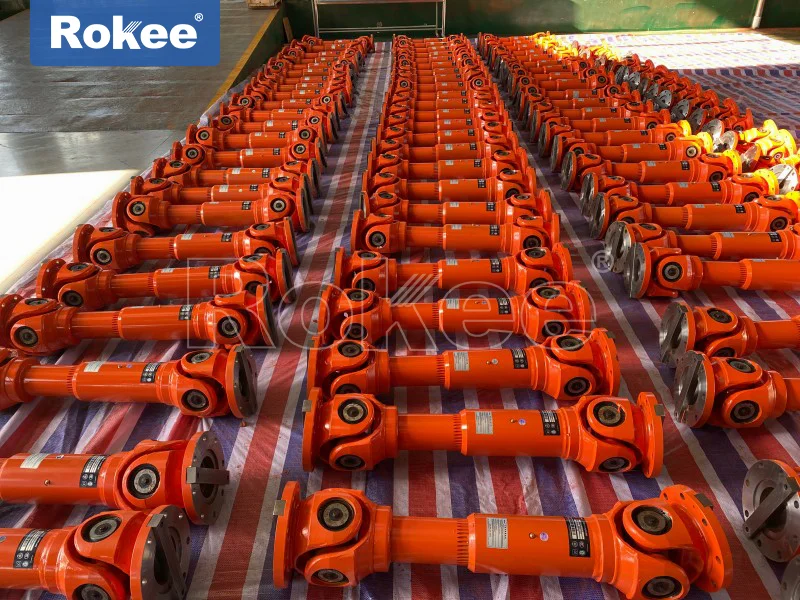
In the modern production process of mineral wool sandwich panels, the transmission system is the core power transmission component that ensures the stable and efficient operation of the entire production line. It undertakes the task of transmitting power from the motor to each functional unit, including feeding, cutting, compounding, and conveying, and its performance directly affects the production efficiency, product quality, and equipment service life of the production line. The universal joint coupling, as a key connecting part in the transmission system, plays a crucial role in compensating for the axial, radial, and angular deviations between the connected shafts, reducing vibration and noise, and ensuring the smooth transmission of power. However, in the actual operation of the mineral wool sandwich panel production line, the traditional universal joint coupling and transmission system often have problems such as insufficient load-bearing capacity, poor wear resistance, large transmission vibration, low efficiency, and high maintenance frequency, which seriously restrict the stable operation of the production line and increase the production cost. Therefore, optimizing the design of the universal joint coupling and transmission system is of great practical significance for improving the overall performance of the mineral wool sandwich panel production line, reducing energy consumption, and enhancing market competitiveness.
The mineral wool sandwich panel production line has the characteristics of continuous operation, variable load, and harsh working environment. During the production process, the transmission system needs to bear alternating loads and impact loads, and the working environment often contains a large amount of dust and fibers, which easily cause wear, corrosion, and blockage of the transmission components. In addition, the installation accuracy of each equipment in the production line is difficult to achieve absolute alignment due to factors such as foundation settlement, thermal expansion, and equipment deformation during operation, which requires the universal joint coupling to have excellent deviation compensation capacity. The traditional universal joint coupling usually adopts a single cross-axis structure, which has limited compensation angle and load-bearing capacity, and the material selection is often not targeted, resulting in short service life and frequent replacement. At the same time, the traditional transmission system has unreasonable power distribution, large energy loss, and poor coordination between each component, leading to low transmission efficiency and high energy consumption. Therefore, the optimization design of the universal joint coupling and transmission system must be carried out in combination with the actual working conditions of the mineral wool sandwich panel production line, focusing on solving the key problems existing in the traditional system, and improving the reliability, stability, and efficiency of the system.
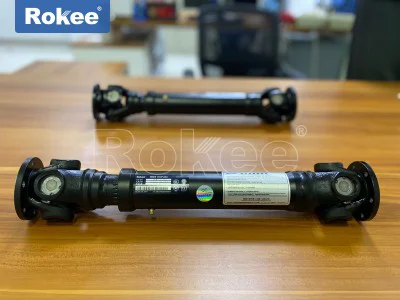
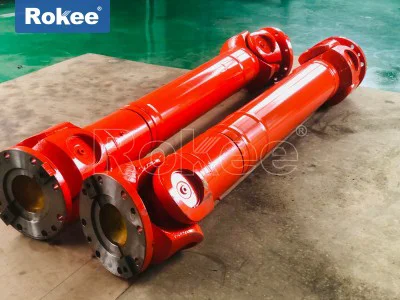
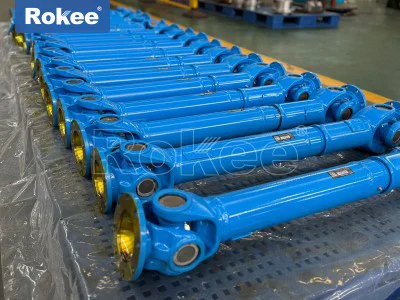
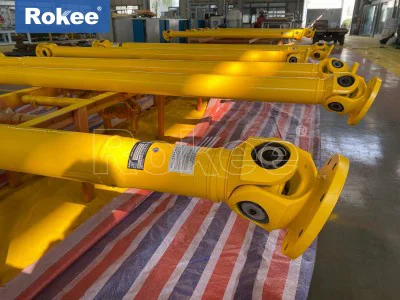
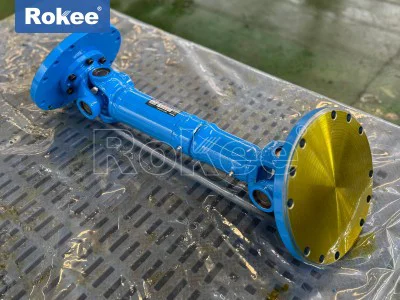
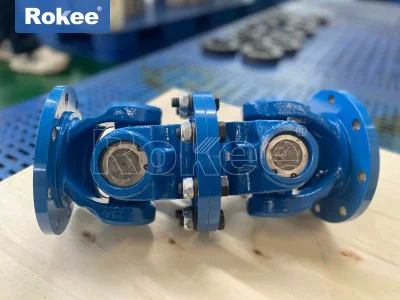
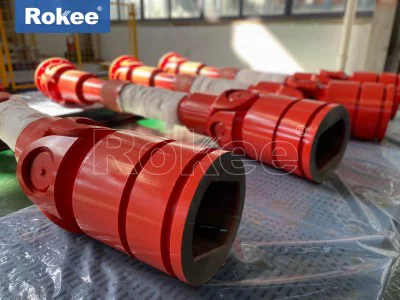
The optimization design of the universal joint coupling is the core of the entire transmission system optimization, which mainly involves the optimization of the structure, material, and processing technology. In terms of structural design, the traditional single cross-axis universal joint coupling has the problem of uneven angular velocity transmission when the angle between the shafts is large, which will cause vibration and noise, and affect the stability of the transmission system. To solve this problem, a double cross-axis universal joint coupling structure is adopted in the optimization design. By connecting two single cross-axis universal joints in series and ensuring that the included angles between the intermediate shaft and the two connected shafts are equal, the uniform angular velocity transmission between the input shaft and the output shaft is realized, which effectively reduces the transmission vibration and noise. At the same time, the structure of the cross shaft and the yoke is optimized: the cross shaft is designed as a hollow structure, which not only reduces the weight of the component and reduces the inertial force during high-speed rotation, but also improves the toughness and impact resistance of the cross shaft. The yoke is designed with a reinforced rib structure, which enhances the structural strength and load-bearing capacity of the yoke, and avoids the problem of yoke deformation or fracture under heavy load conditions. In addition, a sliding sleeve structure is added to the universal joint coupling to compensate for the axial displacement caused by thermal expansion or equipment deformation, further improving the deviation compensation capacity of the coupling.
In terms of material selection, the traditional universal joint coupling usually adopts ordinary carbon steel, which has poor wear resistance, corrosion resistance, and fatigue strength, and is difficult to adapt to the harsh working environment of the mineral wool sandwich panel production line. In the optimization design, according to the working characteristics of the coupling, high-strength alloy steel is selected as the main material of the cross shaft and yoke. This kind of alloy steel has excellent mechanical properties, including high tensile strength, yield strength, and fatigue strength, which can effectively improve the load-bearing capacity and service life of the coupling. At the same time, the surface of the cross shaft and the bearing contact surface are treated with carburizing and quenching technology. The carburizing treatment can form a high-hardness wear-resistant layer on the surface of the component, while the quenching treatment can improve the core toughness of the component, so that the coupling has both excellent wear resistance and impact resistance. For the bearing part of the universal joint coupling, a self-lubricating composite bearing is selected instead of the traditional sliding bearing. This kind of self-lubricating bearing has good lubrication performance and wear resistance, and can work normally without additional lubrication, which not only reduces the maintenance workload, but also avoids the problem of lubricating oil pollution caused by lubrication, which is suitable for the working environment with more dust and fibers.
The processing technology of the universal joint coupling also has an important impact on its performance. In the optimization design, advanced precision processing technology is adopted to improve the processing accuracy of each component. For the cross shaft and yoke, CNC machining technology is used to ensure the dimensional accuracy and shape accuracy of the components, reduce the assembly error, and ensure the smooth operation of the coupling. The surface of the components is polished to reduce the surface roughness, reduce the friction resistance during operation, and further improve the wear resistance of the components. In addition, strict quality inspection is carried out on each processed component, including dimensional inspection, hardness inspection, and fatigue test, to ensure that the performance of each component meets the design requirements and avoid the impact of unqualified components on the overall performance of the coupling.
On the basis of optimizing the universal joint coupling, the overall optimization design of the transmission system is carried out to improve the transmission efficiency and stability of the entire system. The traditional transmission system of the mineral wool sandwich panel production line often adopts a single motor drive mode, which has unreasonable power distribution, large energy loss, and poor adaptability to variable load conditions. In the optimization design, a multi-motor distributed drive mode is adopted, and each functional unit of the production line is equipped with an independent drive motor, which realizes the independent control of each functional unit. This drive mode can adjust the speed and torque of each motor according to the actual working load of each functional unit, avoid the waste of energy caused by the idling of the motor under light load conditions, and improve the energy utilization rate of the system. At the same time, a frequency conversion speed regulation system is added to each drive motor, which can realize the stepless speed regulation of the motor, make the speed of each functional unit match the production rhythm, and ensure the stable operation of the production line. For example, in the feeding and conveying unit, the frequency conversion speed regulation system can adjust the conveying speed according to the material supply, avoid the material accumulation or shortage, and improve the feeding stability; in the cutting unit, the frequency conversion speed regulation system can adjust the cutting speed according to the thickness and hardness of the mineral wool sandwich panel, ensure the cutting quality, and reduce the wear of the cutting tool.
The optimization of the transmission system also involves the optimization of the transmission route and the selection of transmission components. In the traditional transmission system, the transmission route is often long and complicated, with many transmission links, which leads to large energy loss and low transmission efficiency. In the optimization design, the transmission route is simplified, unnecessary transmission links are reduced, and the transmission distance is shortened, so as to reduce the energy loss caused by friction and vibration. At the same time, high-efficiency transmission components are selected to replace the traditional low-efficiency components. For example, the gear transmission adopts high-precision helical gears instead of ordinary spur gears. The helical gears have the advantages of smooth transmission, low noise, and high transmission efficiency, which can effectively improve the transmission efficiency of the system and reduce the vibration and noise. The belt transmission adopts high-strength synchronous belts instead of ordinary V-belts. The synchronous belt has no relative sliding during transmission, high transmission accuracy, and low energy loss, which can ensure the stable transmission of power. In addition, the bearing components in the transmission system are optimized, and high-precision rolling bearings are selected to replace the traditional sliding bearings, which reduces the friction resistance and improves the transmission efficiency and service life of the system.
The vibration and noise control of the transmission system is also an important part of the optimization design. The vibration and noise generated during the operation of the transmission system not only affect the working environment of the workshop, but also accelerate the wear and aging of the equipment, and even affect the product quality. In the optimization design, a variety of measures are taken to control the vibration and noise. First, a vibration isolation device is installed between the motor and the foundation, which can effectively absorb the vibration generated by the motor during operation and prevent the vibration from being transmitted to the entire production line. Second, the universal joint coupling is equipped with a damping washer, which can absorb the impact vibration during the transmission process and reduce the noise generated by the collision between the components. Third, the transmission components are strictly balanced, including dynamic balance and static balance, to reduce the inertial force generated during high-speed rotation, which is the main cause of vibration. In addition, the surface of the transmission components is treated with anti-vibration and noise reduction, and the gap between the components is reasonably adjusted to avoid the noise generated by the friction between the components.
The reliability and maintainability of the transmission system are also important factors considered in the optimization design. The mineral wool sandwich panel production line requires continuous operation for a long time, so the transmission system must have high reliability to avoid frequent failures affecting production. In the optimization design, the structural design of the transmission components is optimized to improve the fatigue strength and wear resistance of the components, and reduce the failure rate. At the same time, a condition monitoring system is added to the transmission system, which can real-time monitor the operating parameters of the transmission components, including temperature, vibration, and noise, and send an alarm in time when abnormal parameters are found, so that the maintenance personnel can take measures to deal with it in time, avoid the expansion of the fault, and ensure the stable operation of the system. In terms of maintainability, the structure of the transmission components is designed to be easy to disassemble and assemble, and the key components are designed with standardized interfaces, which is convenient for the maintenance and replacement of the components. For example, the universal joint coupling adopts a split structure, which can be disassembled and maintained without removing the entire transmission system, which reduces the maintenance workload and maintenance time, and improves the maintenance efficiency.
To verify the effect of the optimization design, a comparative test is carried out between the optimized universal joint coupling and transmission system and the traditional system. The test is carried out on the actual mineral wool sandwich panel production line, and the test indicators include transmission efficiency, vibration amplitude, noise level, load-bearing capacity, and service life. The test results show that the optimized universal joint coupling has a larger deviation compensation angle, which can compensate for the axial, radial, and angular deviations between the shafts more effectively, and the transmission vibration amplitude is reduced by 30% to 40% compared with the traditional coupling, and the noise level is reduced by 15dB to 20dB. The load-bearing capacity of the optimized coupling is increased by 25% to 30%, and the service life is extended by more than twice. The transmission efficiency of the optimized transmission system is increased by 10% to 15% compared with the traditional system, the energy consumption is reduced by 8% to 12%, and the failure rate is reduced by more than 50%. The test results fully show that the optimization design of the universal joint coupling and transmission system can effectively improve the performance of the mineral wool sandwich panel production line, reduce energy consumption and maintenance cost, and ensure the stable and efficient operation of the production line.
In the actual application process, the optimization design of the universal joint coupling and transmission system also needs to be adjusted according to the specific parameters and working conditions of the mineral wool sandwich panel production line. For example, for the production line with large load and high speed, the material and structural parameters of the universal joint coupling need to be further optimized to improve its load-bearing capacity and high-speed performance; for the production line with harsh working environment, the corrosion resistance and dust-proof performance of the transmission components need to be strengthened to extend the service life of the components. In addition, the daily maintenance and management of the optimized transmission system should be strengthened, including regular inspection, lubrication, and cleaning of the components, to ensure that the system is always in good operating condition and give full play to the effect of the optimization design.
In conclusion, the universal joint coupling and transmission system are important components of the mineral wool sandwich panel production line, and their performance directly affects the production efficiency, product quality, and economic benefits of the production line. Through the optimization design of the structure, material, and processing technology of the universal joint coupling, the load-bearing capacity, deviation compensation capacity, wear resistance, and service life of the coupling are improved. Through the optimization of the drive mode, transmission route, and transmission components of the transmission system, the transmission efficiency, stability, and energy utilization rate of the system are improved. The comparative test shows that the optimized system has obvious advantages in transmission efficiency, vibration and noise control, load-bearing capacity, and service life, which can effectively solve the problems existing in the traditional system. The optimization design provides a feasible solution for the improvement of the overall performance of the mineral wool sandwich panel production line, and has important promotion and application value in the field of mineral wool sandwich panel production. With the continuous development of industrial automation technology, the optimization design of the universal joint coupling and transmission system will be more intelligent and refined, which will further promote the development of the mineral wool sandwich panel production industry towards high efficiency, energy saving, and environmental protection.