Telescopic Universal Joints
As a key component in mechanical transmission systems, telescopic universal joints play an irreplaceable role in modern industrial equipment. This specially designed coupling not only enables power transmission between shafts, but also compensates for axial displacement and angular deviation, meeting the transmission requirements under complex working conditions.
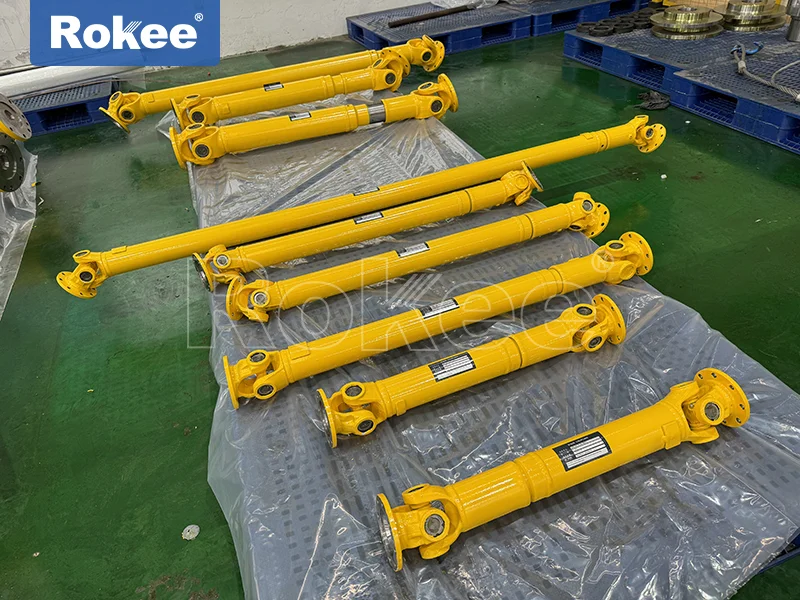
The telescopic universal joint is a precision mechanical component that integrates telescopic function and universal transmission characteristics. It is mainly used to connect transmission shafts at different axis positions and allow relative axial displacement. The design of this coupling cleverly combines the angle compensation capability of traditional universal joints with the axial adjustment function of the telescopic mechanism, making it an ideal choice in complex transmission systems.
The core advantages are mainly manifested in three aspects: firstly, it can effectively compensate for axial, radial, and angular deviations between transmission shafts, solving the strict requirements of traditional rigid couplings in installation alignment; Secondly, its unique telescopic structure design can absorb thermal expansion displacement or vibration displacement generated during equipment operation, protecting the transmission system from stress damage; Finally, high-quality telescopic universal joints use precision needle roller bearings and special materials, with high torque transmission capacity and long service life.
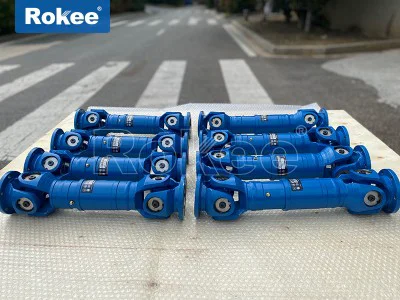
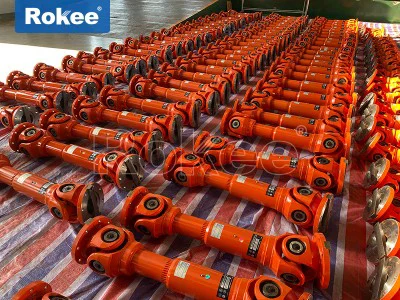
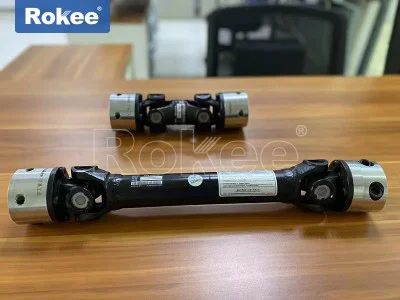
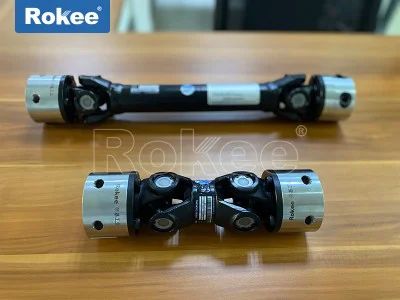
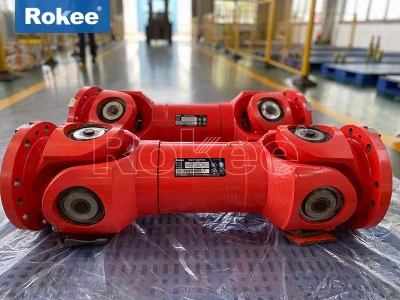
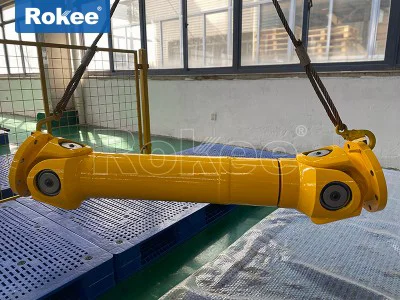
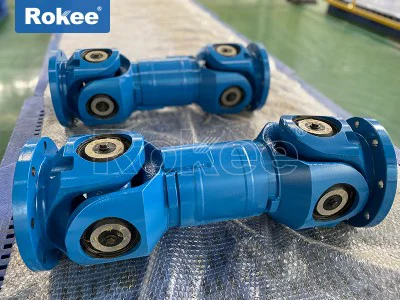
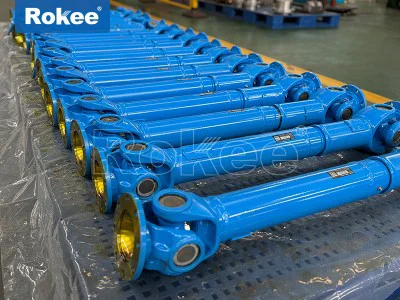
Structurally, a typical telescopic universal joint consists of several components: a cross shaft assembly (including needle roller bearings and seals), a telescopic spline pair (providing axial movement freedom), a fork component (connecting the transmission shaft end), and a dust protection device. Among them, the cross shaft and needle roller bearings bear the functions of torque transmission and angle deflection, while the precision machined expansion spline ensures the smoothness and reliability of axial sliding. The quality of dust seals directly affects the durability of universal joints in harsh environments. High quality products usually use multi-layer labyrinth seals or special rubber seals.
In the realm of mechanical power transmission, the telescopic universal joint stands as a versatile and indispensable component, bridging the gap between misaligned shafts while accommodating axial length variations that arise from operational movement, thermal expansion, or installation tolerances. Unlike standard universal joints that only address angular misalignment, telescopic universal joints integrate two core functionalities: the ability to transmit torque across angled shaft axes and the capacity to extend or retract along the axial direction, creating a dynamic coupling solution that adapts to changing mechanical conditions. This dual-function design eliminates the need for rigid, fixed-length shaft connections, which are prone to stress, wear, and failure in dynamic systems, and instead delivers a flexible, durable linkage that maintains consistent power transfer even as relative positions of connected components shift. From heavy industrial machinery to precision-driven automotive systems, agricultural equipment to aerospace auxiliary mechanisms, these joints play a pivotal role in ensuring smooth, reliable operation across countless mechanical setups, making them a cornerstone of modern mechanical engineering design.
To fully grasp the value of telescopic universal joints, it is critical to dissect their fundamental structural composition, which balances simplicity, strength, and functional flexibility. At its core, a typical telescopic universal joint consists of three primary interconnected modules: the universal joint end assemblies, the telescopic shaft mechanism, and internal support and sealing components. The universal joint ends, positioned at either terminus of the assembly, are engineered to handle angular deflection, featuring fork-shaped yokes that connect to the driving and driven shafts. These yokes are paired with a central cross-shaped trunnion (or spider) fitted with precision bearings, usually needle roller bearings, which reduce friction and enable smooth rotation even at significant angles. The bearing assemblies are housed within precision-machined bores in the yokes, ensuring tight tolerances and stable load distribution, preventing premature wear that can compromise torque transmission efficiency.
The defining feature of the telescopic universal joint is its axial adjustment mechanism, which seamlessly integrates with the universal joint ends to deliver length variability. This telescopic section is most commonly constructed using a splined shaft and sleeve assembly, where the external splines of one shaft segment mesh perfectly with the internal splines of a matching sleeve. The spline design is precision-engineered to maintain full contact even as the joint extends or retracts, ensuring uninterrupted torque transfer throughout the entire range of axial travel. Alternative telescopic designs may utilize polygonal shaft-sleeve pairings or ball-based sliding mechanisms, each tailored to specific load, speed, and precision requirements, but splined configurations remain the most prevalent due to their exceptional load-bearing capacity and operational stability. The telescopic travel range varies widely based on the intended application, from short-stroke adjustments for minor thermal expansion to long-stroke functionality for systems with significant axial movement, such as mobile machinery or articulated industrial equipment.
Completing the structural design are critical auxiliary components that enhance durability, protect internal mechanisms, and sustain long-term performance. Sealing elements, including dust boots, lip seals, and O-rings, encase the telescopic spline section and bearing assemblies, blocking out contaminants like dust, dirt, moisture, and debris that can cause abrasion, corrosion, or lubricant degradation. These seals are crafted from resilient materials capable of withstanding extreme temperatures, chemical exposure, and mechanical stress, preserving the integrity of internal lubrication and preventing premature component failure. Internal lubrication channels or reservoirs are often integrated into the joint structure, delivering consistent lubrication to high-friction areas such as bearing surfaces and spline teeth, reducing wear, minimizing heat generation, and extending the operational lifespan of the entire assembly. Some designs feature self-lubricating bearing materials or sealed-for-life configurations, reducing maintenance demands and enhancing reliability in hard-to-reach or remote operational environments.
The performance characteristics of telescopic universal joints are tailored to meet the diverse demands of mechanical systems, combining robust load capacity, flexible angular and axial adjustment, smooth operation, and exceptional durability. One of the most notable performance attributes is their high torque transmission capability, engineered to handle both steady-state torque loads and sudden shock loads common in heavy-duty applications. The structural design distributes stress evenly across key components—yokes, cross trunnions, bearings, and splined shafts—preventing localized stress concentrations that can lead to cracking, bending, or fracture. This load-bearing efficiency allows the joints to operate reliably under heavy mechanical stress without sacrificing performance, making them suitable for high-load industrial and automotive applications alike.
Angular and axial flexibility further defines the performance profile of these joints, setting them apart from rigid couplings and standard universal joints. The universal joint ends typically accommodate angular misalignment ranging from a few degrees up to 45 degrees per joint, with double-joint assemblies enabling even greater angular compensation for highly misaligned shaft setups. This angular adaptability ensures that torque is transmitted smoothly even when shafts are not perfectly collinear, eliminating binding and reducing wear on connected components. Complementing this, the telescopic section provides precise axial adjustment, absorbing length changes caused by thermal expansion and contraction during operation, mechanical vibration, or dynamic movement of linked machinery. This dual flexibility not only prevents mechanical damage but also simplifies installation, as it reduces the need for ultra-precise shaft alignment during assembly, cutting down on installation time and labor costs.
Operational smoothness and efficiency are additional core performance metrics, with low friction and minimal backlash being key design priorities. Precision-machined splines and high-quality needle roller bearings reduce frictional resistance during rotation and axial movement, lowering energy loss and heat buildup during operation. Reduced backlash, or the minimal clearance between mating components, ensures precise motion transfer, a critical feature for precision-driven systems where accurate positioning and responsive operation are essential. These joints also exhibit strong resistance to environmental stressors, with robust construction materials—typically high-grade alloy steels, carbon steels, or stainless steels—providing durability against wear, corrosion, and fatigue. Whether operating in high-temperature industrial settings, wet and corrosive agricultural environments, or high-vibration mobile machinery, telescopic universal joints maintain consistent performance, resisting degradation and delivering long service life with minimal maintenance.
Telescopic universal joints are categorized into distinct types based on structural design, telescopic mechanism, joint configuration, and intended application, each optimized to address specific mechanical challenges and operational requirements. The most common classification is based on the number of universal joint modules, with single-joint, double-joint, and triple-joint designs being the primary variants. Single-joint telescopic universal joints feature one universal joint assembly at one end and a telescopic shaft at the other, offering basic angular and axial compensation for systems with moderate misalignment and simple power transmission needs. These joints are compact, cost-effective, and ideal for light-duty to medium-duty applications where space is limited and operational demands are relatively mild.
Double-joint telescopic universal joints, also known as double Cardan telescopic joints, incorporate two universal joint assemblies—one at each end—linked by a central telescopic shaft. This design delivers enhanced angular flexibility, enabling the joint to compensate for both angular misalignment and parallel offset between shafts, a capability that single-joint designs lack. Double-joint variants are the most widely used across diverse industries, as they balance versatility, load capacity, and compactness, handling moderate to heavy loads and accommodating complex shaft positioning in automotive, industrial, and agricultural machinery. Triple-joint telescopic universal joints feature three interconnected universal joint modules with extended telescopic shafts, engineered for extreme misalignment scenarios and long-distance power transmission. These joints are reserved for heavy-duty, specialized applications where shafts are severely offset or angled, and axial travel requirements are substantial, such as large-scale construction equipment, marine propulsion systems, and heavy industrial manufacturing lines.
Classification by telescopic mechanism further differentiates the product lineup, with splined telescopic joints, ball telescopic joints, and sliding key joints representing the main categories. Splined telescopic universal joints, as the most common variant, utilize precision-machined spline shafts and sleeves for smooth axial movement and reliable torque transfer, offering exceptional load capacity and durability for heavy-duty use. Ball telescopic joints incorporate ball bearings between the shaft and sleeve, reducing friction significantly and enabling ultra-smooth extension and retraction, making them ideal for high-speed, low-friction applications where operational efficiency is paramount. Sliding key telescopic joints feature a keyed shaft and sleeve design, offering a simpler, more cost-effective solution for light-duty applications with low torque loads and minimal axial travel requirements, prioritizing affordability over heavy-load performance.
Additional categorizations include distinctions based on material construction, such as carbon steel joints for general industrial use, alloy steel joints for heavy-duty high-load applications, and stainless steel joints for corrosion-resistant environments like marine, food processing, or chemical facilities. Joints are also classified by telescopic stroke length, with short-stroke variants for minor axial adjustments and long-stroke variants for dynamic systems with significant length changes. Each type is engineered to target specific operational parameters, ensuring that there is a telescopic universal joint suitable for nearly every mechanical power transmission scenario, from delicate precision equipment to massive industrial machinery.
The adaptability and functional versatility of telescopic universal joints translate to a vast array of practical applications across nearly every sector of mechanical engineering, where flexible, reliable power transmission is non-negotiable. In the automotive industry, these joints are integral components of drive shaft assemblies, particularly in rear-wheel-drive and four-wheel-drive vehicles. They connect the transmission to the differential, accommodating angular misalignment caused by suspension movement and axial length changes as the vehicle navigates uneven terrain, ensuring smooth power delivery to the wheels and enhancing ride comfort and vehicle stability. Beyond passenger vehicles, they are widely used in commercial trucks, buses, and off-road vehicles, enduring heavy loads and harsh operating conditions while maintaining consistent performance.
Agricultural machinery relies heavily on telescopic universal joints to power critical implements, from tractors and harvesters to plows, seeders, and irrigation systems. Agricultural equipment operates in rugged, dusty, and wet environments, with frequent shaft misalignment and axial movement due to uneven ground and implement articulation. Telescopic universal joints deliver the necessary flexibility and durability to transmit power from the tractor’s engine to attached implements, withstanding shock loads, debris exposure, and constant movement without failure. Their ability to adapt to changing shaft positions ensures that agricultural machinery operates efficiently even in challenging field conditions, reducing downtime and boosting productivity for farming operations.
Industrial manufacturing and heavy machinery represent another major application area, where telescopic universal joints are used in conveyor systems, milling machines, presses, cranes, and assembly line equipment. In conveyor systems, they accommodate misalignment and length changes caused by thermal expansion and mechanical vibration, ensuring smooth material handling and uninterrupted production flow. In heavy industrial machinery such as metalworking presses and mining equipment, they handle extreme torque loads and dynamic movement, linking power sources to operational components while absorbing stress and preventing damage to sensitive parts. Their robust design and low maintenance requirements make them ideal for continuous-operation industrial settings, where downtime can result in significant financial losses.
The marine and aerospace industries also leverage the unique capabilities of telescopic universal joints, albeit in specialized capacities. In marine applications, they are used in propulsion systems, steering mechanisms, and auxiliary equipment on boats, ships, and offshore vessels, where corrosion resistance and watertight performance are critical. Stainless steel and sealed telescopic joints withstand the corrosive effects of saltwater and moisture, maintaining reliable operation in harsh marine environments. In aerospace, they are employed in auxiliary control systems, landing gear mechanisms, and cabin equipment, where lightweight design, precision performance, and resistance to extreme temperatures and pressure changes are essential. These joints are engineered to meet strict performance standards for aerospace applications, delivering consistent functionality in high-stakes operational environments.
Additional applications span construction machinery, material handling equipment, robotics, renewable energy systems, and even household appliances, wherever there is a need to transmit torque between misaligned shafts with variable axial spacing. Construction equipment such as excavators, bulldozers, and loaders uses telescopic universal joints to power hydraulic systems and articulated components, adapting to the extreme movement and heavy loads inherent to construction work. Robotic systems utilize precision telescopic joints for accurate motion transfer in automated assembly lines, while wind turbines and other renewable energy equipment rely on them to accommodate shaft misalignment and thermal expansion in power generation systems. This widespread adoption across diverse industries underscores the critical role of telescopic universal joints in modern mechanical design, as they solve fundamental challenges of power transmission in dynamic, real-world operating conditions.
In summary, the telescopic universal joint is a masterclass in mechanical engineering, merging angular flexibility, axial adjustability, and robust load capacity into a single, compact component. Its thoughtfully engineered structure, encompassing precision universal joint ends, reliable telescopic mechanisms, and protective auxiliary components, delivers exceptional performance characteristics that address the limitations of rigid couplings and standard universal joints. With a diverse range of types tailored to specific load, speed, and environmental requirements, these joints offer a customizable solution for nearly every power transmission challenge. From everyday automotive systems to heavy industrial machinery, agricultural equipment to aerospace technology, telescopic universal joints continue to enable smooth, efficient, and reliable mechanical operation, solidifying their status as an essential and irreplaceable component in the global landscape of mechanical engineering and power transmission.