Industrial Cardan Shafts
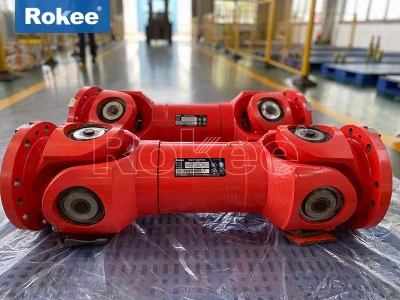
As a key component in mechanical transmission systems, industrial cardan shafts play an indispensable role in modern industrial production. It achieves efficient transmission of power at different angles through unique structural design, solving the problem of angle deviation that traditional rigid connections cannot cope with.
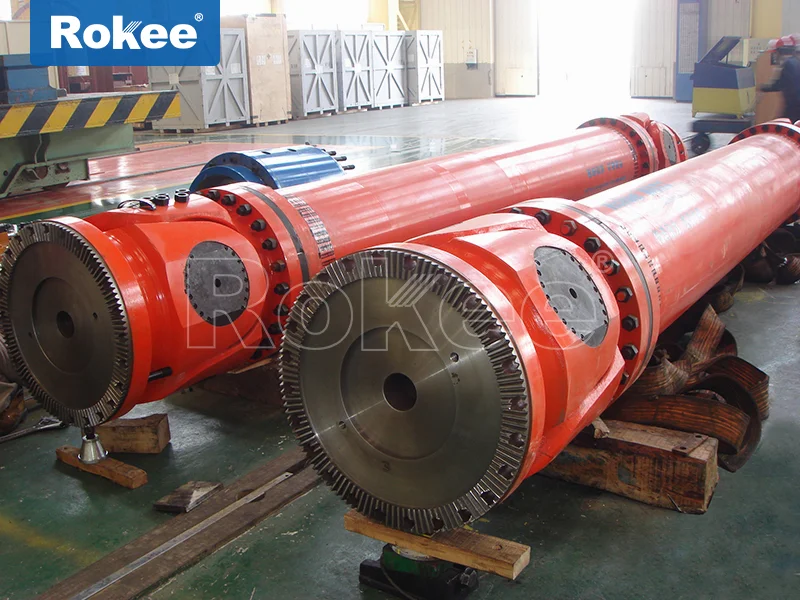
A industrial cardan shaft is a mechanical device that can maintain power transmission even when there is an angle between two axes. Its core function is to solve the problem of angle deviation between rotating shafts. When two rotating shafts are not on the same straight line, ordinary couplings cannot effectively transmit power, while universal shafts allow the shaft to deflect within a certain angle through a special hinge structure, while maintaining stable torque transmission.
From a physics perspective, the working principle of a industrial cardan shaft is based on the theory of spatial linkage mechanisms. When the driving shaft rotates, the rotational motion and torque are transmitted to the driven shaft through the motion conversion of intermediate mechanisms such as cross shafts or ball cages. Although this conversion may cause speed fluctuations in a single joint industrial cardan shaft, the reasonable arrangement of dual joint industrial cardan shafts can eliminate this inequality and achieve synchronous transmission.
The efficiency of universal transmission systems typically ranges from 98% to 99.5%, thanks to advances in modern materials and manufacturing processes. The high transmission efficiency gives industrial cardan shafts significant advantages in energy sensitive applications such as wind power generation and electric vehicles. Meanwhile, its compact structure also highlights its unique value in space constrained environments such as automotive chassis and industrial robot joints.
industrial cardan shafts can be classified into various types based on their structure and usage, each with its unique advantages and application scenarios.
The cross axis industrial cardan shaft consists of two Y-shaped forks and a cross axis, which can rotate flexibly through needle roller bearings on the cross axis. This structure is simple, reliable, and has strong load-bearing capacity, making it particularly suitable for heavy machinery and construction vehicles. Typical applications include metallurgical rolling mills, mining machinery, and large-scale engineering equipment. The allowable axis deflection angle of a cross axis industrial cardan shaft is usually 15 ° -25 °, with a maximum of 45 °, and the torque transmission capacity ranges from a few Newton meters to several million Newton meters. Its disadvantage is that there will be speed fluctuations when using a single section, and it needs to be used in pairs and arranged correctly to ensure transmission synchronization.
The ball cage universal shaft adopts a spherical raceway and cage structure, with precision steel balls transmitting torque between the inner and outer raceways inside. Compared to the cross axis type, the ball cage industrial cardan shaft operates more smoothly, with less vibration and noise, and allows for a working angle of up to 25 ° -30 °, making it particularly suitable for high-speed situations. The front wheel drive system of automobiles commonly uses ball cage industrial cardan shafts, which can reach speeds of 3000-5000rpm or even higher. Modern cage type universal shafts adopt equal tooth design and precision grinding processing technology, which makes the load distribution more uniform and significantly improves the service life. The disadvantage is that the manufacturing cost is high, it is sensitive to foreign objects, and requires good sealing protection.
The ball fork industrial cardan shaft structure is between the cross shaft and the cage type, and power transmission is achieved through the spherical fork head and the force transmitting steel ball. This design is more compact than the cross axis type and simpler and more economical than the ball cage type. It is commonly used in applications with medium to low speeds and light loads, such as agricultural machinery and commercial vehicles. The allowable deflection angle of a ball fork industrial cardan shaft is generally around 20 °, which has good sealing performance and is suitable for harsh working environments.
Other special types include trident industrial cardan shaft (suitable for large angle deflection), diaphragm industrial cardan shaft (seamless transmission, suitable for precision machinery), elastic industrial cardan shaft (with rubber components, capable of absorbing vibration and impact), etc. In recent years, magnetic universal couplings have also emerged, which transmit torque through non-contact magnetic coupling without wear and are suitable for high cleanliness or vacuum environments.
The performance and lifespan of industrial cardan shafts largely depend on the selection of materials and manufacturing processes. Different components require differentiated material solutions based on their functional characteristics and stress conditions.
As the core load-bearing component of the cross axis industrial cardan shaft, the cross axis is usually made of high-quality alloy structural steel such as 20CrMnTi and 20CrMo. After carburizing and quenching treatment, the surface hardness can reach HRC58-62, while the core maintains the toughness of HRC30-35, ensuring both wear resistance and ability to withstand impact loads. The depth of the carburized layer is generally 0.8-1.4mm, and the surface roughness is controlled below Ra0.4 after precision grinding. In recent years, cross shafts prepared by powder metallurgy technology have been applied, resulting in more uniform material density and strength, and an increase in fatigue life of over 30%.
The bearing components are crucial to the performance of the industrial cardan shaft. Needle roller bearings are usually made of GCr15 bearing steel, with a hardness of HRC61-65 after heat treatment, and the working surface is ultra precision machined. Retainers are often made of copper alloys or engineering plastics (such as polyamide) to reduce friction and wear. High end applications are starting to use ceramic needle rollers, which, although costly, can extend their service life by 3-5 times, making them particularly suitable for situations with harsh lubrication conditions.
The fork head, flange and other structural components of the industrial cardan shaft are generally made of medium carbon alloy steels such as 42CrMo and 35CrMo, which have good comprehensive mechanical properties after quenching and tempering treatment. For fields with strong demand for lightweighting, such as aerospace and new energy vehicles, high-strength aluminum or titanium alloys are being adopted, which can reduce weight by 30% -50% while ensuring strength.
The sealing material has a decisive impact on the maintenance cycle of the industrial cardan shaft. The working temperature range of traditional nitrile rubber seals is generally -40 ℃ to+100 ℃, while the new fluororubber (FKM) seals can withstand environments from -30 ℃ to+200 ℃ and have better chemical corrosion resistance. The PTFE composite lip design further reduces frictional resistance and extends sealing life.
Modern industrial cardan shaft manufacturing integrates multiple precision machining technologies. The machining of the cross axis is carried out using CNC lathes and specialized grinders to ensure the dimensional accuracy and form tolerance of the shaft neck (roundness ≤ 0.003mm). The machining of fork heads involves five axis linkage milling centers to ensure the positional accuracy of bearing seat holes. The heat treatment process adopts a computer-controlled controlled controlled controlled atmosphere carburizing furnace, which precisely adjusts the carbon potential and temperature curve to avoid oxidation and decarburization.
Surface strengthening techniques such as rolling and shot peening are widely used in key parts of industrial cardan shafts, which can form residual compressive stress layers on the surface and increase fatigue strength by 30% -50%. New technologies such as laser surface quenching and plasma nitriding have also begun to be applied in high-end products, further extending their service life.
The assembly process adopts torque control tightening technology to ensure precise and consistent pre tightening force of the bearings. Dynamic balance testing is essential for high-speed industrial cardan shafts, usually requiring a balance level of G6.3 or higher, and some precision applications even require G2.5. Before leaving the factory, a bench test is required to simulate actual working conditions and verify performance indicators.
industrial cardan shafts play a crucial role in many industrial fields due to their unique angle compensation capability and efficient torque transmission characteristics. Different industries choose the appropriate type and configuration of industrial cardan shaft based on their working conditions and performance requirements.
In the metallurgical industry, the industrial cardan shaft is the core component of the rolling mill transmission system. Taking the tropical continuous rolling mill as an example, its main drive universal shaft needs to transmit a torque of up to 3000kN · m, and the speed can be adjusted within the range of 0-200rpm. The working environment temperature can reach over 200 ℃. This type of industrial cardan shaft usually adopts SWC heavy-duty cross shaft design, equipped with water cooling or oil mist lubrication system, and the bearings are made of special high-temperature resistant materials. In continuous casting equipment, the industrial cardan shaft is used to drive the fan-shaped roller conveyor, which needs to compensate for the axis deviation caused by the thermal expansion of the casting billet.
In the field of mining machinery, large universal shafts used in equipment such as ball mills and crushers face challenges of large impact loads and high levels of dust. The design adopts a reinforced cross package structure, and the sealing system adopts a multi-layer labyrinth with magnetic sealing, effectively blocking dust intrusion. Some models are also equipped with torque overload protection devices, which automatically slip when the load exceeds the set value, protecting the safety of the transmission system.
An industrial cardan shaft, also known as a universal joint shaft or drive shaft, is a critical mechanical component designed to transmit torque and rotational motion between two shafts that are not aligned in a straight line or have angular deviations, axial displacements, or radial offsets. It plays an indispensable role in modern industrial machinery, bridging the gap between different parts of drive systems to ensure smooth, efficient, and reliable power transmission even under harsh operating conditions. The functionality and adaptability of industrial cardan shafts stem from their sophisticated structural design, superior performance characteristics, diverse types tailored to specific needs, and wide-ranging applications across various industrial sectors.
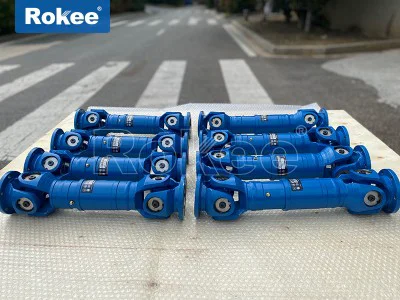
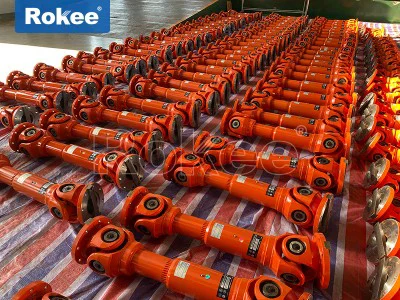
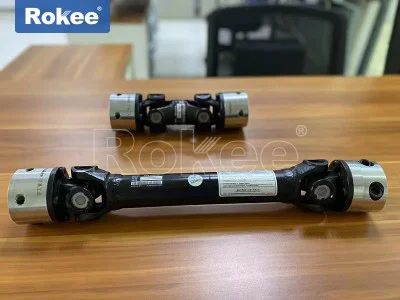
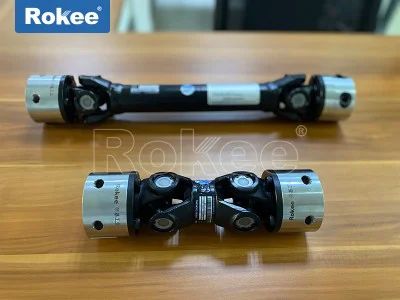
The structure of an industrial cardan shaft is meticulously engineered to accommodate misalignment while maintaining stable torque transmission, and it typically consists of several core components that work in harmony. At the heart of most cardan shafts are universal joints, which are the key elements enabling angular flexibility. A basic universal joint, often referred to as a Hooke’s joint, comprises two yokes (fork-shaped components) and a cross shaft (or spider) that connects the two yokes. The yokes are attached to the driving and driven shafts respectively, while the cross shaft fits into the bearings mounted within the yokes, allowing the yokes to rotate relative to each other at various angles. The bearings, usually needle roller bearings or sliding bearings, reduce friction between the cross shaft and yokes, ensuring smooth rotation and minimizing wear even under high loads. In addition to the universal joints, the central shaft (or intermediate shaft) serves as the main body of the cardan shaft, connecting the two universal joints and transmitting torque from one end to the other. The central shaft is typically made of high-strength materials to withstand torsional stress, bending forces, and wear, and its length can be adjusted or customized based on the specific distance between the driving and driven shafts. Some cardan shafts also incorporate a spline connection between the central shaft and one of the yokes, which allows for axial compensation—this feature is particularly useful in applications where the distance between the two shafts may change during operation due to thermal expansion, vibration, or equipment movement. The spline connection consists of a male spline (on the central shaft) and a female spline (in the yoke), enabling the two components to slide relative to each other while maintaining torque transmission. Sealing components are another important part of the cardan shaft structure, designed to prevent the ingress of dust, dirt, moisture, and other contaminants into the bearings and universal joints, which could otherwise cause premature wear, corrosion, and failure. These seals also help retain lubricants, ensuring that all moving parts remain properly lubricated to reduce friction and extend service life. The overall structural design of an industrial cardan shaft is a balance between flexibility, strength, and durability, allowing it to adapt to various misalignment conditions while reliably transmitting torque.
The performance of an industrial cardan shaft is determined by a combination of its structural design, material selection, and manufacturing processes, and it is characterized by several key attributes that make it suitable for industrial applications. One of the most prominent performance features is its angular compensation capability, which refers to the maximum angle at which the cardan shaft can accommodate misalignment between the driving and driven shafts while maintaining efficient torque transmission. Different types of cardan shafts have varying angular compensation ranges, typically between 5° and 45°, with some heavy-duty or specialized models capable of handling even larger angles. This flexibility is crucial in industrial settings where equipment installation errors, thermal expansion, or dynamic movement may cause shaft misalignment. Another critical performance attribute is torque capacity, which is the maximum amount of torque that the cardan shaft can transmit without deformation, damage, or failure. Torque capacity varies widely depending on the size, material, and design of the cardan shaft, ranging from a few hundred newton-meters for light-duty models to over 290,000 newton-meters for heavy-duty industrial cardan shafts used in large-scale machinery. The ability to transmit high torque efficiently makes cardan shafts indispensable in heavy-industry applications where large power outputs are required. Transmission efficiency is also a key performance factor, as it directly impacts the overall efficiency of the drive system. High-quality industrial cardan shafts typically have a transmission efficiency of 98% or higher, meaning that very little power is lost during transmission—this is achieved through precise manufacturing, high-quality bearings, and optimal lubrication. Low transmission efficiency can lead to increased energy consumption, reduced machinery performance, and excessive heat generation, which can damage components over time. Durability and wear resistance are also essential performance characteristics, as industrial cardan shafts often operate in harsh environments with high loads, high speeds, vibration, and exposure to contaminants. To ensure long service life, cardan shafts are typically made from high-strength materials such as alloy steel, carbon steel, or aluminum alloy, which offer excellent torsional strength, wear resistance, and corrosion resistance. Advanced manufacturing processes such as heat treatment, forging, and precision machining further enhance the durability of the components, making them capable of withstanding continuous operation under demanding conditions. Vibration and noise reduction are additional performance considerations, especially in applications where precision and operator comfort are important. Well-designed cardan shafts minimize vibration and noise through balanced components, high-quality bearings, and proper lubrication, reducing the impact on surrounding equipment and improving the working environment. Finally, the dynamic balance performance of industrial cardan shafts is critical, particularly for high-speed applications. Imbalanced cardan shafts can cause excessive vibration, which not only reduces transmission efficiency but also accelerates wear on bearings, shafts, and other components, leading to premature failure. Precision dynamic balancing during manufacturing ensures that the cardan shaft rotates smoothly at high speeds without generating excessive vibration.
Industrial cardan shafts are available in a wide range of types, each designed to meet the specific requirements of different applications, operating conditions, and load capacities. The classification of cardan shafts can be based on several criteria, including structural design, torque capacity, angular compensation range, and application type. One of the most common classification methods is based on structural design, which includes cross shaft type, ball cage type, ball fork type, convex block type, ball pin type, ball joint type, three pin type, trident rod type, and hinge rod type, among others. The cross shaft type (Hooke’s joint) cardan shaft is the most widely used type in industrial applications due to its simple structure, high torque capacity, and reliable performance. It consists of two yokes and a cross shaft, as described earlier, and is suitable for medium to heavy-duty applications with moderate angular misalignment. The ball cage type cardan shaft, also known as a Rzeppa joint, is another popular type, characterized by its ability to transmit torque at constant angular velocity even with large angular misalignments. It consists of an outer ring (with a spherical raceway), an inner ring (star-shaped), a cage, and several transmission steel balls. The cage keeps the steel balls aligned in the bisecting plane of the two shaft angles, ensuring smooth, constant-velocity transmission. This type of cardan shaft is particularly suitable for high-speed applications, precision machinery, and situations where large angular misalignments are present, such as in automotive drive systems and precision machine tools. Ball fork type cardan shafts are similar to ball cage types but have a simpler structure, using two forks with ball grooves and steel balls to transmit torque; they are often used in light-duty applications with small angular misalignments. Another classification method is based on torque capacity, which divides cardan shafts into light-duty, medium-duty, heavy-duty, and super heavy-duty types. Light-duty cardan shafts have a torque capacity ranging from a few hundred to several thousand newton-meters and are typically used in light industrial machinery, precision equipment, paper processing, and pumping equipment. They are compact, lightweight, and designed for high-speed operation with low to medium loads. Medium-duty cardan shafts have a higher torque capacity, suitable for applications such as locomotives, light industrial machinery, precision metallurgy, and lifting equipment, where moderate loads and speeds are involved. Heavy-duty cardan shafts are designed to withstand large torques (often exceeding 100,000 newton-meters) and heavy loads, making them ideal for use in metallurgical machinery, heavy construction equipment, mining machinery, and oil and gas extraction equipment. They are constructed from high-strength materials with reinforced components to handle the extreme stresses encountered in these applications. Super heavy-duty cardan shafts are specialized models with torque capacities exceeding 200,000 newton-meters, used in large-scale industrial equipment such as steel rolling mills, large cranes, and marine drives. Cardan shafts can also be classified based on their compensation capabilities, including those with long axial compensation and short axial compensation. Long compensation cardan shafts feature a lightweight design, low inertia, high torsional rigidity, and large axial compensation capacity, making them suitable for coilers, large paper machines, marine drives, and pumping equipment. Short cardan shafts are compact in length, designed to fit into tight spaces, and are often used in applications where installation space is limited, such as in some construction machinery and industrial equipment. Additionally, there are specialized cardan shafts designed for specific applications, such as telescopic cardan shafts (which can adjust their length to accommodate varying distances between shafts), double cardan shafts (which eliminate speed fluctuations associated with single universal joints and are suitable for long-distance transmission), and sealed cardan shafts (designed for use in harsh environments with high levels of contaminants).
The versatility of industrial cardan shafts makes them indispensable across a wide range of industrial sectors, where they play a critical role in ensuring the smooth and reliable operation of machinery and equipment. One of the largest application areas is the metallurgical industry, where cardan shafts are used in various equipment such as steel rolling mills, continuous casters, and crushers. In steel rolling mills, cardan shafts connect the rollers to the drive system, transmitting high torque to shape and process steel into various forms, while accommodating the angular misalignment and axial movement that occur during the rolling process. They are also used in continuous casters to transmit power to the withdrawal rolls, ensuring the smooth movement of molten steel into solid slabs. In the heavy machinery and construction industry, cardan shafts are essential components in equipment such as excavators, cranes, bulldozers, and loaders. In excavators, they transmit power from the engine to the hydraulic pumps and the undercarriage, allowing the machine to move, dig, and rotate while accommodating the dynamic misalignment caused by the movement of the boom and bucket. In cranes, cardan shafts are used in the hoisting mechanism and the slewing mechanism, transmitting torque to lift heavy loads and rotate the crane boom, even when there are significant angular offsets between the drive and driven shafts. The oil and gas industry also relies heavily on industrial cardan shafts, particularly in drilling rigs, pumps, and compressors. In drilling rigs, cardan shafts transmit power from the engine to the drill string, enabling the drill bit to rotate and penetrate the earth’s surface, while handling the high torques and misalignments encountered during drilling operations. They are also used in pumps and compressors for oil and gas transportation, ensuring efficient power transmission even in harsh offshore or onshore environments. The paper and packaging industry uses light to medium-duty cardan shafts in paper machines, where they transmit power to the rollers and other components, ensuring the smooth production of paper and packaging materials. These cardan shafts are designed to operate at high speeds with precise torque transmission, maintaining the quality of the paper during the manufacturing process. The marine industry uses specialized cardan shafts in ship propulsion systems, connecting the engine to the propeller, and accommodating the angular misalignment between the engine and the propeller shaft due to the ship’s hull flexing during navigation. Marine cardan shafts are designed to withstand corrosion from saltwater, high torques, and dynamic loads, ensuring reliable operation even in extreme marine conditions. The agricultural industry also utilizes cardan shafts in equipment such as tractors, harvesters, and rotavators. In tractors, they connect the engine to the power take-off (PTO) system, transmitting power to various attachments such as plows, harrows, and mowers, while accommodating the misalignment caused by the movement of the tractor and the attachments. The rail transportation industry uses cardan shafts in locomotives and railcars, transmitting power from the engine to the wheels, ensuring smooth and efficient movement of trains even when there are small misalignments between the drive system and the wheels. Additionally, industrial cardan shafts are used in precision machinery such as industrial robots, machine tools, and automation equipment, where they provide precise torque transmission with minimal vibration and noise, ensuring the accuracy and reliability of the equipment. They are also used in energy generation equipment such as wind turbines and gas turbines, where they transmit power from the turbine to the generator, accommodating the misalignments caused by thermal expansion and dynamic loads. In summary, industrial cardan shafts are a vital component in modern industrial systems, with applications spanning virtually every major industry sector, from heavy manufacturing to precision automation, and their adaptability, reliability, and performance make them indispensable for the smooth operation of countless types of machinery.
In conclusion, the industrial cardan shaft is a sophisticated and versatile mechanical component that plays a critical role in power transmission across a wide range of industrial applications. Its carefully designed structure, comprising universal joints, central shafts, bearings, and sealing components, enables it to accommodate angular misalignment, axial displacement, and radial offset while reliably transmitting torque. The superior performance characteristics of industrial cardan shafts—including high angular compensation capability, large torque capacity, high transmission efficiency, durability, and low vibration—make them suitable for use in even the most demanding operating conditions. The diverse range of types, classified by structure, torque capacity, and compensation capabilities, ensures that there is a cardan shaft tailored to the specific needs of every application, from light-duty precision machinery to super heavy-duty industrial equipment. Their wide-ranging applications across metallurgy, heavy machinery, oil and gas, paper and packaging, marine, agricultural, rail, and precision manufacturing industries highlight their importance in modern industrial operations. As industrial technology continues to advance, the design and performance of industrial cardan shafts are also evolving, with ongoing improvements in materials, manufacturing processes, and structural design to meet the increasing demands for higher efficiency, greater reliability, and enhanced durability. Understanding the structure, performance, types, and applications of industrial cardan shafts is essential for engineers, technicians, and industry professionals to select the right component for their specific needs, optimize equipment performance, reduce maintenance costs, and extend the service life of machinery. The industrial cardan shaft may be a relatively small component in comparison to the large machinery it serves, but its role in ensuring smooth, efficient, and reliable power transmission makes it an indispensable part of modern industry.
Coupling Categories
Links:
Related Articles
- Jul 8, 2026Upgrade Of Transmission System Of PU Sandwich Panel Line With Industrial Cardan Shaft
- Jul 8, 2026Industrial Cardan Shaft Helps PU Sandwich Panel Line Achieve Continuity And Automation
- Jul 8, 2026Troubleshooting Process And Method Of Industrial Cardan Shaft In PU Sandwich Panel Line
- Jul 8, 2026Impact Resistance Of Industrial Cardan Shaft Adapting To The Working Conditions Of PU Sandwich Panel Line
- Jul 8, 2026Daily Maintenance Misunderstandings And Corrections Of Industrial Cardan Shaft In PU Sandwich Panel Line