Shim Pack Couplings
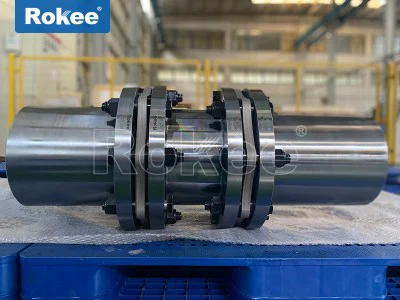
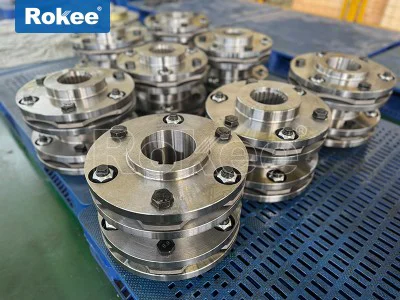
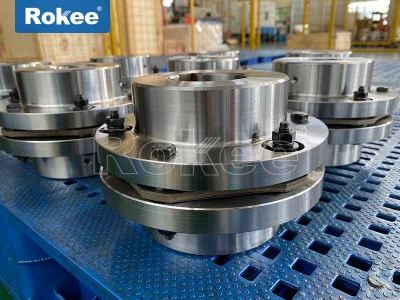
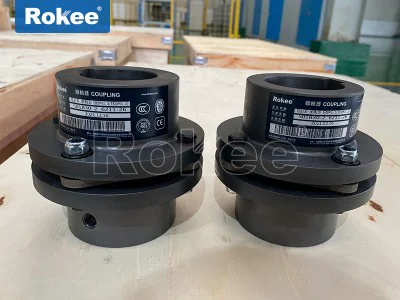
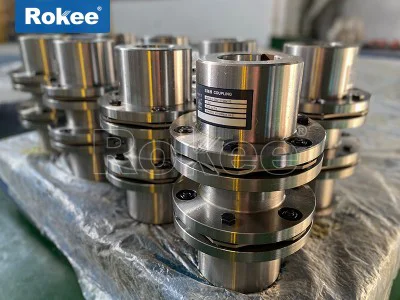
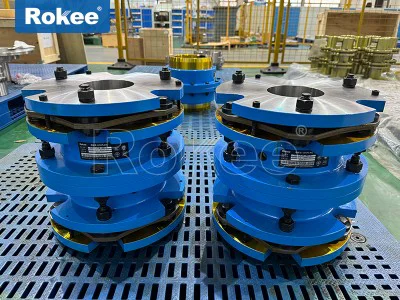
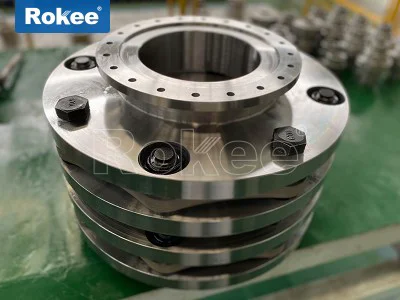
Shim pack coupling is a high-performance metal elastic element flexible coupling, which is composed of several sets of stainless steel thin plates made of membranes connected to the two halves of the coupling through bolts in a staggered manner. Each group of membranes is composed of several stacked sheets, and the relative displacement between the two connected axes is compensated by the elastic deformation of the membranes. This design makes diaphragm couplings an ideal replacement for gear couplings and other traditional couplings today.
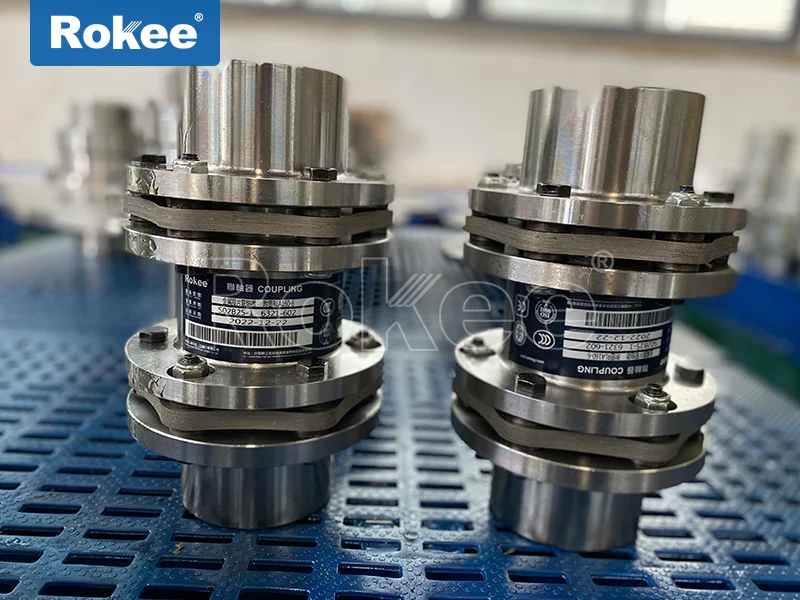
According to their structural and functional characteristics, shim pack couplings can be divided into various types:
Single shim pack coupling: composed of one diaphragm and two shaft sleeves, with a relatively simple structure, suitable for situations with low compensation requirements.
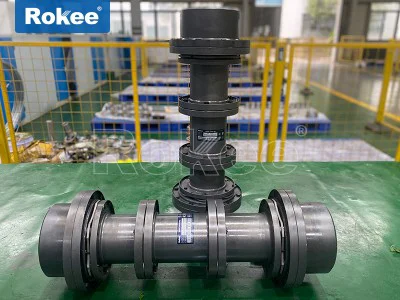
Double shim pack coupling: consisting of two diaphragm components, it has stronger deviation compensation capability and can simultaneously bend in different directions to compensate for eccentricity.
JZM heavy-duty shim pack coupling: specially designed for heavy-duty machinery, with higher torque carrying capacity and environmental adaptability.
SJM type double shim pack coupling: adopting a special structural design, suitable for harsh working conditions such as high temperature, high speed, and corrosive media.
In addition, according to different connection methods, shim pack couplings can be divided into different series such as keyway connection type, expansion sleeve connection type, etc., to meet the needs of various shaft connections. These classifications reflect the specialized development of membrane couplings in different industrial application scenarios, providing users with diverse options.
The core structure of a shim pack coupling consists of three major components: the coupling body, the diaphragm assembly, and the connecting bolts. The coupling body is usually divided into two halves, connected to the driving shaft and the driven shaft respectively; The membrane group is composed of multiple stainless steel thin plates stacked together and fixed between the two halves of the coupling by high-strength bolts in a staggered manner. This structure may seem simple, but it contains intricate mechanical design principles.
The working principle of shim pack couplings is based on the fundamental principle of metal elastic deformation. When the driving shaft transmits torque, the torque acts on the diaphragm group through the bolt, causing elastic deformation of the diaphragm and transmitting the torque to the driven shaft. During this process, the elastic deformation of the membrane can effectively compensate for axial, radial, and angular deviations between the two axes.
Specifically:
Axial displacement compensation: When two axes undergo displacement along the axis direction, the diaphragm will bend and deform to adapt to this change.
Radial displacement compensation: For cases where the two axis centerlines do not coincide, the diaphragm can absorb radial deviation through its own deflection.
Angular displacement compensation: When there is an angle between the two axes, the diaphragm group can maintain torque transmission through asymmetric deformation.
It is worth noting that the compensation capability of shim pack couplings is closely related to their structural design. The double shim pack coupling has stronger deviation compensation capability compared to the single diaphragm type, because the two sets of diaphragms can deform in different directions simultaneously, forming a more effective compensation mechanism. In addition, the thickness, material, and number of layers of the diaphragm itself directly affect the compensation performance and load-bearing capacity of the coupling.
The reason why shim pack couplings can be widely used in many industrial fields is due to their excellent technical performance and significant advantages in use.
Compared with traditional couplings, shim pack couplings exhibit a series of outstanding features:
High precision transmission: The shim pack coupling has no rotational clearance, with a transmission efficiency of up to 99.86%. It can accurately transmit speed and operate without slip, meeting the strict requirements of precision mechanical transmission.
Environmental adaptability: It can work stably within the temperature range of -80 ℃ to+300 ℃ and withstand corrosive media such as acid and alkali, suitable for harsh working conditions such as chemical and metallurgical industries.
Maintenance free design: No lubrication or sealing structure is required, reducing maintenance workload and operating costs, while avoiding pollution problems caused by lubricant leakage.
Excellent dynamic performance: It has a significant vibration reduction effect, can effectively absorb vibrations and impacts in the transmission system, operates without noise, and extends the service life of the equipment.
Compact and lightweight: simple structure, light weight, small volume, easy installation and disassembly, no need to move the machine to complete the installation and disassembly work (referring to the type with intermediate shaft).
From the technical parameters, the compensation capability of the shim pack coupling is significantly better than that of the traditional gear coupling. Its angular displacement compensation capability can reach twice that of the gear coupling, and the reaction force generated during radial displacement is smaller. For example, a certain model of shim pack coupling can withstand angular deviations of up to 1.5 degrees while generating lower bearing loads in the servo system. These characteristics make shim pack couplings particularly suitable for medium to high speed and high-power transmission scenarios, becoming the preferred component for modern industrial transmission systems.
Shim pack couplings have been widely used in many industrial fields due to their excellent performance characteristics. Its application scope covers various transmission systems from general machinery to special working condition equipment, demonstrating strong adaptability and reliability.
In the field of general industrial equipment, shim pack couplings are widely used in:
Pump equipment: especially high-power water pumps and chemical pumps, shim pack couplings can effectively resist the influence of corrosive media.
Fan system: including centrifugal fans, axial fans, etc., using the damping characteristics of diaphragms to reduce noise and vibration.
Compressor: Various gas compressors use shim pack couplings to achieve efficient and stable power transmission.
Hydraulic machinery: The shim pack coupling, which does not require lubrication, is very suitable for the cleaning requirements of hydraulic systems.
In terms of heavy machinery and special equipment, shim pack couplings play an irreplaceable role:
Mining machinery, such as crushers and ball mills, utilize the high torque transmission capability of shim pack couplings.
Metallurgical equipment such as rolling mills and continuous casting machines rely on the heat resistance of shim pack couplings in high-temperature environments.
Oil drilling and production: The key equipment on the drilling platform adopts shim pack couplings to resist harsh working conditions.
Generator set: including various high-power transmission systems in thermal, hydraulic, and nuclear power plants.
Of particular note is the increasingly widespread application of shim pack couplings in high-tech fields
Aviation power: The helicopter transmission system adopts special shim pack couplings to meet the requirements of lightweight and high reliability.
Ship propulsion: shim pack couplings are used in the ship's power system to connect the main engine and propeller, adapting to shaft deformation.
High speed railway: The transmission system of high-speed trains uses shim pack couplings to ensure stability during high-speed operation.
Robot technology: Precision shim pack couplings provide seamless power transmission for industrial robots.
These diverse applications fully demonstrate the important position of shim pack couplings as basic transmission components, and their technological development continues to drive the improvement of equipment performance in various industries.
The correct selection of shim pack couplings is a crucial step in ensuring the reliable operation of the transmission system. During the selection process, multiple factors need to be considered, including meeting basic transmission requirements and adapting to specific working conditions. The following are the main points for selecting shim pack couplings:
Basic parameter determination:
Torque characteristics: Determine the rated torque, peak torque, and starting torque according to the requirements of the transmission system. The rated torque of the coupling should be greater than the maximum working torque of the system and leave a certain safety margin.
Speed range: shim pack couplings with different structures have their applicable speed ranges, and products that have undergone precision dynamic balancing should be selected for high-speed applications.
Shaft diameter size: The aperture of the coupling must match the shaft diameter. When the main and driven end shaft diameters are different, the model should be selected according to the larger shaft diameter.
Displacement compensation: Evaluate the possible axial, radial, and angular deviations of the system and select a coupling type with sufficient compensation capability.
Consideration of adaptability to working conditions:
Environmental conditions: For high temperature, low temperature, or corrosive environments, special materials (such as stainless steel) should be selected for shim pack couplings.
Vibration and impact: For systems with strong vibration or impact loads, couplings with good vibration reduction performance should be selected.
Space limitations: In situations where installation space is limited, compact shim pack couplings become an ideal choice.
Maintenance requirements: For equipment that is difficult to maintain frequently, priority should be given to maintenance free shim pack couplings.
Installation coordination requirements:
Shaft hole form: It is recommended to use the standard shaft hole form specified in GB/T3852 (such as J1 type) to improve universality and interchangeability.
Alignment accuracy: Although shim pack couplings have the ability to compensate for deviations, it is still necessary to improve alignment accuracy as much as possible during installation to extend their service life.
Bolt tightening: It is necessary to use a torque wrench to tighten the bolts according to the specified torque, ensuring a reliable connection and not damaging the diaphragm.
It is particularly important to note that shim pack couplings are highly sensitive to installation errors. Although it can compensate for a certain degree of deviation, installation errors beyond the allowable range can lead to premature fatigue damage of the diaphragm. Generally speaking, the angular deviation should be controlled within 1.5 degrees, the radial deviation should not exceed 0.2mm, and the axial deviation should be within 0.3mm. In practical applications, controlling the deviation within one-third of the allowable value can significantly extend the life of the coupling.
The correct installation of shim pack couplings is an important prerequisite for ensuring their performance and extending their service life. Compared with ordinary couplings, shim pack couplings have higher requirements for installation processes and need to follow standardized installation procedures and operating methods.
Detailed installation steps:
Preparation in advance: Clean the surface of the shaft end and the inner hole of the coupling, check the dimensional accuracy and surface quality of the keyway and other mating parts.
Shaft hole fit: Install the coupling onto the shaft. If the hole diameter is too tight, use a special tool to press it in. It is strictly prohibited to strike it directly with a hammer.
Centering adjustment: use precision measuring tools such as dial indicator to detect the radial and end face runout of the two coupling halves to ensure that the coaxiality is within the allowable range.
Bolt tightening: Tighten the bolts in stages according to diagonal order, first pre tighten with 1/4 of the specified torque, then increase to 1/2, and finally reach the full value.
Final inspection: After installation, manually turn the wheel to check for any jamming and confirm that the clearances between various parts meet the requirements.
Key points of maintenance and upkeep:
Regular inspection: During the initial operation, the bolt tightening status should be checked daily, and any looseness should be dealt with immediately; After stable operation, the inspection cycle can be extended.
Diaphragm state: Check the diaphragm for cracks, deformations, and other damages by observing the holes or disassembling it, and replace damaged parts in a timely manner.
Environmental control: Keep the area around the coupling clean, avoid the accumulation of corrosive substances, and add protective covers in harsh environments.
Vibration monitoring: Regularly check the vibration value of the coupling. Abnormal vibration often indicates poor alignment or component damage.
Common troubleshooting:
Abnormal noise: Possible causes may include loose bolts, damaged diaphragms, or excessive alignment deviation. The machine should be stopped for inspection.
Increased vibration: In most cases, it is caused by changes in the alignment state and requires re alignment; It may also be caused by membrane fatigue.
Temperature rise: caused by abnormal friction of bearings or couplings, check the alignment and lubrication status.
Diaphragm fracture: Usually caused by long-term overload or fatigue use, the diaphragm needs to be replaced and the system load checked.
It is worth noting that although membrane couplings are maintenance free, they still require regular inspection. It is recommended to conduct a comprehensive inspection every 6-12 months of operation, and shorten the inspection cycle under harsh conditions such as high temperature and high speed. Proper installation and maintenance not only ensure stable operation of the transmission system, but also extend the service life of the shim pack coupling to more than 10 years, significantly reducing equipment lifecycle costs.
In the future, with the advancement of Industry 4.0 and intelligent manufacturing, shim pack couplings will develop towards higher precision and intelligence. The application of digital design platforms and intelligent manufacturing systems will shorten the product development cycle, improve production efficiency and consistency quality. At the same time, the popularization of green manufacturing concepts has prompted enterprises to pay more attention to the environmental friendliness of their products throughout their entire lifecycle, and these trends will profoundly affect the development direction of membrane coupling technology and the market.
A shim pack coupling is a type of high-performance metal flexible coupling widely used in industrial power transmission systems, designed to connect two rotating shafts to transmit torque while compensating for relative displacements that may occur between them. Unlike rigid couplings that require precise alignment and cannot accommodate any misalignment, shim pack couplings leverage the elastic deformation of their core components to achieve both torque transmission and deviation compensation, making them indispensable in various modern industrial applications where operational stability and adaptability are critical. The design of shim pack couplings is based on the principle of utilizing thin metal sheets (shims) stacked together to form a flexible element, which can undergo slight elastic deformation under external forces, thereby absorbing axial, angular, and in some cases radial displacements between the connected shafts without causing excessive stress on the shaft system or adjacent equipment. This unique structural design not only ensures efficient power transmission but also extends the service life of the entire transmission system by reducing vibration and wear.
The structure of a shim pack coupling is relatively compact yet sophisticated, consisting of several key components that work together seamlessly to deliver its core functions. At the heart of the coupling is the shim pack, also known as the laminated group, which is composed of multiple thin metal sheets stacked in a specific arrangement. These metal sheets are typically made of high-strength, corrosion-resistant materials such as stainless steel or high-alloy steel, selected for their excellent elastic properties, fatigue resistance, and ability to withstand harsh operating conditions. The thickness of each individual shim usually ranges from a fraction of a millimeter to a few millimeters, and the number of shims in a pack can vary depending on the required flexibility, torque capacity, and displacement compensation range of the coupling. The shims are precision-stamped or laser-cut into specific shapes, commonly circular, polygonal, or concave arc, with a series of evenly distributed mounting holes around their circumference. The number of these holes, which can be 4, 6, 8, or more, is determined by the size of the coupling and the torque it needs to transmit, as more holes typically allow for a more uniform distribution of stress across the shim pack.
In addition to the shim pack, the basic structure of a shim pack coupling includes two half-couplings (hubs) that are mounted on the driving and driven shafts respectively. These half-couplings are usually machined from high-strength metal materials to ensure they can withstand the torque and rotational forces generated during operation. The half-couplings are designed with flanges that have matching mounting holes corresponding to those on the shim pack, allowing the entire assembly to be secured together using high-strength bolts. The bolts pass through the holes in the shim pack and the half-coupling flanges, clamping the shim pack tightly between the two half-couplings. In some designs, bushings or washers are used between the bolts and the shim pack holes to reduce friction, prevent wear, and ensure precise alignment of the components. Depending on the application requirements, some shim pack couplings may also include auxiliary components such as intermediate shafts, spacers, or collars. Intermediate shafts are used when the distance between the driving and driven shafts is too large for a single-section coupling, while spacers help adjust the axial length of the coupling assembly. Collars, on the other hand, are used to secure the half-couplings to the shafts, preventing axial movement during operation.
The way in which the components interact determines the overall functionality of the shim pack coupling. When the driving shaft rotates, it transmits torque to the connected half-coupling, which in turn transfers this torque to the shim pack through the bolts. The shim pack, being a flexible element, undergoes slight elastic deformation as it transmits the torque to the other half-coupling, which then drives the driven shaft. When there is relative displacement between the two shafts—such as axial movement (towards or away from each other), angular misalignment (where the shafts are not perfectly coaxial), or in some cases radial misalignment (where the shafts are offset parallel to each other)—the shim pack absorbs these deviations through its own bending or torsional deformation. This deformation is elastic, meaning the shim pack returns to its original shape once the displacement is eliminated, ensuring consistent performance over time. The precision machining of all components is crucial to the performance of the coupling, as any irregularities in the shim shape, hole alignment, or half-coupling flange surface can lead to uneven stress distribution, increased vibration, and premature failure.
The performance characteristics of shim pack couplings are what make them stand out among other types of couplings, particularly in demanding industrial environments. One of the most notable performance features is their high torque transmission capacity. Despite their compact size, shim pack couplings can transmit large amounts of torque due to the high-strength materials used in their construction and the efficient torque distribution across the shim pack. The torque capacity varies depending on factors such as the number and thickness of the shims, the size of the coupling, the material of the shims, and the number of mounting bolts. In general, couplings with thicker shims, more shims, or larger diameters have higher torque capacities, making them suitable for use in heavy-duty applications such as large pumps, compressors, and turbines.
Another key performance characteristic is their ability to compensate for multiple types of shaft misalignment. Most shim pack couplings are highly effective at compensating for axial and angular displacements, which are common in industrial systems due to thermal expansion, mounting errors, or structural deflection during operation. Axial displacement compensation is particularly important in applications where the shafts expand or contract due to temperature changes, as the coupling can absorb this movement without putting stress on the shafts or bearings. Angular misalignment compensation allows the coupling to function even when the driving and driven shafts are not perfectly aligned, which is often the case in large machinery where precise alignment is difficult to maintain. Some specialized designs of shim pack couplings can also compensate for small amounts of radial misalignment, further enhancing their adaptability. The amount of displacement that a shim pack coupling can compensate for depends on the design of the shim pack, with more flexible shim packs (composed of thinner, more numerous shims) able to accommodate larger displacements.
Shim pack couplings are also known for their maintenance-free operation, which is a significant advantage in industrial settings where downtime for maintenance can be costly. Unlike gear couplings, which require regular lubrication to prevent wear and corrosion, or rubber flexible couplings, which degrade over time and need to be replaced, shim pack couplings have no moving parts that require lubrication and are resistant to wear and tear. The metal shims are highly durable and can withstand prolonged use without significant degradation, provided they are operated within their design limits. This maintenance-free nature not only reduces operational costs but also increases the reliability and uptime of the equipment they are used in.
High temperature and corrosion resistance are additional performance benefits of shim pack couplings, making them suitable for use in harsh operating environments. The stainless steel or high-alloy steel used in the shim pack and half-couplings is inherently resistant to corrosion from chemicals, moisture, and other corrosive substances, which is essential in applications such as chemical processing, marine engineering, and wastewater treatment. These materials also have high melting points and can withstand elevated temperatures, allowing the couplings to operate in high-temperature environments such as power generation plants, steel mills, and industrial furnaces. In some cases, the shims may be coated with specialized materials to further enhance their corrosion or high-temperature resistance, expanding their range of applications.
Vibration damping is another important performance characteristic of shim pack couplings. The elastic deformation of the shim pack helps to absorb and dampen vibrations generated during the operation of the connected equipment. This vibration damping effect reduces the transmission of vibrations from the driving shaft to the driven shaft, and vice versa, which helps to protect sensitive components such as bearings, seals, and electrical equipment from damage caused by excessive vibration. Reduced vibration also improves the overall stability and performance of the entire transmission system, leading to smoother operation and longer service life of all components involved.
Torsional stiffness is a performance characteristic that varies depending on the design of the shim pack coupling. Some designs are highly torsionally stiff, meaning they have minimal torsional deformation under torque, which is ideal for applications that require precise torque transmission and synchronization, such as precision machinery and robotics. Other designs are more torsionally flexible, allowing for greater torsional deformation, which is beneficial in applications where vibration damping is a priority or where there are slight variations in torque. The ability to tailor the torsional stiffness of shim pack couplings makes them suitable for a wide range of applications with different performance requirements.
Shim pack couplings are available in several different types, each designed to meet specific application requirements in terms of torque capacity, displacement compensation, shaft size, and operating environment. The classification of these types is typically based on their structural design, particularly the number of shim packs, the arrangement of the half-couplings, and the presence of auxiliary components such as intermediate shafts.
One of the most common types is the single-section shim pack coupling. This type consists of a single shim pack clamped between two half-couplings, with no intermediate components. It is compact in design, lightweight, and easy to install, making it suitable for applications where the distance between the driving and driven shafts (shaft spacing) is small. Single-section shim pack couplings are available in both standard and customized sizes, with torque capacities ranging from low to high. They are particularly well-suited for small to medium-sized equipment such as industrial process pumps, fans, blowers, and small motors, where they can compensate for moderate axial and angular displacements while transmitting torque efficiently. Some single-section designs are not capable of compensating for radial misalignment, making them more suitable for applications where radial offset is minimal or non-existent.
Another common type is the double-section shim pack coupling. This type features two shim packs, each clamped between a half-coupling and an intermediate flange or spacer. The two shim packs are arranged in series, with the intermediate component connecting them. Double-section couplings are designed to accommodate larger shaft spacings than single-section couplings, as the intermediate component can be adjusted to increase the distance between the two half-couplings. They also offer improved displacement compensation capabilities, particularly for angular misalignment, as the two shim packs can deform independently to absorb deviations. This makes double-section shim pack couplings suitable for applications where the shaft spacing is large or where there are significant angular misalignments, such as in large compressors, turbines, and conveyor systems. Like single-section couplings, double-section designs are available in a range of sizes and torque capacities to meet different application needs.
Reverse-installation shim pack couplings are a specialized type designed for applications where the shaft head distance is limited. In these designs, the half-couplings are installed in a reverse orientation, with the flanges facing inward towards the shim pack rather than outward. This reverse installation reduces the overall axial length of the coupling assembly, making it suitable for use in tight spaces where there is limited room for the coupling. Reverse-installation couplings are available in both single-shaft sleeve and double-shaft sleeve designs. Single-shaft sleeve reverse-installation couplings have one shaft sleeve that is reversed, while double-shaft sleeve designs have both shaft sleeves reversed. These couplings are commonly used in equipment such as gearboxes, small motors, and precision machinery where space is a critical constraint.
Customized shim pack couplings are another type, designed to meet the specific requirements of unique or specialized applications. These couplings can be tailored in terms of size, torque capacity, displacement compensation range, material, and structural design to suit the particular needs of the equipment or industry. For example, customized couplings may have thicker shims for higher torque capacity, specialized materials for extreme temperatures or corrosion resistance, or unique shim shapes for improved displacement compensation. Customized shim pack couplings are often used in high-end industrial applications such as nuclear power, aerospace, and precision manufacturing, where standard couplings cannot meet the stringent performance requirements.
The applications of shim pack couplings are extensive and span across a wide range of industries, thanks to their versatile performance characteristics and adaptability. One of the primary industries where shim pack couplings are widely used is the power generation industry. In power plants, both thermal and nuclear, shim pack couplings are used to connect turbines, generators, pumps, and compressors. The high torque capacity, high temperature resistance, and maintenance-free operation of these couplings make them ideal for use in power generation equipment, where reliability and efficiency are critical. For example, in steam turbines, shim pack couplings connect the turbine shaft to the generator shaft, transmitting large amounts of torque while compensating for axial displacements caused by thermal expansion and angular misalignments due to the large size of the equipment.
The oil and gas industry is another major user of shim pack couplings. In this industry, couplings are used in a variety of equipment, including pumps, compressors, drilling rigs, and pipelines. The corrosion resistance of shim pack couplings is particularly important in offshore oil and gas operations, where the equipment is exposed to saltwater and other corrosive substances. The ability to compensate for shaft misalignments is also crucial in drilling rigs and pipelines, where the equipment may be subject to structural movement or vibration. Shim pack couplings are used in both onshore and offshore applications, helping to ensure the reliable operation of critical oil and gas equipment.
The chemical processing industry also relies heavily on shim pack couplings. In chemical plants, couplings are used in pumps, mixers, reactors, and other equipment that handles corrosive chemicals, high temperatures, and high pressures. The corrosion resistance and high temperature resistance of shim pack couplings make them suitable for use in this harsh environment, where other types of couplings may degrade quickly. Additionally, the vibration damping capabilities of these couplings help to protect sensitive chemical processing equipment from damage caused by vibration, ensuring the safety and efficiency of the production process.
The manufacturing industry is another key application area for shim pack couplings. In manufacturing plants, these couplings are used in a wide range of equipment, including conveyor systems, machine tools, robotics, and packaging machinery. Single-section shim pack couplings are commonly used in small to medium-sized manufacturing equipment, such as fans, blowers, and small pumps, while double-section and customized couplings are used in larger or more specialized equipment, such as heavy-duty conveyors and precision machine tools. The ability to tailor the performance characteristics of shim pack couplings makes them suitable for use in both general manufacturing and precision manufacturing applications, where different levels of torque, displacement compensation, and vibration damping are required.
The automotive and aerospace industries also use shim pack couplings in specialized applications. In the automotive industry, these couplings are used in high-performance vehicles, electric vehicles, and automotive manufacturing equipment. For example, in electric vehicles, shim pack couplings are used to connect the electric motor to the drivetrain, transmitting torque efficiently while compensating for shaft misalignments. In the aerospace industry, customized shim pack couplings are used in aircraft engines, landing gear systems, and other critical components, where lightweight design, high torque capacity, and reliability are essential. The high strength-to-weight ratio of shim pack couplings makes them suitable for aerospace applications, where every gram of weight savings is important.
Other industries that use shim pack couplings include the marine industry, where they are used in ship propulsion systems, pumps, and generators; the steel and metallurgy industry, where they are used in rolling mills, furnaces, and other heavy-duty equipment; and the water and wastewater treatment industry, where they are used in pumps and mixers that handle corrosive wastewater. In each of these industries, shim pack couplings play a critical role in ensuring the reliable and efficient operation of the equipment, reducing downtime and maintenance costs.
In conclusion, shim pack couplings are versatile and high-performance metal flexible couplings that offer a unique combination of torque transmission, displacement compensation, durability, and maintenance-free operation. Their compact and sophisticated structure, consisting of a shim pack, half-couplings, and optional auxiliary components, allows them to adapt to a wide range of operating conditions and application requirements. The performance characteristics of these couplings, including high torque capacity, excellent displacement compensation, high temperature and corrosion resistance, vibration damping, and customizable torsional stiffness, make them suitable for use in a diverse array of industries. With various types available, including single-section, double-section, reverse-installation, and customized designs, shim pack couplings can meet the specific needs of almost any industrial power transmission application. As industrial technology continues to advance, the demand for shim pack couplings is expected to grow, particularly in high-end and specialized industries where reliability, efficiency, and adaptability are paramount. Their ability to withstand harsh operating conditions, reduce maintenance costs, and extend the service life of equipment makes them an indispensable component in modern industrial power transmission systems.