Curved Jaw Couplings
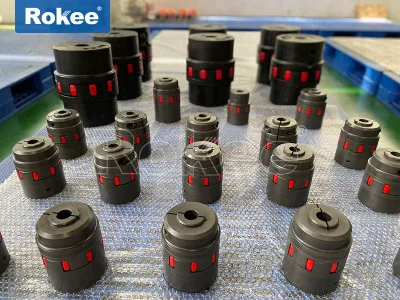
Curved jaw coupling is a commonly used type of elastic coupling, named after its structural characteristics resembling interlocking claws. This type of coupling transmits torque through elastic elements and can compensate for certain axial, radial, and angular deviations, playing an important role in industrial transmission systems.
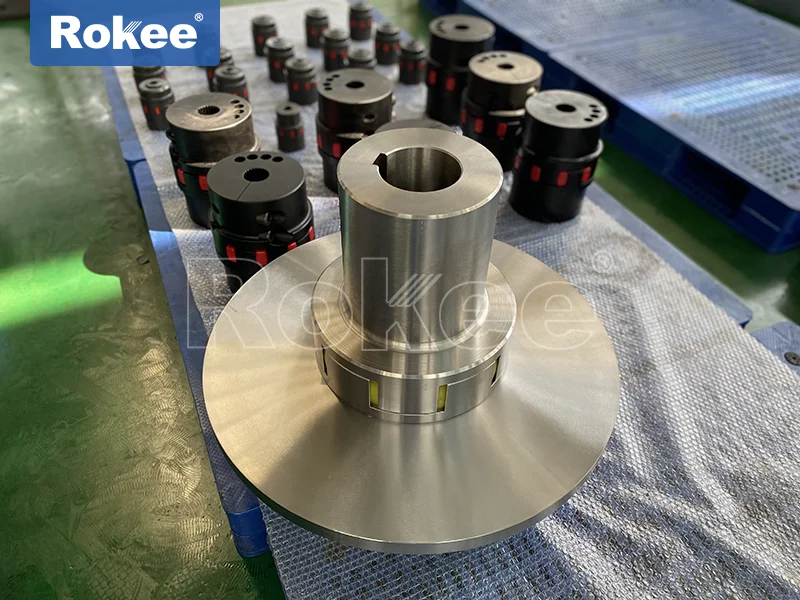
Main components
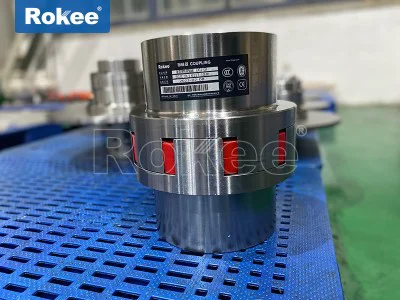
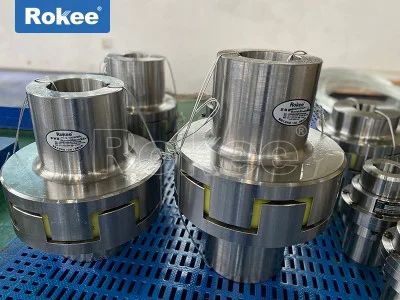
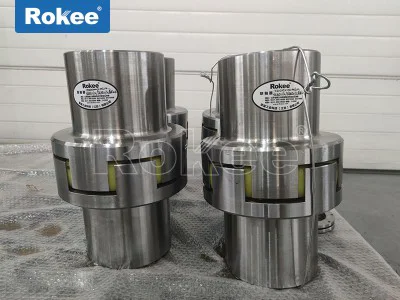
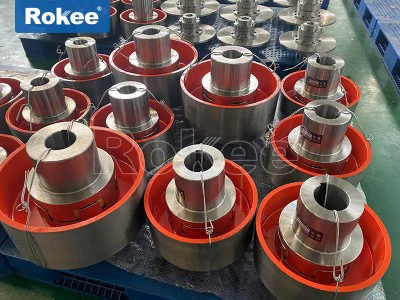
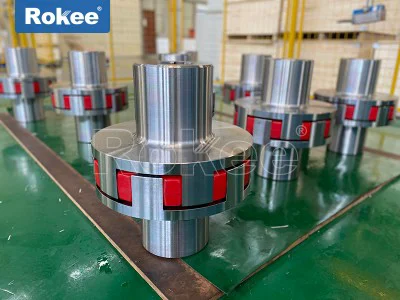
Two metal flanges: typically made of aluminum alloy, steel, or stainless steel, each flange end has multiple curved protrusions ("claws")
Elastic body (spider): a star shaped component made of polyurethane, rubber, or other elastic materials, located between two flanges
Tightening components: bolts, nuts, etc. used to fix the coupling and shaft end
When power is input from one end, the claws on the driving side transmit torque to the claws on the driven side by compressing the elastic body. Elastic bodies absorb vibrations and impacts while transmitting torque, and allow for a certain degree of axial deviation.
Advantages:
Shock absorption and buffering: Elastic components effectively absorb vibrations and impact loads
Deviation compensation: can compensate for angular deviation of 0.5 ° -3 ° and radial deviation of 0.1-0.5mm
Easy to maintain: no lubrication required, easy replacement of elastomers
Stable torque transmission: seamless transmission, smooth start and stop
Electrical insulation: elastomers provide electrical isolation to prevent stray currents
limitations:
Limited compensation capability, not suitable for large deviation situations
The elastomer has aging issues and requires regular inspection
Performance will decrease in high temperature environments (generally operating temperature range -40 ℃ to+100 ℃)
The main types of curved jaw couplings
Standard curved jaw coupling: The most common form, suitable for general industrial applications
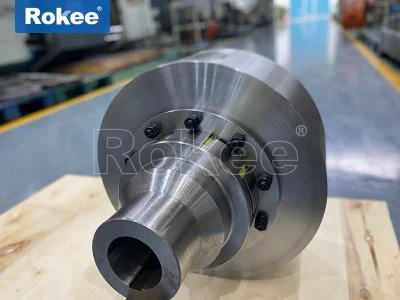
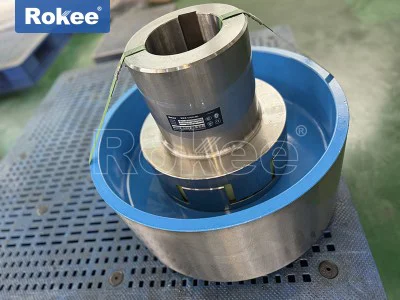
Heavy duty curved jaw coupling: increased size and strength for high torque applications
Micro curved jaw coupling: miniaturized design for precision instruments and small equipment
Special material coupling: such as stainless steel material used in special industries such as food and medicine
Key points for selecting claw type couplings
Torque demand: Calculate the torque required by the system (including peak torque)
Speed range: Consider the maximum allowable speed of the coupling
Shaft diameter matching: Choose a coupling that is suitable for connecting the shaft size
Environmental conditions: Effects of temperature, humidity, chemicals, etc. on elastomers
Deviation requirement: Evaluate the amount of axis deviation that the system may produce
Space limitations: Consider size constraints for installation space
Application fields of curved jaw couplings
General industrial machinery: pumps, fans, compressors, etc
Automation equipment: robots, CNC machine tools
Food processing equipment: specially designed to meet hygiene requirements
Packaging machinery: occasions requiring precise transmission
Power generation equipment: connection of small generator sets
Installation steps:
Check the size matching between the shaft end and the coupling
Clean the contact surface between the shaft and coupling
Assemble using the correct method (avoid hammering)
Uniformly tighten the bolts to the specified torque
Check the axial clearance and coaxiality
Maintenance suggestion:
Regularly check the wear of the elastomer
Observe the vibration and noise during the operation of the coupling
Check the bolt tightening status every 6-12 months
The replacement cycle of elastomers is generally 3-5 years (depending on the usage conditions)
Record maintenance history and replacement component information
Curved jaw couplings have been widely used in the field of industrial transmission due to their advantages of simple structure, reliable performance, and easy maintenance. The correct selection and use of curved jaw couplings can effectively improve the efficiency of transmission systems and extend the service life of equipment, making them an indispensable key component in modern mechanical design.
Curved jaw couplings, also widely referred to as spider jaw couplings in the mechanical transmission industry, stand as one of the most versatile and commonly deployed elastic coupling variants across global industrial sectors. Engineered to bridge the gap between driving and driven shafts while mitigating operational inefficiencies caused by misalignment, vibration, and shock loads, these couplings integrate a thoughtfully crafted structural design that balances durability, flexibility, and functional reliability. Unlike rigid couplings that demand perfect shaft alignment and offer no tolerance for operational deviations, curved jaw couplings deliver a harmonious blend of torque transmission capability and adaptive flexibility, making them indispensable in countless mechanical systems where smooth power delivery and equipment protection are non-negotiable priorities.
At its core, the curved jaw coupling operates on a simplified yet highly efficient three-piece structural framework, with no overly complex components that hinder installation, maintenance, or replacement. The foundational elements consist of two symmetrically designed metallic hubs and a single elastic intermediate element, commonly known as a spider, which sits snugly between the two hubs to facilitate power transfer and absorb mechanical stress. Each metallic hub features a series of curved, interlocking protrusions—often termed jaws or claws—arranged in a radial pattern around the central bore designed to fit onto the shaft. The curvature of these jaws is a defining structural feature that sets this coupling apart from straight jaw alternatives; the rounded contour of the jaws ensures uniform contact with the elastic spider, distributing pressure evenly across the elastomer surface and eliminating concentrated stress points that could lead to premature wear or failure. This curved profile also enhances the coupling’s ability to accommodate minor shaft misalignments without compromising torque transmission efficiency, a critical advantage in real-world operating conditions where perfect shaft alignment is rarely achievable.
The metallic hubs are typically fabricated from high-strength engineering metals, selected based on the operational demands of the target application. Common materials include carbon steel, stainless steel, and aluminum alloy, each offering unique mechanical properties tailored to specific environmental and performance needs. Carbon steel hubs excel in heavy-duty applications requiring exceptional torque capacity and structural rigidity, withstanding high rotational forces and mechanical stress without deformation. Stainless steel hubs, meanwhile, are preferred for applications exposed to corrosive substances, moisture, or extreme temperature fluctuations, as they resist rust, oxidation, and chemical degradation, maintaining structural integrity in harsh operating environments. Aluminum alloy hubs, prized for their lightweight nature and excellent machinability, are ideal for precision-driven, low-to-medium load applications where reduced rotational inertia and quick response times are essential, such as in automated machinery and precision transmission systems. The central bore of each hub is precision machined to match shaft diameters, with options for keyway connections, set screws, or clamping designs to ensure a secure, slip-free attachment to the driving and driven shafts, preventing power loss during operation.
The elastic spider, the heart of the curved jaw coupling’s flexible performance, is a star-shaped component manufactured from high-grade elastomeric materials, predominantly polyurethane, nitrile rubber, or natural rubber compounds. These materials are chosen for their optimal balance of elasticity, wear resistance, and damping properties, which enable the spider to absorb torsional vibrations, cushion sudden shock loads, and compensate for minor shaft misalignments while reliably transmitting torque between the hubs. The lobes of the spider are precisely shaped to interlock with the curved jaws of the hubs, creating a tight, uniform fit that eliminates backlash in many operational configurations, a key benefit for systems requiring precise motion control. The elastomer’s hardness can be customized to match specific application requirements, with softer compounds offering superior vibration damping and misalignment accommodation, and harder compounds delivering enhanced torque transmission and reduced deflection for high-load, high-speed scenarios. Importantly, the spider acts as a physical barrier between the two metallic hubs, preventing direct metal-to-metal contact during operation. This not only reduces friction and wear on the hub jaws but also minimizes noise generation and eliminates the need for lubrication, streamlining maintenance routines and reducing long-term operational costs.
The structural synergy between the curved metallic hubs and the elastic spider gives rise to a suite of exceptional performance characteristics that make curved jaw couplings a top choice across diverse mechanical systems. Foremost among these is their ability to compensate for multiple forms of shaft misalignment, including angular misalignment, parallel misalignment, and axial displacement, within specified operational limits. While not designed for extreme misalignment scenarios, these couplings effectively handle moderate deviations that commonly occur due to manufacturing tolerances, thermal expansion, equipment vibration, or installation inaccuracies, preventing excessive stress on shafts, bearings, and connected machinery components. This misalignment compensation directly extends the service life of critical equipment, reducing downtime and repair frequency in industrial settings.
Another standout performance trait is superior vibration damping and shock absorption. In mechanical systems driven by motors, engines, or other power sources, rotational imbalances, sudden load changes, and operational vibrations are inevitable, and these forces can cause premature wear, component fatigue, and even catastrophic failure if left unaddressed. The elastic spider in curved jaw couplings acts as a natural shock absorber, compressing and rebounding to absorb vibrational energy and cushion sudden impact loads, smoothing out power delivery and protecting delicate downstream components. This damping effect also reduces operational noise, creating a quieter working environment in industrial facilities and enhancing overall system stability. Additionally, curved jaw couplings offer reliable torque transmission across a wide range of rotational speeds, from low-speed, high-torque heavy machinery to high-speed precision equipment, with consistent performance and minimal power loss. The absence of lubrication requirements translates to maintenance-free operation in most cases, with only periodic visual inspections needed to assess the condition of the elastic spider; when wear or degradation occurs, the spider can be quickly replaced without disassembling the entire coupling or removing the hubs from the shafts, further boosting operational efficiency.
Curved jaw couplings also exhibit strong adaptability to varied environmental conditions, with the elastomeric spider and metallic hub materials resisting common industrial contaminants such as oil, grease, dust, and mild chemicals. Standard elastomer compounds perform reliably within moderate temperature ranges, while specialized formulations can withstand extreme high or low temperatures for specialized applications, expanding the coupling’s operational versatility. Electrical insulation is another valuable performance feature, as the non-conductive elastomer spider prevents the transfer of stray electrical currents between shafts, safeguarding sensitive electronic components and control systems in automated and precision machinery from electrical damage. While these couplings boast numerous advantages, they do have inherent performance limitations: they are not suitable for applications requiring extreme misalignment compensation, and the elastomeric spider is subject to gradual aging and degradation with prolonged use, particularly in harsh environments, necessitating routine monitoring to ensure optimal performance.
Curved jaw couplings are categorized into distinct types based on structural design, material composition, load capacity, and application-specific features, each tailored to address unique operational requirements across different industrial sectors. The most prevalent classification is based on operational load and size, encompassing standard duty, heavy duty, and miniature curved jaw couplings. Standard duty curved jaw couplings represent the most widely used variant, designed for general-purpose industrial applications with moderate torque loads, average rotational speeds, and routine environmental conditions. These couplings feature balanced hub dimensions and elastomer hardness, offering a versatile solution for everyday power transmission needs, and are suitable for the vast majority of light-to-medium duty machinery across manufacturing and processing industries.
Heavy duty curved jaw couplings are engineered to withstand extreme torque loads, high rotational forces, and rigorous operating conditions, featuring reinforced metallic hubs with thicker cross-sections, larger jaw profiles, and high-density, high-hardness elastomer spiders. These robust couplings are built to handle heavy machinery and high-load transmission systems, delivering exceptional durability and resistance to mechanical stress, making them ideal for applications involving heavy industrial equipment and continuous high-load operation. In contrast, miniature curved jaw couplings feature compact, lightweight designs with reduced dimensions and smaller load capacities, crafted for precision instruments, small-scale automated equipment, and delicate mechanical systems where space is limited and low inertia is critical. These miniaturized couplings maintain the core curved jaw design and flexible performance but are scaled to fit tight installation spaces and support low-torque, high-precision power transmission without compromising accuracy.
Material-based classification further differentiates curved jaw couplings to suit specialized environmental and operational needs. Standard metal hub couplings, typically crafted from carbon steel, serve general industrial applications with neutral environmental conditions, offering cost-effective performance and reliable durability. Corrosion-resistant couplings, constructed with stainless steel hubs and chemical-resistant elastomer spiders, are engineered for environments with high moisture, corrosive chemicals, or sanitation requirements, such as food and beverage processing, pharmaceutical manufacturing, and marine applications. Lightweight precision couplings, featuring aluminum alloy hubs, cater to high-speed automation, robotics, and CNC machinery, where reduced weight and minimal rotational inertia enhance system responsiveness and precision. Additionally, some curved jaw couplings are classified by design modifications, such as split-hub designs for easy installation and maintenance without shaft disassembly, or single-piece hub designs for enhanced structural rigidity in high-speed applications, each addressing specific installation and operational pain points.
The unique combination of structural simplicity, flexible performance, and adaptable design makes curved jaw couplings a staple in an extensive array of industrial and commercial applications, spanning nearly every sector that relies on mechanical power transmission. In general industrial machinery, these couplings are ubiquitous in pumps, fans, compressors, blowers, and conveyors, where they connect motors to rotating equipment, absorb operational vibrations, and compensate for minor shaft misalignments to ensure consistent, reliable performance. Their maintenance-free design and shock absorption capabilities make them particularly well-suited for continuous-operation industrial machinery, reducing downtime and maintenance overhead for manufacturing and processing facilities.
In the realm of automation and precision manufacturing, curved jaw couplings play a pivotal role in robotics, CNC machine tools, assembly lines, and precision conveying systems. The zero-backlash performance and precise torque transmission of these couplings ensure accurate motion control, positioning, and operational repeatability, critical for maintaining product quality and production efficiency in automated manufacturing environments. Their lightweight variants are especially valued in robotic arms and compact automated systems, where they deliver reliable power transfer without adding excessive weight or inertia.
Specialized industrial sectors also rely heavily on curved jaw couplings for their tailored performance attributes. In food and beverage processing and pharmaceutical manufacturing, corrosion-resistant, hygienic curved jaw couplings meet strict sanitation and cleanliness standards, with stainless steel construction and chemical-resistant elastomers resisting degradation from cleaning agents, moisture, and process materials. In agricultural and construction machinery, these couplings connect engines to hydraulic pumps, mixers, and other working components, withstanding the shock loads, vibrations, and harsh outdoor conditions inherent to heavy-duty field equipment. In power generation systems, curved jaw couplings link generators to drive motors or turbines, providing stable torque transmission and protecting power generation components from mechanical stress and misalignment-related damage.
Beyond these core sectors, curved jaw couplings find utility in material handling equipment, packaging machinery, textile manufacturing equipment, printing presses, and a host of other mechanical systems where reliable power transmission, vibration damping, and misalignment tolerance are essential. Their widespread adoption stems not only from their functional versatility but also from their cost-effective, low-maintenance design, which delivers long-term value for operators across diverse industries. As mechanical engineering and industrial automation continue to evolve, the demand for curved jaw couplings remains steady, with ongoing material and design refinements enhancing their performance, durability, and adaptability to meet the evolving needs of modern mechanical systems.
In summary, curved jaw couplings represent a masterclass in mechanical design simplicity paired with exceptional functional performance, combining a straightforward three-piece structure with versatile performance traits that address key pain points in power transmission systems. Their unique curved jaw design, elastic damping capabilities, and adaptable material options enable them to accommodate misalignment, absorb shock, reduce vibration, and transmit torque reliably across a vast spectrum of applications. From general industrial machinery to high-precision automation, and from light-duty equipment to heavy-duty industrial systems, curved jaw couplings continue to prove their worth as a foundational component in modern mechanical engineering. By understanding their structural mechanics, performance characteristics, classification nuances, and practical applications, engineers and equipment designers can select and implement these couplings effectively, optimizing system performance, extending equipment lifespan, and enhancing overall operational efficiency across every industrial sector they serve.