Disc Membrane Couplings
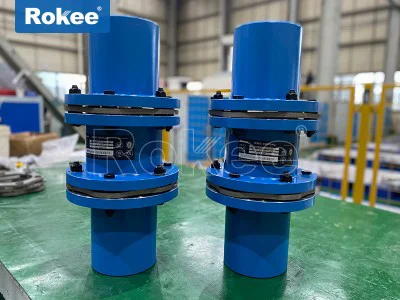
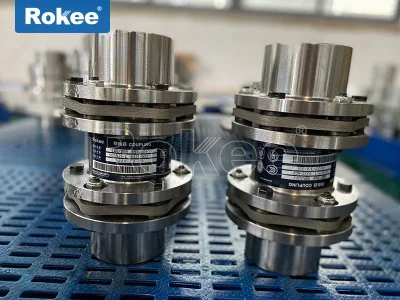
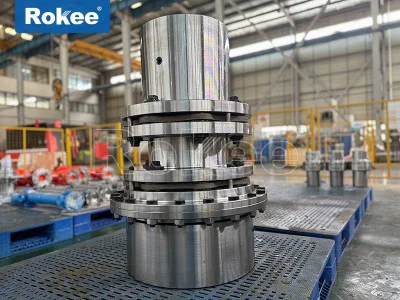
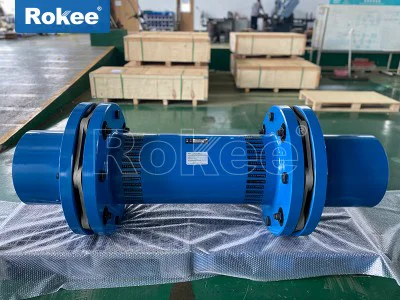
Disc membrane coupling is a high-performance flexible coupling device that achieves torque transmission and displacement compensation through the elastic deformation of metal diaphragms.
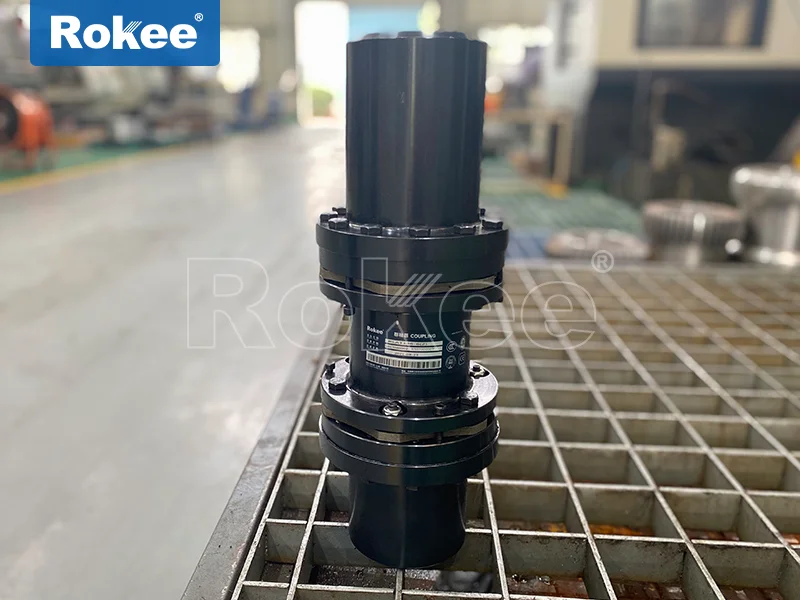
The core structure includes:
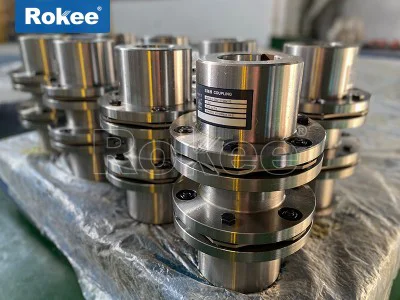
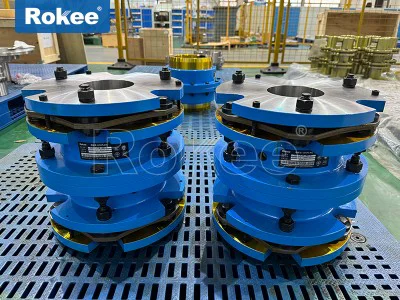
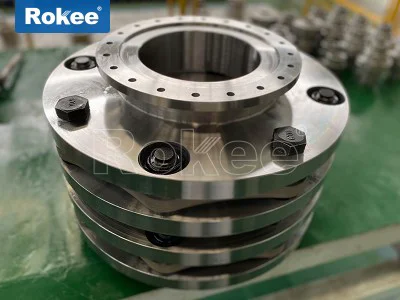
Diaphragm component: composed of multiple layers of stainless steel thin plates stacked together, forming a specific corrugated structure through precision stamping or laser cutting, and undertaking the main functions of force transmission and deformation compensation.
Flange connection system: Adopting high-strength bolt pre tightening connection to ensure the stability of torque transmission, some models are equipped with conical interference fit to improve assembly accuracy.
Auxiliary support mechanism: Integrated spherical support and elastic pre tensioning device, can provide radial stiffness of ≥ 800N/mm, while achieving self centering function.
Working principle and performance advantages
Displacement compensation capability:
Axial compensation: 0.5-3mm (through elastic deformation of the diaphragm)
Radial compensation: ± 0.2mm
Angular compensation: ± 0.5 °Dynamic characteristics:
Vibration suppression: reduce the unbalanced response of the rotor system by 15% -20%
Critical speed regulation: Increases the first-order critical speed of the system by 12.4% -16.77%Environmental adaptability:
Temperature range: -80 ℃ to+300 ℃
Corrosion resistance: Suitable for acidic and alkaline media environments, no lubrication required
The disc membrane coupling with its non-contact transmission and maintenance free characteristics, is gradually replacing traditional gear couplings and becoming the preferred solution for modern industrial transmission. Proper selection and standardized installation can extend its lifespan to over 10 years, significantly reducing the total lifecycle cost.
In the realm of mechanical power transmission, disc membrane couplings stand as one of the most versatile and high-performance flexible coupling solutions, engineered to bridge rotating shafts while addressing critical operational challenges such as misalignment, torque transmission, and vibration damping. Unlike elastomeric couplings that rely on rubber or plastic components for flexibility, disc membrane couplings utilize thin, precision-formed metal discs as the core flexible elements, delivering a unique blend of torsional rigidity, misalignment compensation, and long-term durability across diverse industrial operating conditions. These couplings have become indispensable in modern mechanical systems, catering to applications that demand precision, reliability, and resistance to extreme environments, from small-scale precision machinery to heavy-duty industrial drive trains.
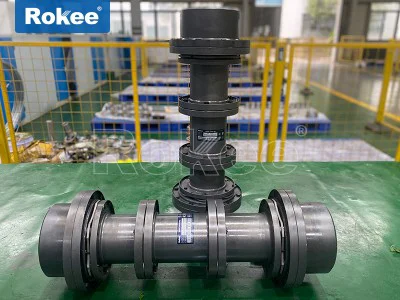
At its core, the structure of a disc membrane coupling is elegantly engineered, consisting of several key components that work in seamless harmony to transmit torque and accommodate shaft misalignment without compromising power transfer efficiency. The primary flexible elements are the metal disc packs, typically fabricated from high-strength alloy steel or stainless steel, chosen for their exceptional fatigue resistance, tensile strength, and ability to withstand repeated elastic deformation. These thin, flat disc membranes are stacked in precise configurations and secured between two hub assemblies—one attached to the driving shaft and the other to the driven shaft—via high-precision fasteners such as bolts or rivets, which ensure uniform load distribution across the disc surface. The hub designs vary based on application requirements, with options ranging from simple clamp-style hubs for quick installation to tapered bore hubs for enhanced torque grip, all machined to tight tolerances to maintain concentricity and dynamic balance during rotation. Many disc membrane couplings also feature a spacer component between the two disc packs, a design element that extends the distance between the driving and driven shafts, simplifies maintenance access, and reduces the transfer of axial thrust between connected equipment. Unlike gear couplings or jaw couplings that feature sliding or meshing moving parts, disc membrane couplings operate with no relative motion between friction surfaces, eliminating wear caused by friction and minimizing the need for lubrication, a structural trait that directly boosts their service life and reduces maintenance overhead. The entire assembly is precision balanced to minimize rotational vibration, making it suitable for high-speed operation where even minor imbalances can trigger premature component failure and system instability.
The performance characteristics of disc membrane couplings are a direct product of their structural design, setting them apart from other flexible coupling types and making them ideal for demanding operational scenarios. Foremost among these traits is their exceptional torsional rigidity, which ensures zero backlash during torque transmission—an critical attribute for precision-driven systems where positional accuracy and synchronous rotation are non-negotiable. This zero-backlash operation eliminates lost motion, enabling consistent power delivery and precise control in applications such as automated machinery and precision tooling. Simultaneously, the flexible metal discs provide effective compensation for multiple forms of shaft misalignment, including angular misalignment, parallel misalignment, and axial displacement, which are common in real-world mechanical installations due to manufacturing tolerances, thermal expansion, or mechanical settling. Unlike rigid couplings that transfer misalignment stresses directly to shafts and bearings, causing premature wear and failure, disc membrane couplings absorb these stresses through controlled elastic deformation of the metal discs, protecting connected equipment and extending the service life of bearings, seals, and other vulnerable components. Another standout performance feature is their ability to operate efficiently across extreme temperature ranges, from sub-zero cold to high-heat environments, as the metal disc materials maintain their mechanical properties without degradation, unlike elastomeric components that harden, crack, or soften under temperature fluctuations. Additionally, disc membrane couplings exhibit excellent resistance to corrosion, oil, and chemical exposure, making them suitable for harsh industrial settings where contaminants are prevalent. They also offer low moment of inertia, a key benefit for high-speed drive systems as it reduces energy consumption during acceleration and deceleration cycles and minimizes centrifugal forces at elevated rotational speeds. While they provide effective vibration damping to reduce torsional shock and resonant vibrations, they do not isolate excessive vibration like highly flexible elastomeric couplings, striking a balanced compromise between rigidity and flexibility that suits most industrial drive applications.
Disc membrane couplings are categorized into distinct types based on structural variations, each tailored to specific load capacities, misalignment requirements, and spatial constraints, ensuring a suitable configuration for nearly every power transmission scenario. The most fundamental classification is based on the number of disc packs integrated into the assembly, namely single-disc membrane couplings and double-disc membrane couplings. Single-disc membrane couplings feature a single set of flexible metal discs connecting the two hubs, resulting in a compact, lightweight design with enhanced lateral flexibility. This type excels in applications with limited axial space and low to moderate torque loads, offering superior compensation for angular and parallel misalignment; however, it has limitations in handling high torque outputs and large axial displacements, making it ideal for small precision instruments, light-duty motors, and compact automated equipment. Double-disc membrane couplings, by contrast, incorporate two separate disc packs with a central spacer between them, creating a symmetric, balanced structure that boosts torque transmission capacity and misalignment compensation range. The dual-disc design distributes torsional and bending stresses more evenly, significantly enhancing the coupling’s load-bearing capabilities and fatigue life, while the central spacer allows for greater axial shaft separation and reduces heat transfer between connected machines. This type is the most widely used across general industrial applications, balancing performance, size, and cost-effectiveness for medium to heavy-duty operations. Beyond the single and double-disc classifications, disc membrane couplings are further differentiated by hub design and assembly configuration, including flanged couplings, clamp-style couplings, and tapered bore couplings. Flanged disc membrane couplings feature robust flanged hubs, delivering exceptional torque capacity and rigidity for heavy industrial machinery such as pumps, fans, and compressors, where high load transmission is critical. Clamp-style couplings offer tool-free, quick installation and disassembly, ideal for applications requiring frequent maintenance or component replacement, with a secure grip that prevents slippage under load. Tapered bore couplings provide a tight, interference fit between the hub and shaft, maximizing torque transfer efficiency and eliminating axial movement, making them perfect for high-speed, high-precision systems such as turbine drives and machine tool spindles. Additionally, specialized disc membrane couplings are designed for extreme operating conditions, including high-temperature variants with heat-resistant disc materials and corrosion-resistant models coated or fabricated from stainless steel alloys, tailored for marine, chemical processing, and high-temperature industrial environments.
The unique combination of structural integrity, reliable performance, and diverse design options makes disc membrane couplings applicable across an extensive spectrum of industries and mechanical systems, serving as a critical link in ensuring smooth and efficient power transmission. In the manufacturing and automation sector, they are extensively used in precision machinery such as CNC machine tools, robotic arms, servo motor drives, and positioning systems, where zero backlash, high precision, and consistent torque delivery are essential for maintaining machining accuracy and operational repeatability. The low inertia and vibration damping properties of these couplings also enhance the responsiveness of automated systems, enabling rapid acceleration and precise positioning without excessive wear. In the general industrial machinery domain, disc membrane couplings are the go-to choice for pumps, fans, blowers, conveyors, and mixers, handling medium to high torque loads while compensating for shaft misalignment caused by thermal expansion or operational settling. Their maintenance-free design and resistance to oil and contaminants make them particularly well-suited for continuous-operation industrial setups where downtime must be minimized. The energy and power generation industry relies heavily on disc membrane couplings for turbine drives, generator sets, centrifugal compressors, and boiler feed pumps, where high-speed operation, extreme temperatures, and heavy loads are standard. The torsional rigidity and fatigue resistance of these couplings ensure stable power transmission in critical power generation equipment, reducing the risk of costly unplanned outages. In the marine and offshore sector, corrosion-resistant disc membrane couplings are employed in ship propulsion systems, winches, and auxiliary machinery, withstanding saltwater exposure, mechanical shock, and variable load conditions while maintaining reliable performance. The aerospace and transportation industries also utilize specialized disc membrane couplings in aircraft auxiliary power units, automotive test equipment, and rail vehicle drive systems, leveraging their lightweight construction, high strength, and ability to operate under demanding dynamic loads. Furthermore, disc membrane couplings find utility in food and beverage processing, pharmaceutical manufacturing, and textile machinery, where hygienic, contamination-free operation and resistance to cleaning agents are required, as their all-metal construction avoids particle shedding and is easy to sanitize. Even in small-scale applications such as medical devices, laboratory equipment, and optical instrumentation, compact disc membrane couplings deliver precise, reliable power transmission without compromising accuracy or introducing unwanted vibration.
In summary, disc membrane couplings represent a pinnacle of flexible coupling engineering, merging robust structural design, exceptional performance metrics, and adaptable configurations to meet the evolving demands of modern mechanical power transmission. Their metal disc-based flexible design eliminates the drawbacks of elastomeric and gear couplings, offering zero backlash, misalignment compensation, low maintenance, and long service life across a broad range of operating conditions. The diverse types of disc membrane couplings—from compact single-disc units for light precision applications to heavy-duty double-disc and flanged models for industrial heavyweights—ensure compatibility with nearly every shaft connection requirement, regardless of load capacity, speed, or environmental constraints. As industrial technology continues to advance toward higher precision, greater efficiency, and more extreme operating conditions, the role of disc membrane couplings will only grow in significance, serving as a reliable and indispensable component in critical mechanical systems worldwide. Their ability to balance rigidity and flexibility, durability and adaptability, cements their status as a cornerstone solution for seamless, efficient, and long-lasting power transmission in countless industrial and commercial applications, proving that even the most seemingly minor mechanical components can have a profound impact on overall system performance and reliability.