Cross Cardan Shafts
As a key component in mechanical transmission systems, the cross cardan shaft plays an irreplaceable role in modern industrial equipment. This sophisticated mechanical device can solve the transmission problem of axis misalignment and is widely used in various fields from heavy machinery to precision equipment.
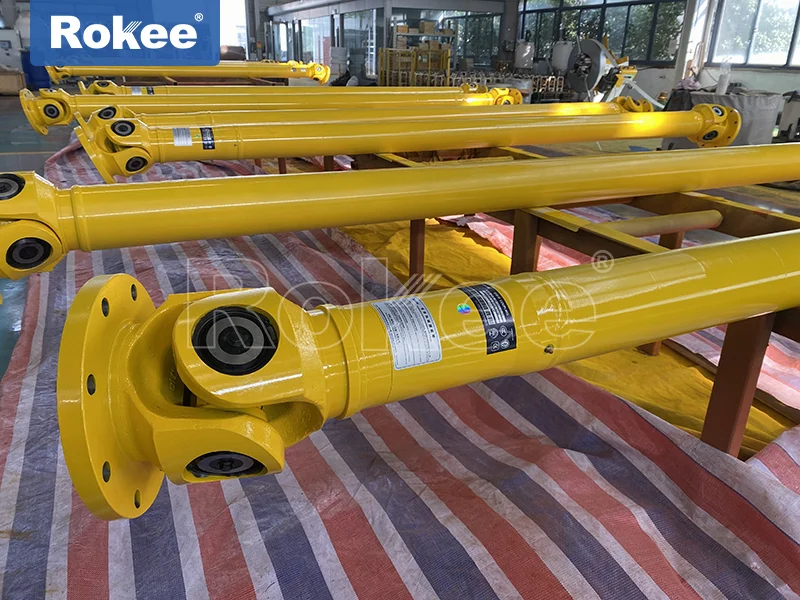
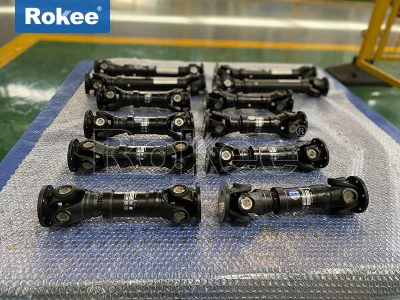
Cross cardan shaft is a universal coupling device used to connect different axis transmission shafts. This mechanical component can effectively solve the problem of misalignment of the axis in the transmission system and achieve efficient transmission of torque and motion. Its core function is to achieve power transmission in the presence of an angle between two axes (usually within the range of 5 ° -45 °) or non coaxial working conditions, and provide angular compensation capability of more than 25 ° and axial displacement adaptability, which makes it irreplaceable in the field of industrial transmission.
The working principle of the cross cardan shaft is based on the classic Hooke hinge principle. Its core structure consists of two universal joint forks and a cross shaft, which are connected to the bearings on the two universal joint forks through four journals on the cross shaft. When the driving shaft rotates, it drives the driven shaft to rotate through the cross shaft, while allowing for a certain degree of angular deviation between the two shafts. It is worth noting that a single cross cardan shaft has an inherent characteristic when transmitting power: when there is an angle between the two shafts, the output shaft speed will experience periodic fluctuations, even if the input shaft speed remains constant. This non-uniform characteristic needs to be eliminated or reduced through special arrangements in engineering applications.
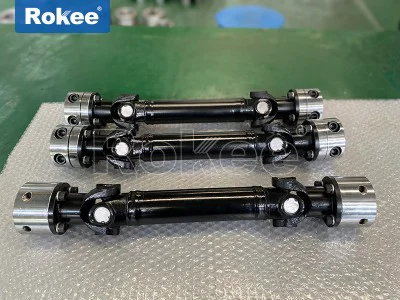
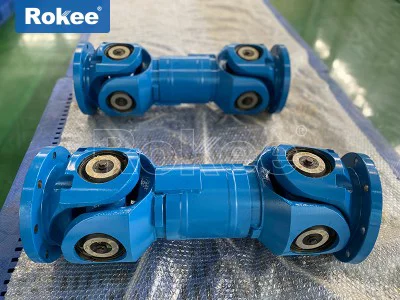
Cross universal shafts can be divided into various types according to their structural forms, among which the most common is the traditional cross shaft type, also known as the cross pin type universal shaft. This structure consists of two universal joint forks and a cross shaft, which are connected by four bearings on the cross shaft, allowing for angular deflection in two planes. Another important type is the ball cage universal joint, which adopts a spherical shell and cage structure, containing multiple steel balls as force transmission elements inside, and can achieve smoother constant speed transmission. In addition, there are various structural variants such as ball fork, convex block, and three pin, each designed for specific application needs. According to the load-bearing capacity, the cross cardan shaft product series is usually divided into four levels: heavy, medium, light, and small.
In the vast landscape of mechanical power transmission systems, the cross Cardan shaft stands as one of the most fundamental and indispensable components, engineered to address the longstanding challenge of transmitting torque and rotational motion between two shafts that are not collinear. Unlike rigid couplings that demand perfect axial alignment, this specialized shaft assembly leverages a unique cross-shaped core structure to accommodate angular misalignments, axial displacements, and even minor radial offsets between driving and driven shafts, ensuring uninterrupted power flow across a wide spectrum of operating conditions. Its versatility and reliability have cemented its status as a cornerstone part in countless mechanical setups, spanning light-duty precision equipment to heavy-duty industrial machinery, and its design has evolved continuously over decades to meet the increasingly stringent demands of modern engineering applications. Every aspect of the cross Cardan shaft, from its internal structural composition to its performance parameters and functional classifications, is tailored to balance durability, efficiency, and adaptability, making it a subject worthy of in-depth exploration for engineers, technicians, and industry professionals alike.
At its core, the cross Cardan shaft features a streamlined yet robust structural design that prioritizes load-bearing capacity and flexibility. The central element is the cross journal, a precision-machined component with four perpendicular stub shafts arranged in a cruciform shape, which serves as the pivotal connection between two yoke assemblies. Each end of the cross journal is fitted with high-precision bearing units, typically needle roller bearings or plain sliding bearings, which minimize friction during rotational movement and support the heavy radial and axial loads imposed during operation. These bearings are encased in bearing caps or housings that secure them firmly to the yokes, preventing lateral movement and maintaining structural integrity even under dynamic stress. The two yoke components, usually forged from high-strength alloy steel for enhanced toughness, are shaped in a Y-form or fork-like configuration, with one yoke attached to the input driving shaft and the other to the output driven shaft. The cross journal fits snugly between the two yokes, creating a articulated joint that allows the yokes to pivot freely in two perpendicular planes, enabling the transmission of motion even when the connected shafts are inclined at a significant angle to one another. Additional supporting elements may include splined shafts for axial length adjustment, protective dust covers to shield internal bearings from contaminants like dust, moisture, and debris, and lubrication channels to ensure consistent oil distribution across friction surfaces, all of which work in tandem to extend the service life and maintain optimal performance of the entire shaft assembly.
The performance characteristics of the cross Cardan shaft are defined by a unique set of mechanical properties that distinguish it from other transmission components, making it suitable for diverse operational environments. Foremost among these is its exceptional angular compensation capability, which allows it to handle misalignment angles ranging from a few degrees to over 45 degrees in specialized heavy-duty models, a feature that is critical in applications where shaft alignment cannot be guaranteed due to installation constraints, mechanical vibration, or structural movement. This flexibility eliminates the need for precise on-site alignment during installation, reducing assembly time and simplifying maintenance procedures for complex machinery. Secondly, the cross Cardan shaft boasts high torque transmission efficiency, with minimal power loss during operation, thanks to the low-friction bearing design and optimized structural geometry that reduces energy dissipation caused by friction and misalignment. Even under maximum load conditions, the shaft maintains a high level of mechanical efficiency, ensuring that the vast majority of input power is transferred to the driven component without waste. Thirdly, it exhibits outstanding load-bearing performance and structural rigidity, capable of withstanding heavy torsional loads, impact shocks, and cyclic stresses that are common in heavy industrial and automotive applications. The use of high-grade forged steel and precision heat treatment processes enhances the shaft’s resistance to fatigue, bending, and wear, allowing it to operate reliably over extended periods without deformation or failure. Additionally, the cross Cardan shaft offers smooth and stable rotational transmission, especially in advanced dual-joint configurations, minimizing velocity fluctuations, vibration, and noise that can compromise the performance of sensitive equipment. It also demonstrates strong adaptability to varying operating speeds, functioning efficiently across both low-speed, high-torque scenarios and high-speed, moderate-torque applications, further expanding its operational versatility. Finally, the shaft features moderate maintenance requirements, with durable bearing components and sealed designs that reduce the frequency of lubrication and part replacement, though regular inspection of wear and lubrication levels remains essential to prevent premature failure.
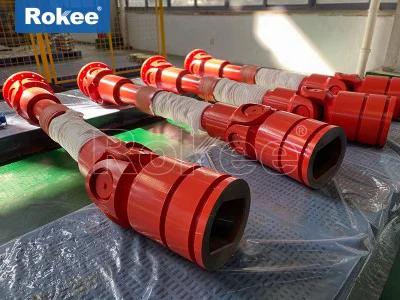
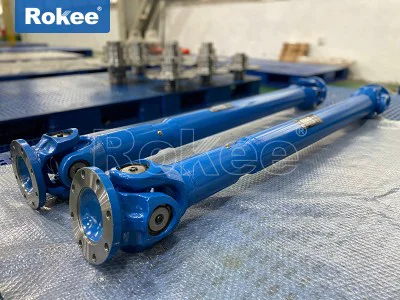
Cross Cardan shafts are categorized into distinct types based on structural design, functional features, load-bearing capacity, and intended operating conditions, each tailored to address specific transmission challenges and application requirements. The most basic and widely used classification is based on the number of universal joints integrated into the assembly, namely single joint cross Cardan shafts and double joint cross Cardan shafts. Single joint models consist of one cross journal and two yokes, forming a simple articulated joint that is compact, cost-effective, and easy to manufacture. These shafts are ideal for applications with moderate angular misalignments and light to medium load requirements, where space is limited and simplicity is prioritized. However, single joint shafts exhibit slight velocity fluctuations during rotation at larger angles, leading to minor vibration, which makes them less suitable for high-precision or high-speed equipment. Double joint cross Cardan shafts, by contrast, feature two separate universal joints connected by an intermediate shaft or tube, a design that effectively cancels out velocity variations and rotational imbalances caused by angular misalignment. This configuration delivers near-constant velocity transmission, significantly reducing vibration and noise, and is capable of handling larger misalignment angles and heavier loads, making it the preferred choice for high-speed, high-precision, and heavy-duty applications. Another key classification is based on axial adjustability, dividing shafts into fixed-length non-telescopic types and telescopic types with splined axial adjustment. Non-telescopic cross Cardan shafts have a fixed overall length, offering maximum structural rigidity and load-bearing capacity, making them suitable for applications where the distance between driving and driven shafts remains constant throughout operation. Telescopic models incorporate a splined shaft and sleeve assembly that allows for controlled axial length variation, compensating for thermal expansion, mechanical movement, or installation tolerances that cause changes in shaft spacing, and are widely used in scenarios where shaft distance fluctuates dynamically. Cross Cardan shafts are also classified by load-bearing capacity into light-duty, medium-duty, and heavy-duty variants. Light-duty models are designed for small-scale precision equipment, featuring compact dimensions, low weight, and moderate torque capacity, while medium-duty models strike a balance between size and strength, catering to general industrial machinery and automotive components. Heavy-duty cross Cardan shafts are engineered with reinforced cross journals, thicker yokes, and oversized bearings, built to withstand extreme torsional loads, impact forces, and harsh operating conditions in heavy industrial settings. Additionally, specialized custom cross Cardan shafts are available for unique applications, featuring modified structural designs, materials, or dimensions to meet specific operational constraints, such as high-temperature resistance, corrosion resistance, or ultra-compact installation spaces.
The adaptability and reliable performance of cross Cardan shafts have led to their extensive deployment across nearly every sector of mechanical engineering, with each application leveraging the shaft’s unique capabilities to solve specific transmission challenges. In the automotive industry, cross Cardan shafts are integral components of vehicle drivetrains, used in drive shafts to transmit power from the transmission or transfer case to the drive wheels, accommodating the vertical movement of suspension components and angular misalignments between the chassis and axle assemblies. They are also widely used in steering systems, enabling smooth and precise steering control by transmitting rotational motion between the steering column and steering gear, even as the steering linkage moves during vehicle operation. Beyond passenger vehicles, they are essential in heavy commercial vehicles, off-road equipment, and agricultural tractors, where they handle high torque loads and extreme misalignments in rugged working environments. In the agricultural machinery sector, cross Cardan shafts are critical for power transmission in equipment such as rotary tillers, harvesters, balers, and seeders, connecting the tractor’s power take-off (PTO) shaft to various implements and adapting to the uneven terrain and variable operating angles encountered in field work. Their ability to withstand dust, dirt, and moisture makes them particularly well-suited for the harsh agricultural operating environment, ensuring consistent power delivery for efficient farming operations. In heavy industrial machinery, cross Cardan shafts play a vital role in metallurgical equipment, mining machinery, rolling mills, and crushing equipment, transmitting high torque between large drive motors and working components while compensating for structural deformation and vibration in heavy-duty production lines. They are also used in material handling equipment such as cranes, conveyors, and elevators, enabling reliable power transmission in dynamic lifting and transport operations. In the marine industry, cross Cardan shafts are employed in ship propulsion systems and auxiliary machinery, transmitting power from marine engines to propellers, pumps, and other onboard equipment, accommodating the movement of the ship’s hull and misalignments caused by wave motion. Additionally, they find widespread use in aerospace support equipment, construction machinery, textile machinery, packaging equipment, and pump and compressor systems, wherever non-collinear shaft power transmission is required. From small precision instruments to large-scale industrial production lines, the cross Cardan shaft remains a versatile and irreplaceable component, adapting to evolving technological advancements and continuing to meet the diverse transmission needs of modern industry.
As mechanical engineering continues to advance toward higher efficiency, greater durability, and smarter design, the cross Cardan shaft remains a vital part of power transmission systems, with ongoing innovations in materials, manufacturing processes, and structural design further enhancing its performance and expanding its application scope. The development of high-strength lightweight alloys and advanced composite materials is reducing the weight of cross Cardan shafts while maintaining or improving their load-bearing capacity, contributing to energy savings in various equipment. Precision manufacturing technologies such as CNC machining, precision forging, and advanced heat treatment are enhancing the dimensional accuracy and surface quality of shaft components, reducing friction and wear, and extending service life. Additionally, optimized structural designs and sealed maintenance-free bearing systems are minimizing maintenance requirements and improving operational reliability in hard-to-access or harsh environments. Despite the emergence of alternative transmission technologies, the unique ability of the cross Cardan shaft to accommodate misalignment and transmit torque reliably ensures its enduring relevance in mechanical engineering. Its simple yet effective design, combined with exceptional performance and versatility, makes it a timeless solution for non-collinear power transmission, and it will continue to serve as a critical component in countless mechanical systems, supporting the operation of modern industry and technological progress for years to come.
Coupling Categories
Links:
Related Articles
- Jul 8, 2026Technical Requirements Of Cross Cardan Shaft In PU Sandwich Panel Line
- Jul 8, 2026Cross Cardan Shaft Improves The Transmission Reliability And Accuracy Of PU Sandwich Panel Line
- Jul 8, 2026Lubrication Technology Upgrading And Application Of Cross Cardan Shaft In PU Sandwich Panel Line
- Jul 8, 2026Case Analysis Of Integrated Application Of Cross Cardan Shaft And PU Sandwich Panel Line
- Dec 23, 2025Expansion And Contraction Of Cross Cardan Shaft
- Sep 30, 2025Function Of Cross Cardan Shaft
- Sep 26, 2025Model of Cross Cardan Shaft