Cardan Couplings
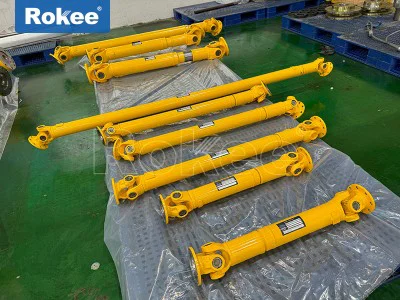
As a key component in mechanical transmission systems, cardan couplings play an irreplaceable role in modern industrial equipment. It can effectively solve the power transmission problem in the case of axis misalignment and angular deviation, and is widely used in various fields from precision automotive transmission to heavy metallurgical machinery.
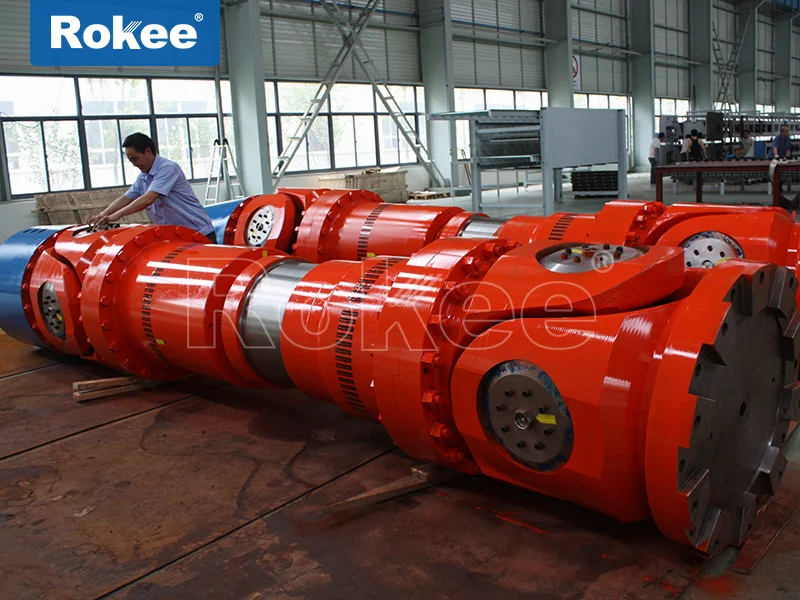
Cardan coupling is a mechanical device that can achieve continuous rotation and reliably transmit torque and motion in the presence of an angle between two axes. Its core function is to compensate for axial, radial, and angular deviations in the transmission system, and solve the problem of shaft misalignment caused by manufacturing errors, installation deviations, load deformation, or thermal expansion. This unique performance makes universal couplings an indispensable component in complex mechanical transmission systems.
Structurally, the cardan coupling utilizes the principle of hinge mechanism to achieve multi-directional rotational freedom through special structures such as cross shafts and ball cages. When the driving shaft rotates, power is transmitted to the driven shaft through an intermediate transmission mechanism, which maintains the continuity of motion even if there is a certain angle between the two shafts. This design not only solves the problem of axis misalignment, but also buffers and reduces vibration, improving the dynamic performance of the entire shaft system. The transmission efficiency of universal couplings is usually high, the structure is relatively compact, and it can achieve power transmission with large angle deflection in a limited space.
From a material perspective, universal couplings are often made of high-strength alloy steel, carbon steel, or special composite materials. Key components undergo precision machining and heat treatment to ensure sufficient strength, wear resistance, and fatigue life. The bearing part usually uses needle or roller bearings to reduce friction losses, and some high-speed products also undergo dynamic balancing treatment to ensure smooth operation. The design of the lubrication system is also crucial, as good lubrication can significantly extend the service life of the coupling. Modern high-end products are often equipped with automatic lubrication systems or adopt maintenance free designs.
The development of universal couplings has formed diverse structural forms, each with its unique advantages and application scenarios. According to the transmission principle and structural characteristics, common universal couplings in the market can be divided into various types such as cross shaft type, ball cage type, ball fork type, three pin type, etc. They each have their own emphasis on compensation ability, transmission efficiency, speed limit, and service life. A deep understanding of the characteristic differences among these structural types is the foundation for correct selection and application.
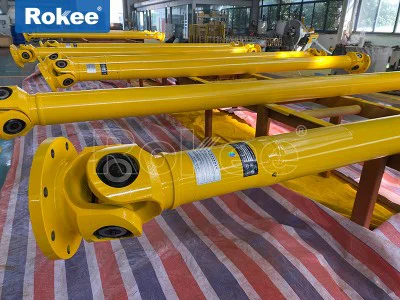
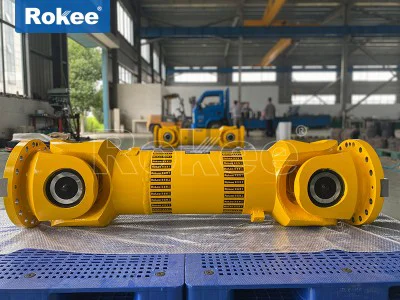
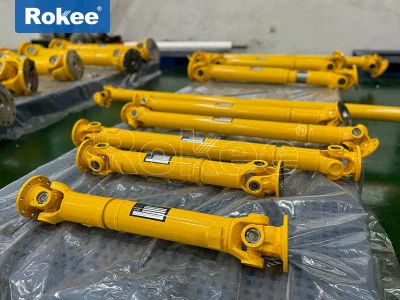
The cross axis cardan coupling is the most traditional and common type, consisting of two Y-shaped or U-shaped cardan coupling forks and a cross axis. The four necks of the cross shaft are connected to two forks through needle roller bearings, forming a hinge structure. The advantages of this design are simple structure, low manufacturing cost, easy maintenance, and the ability to adapt to larger torque transmission requirements. Its disadvantage is that the output speed is uneven when used in a single section, which can generate additional dynamic loads. Therefore, in practical applications, a double coupling structure is often used to eliminate speed fluctuations by reasonably arranging the phase relationship between the two cross couplings. The allowable angle between the two axes of the cross axis cardan coupling is usually 15 ° -25 °, and can reach 45 ° in heavy-duty designs. It is widely used in industrial fields such as metallurgy, mining, and construction machinery. According to the different bearing seat structures, the cross shaft type can be divided into various forms such as SWC type integral fork head type, SWP type partial bearing seat type, and SWZ type integral bearing seat type, which are suitable for different load conditions and installation space limitations.
The ball cage cardan coupling (also known as the constant velocity cardan coupling) uses spherical raceways and steel balls as transmission components, ensuring that the instantaneous angular velocity of the input and output shafts is always consistent through precise geometric relationships. This structure has smooth transmission and low vibration noise, making it particularly suitable for high-speed operation. The most common application is in automotive drive shafts. The ball cage cardan coupling usually allows a working angle of up to 22 ° -25 °, and special designs can reach up to 47 °. The internal steel balls move along the precision machined raceway under the guidance of the cage, with low friction loss and high efficiency. According to the different shapes of the raceway, the cage type is divided into fixed type (RF) and telescopic type (VL). The former is used for the wheel end, while the latter is used for the differential end, together forming a complete automotive drive shaft system. In addition to the automotive industry, ball cage cardan couplings are gradually being applied in fields such as industrial robots and precision machine tools that require high transmission stability.
The ball joint plunger cardan coupling represents another innovative design concept, which adopts a spherical hinge structure and a plunger type force transmission mechanism, combining large angle compensation capability and compact structural dimensions. This type of coupling usually consists of two connecting plates and three or more force transmitting arm pairs, and power transmission is achieved through a ball joint socket connection. Its single section swing angle can reach 42.5 °, and special models even support high tilt angle operation of 75 °, far higher than traditional cross axis products. Another significant advantage of the ball joint plunger type is its compact structure. Under the same rotation diameter conditions, its axial size is much smaller than that of the cross shaft coupling, making it very suitable for installation in situations where space is limited. At the same time, this design naturally has good dynamic balance performance and can adapt to high-speed operation requirements. In heavy load and limited space scenarios such as metallurgical rolling mills and mining hoisting machinery, ball joint plunger universal couplings demonstrate significant advantages.
In addition to the three mainstream types mentioned above, the cardan coupling family also includes various variants such as ball fork type, three pin type, and convex block type. The ball fork transmission is achieved through a spherical fork head and a groove, with a simple structure but fast wear and tear; The three pin type adopts three pin shafts and a special contour cam plate, which can achieve constant speed transmission and is mainly used for the inner cardan coupling of front wheel drive vehicles; The convex block type utilizes the engagement between the convex block and the groove to transmit torque, and has overload protection function. Each structural type has its own advantages, and in practical selection, multiple factors such as torque capacity, speed range, compensation capability, space limitations, and cost budget need to be comprehensively considered.
A cardan coupling, also commonly referred to as a universal joint coupling, is a critical mechanical transmission component designed to connect two shafts that are not perfectly aligned, enabling the reliable transmission of torque and rotational motion even when there are angular, axial, or radial deviations between the shafts. Its versatility and robust design have made it an indispensable part of numerous industrial and mechanical systems, spanning from heavy machinery to precision equipment. The fundamental design of a cardan coupling is rooted in the principles of mechanical geometry and dynamics, leveraging articulated structures to accommodate misalignments while maintaining efficient power transfer. Unlike rigid couplings that require precise alignment between shafts, cardan couplings offer a flexible solution that can adapt to installation errors, thermal expansion, or dynamic displacements during operation, thereby reducing wear on connected components and extending the overall service life of the system.
The structure of a cardan coupling is relatively compact yet highly functional, with its core components working together to achieve flexible torque transmission and misalignment compensation. While there are variations in design across different types of cardan couplings, most share a set of basic components that form the foundation of their operation. At the heart of a typical cardan coupling is the cross-shaped intermediate member, often called a spider, which features four arms extending outward at right angles to each other. This spider is connected to two yokes, which are U-shaped components attached to the ends of the driving and driven shafts. Each yoke is fitted with bearings at the ends of its arms, allowing the spider to rotate freely within the yokes. The bearings, which are commonly needle rollers or sliding bearings, reduce friction between the spider and the yokes, ensuring smooth rotation and minimizing energy loss during operation. In some designs, the bearings may be sealed to prevent the ingress of dust, debris, or moisture, which can degrade performance and shorten the service life of the coupling. Additionally, many cardan couplings incorporate a grease fitting, a small opening that allows for periodic lubrication of the bearings and spider, further reducing wear and ensuring consistent performance over time. The yokes themselves are typically machined from high-strength materials to withstand the torque and stresses encountered during operation, and they are attached to the shafts using methods such as keyways, set screws, or shrink fits to ensure a secure connection that does not slip under load. Some advanced designs may also include a sleeve or housing that encloses the spider and bearings, providing additional protection and stability, especially in harsh operating environments.
The performance of a cardan coupling is defined by a set of key characteristics that determine its suitability for different applications, including torque capacity, misalignment compensation capability, transmission efficiency, rotational speed range, durability, and resistance to environmental factors. Torque capacity is one of the most critical performance metrics, as it refers to the maximum amount of torque that the coupling can transmit without suffering damage or failure. This capacity is primarily determined by the material strength of the spider, yokes, and bearings, as well as the design of the coupling itself. Heavy-duty cardan couplings, designed for use in industrial machinery such as rolling mills and construction equipment, can transmit extremely high torques, often measured in thousands of Newton-meters, while lighter-duty couplings used in precision equipment may have lower torque capacities but offer greater precision. Another key performance characteristic is misalignment compensation, which is the ability of the coupling to accommodate angular, axial, and radial deviations between the driving and driven shafts. Angular misalignment, which is the angle between the two shafts, is the most common type of misalignment that cardan couplings are designed to handle, with most standard designs capable of accommodating angles ranging from 5 degrees to 45 degrees, depending on the type and size of the coupling. Axial misalignment, which is the linear displacement between the shafts along their axes, and radial misalignment, which is the offset between the shafts perpendicular to their axes, can also be compensated for by certain cardan coupling designs, although the range of compensation for these types of misalignment is typically smaller than that for angular misalignment.
Transmission efficiency is another important performance factor, as it measures the percentage of power that is transferred from the driving shaft to the driven shaft without being lost to friction or other inefficiencies. High-quality cardan couplings typically have transmission efficiencies ranging from 98% to 99.8%, making them highly efficient power transmission components. This high efficiency is largely due to the use of low-friction bearings and the streamlined design of the spider and yokes, which minimize energy loss during rotation. The rotational speed range of a cardan coupling refers to the maximum and minimum speeds at which the coupling can operate reliably without generating excessive vibration, noise, or wear. This range is influenced by factors such as the design of the coupling, the quality of the bearings, and the balance of the components. Some cardan couplings are designed for high-speed applications, such as those used in automotive drive shafts or precision machine tools, and can operate at speeds exceeding 10,000 revolutions per minute (RPM), while others are designed for low-speed, heavy-duty applications and operate at much lower speeds. Durability is also a key performance characteristic, as cardan couplings are often used in harsh operating environments where they are exposed to high loads, vibrations, temperature extremes, and corrosive substances. The durability of a cardan coupling is determined by the materials used in its construction, the quality of the manufacturing process, and the level of maintenance it receives. High-strength materials such as alloy steel, stainless steel, and cast iron are commonly used to manufacture cardan coupling components, as they offer excellent resistance to wear, fatigue, and corrosion.
Environmental resistance is another important performance consideration, especially for cardan couplings used in outdoor or harsh industrial environments. Couplings used in marine, offshore, or chemical processing applications may need to be resistant to corrosion from saltwater, chemicals, or other corrosive substances, while those used in high-temperature applications, such as metallurgical equipment or power generation systems, must be able to withstand extreme heat without degrading. Some cardan couplings are coated with protective finishes or made from corrosion-resistant materials to enhance their environmental resistance, ensuring reliable performance even in challenging conditions. Additionally, vibration and noise levels are important performance factors, as excessive vibration or noise can damage connected equipment and create an unsafe working environment. Well-designed cardan couplings minimize vibration and noise by ensuring balanced components, low-friction operation, and proper alignment, although single cardan couplings may exhibit some speed fluctuations at large angular misalignments, which can generate vibration. This issue is often addressed by using double cardan couplings, which are designed to eliminate speed fluctuations and reduce vibration.
There are several different types of cardan couplings, each designed to meet specific application requirements based on factors such as torque capacity, misalignment range, rotational speed, and environmental conditions. The most common types include cross shaft cardan couplings, ball cage cardan couplings, double cardan couplings, ball fork cardan couplings, and special-purpose cardan couplings. Cross shaft cardan couplings, also known as Hooke’s joints, are the simplest and most widely used type of cardan coupling. They consist of two yokes and a cross-shaped spider, with needle bearings or sliding bearings at the ends of the spider’s arms. Cross shaft cardan couplings are known for their high torque capacity, simplicity of design, and ease of maintenance, making them ideal for heavy-duty, low-speed applications such as construction machinery, metallurgical rolling mills, and mining equipment. However, they have a limitation in that they can cause speed fluctuations when the angular misalignment between the shafts is large, which can lead to vibration and noise at high speeds. This makes them less suitable for high-speed or precision applications where smooth operation is critical.
Ball cage cardan couplings, also known as constant velocity (CV) joints, are a more advanced type of cardan coupling designed to eliminate the speed fluctuations associated with cross shaft couplings. They feature a spherical shell that contains a series of steel balls and a cage, which guide the balls along a curved path to ensure constant velocity transmission. The steel balls transmit torque between the driving and driven shafts, while the cage maintains the position of the balls and allows for angular misalignment. Ball cage cardan couplings offer smooth transmission, high rotational speeds, and excellent angular misalignment compensation, making them suitable for high-speed, precision applications such as automotive drive shafts, front-wheel drive vehicles, and precision machine tools. They are also quieter and generate less vibration than cross shaft couplings, which is a significant advantage in applications where noise and vibration are a concern. However, ball cage cardan couplings are more complex in design and more expensive to manufacture than cross shaft couplings, and they have a lower torque capacity, making them less suitable for heavy-duty applications.
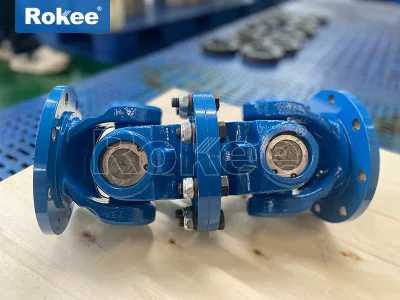
Double cardan couplings, also known as double universal joints, are designed to address the speed fluctuation issue of single cross shaft couplings. They consist of two single cardan couplings connected by an intermediate shaft, with the two couplings arranged at 90 degrees to each other. This design cancels out the speed fluctuations generated by each individual coupling, resulting in constant velocity transmission even at large angular misalignments. Double cardan couplings also offer greater misalignment compensation capability than single cardan couplings, making them suitable for applications where the shafts are significantly misaligned or where long-distance transmission is required. They are commonly used in automotive steering columns, four-wheel drive vehicles, and industrial machinery such as conveyors and cranes. The intermediate shaft in a double cardan coupling is often modular and detachable, which improves maintenance efficiency and allows for easy replacement of components if necessary. However, double cardan couplings are more complex and bulkier than single cardan couplings, and they require more installation space, which can be a limitation in some applications.
Ball fork cardan couplings are a variation of the ball cage design, featuring a fork-shaped component instead of a spherical shell. They consist of two ball forks and a set of steel balls, which transmit torque through a series of grooves in the forks. Ball fork cardan couplings have a simpler design than ball cage couplings and are less expensive to manufacture, making them suitable for moderate-speed, moderate-torque applications such as agricultural machinery, light-duty industrial equipment, and some automotive applications. They offer good angular misalignment compensation and smooth operation, although they have a lower torque capacity and rotational speed range than ball cage couplings. Special-purpose cardan couplings are designed for specific applications that require unique performance characteristics, such as high-temperature resistance, corrosion resistance, or extreme torque capacity. Examples of special-purpose cardan couplings include high-temperature couplings used in metallurgical equipment, corrosion-resistant couplings used in marine and chemical applications, and miniature cardan couplings used in precision instruments and robotics. These couplings are often customized to meet the specific requirements of the application, using specialized materials and designs to ensure reliable performance in challenging conditions.
Cardan couplings are used in a wide range of industries and applications, due to their versatility, flexibility, and robust performance. One of the largest application areas for cardan couplings is the automotive industry, where they are used in drive shafts, steering columns, and transmission systems. In rear-wheel drive and four-wheel drive vehicles, cardan couplings are used to connect the gearbox to the drive axle, allowing for angular misalignment between the two components as the vehicle moves over uneven terrain. In front-wheel drive vehicles, ball cage cardan couplings (CV joints) are used in the half-shafts that connect the transmission to the wheels, accommodating the angular movement of the wheels during steering and suspension operation. They are also used in steering columns to transmit rotational motion from the steering wheel to the steering gear, allowing for misalignment between the steering wheel and the gearbox. The automotive industry relies on cardan couplings for their durability, smooth operation, and ability to withstand the dynamic loads and misalignments encountered during vehicle operation.
The construction and heavy machinery industry is another major user of cardan couplings, where they are used in a variety of equipment such as excavators, cranes, bulldozers, and loaders. In these applications, cardan couplings are used to transmit torque between components such as engines, hydraulic pumps, and drivetrains, accommodating the large angular misalignments and heavy loads encountered during operation. For example, in excavators, cardan couplings are used in the slewing mechanism that allows the upper structure of the excavator to rotate relative to the undercarriage, and in the boom and arm mechanisms that control the movement of the bucket. In cranes, they are used in the hoist and trolley mechanisms, transmitting torque from the motor to the winch and allowing for misalignment between the motor and the winch. The heavy-duty design of cross shaft cardan couplings makes them particularly suitable for these applications, as they can withstand the high torques and harsh operating conditions associated with construction and heavy machinery.
The metallurgical industry also relies heavily on cardan couplings for use in equipment such as rolling mills, furnaces, and conveyors. Rolling mills, which are used to produce steel sheets, bars, and other metal products, require cardan couplings to transmit torque between the motor and the rolls, accommodating the misalignments that occur during roll adjustment and operation. The high torque capacity and durability of cross shaft cardan couplings make them ideal for this application, as they can withstand the extreme loads and high temperatures encountered in rolling mills. Cardan couplings are also used in conveyors that transport raw materials and finished products within metallurgical plants, allowing for misalignment between the conveyor sections and ensuring reliable operation even in harsh, dusty environments. In addition, they are used in furnace mechanisms, transmitting torque to the components that control the movement of the furnace door and other parts, where high-temperature resistance is a critical requirement.
The aerospace industry uses cardan couplings in a variety of applications, including aircraft control systems, helicopter rotor transmission systems, and rocket engines. In aircraft, cardan couplings are used in the control systems that operate the ailerons, elevators, and rudder, transmitting rotational motion from the cockpit controls to the control surfaces while accommodating misalignments between the components. In helicopters, they are used in the rotor transmission system, connecting the engine to the rotor shaft and solving the problem of misalignment between the engine and the rotor. The high precision and reliability of ball cage and double cardan couplings make them suitable for aerospace applications, where even small errors or failures can have catastrophic consequences. Cardan couplings used in aerospace applications are typically made from lightweight, high-strength materials such as titanium and aluminum alloys, to reduce weight while maintaining the required strength and durability. They are also designed to withstand extreme temperatures, high speeds, and vibration, ensuring reliable performance in the harsh environment of flight.
The marine industry uses cardan couplings in marine propulsion systems, connecting the engine to the propeller shaft and accommodating the misalignments that occur due to the movement of the ship’s hull. In ships and boats, cardan couplings are used to transmit torque from the main engine to the propeller, allowing for angular and axial misalignments caused by wave motion and hull flexing. Corrosion-resistant cardan couplings, made from materials such as stainless steel or bronze, are used in marine applications to withstand the corrosive effects of saltwater. They are also used in auxiliary systems such as pumps, compressors, and generators, ensuring reliable power transmission in these critical systems. The durability and environmental resistance of cardan couplings make them ideal for marine applications, where equipment must operate reliably in harsh, corrosive environments.
Other industries that use cardan couplings include the agricultural industry, where they are used in tractors, harvesters, and other agricultural machinery to transmit torque between the engine and various components such as the wheels, PTO (power take-off) shafts, and hydraulic systems. The simplicity and durability of cross shaft and ball fork cardan couplings make them suitable for agricultural applications, where equipment is often used in harsh, dusty environments and requires minimal maintenance. The industrial machinery industry uses cardan couplings in a wide range of equipment such as pumps, compressors, fans, and conveyors, where they accommodate misalignments and ensure reliable power transmission. Precision machine tools, such as CNC machines and lathes, use ball cage cardan couplings to ensure smooth, high-speed operation and precise torque transmission, which is critical for achieving high-quality machining results. The robotics industry uses miniature cardan couplings in robotic arms and other components, where they provide flexibility and precise motion transmission in compact spaces.
In conclusion, cardan couplings are versatile and essential mechanical transmission components that play a critical role in a wide range of industries and applications. Their unique structural design, which incorporates a cross-shaped spider, yokes, and bearings, allows them to accommodate angular, axial, and radial misalignments between shafts while transmitting torque efficiently and reliably. The key performance characteristics of cardan couplings, including high torque capacity, excellent misalignment compensation, high transmission efficiency, and durability, make them suitable for both heavy-duty and precision applications. The various types of cardan couplings, such as cross shaft, ball cage, double cardan, and ball fork couplings, each offer unique advantages and are designed to meet specific application requirements, ensuring that there is a cardan coupling suitable for almost any power transmission need. From the automotive and construction industries to aerospace and precision manufacturing, cardan couplings enable the reliable operation of countless mechanical systems, contributing to the efficiency, productivity, and safety of modern industrial processes. As technology continues to advance, the design and performance of cardan couplings are likely to be further improved, with new materials and manufacturing techniques enhancing their durability, efficiency, and versatility, ensuring that they remain a critical component of mechanical transmission systems for years to come.
Coupling Categories
Links:
Related Articles
- Aug 4, 2026Cardan Coupling Torque Transmission
- Aug 4, 2026Welded Type Cardan Coupling
- Jul 30, 2026SWC Cardan Coupling Factory Wholesale
- Jul 23, 2026Cardan Coupling Dynamic Balanced
- Jul 23, 2026Cardan Coupling Speed Rating
- Jul 23, 2026Cardan Coupling Axial Misalignment
- Jun 5, 2026Cardan Coupling Specifications
- Jun 5, 2026Cardan Coupling Price
- Jun 5, 2026Low Backlash Cardan Coupling
- Jun 5, 2026Cardan Coupling for Heavy Commercial