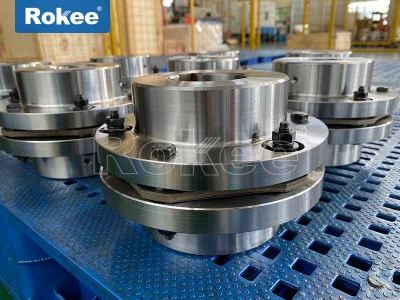
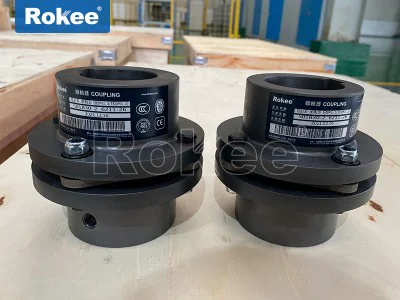
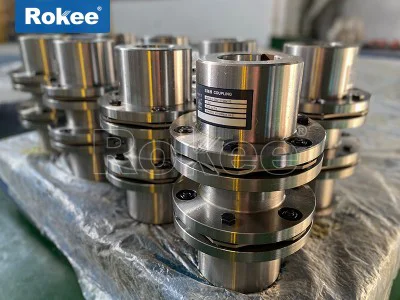
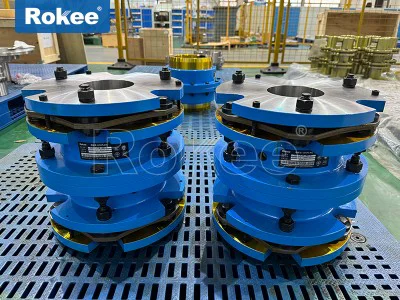
Steel Laminae Couplings
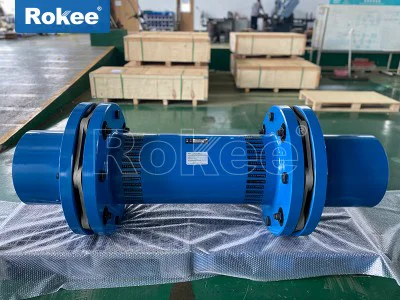
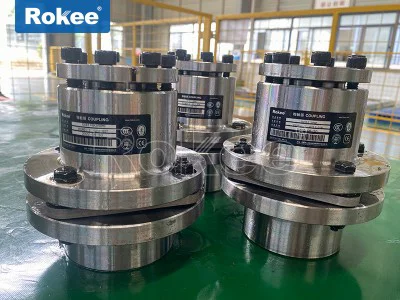
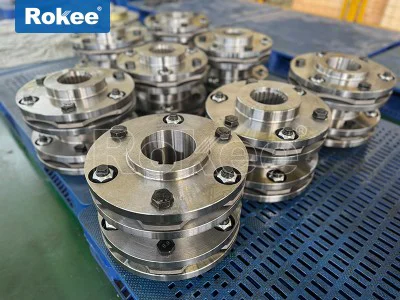
Steel laminae coupling is a flexible coupling device that compensates for shaft deviation through elastic deformation of metal diaphragms. Its core is composed of a membrane group composed of multiple layers of stainless steel thin plates stacked together, and the two halves of the coupling are connected by bolts in a staggered manner, achieving torque transmission without lubrication. The flexible design of the membrane can absorb axial, radial, and angular displacements, making it suitable for high-speed, high-temperature, and corrosive environments.
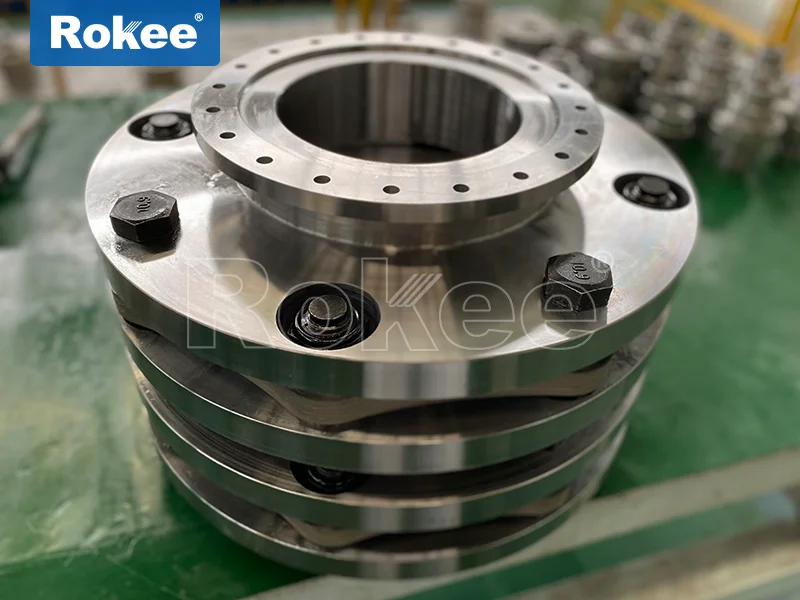
Single/Double Diaphragm Structure
Single membrane type: simple structure, suitable for low eccentricity scenarios, high torsional stiffness but limited compensation capability.
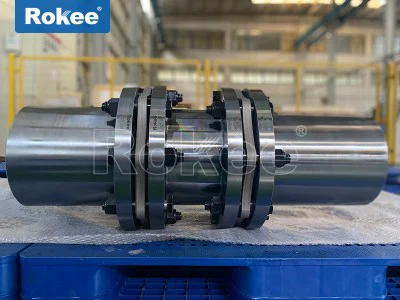
Double diaphragm type (such as SJM type): By coordinating the deformation of two sets of diaphragms, multi-directional deviation can be compensated simultaneously, and the angular displacement capacity is twice that of a gear coupling. It is suitable for long wheelbase transmission (such as fans and compressors).
Special type
Expansion sleeve type (such as JZM type): using keyless expansion sleeve fixation to avoid shaft damage, suitable for heavy machinery (metallurgy, mining equipment).
Step type: enhances torsional stiffness, suitable for high-power transmission (such as generator sets).
Performance advantage of steel laminae coupling
High transmission efficiency: up to 99.86%, no rotational clearance, precise transmission of speed.
Environmental adaptability: acid and alkali resistant, corrosion-resistant, can operate for a long time in oil contaminated, high or low temperature environments.
Maintenance free design: No wear parts, with a lifespan of over 10 years, significantly reducing downtime costs.
Vibration reduction and noise reduction: Metal diaphragms absorb vibrations, reduce bearing loads, and are suitable for precision machinery (such as servo systems).
Key selection points
Select the number of diaphragm groups based on torque (range 10Nm~810000 Nm), speed, and deviation.
J1 type is preferred for shaft hole type to improve interchangeability, and when the shaft diameter is different, the larger shaft diameter should be selected.
Installation steps
Clean the shaft end and apply lubricant, gradually tighten the bolts diagonally (3 times to rated torque).
Control the gap between the flange and the diaphragm (0.20-0.30mm) to avoid axial overload.
Common faults
Reason for abnormal noise: Loose bolts, excessive axial displacement (needs to be adjusted to within 1/3 of the allowable value).
Membrane fracture: caused by long-term overload or accumulated fatigue due to angular deviation.
Maintenance suggestions for steel laminae coupling
Regularly check the pre tightening force of bolts, and apply molybdenum disulfide lubricant between the diaphragms to reduce micro motion wear.
It is recommended to install protective covers on high-speed equipment to prevent debris from splashing.
Application scenarios of steel laminae coupling
Industrial field: Heavy duty equipment such as chemical pumps, air compressors, and rolling mills.
Energy sector: wind power gearbox, turbine transmission system.
Steel laminae coupling with their excellent reliability and adaptability, are gradually replacing traditional gear couplings and becoming the preferred solution for modern industrial transmission. Proper selection and installation are the key to maximizing its performance. It is recommended to consult professional manufacturers for customized design based on specific working conditions.
Steel laminae coupling is a high-performance metal flexible coupling widely used in industrial power transmission systems, which achieves torque transfer while compensating for axial, radial and angular displacements through the elastic deformation of its core component—steel laminae. Unlike traditional rigid couplings that require strict alignment between connected shafts, steel laminae coupling features a flexible design that can adapt to minor deviations caused by manufacturing errors, installation inaccuracies, temperature changes or mechanical deformation during operation, thereby protecting the connected equipment such as motors, pumps, and gearboxes from additional stress and extending the overall service life of the transmission system. Composed of metal components with high strength and good elastic properties, this type of coupling is free from lubrication and wear, making it suitable for various harsh working environments, including high temperature, high speed, and corrosive conditions. Its simple but precise structure, excellent performance and wide adaptability have made it an indispensable key component in modern industrial production, replacing many traditional coupling types in many important fields.
The basic structure of steel laminae coupling is relatively compact but requires high precision in manufacturing and assembly, which directly determines its transmission performance and service life. The core structure consists of three main parts: steel laminae groups, connecting hubs and fasteners, and some types may also include spacers or intermediate shafts according to application needs. The steel laminae groups are the core elastic elements of the coupling, usually made of high-quality stainless steel thin plates or high-strength spring steel, which are stacked together in multiple layers to form a single lamina set. The thickness of each single lamina is usually between 0.1mm and 1mm, and the number of layers varies according to the required torque and displacement compensation capacity—more layers can enhance the torque transmission capacity, while fewer layers can improve the flexibility and displacement compensation performance. The shape of the steel laminae is carefully designed through finite element method (FEM) calculations to achieve an optimal balance between torque transmission, torsional stiffness and displacement capacity; common shapes include waisted, circular, rectangular or special-shaped structures, among which the waisted shape is widely used because it can effectively reduce stress concentration and improve the elastic deformation capacity. Each lamina is processed with precision holes at the edge, which are used to connect with the hubs through fasteners, and the hole positions are arranged in a staggered manner to ensure uniform force distribution and avoid local stress overload.
The connecting hubs are used to connect the coupling to the input and output shafts of the connected equipment, and are usually made of high-strength carbon steel or alloy steel after forging, machining and heat treatment processes to ensure sufficient strength and rigidity to bear the transmission torque. The inner hole of the hub is processed according to the size of the connected shaft, and common connection methods include keyway connection, interference fit connection and keyless expansion sleeve connection. The keyway connection is simple in structure and convenient in installation, which is suitable for most general working conditions; the interference fit connection has high centering accuracy and can avoid relative sliding between the hub and the shaft, which is suitable for high-speed and high-precision transmission scenarios; the keyless expansion sleeve connection can avoid damage to the shaft caused by keyway processing, and has good centering performance and disassembly convenience, which is widely used in heavy machinery and equipment. The fasteners used to connect the laminae groups and the hubs are mainly high-strength bolts or dowel screws, which are required to have high tensile strength and fatigue resistance to ensure that the connection is firm and reliable during long-term high-speed operation without loosening. In order to reduce stress concentration at the edge of the lamina holes, some designs will adopt special elastic gaskets between the bolts and the lamina groups, which can effectively buffer the impact force and extend the service life of the laminae.
For couplings used in long-distance shaft transmission scenarios, an intermediate spacer or intermediate shaft is usually added between the two sets of laminae groups, which can not only increase the distance between the two connected shafts but also further improve the displacement compensation capacity of the coupling. The spacer is usually made of seamless steel pipe or forged steel, and its length can be customized according to the actual installation needs; the intermediate shaft is connected with the hubs at both ends through flanges, which can achieve longer-distance power transmission and is suitable for large-scale equipment such as fans and compressors. The overall structure of the steel laminae coupling is designed without moving parts that require lubrication, such as gears or bearings, so it has the characteristics of simple structure, easy assembly and disassembly, and no need for regular lubrication and maintenance, which can greatly reduce the maintenance cost and downtime of the equipment.
The performance of steel laminae coupling is closely related to its structural design, material selection and manufacturing process, and its comprehensive performance is significantly superior to that of traditional flexible couplings such as gear couplings and rubber couplings. The most prominent performance advantage is its excellent torque transmission capacity and transmission efficiency. Due to the use of high-strength steel materials and reasonable structural design, the steel laminae coupling can transmit a wide range of torques, from several Newton-meters to hundreds of thousands of Newton-meters, which can meet the needs of both small precision equipment and large heavy-duty machinery. At the same time, the transmission efficiency of the coupling is as high as 99.8% or more, which is close to that of rigid couplings, because there is no relative sliding between the components during operation, and the energy loss caused by friction or elastic deformation is extremely small. This high transmission efficiency is particularly important in energy-intensive industries, which can effectively save energy and reduce operating costs.
Another important performance advantage of steel laminae coupling is its excellent displacement compensation capacity, which can compensate for axial, radial and angular displacements between the two connected shafts through the elastic deformation of the steel laminae groups. The axial displacement compensation capacity is usually between a few millimeters and tens of millimeters, the radial displacement compensation capacity is relatively small, usually between 0.1mm and 1mm, and the angular displacement compensation capacity can reach 0.5 degrees to 3 degrees, depending on the number of lamina layers, shape and size. This displacement compensation capacity can effectively absorb the deviations caused by manufacturing errors, installation inaccuracies, temperature expansion and contraction of the shaft, and mechanical deformation during equipment operation, thereby reducing the additional bending moment and axial force acting on the bearings and shafts of the connected equipment, avoiding premature wear and failure of the equipment, and improving the stability and reliability of the entire transmission system. Compared with gear couplings, which have limited displacement compensation capacity and require regular lubrication, steel laminae coupling can achieve more comprehensive displacement compensation without lubrication, which is more suitable for complex working conditions.
The steel laminae coupling also has excellent high-temperature resistance, corrosion resistance and environmental adaptability. Since the core components are made of stainless steel or high-strength spring steel, which have good high-temperature resistance, the coupling can work stably in a high-temperature environment of -40°C to 300°C, and some special materials can even adapt to higher temperature environments. This makes it suitable for high-temperature working scenarios such as steam turbine units, internal combustion engines and high-temperature furnaces. At the same time, stainless steel laminae have good acid resistance, alkali resistance and corrosion resistance, which can resist the erosion of corrosive media such as chemicals, seawater and humidity, and are suitable for harsh working environments such as chemical industry, marine engineering and coastal equipment. In addition, the steel laminae coupling has no rotational clearance, which can ensure precise transmission of speed and position, and is not affected by temperature changes and oil pollution, so it can maintain stable performance in various harsh environments.
Vibration reduction and noise reduction performance is another important feature of steel laminae coupling. During the operation of industrial equipment, vibration and noise are inevitable, which will not only affect the working environment but also cause damage to the equipment. The steel laminae groups of the coupling have a certain elastic deformation capacity, which can absorb and buffer the vibration generated during the operation of the equipment, reduce the transmission of vibration between the connected shafts, and thus reduce the noise of the entire transmission system. At the same time, the absence of rotational clearance and friction between the components of the coupling also avoids the noise generated by friction or impact, making the operation more stable and quiet. This performance makes the steel laminae coupling particularly suitable for precision machinery and equipment that requires low vibration and low noise, such as servo systems, precision machine tools and medical equipment.
In addition, the steel laminae coupling also has the advantages of long service life and maintenance-free. Since the steel laminae are made of high-quality metal materials with good fatigue resistance, and the structure is designed without wear parts, the service life of the coupling can reach more than 10 years under normal working conditions, which is much longer than that of non-metallic elastic couplings such as rubber couplings. At the same time, because there is no need for regular lubrication and maintenance, it can greatly reduce the maintenance workload and maintenance cost of the equipment, and reduce the downtime caused by maintenance, which is particularly important for continuous production enterprises. The coupling also has good torsional stiffness, which can accurately transmit the torque and speed of the motor to the working equipment, ensuring the stability and accuracy of the equipment operation, and is suitable for high-precision transmission scenarios.
According to the structural differences, installation methods and application scenarios, steel laminae coupling can be divided into several different types, each with its own characteristics and applicable scope, which can meet the diverse needs of different industrial fields. The most common classification is based on the number of lamina groups, which can be divided into single-lamina type and double-lamina type. The single-lamina type coupling has a simple structure, usually composed of a single set of lamina groups and two hubs, which is easy to assemble and disassemble, and has high torsional stiffness. However, its displacement compensation capacity is relatively limited, especially the angular displacement compensation capacity, which is suitable for low eccentricity, short-distance shaft transmission scenarios with low requirements on displacement compensation, such as small motors, pumps and fans.
The double-lamina type coupling is composed of two sets of lamina groups, two hubs and an intermediate spacer (or intermediate shaft). The two sets of lamina groups are symmetrically arranged on both sides of the spacer, and the deformation of the two sets of laminae can be coordinated to compensate for multi-directional displacements simultaneously. Its angular displacement compensation capacity is twice that of the single-lamina type coupling, and it can also better absorb the axial and radial displacements between the two shafts, which is suitable for long wheelbase, large displacement deviation and high-speed transmission scenarios, such as large fans, compressors, steam turbines and generator sets. The double-lamina type coupling also has better balance performance, which can reduce the vibration generated during high-speed operation and improve the stability of the transmission system.
According to the connection method between the hub and the shaft, steel laminae coupling can be divided into keyway type, interference fit type and expansion sleeve type. The keyway type is the most common type, which is connected through the key and keyway between the hub and the shaft, with simple structure, convenient installation and disassembly, and low cost, which is suitable for most general working conditions, such as ordinary motors, reducers and pumps. The interference fit type is connected by the interference between the inner hole of the hub and the shaft, which has high centering accuracy, no relative sliding between the hub and the shaft, and can bear larger torque and higher speed, which is suitable for high-precision, high-speed transmission scenarios, such as precision machine tools, servo systems and aerospace equipment. The expansion sleeve type uses a keyless expansion sleeve to fix the hub and the shaft, which can avoid damage to the shaft caused by keyway processing, has good centering performance and disassembly convenience, and can also compensate for minor shaft deviations, which is suitable for heavy machinery, metallurgical equipment, mining equipment and other scenarios where the shaft is not suitable for processing keyways.
In addition, there are some special types of steel laminae couplings designed for specific application scenarios. The step-type steel laminae coupling has an enhanced torsional stiffness due to its special step-shaped lamina design, which is suitable for high-power, high-torque transmission scenarios, such as large generator sets and heavy-duty reducers. The composite steel laminae coupling uses carbon fiber (CFRP) as the material of the intermediate spacer, which has the characteristics of light weight, high strength and low moment of inertia, which can reduce the load of the transmission system and improve the dynamic performance of the equipment, which is suitable for high-speed, lightweight transmission scenarios, such as aerospace equipment, high-speed fans and precision instruments. The wind power-specific steel laminae coupling is specially designed for wind power generation systems, which can bear large torques (up to 300,000 Newton-meters) and has excellent displacement compensation capacity and fatigue resistance, which can adapt to the harsh working environment of wind farms, such as strong wind, temperature change and vibration.
Due to its excellent comprehensive performance, steel laminae coupling is widely used in various industrial fields, covering energy, chemical industry, metallurgy, machinery manufacturing, aerospace, marine engineering, medical equipment and many other fields, and has become an important part of the industrial power transmission system. In the energy sector, steel laminae coupling is widely used in wind power generation systems, thermal power generation units, hydropower generation units and nuclear power equipment. In wind power generation systems, it is used to connect the wind wheel hub and the gearbox, or the gearbox and the generator, which can transmit large torques and compensate for the displacement caused by wind load and temperature change, ensuring the stable operation of the wind turbine. In thermal power generation units, it is used in the transmission system of steam turbines and generators, which can adapt to high-temperature and high-speed working conditions, and has high transmission efficiency and reliability. In hydropower generation units, it is used to connect the water turbine and the generator, which can compensate for the displacement caused by the deformation of the shaft and the foundation, and protect the bearings and shafts of the equipment.
In the chemical industry, steel laminae coupling is widely used in pumps, compressors, mixers, reactors and other equipment. Due to its good corrosion resistance, it can adapt to the harsh working environment of chemical plants, such as corrosive media, high temperature and high pressure. For example, in chemical pumps that transport corrosive liquids, the steel laminae coupling can avoid the corrosion of non-metallic components, and has no need for lubrication, which can prevent lubricating oil from polluting the medium, ensuring the purity of the product and the stable operation of the equipment. In the mixing equipment of reactors, it can transmit large torques and compensate for the displacement caused by the vibration of the mixer, ensuring the uniform mixing of materials and improving the production efficiency.
In the metallurgical industry, steel laminae coupling is used in rolling mills, crushers, conveyors and other heavy machinery. These equipment usually work under heavy load, high vibration and harsh environment, requiring the coupling to have high torque transmission capacity, good vibration reduction performance and long service life. The steel laminae coupling can meet these requirements, which can transmit large torques (up to hundreds of thousands of Newton-meters), absorb the vibration generated during the operation of the equipment, and avoid the damage of the equipment caused by displacement deviation. For example, in the rolling mill, it is used to connect the motor and the rolling mill, which can transmit the torque stably and accurately, ensuring the precision of the rolled products; in the crusher, it can absorb the impact vibration generated during the crushing process, protect the motor and the crusher from damage.
In the machinery manufacturing industry, steel laminae coupling is widely used in machine tools, reducers, motors, pumps, fans and other general machinery. In precision machine tools, such as CNC machine tools and machining centers, the steel laminae coupling has high transmission precision and no rotational clearance, which can ensure the accuracy of the machine tool's movement and improve the processing precision of the products. In reducers, it is used to connect the motor and the reducer, which can transmit large torques and compensate for the installation deviation, ensuring the stable operation of the reducer. In ordinary motors and pumps, it has the advantages of simple installation, maintenance-free and long service life, which can reduce the maintenance cost and improve the reliability of the equipment.
In the aerospace field, steel laminae coupling is used in aircraft engines, aerospace motors, navigation equipment and other high-precision, high-speed equipment. These equipment have strict requirements on the weight, volume, transmission precision and reliability of the coupling. The steel laminae coupling has the characteristics of compact structure, light weight, high transmission precision and high reliability, which can meet the requirements of aerospace equipment. For example, in aircraft engines, it is used in the transmission system of the engine, which can adapt to high-temperature, high-speed and high-vibration working conditions, and transmit torque stably, ensuring the normal operation of the engine.
In the marine engineering field, steel laminae coupling is used in marine motors, marine pumps, propeller transmission systems and other equipment. The marine environment is harsh, with high humidity, salt spray corrosion and large temperature changes, requiring the coupling to have good corrosion resistance and environmental adaptability. The stainless steel laminae coupling can resist the corrosion of seawater and salt spray, and can work stably in a wide temperature range, ensuring the reliable operation of marine equipment. In the propeller transmission system of ships, it can transmit large torques and compensate for the displacement caused by the vibration of the hull and the deformation of the shaft, ensuring the normal navigation of the ship.
In addition, steel laminae coupling is also used in medical equipment, such as precision medical instruments, medical pumps and medical motors. These equipment require low vibration, low noise, high transmission precision and high reliability, and the steel laminae coupling can meet these requirements, which can ensure the stable operation of medical equipment and improve the accuracy of medical diagnosis and treatment. In the field of new energy, such as solar power generation and hydrogen energy equipment, steel laminae coupling is also widely used, which can adapt to the special working conditions of new energy equipment and provide reliable power transmission guarantee.
In summary, steel laminae coupling is a high-performance metal flexible coupling with compact structure, excellent torque transmission capacity, good displacement compensation performance, high temperature resistance, corrosion resistance, maintenance-free and long service life. Its structural design is scientific and reasonable, and it can be divided into various types according to different classification standards to meet the diverse needs of different industrial fields. With the continuous development of industrial technology, the requirements for power transmission systems are getting higher and higher, and the steel laminae coupling, with its excellent comprehensive performance, will be more widely used in more fields. In the future, with the improvement of manufacturing technology and the innovation of material science, the performance of steel laminae coupling will be further optimized, such as higher torque transmission capacity, better displacement compensation performance, lighter weight and more compact structure, which will better meet the development needs of modern industry and provide more reliable power transmission solutions for industrial production.