Crown Gear Couplings
As a key component in modern industrial transmission, crown gear couplings play an irreplaceable role in connecting two shafts and transmitting torque. Compared with traditional spur gear couplings, crown gear couplings have become an important choice in industries such as metallurgy, mining, lifting and transportation, petrochemicals, and general machinery due to their unique structural design and excellent performance.
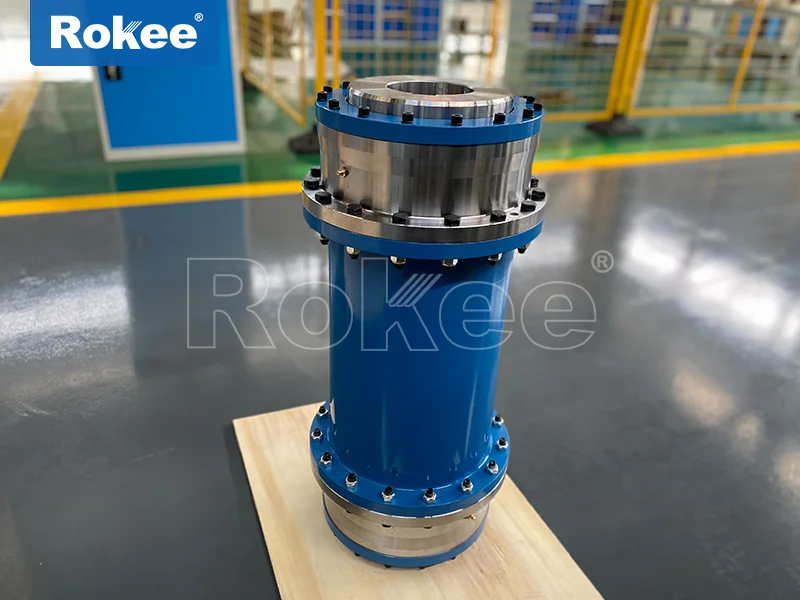
The crown gear coupling stands out among many types of couplings mainly due to its unique design concept and excellent mechanical performance. Compared with traditional spur gear couplings, crown gear couplings exhibit significant advantages in multiple aspects.
Load bearing capacity is one of the most prominent features of crown gear couplings. Under the same outer diameter of the inner gear sleeve and maximum outer diameter of the coupling, the load-bearing capacity of the crown gear coupling is on average 15% to 20% higher than that of the straight gear coupling. This performance improvement is due to the special design of the drum shaped teeth, which effectively disperses the load and avoids stress concentration by optimizing the tooth surface contact conditions.
In terms of compensation capability, the crown gear coupling also performs well. When the radial displacement is equal to zero, the allowable angular displacement of a spur gear coupling is usually only 1 °, while the allowable angular displacement of a crown gear coupling can reach 1 ° 30 ', with an increase of 50%. This enhanced compensation capability enables the crown gear coupling to better adapt to deviations in shaft installation and perform excellently in axial, radial, and angular displacement compensation. In practical applications, this characteristic is particularly suitable for working conditions where the axis is misaligned due to manufacturing errors, installation deviations, or deformation during operation.
Transmission efficiency is another important indicator for measuring the performance of couplings, and crown gear couplings also perform well in this regard, with a transmission efficiency of up to 99.7%. High efficiency means less energy loss and lower heat generation, which is particularly important for industrial equipment that operates continuously for long periods of time.
In terms of service life and maintenance cycle, crown gear couplings also have significant advantages. The drum shaped tooth surface design improves the contact conditions between the inner and outer teeth, avoids stress concentration caused by edge compression of straight teeth under angular displacement conditions, and optimizes the friction and wear conditions of the tooth surface.
These significant advantages have led to the widespread application of crown gear couplings in industrial fields both domestically and internationally, gradually replacing traditional spur gear couplings and becoming the preferred solution for heavy-duty, high-speed, and high-precision transmission systems. With the continuous advancement of materials science and manufacturing technology, the performance of crown gear couplings will continue to improve, providing more reliable connection guarantees for industrial transmission systems.
In the field of mechanical power transmission, the crown gear coupling stands out as a highly versatile and robust component that bridges the gap between driving and driven shafts, addressing common challenges such as misalignment, torque transmission, and operational durability across diverse industrial settings. Unlike rigid couplings that offer no tolerance for shaft displacement or flexible couplings with limited torque-carrying capacity, crown gear couplings combine the strength of gear-based power transfer with controlled flexibility, making them a staple in heavy-duty and precision-driven machinery alike.
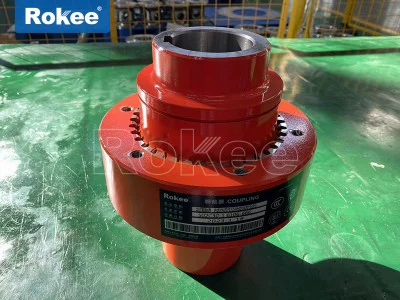
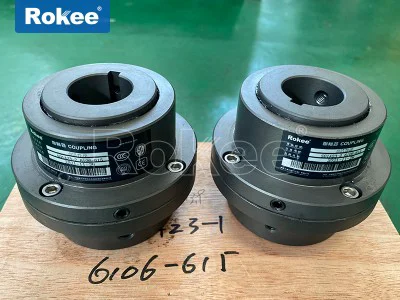
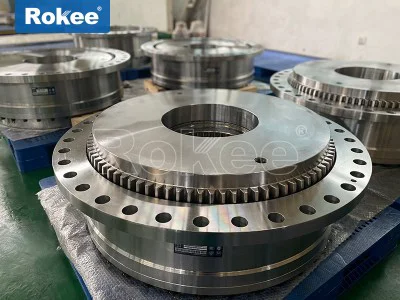
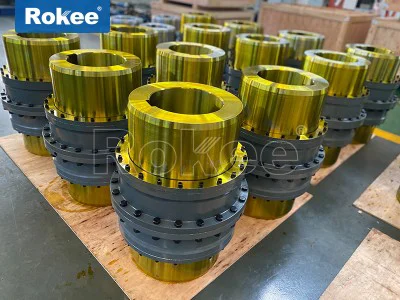
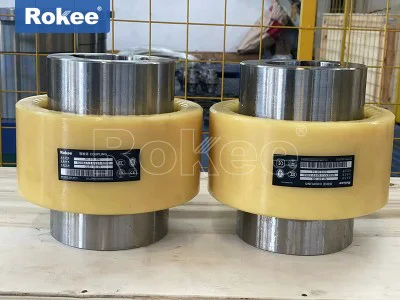
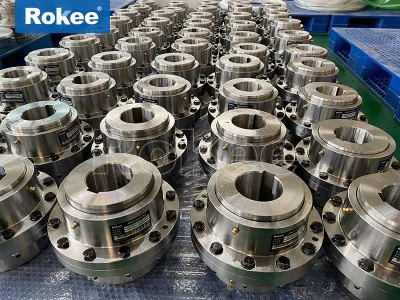
At its core, the crown gear coupling features a specialized structural configuration centered on meshing gear teeth engineered for both power transfer and misalignment compensation. The fundamental assembly consists of two hub components with external crowned gear teeth and a sleeve component with internal straight gear teeth, forming a closed meshing system that encases the gear interfaces. The defining structural feature lies in the profile of the external gear teeth: each tooth is machined with a spherical crown shape, with the center of the spherical surface aligned precisely with the axis of the gear hub. This unique crown design deviates from the flat, straight tooth profile of conventional gear couplings, creating a curved contact surface between external and internal teeth during operation. The hubs are typically mounted onto the respective driving and driven shafts via keyways or interference fits, ensuring a secure torque-transmitting connection without slippage under load. The internal sleeve, which houses the straight teeth, acts as a connecting bridge between the two crowned hubs, and the entire assembly is often sealed with protective end covers or gaskets to retain lubrication and prevent the ingress of dust, debris, or moisture from the surrounding environment. Additional structural elements may include fastening bolts to secure the sleeve and hubs, as well as lubrication ports to facilitate ongoing maintenance and optimal gear meshing. The compact nature of this structure allows for easy installation and integration into limited space constraints, while the durable metallic construction—typically high-strength alloy steel or carbon steel—ensures resistance to mechanical stress and wear over extended operational cycles.
The structural design of crown gear couplings directly translates to exceptional performance characteristics that set them apart from other coupling types, making them suitable for demanding operational conditions. Foremost among these performance traits is their superior misalignment compensation capability, a critical advantage in real-world machinery where perfect shaft alignment is rarely achievable. The spherical crowned teeth enable the coupling to accommodate three primary forms of shaft misalignment: angular misalignment, radial misalignment, and axial misalignment, either individually or in combination. Angular misalignment, which occurs when the two shafts intersect at a slight angle, is mitigated by the curved tooth profile that maintains consistent contact even as the shaft angle shifts, eliminating edge loading and uneven wear that plagues straight-tooth couplings. Radial misalignment, caused by lateral offset between shaft centers, is absorbed through the controlled radial movement of the crowned teeth within the internal sleeve, while axial misalignment—resulting from thermal expansion or axial shaft movement—is accommodated by the longitudinal clearance built into the gear meshing. This multi-directional misalignment tolerance prevents excessive stress on shafts, bearings, and connected equipment, reducing the risk of premature component failure and extending the overall service life of the power transmission system.
Beyond misalignment compensation, crown gear couplings boast exceptional torque transmission capacity, capable of transferring high levels of torque with minimal power loss even under heavy, fluctuating, or shock loads. The full-tooth contact between crowned external teeth and internal sleeve teeth distributes torque evenly across the entire meshing surface, maximizing load-bearing efficiency and preventing localized stress concentrations. This even load distribution also enhances the coupling’s resistance to shock and vibration, common in industrial machinery such as crushers, conveyors, and heavy pumps, where sudden load spikes can damage less robust transmission components. The rigid yet flexible nature of the gear meshing ensures that torque is transmitted smoothly without torsional slack or backlash, maintaining precise power delivery for both low-speed, high-torque applications and high-speed rotational systems. Additionally, crown gear couplings exhibit reliable operational stability across a wide range of temperatures and environmental conditions, with the sealed structure protecting internal gear surfaces from corrosion and abrasion. Properly lubricated, the crowned teeth experience reduced friction and wear, resulting in low maintenance requirements and consistent performance over prolonged periods. Unlike some flexible couplings that rely on elastomeric elements prone to degradation, the all-metal construction of crown gear couplings offers long-term durability, making them a cost-effective solution for continuous industrial operation.
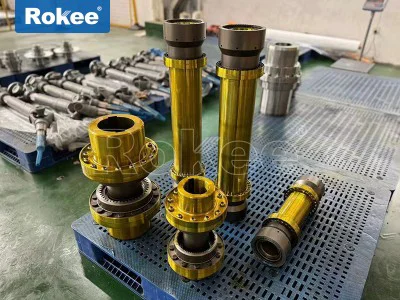
Crown gear couplings are classified into distinct types based on structural variations, functional adaptations, and application-specific design modifications, each tailored to meet unique operational requirements in different mechanical systems. One primary classification is based on the presence or absence of an intermediate shaft, distinguishing between standard short-coupled crown gear couplings and long-spaced crown gear couplings with an intermediate shaft assembly. Standard short-coupled models feature a compact, integrated design with the two crowned hubs directly meshing within a single internal sleeve, ideal for applications where the distance between driving and driven shafts is minimal and space is limited. These models offer maximum torsional rigidity and are well-suited for close-coupled machinery such as electric motors and gearboxes. In contrast, long-spaced crown gear couplings incorporate a rigid intermediate shaft between two separate crown gear coupling units, extending the distance over which torque can be transmitted while retaining full misalignment compensation capabilities. This type is essential for applications where shafts are positioned far apart, such as in large-scale conveyor systems, marine propulsion drives, and industrial mill drives, where direct coupling is impractical.
Another key classification relates to functional modifications for specialized operational needs, including brake wheel-equipped crown gear couplings, vertical shaft crown gear couplings, and high-speed balanced crown gear couplings. Brake wheel-integrated models feature a built-in brake wheel on one of the gear hubs, designed to work alongside braking systems to halt or slow shaft rotation when required, commonly used in lifting equipment, material handling machinery, and heavy-duty crushers where controlled stopping is critical. Vertical shaft crown gear couplings are engineered with reinforced structural elements to support the weight of vertical shafts and resist gravitational displacement, ensuring stable meshing and torque transfer in vertically oriented systems such as vertical pumps, mixers, and agitators. High-speed balanced crown gear couplings undergo precision dynamic balancing to minimize vibration and rotational imbalance at high operating speeds, making them suitable for turbomachinery, high-speed compressors, and precision manufacturing equipment where smooth, vibration-free rotation is paramount. Additionally, crown gear couplings can be categorized by tooth size and load capacity, with heavy-duty models featuring larger module gears for extreme torque transmission and standard-duty models optimized for moderate load and speed conditions. Each variant retains the core crowned tooth design but adapts secondary features to align with specific operational demands, highlighting the coupling’s adaptability across diverse mechanical setups.
The unique combination of structural robustness, flexible misalignment tolerance, and high torque capacity makes crown gear couplings indispensable across a vast spectrum of industrial sectors, powering critical machinery in both heavy industry and precision engineering. In the heavy machinery and manufacturing sector, these couplings are widely employed in rolling mills, metal processing equipment, crushers, and extruders, where they endure extreme torque loads, shock vibrations, and constant misalignment caused by heavy material processing. Their ability to maintain reliable power transfer under harsh operating conditions ensures uninterrupted production flow, reducing downtime and enhancing operational efficiency. In the mining and quarrying industry, crown gear couplings are integral to conveyor systems, crushing plants, and mineral processing machinery, where they withstand dusty, abrasive environments and heavy cyclic loads that would quickly damage less durable coupling types. The sealed construction and wear-resistant gear surfaces ensure consistent performance even in the rugged, unforgiving conditions typical of mining operations.
The marine and offshore industry also relies heavily on crown gear couplings for various propulsion and auxiliary systems, including shipboard pumps, fans, winches, and propulsion drive trains. The coupling’s ability to compensate for shaft misalignment caused by hull flexing, wave-induced movement, and thermal expansion makes it ideal for marine applications, where shaft alignment is constantly shifting. The corrosion-resistant construction options further enhance its suitability for saltwater environments, preventing rust and degradation that could compromise operational safety. In the power generation sector, crown gear couplings are used in turbines, generators, feed pumps, and cooling system drives, facilitating efficient power transfer while accommodating thermal expansion of shafts during startup and shutdown cycles. Their high torque capacity and dynamic stability ensure reliable operation in both conventional power plants and renewable energy systems, supporting consistent electricity generation.
Beyond heavy industry, crown gear couplings find application in transportation equipment, chemical processing machinery, food and beverage processing lines, and construction machinery, showcasing their universal adaptability. In transportation, they are used in rail traction systems, heavy-duty vehicle transmissions, and port handling equipment, providing durable power transfer for mobile machinery. In chemical and food processing, the sealed, hygienic design options prevent lubricant leakage and contamination, meeting strict operational standards while maintaining performance. In construction, they power concrete mixers, excavators, and crane mechanisms, withstanding the heavy shock loads and frequent misalignment inherent to construction site operations. Even in precision engineering and small-scale industrial machinery, compact crown gear couplings deliver reliable torque transfer and misalignment compensation, proving their value across the full spectrum of mechanical power transmission needs.
In summary, the crown gear coupling represents a pinnacle of flexible gear coupling design, merging structural ingenuity with exceptional performance to solve core challenges in mechanical power transmission. Its uniquely crowned tooth profile enables unmatched misalignment compensation, while its robust all-metal construction delivers superior torque capacity, shock resistance, and long-term durability. The diverse range of structural and functional variants allows for tailored solutions to fit specific shaft configurations, space constraints, and operational demands, while its widespread applications across heavy industry, marine, power generation, and manufacturing sectors underscore its universal utility. As mechanical systems continue to evolve toward higher loads, greater precision, and harsher operating environments, the crown gear coupling remains a vital component, offering reliable, efficient, and maintenance-friendly power transmission that supports the seamless operation of critical machinery worldwide. Its enduring relevance in engineering design stems from its ability to balance flexibility and strength, a rare combination that addresses the most pressing needs of modern mechanical power transmission systems.