Universal Joint Couplings
As a key component in mechanical transmission systems, universal joint couplings play an indispensable role in modern industrial equipment. It can effectively solve the power transmission problem in the case of axis misalignment, and is widely used in multiple fields such as automobiles, engineering machinery, metallurgical equipment, etc.
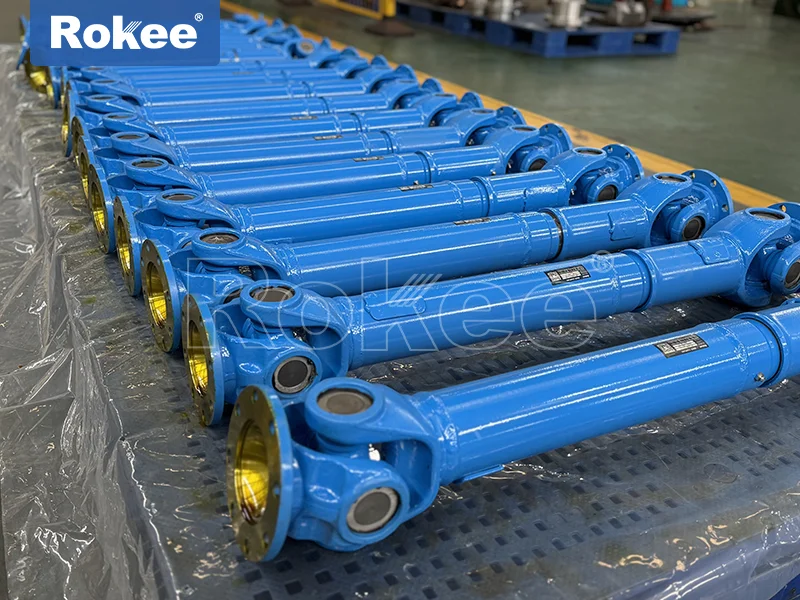
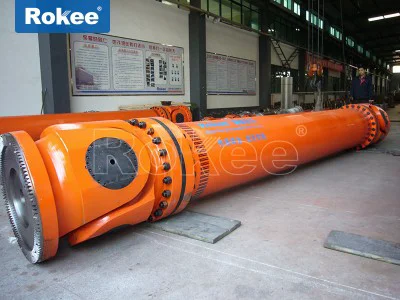
Universal joint coupling is a mechanical device used to transmit relative motion between axes. Its core function is to compensate for the angular deviation between two axes and achieve power transmission between non concentric axes. This type of coupling utilizes its unique structural characteristics to enable the connected shafts to rotate continuously and reliably transmit torque and motion when the two shafts are not on the same axis and there is an angle between the axes.
The most significant feature of universal joint couplings is their large angular compensation ability, compact structure, and high transmission efficiency. The allowable angle between the two axes of universal joint couplings of different structural types varies, generally between 5 ° -45 °. This angle compensation capability ensures the continuity and stability of power transmission even when the axis is misaligned due to equipment installation errors, working deformations, thermal expansion, and other factors.
In terms of importance in industrial applications, universal joint couplings are almost an essential component of all complex transmission systems. Universal joint couplings play a crucial role in automotive driveshafts, roller drives for rolling mills, and ship propulsion systems. It can not only transmit torque and rotational motion, but also absorb vibration, compensate for deviations, and protect other components in the transmission system from additional loads caused by misalignment. With the development of industrial equipment towards high speed, heavy load, and precision, the performance requirements for universal joint couplings are also increasing, driving continuous technological innovation in this field.
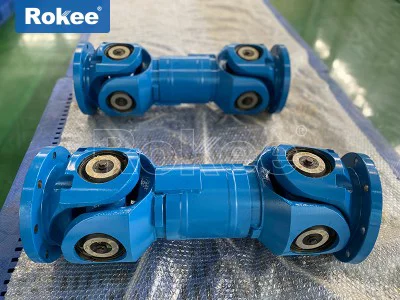
The basic structural composition of universal joint couplings is relatively standardized, mainly including core components such as cross shafts, universal joint forks, bearings, and lubrication and sealing devices. As the core component for force transmission, the cross shaft is usually made of alloy steel and undergoes heat treatment to improve its wear resistance and fatigue strength. Two universal joint forks are respectively connected to the driving shaft and the driven shaft, forming a movable joint through a cross axis. Bearings are installed at the connection between the cross shaft and the fork head, mostly needle roller bearings or sliding bearings, responsible for reducing friction and bearing radial loads. The lubrication system includes oil nozzles, oil passages, and seals to ensure that moving parts are adequately lubricated and prevent premature wear.
Universal joint couplings, often referred to simply as universal joints or U-joints, are fundamental mechanical power transmission components that play an irreplaceable role in connecting two rotating shafts with non-coincident axes, enabling the efficient transfer of torque and rotational motion even when there are angular, axial or radial misalignments between the shafts. Unlike rigid couplings that demand perfect shaft alignment and cannot tolerate any form of offset, universal joint couplings are engineered with flexible structural designs to adapt to dynamic operating conditions, making them indispensable across a vast spectrum of industrial, automotive, agricultural and precision mechanical systems.
At its core, the standard universal joint coupling features a compact and robust structural framework built around a few key components that work in tandem to deliver reliable power transmission. The most prevalent design, the cross-type universal joint, consists of two yoke-shaped end fittings, a central cross shaft (commonly called a spider), and bearing assemblies that facilitate smooth rotational movement between the yokes and the cross shaft. The yokes are typically forged or machined from high-strength metallic materials, shaped into a U-like structure with mounting holes at the open ends to attach to the driving and driven shafts, either via splines, flanges or keyways for a secure, torque-transmitting connection. The central cross shaft, the heart of the coupling, is a cross-shaped component with four perpendicular journal ends, each fitted with a precision bearing to minimize friction and wear during operation. These bearings are usually needle roller bearings, chosen for their high load-bearing capacity, compact size and ability to withstand both radial and thrust loads generated by angular misalignment; in some heavy-duty variants, plain bearings or roller bearings may be used to handle extreme torque and harsh operating environments. The bearing assemblies are enclosed within bearing caps or housings to retain lubrication, prevent contamination from dust, debris or moisture, and protect the internal moving parts from external damage, ensuring prolonged operational stability. Beyond the basic cross-type structure, some universal joint couplings incorporate additional elements such as intermediate shafts, telescopic splines or damping components to enhance flexibility, extend operational range or reduce vibration transmission, tailoring the structure to meet the unique demands of specific applications.
The performance of universal joint couplings is defined by a set of critical mechanical and operational characteristics that determine their suitability for different working scenarios, with angular misalignment capacity, torque transmission capability, rotational smoothness, durability and operational efficiency standing out as the most pivotal metrics. One of the defining performance traits is the ability to compensate for angular misalignment between the driving and driven shafts, a feature that sets universal joints apart from other coupling types. Standard cross-type universal joints can accommodate angular offsets ranging from 15 degrees to 30 degrees under normal operating conditions, while specialized heavy-duty or precision designs can handle angles up to 45 degrees without compromising power transmission efficiency; this flexibility allows the coupling to adapt to shaft position changes caused by installation errors, mechanical wear, thermal expansion or dynamic movement during operation, eliminating excessive stress on connected shafts, gears and bearings that could lead to premature failure. Torque transmission capacity is another core performance parameter, varying widely based on structural dimensions, material strength and bearing design. Small-scale universal joint couplings are engineered to transmit low to moderate torque for precision machinery and light-duty equipment, while large-scale, heavy-duty variants are built to withstand extremely high torque loads in heavy industrial machinery, construction equipment and marine propulsion systems, with torsional stiffness optimized to prevent excessive deflection and ensure accurate motion transfer. Rotational smoothness is closely tied to angular misalignment angle and joint design; single universal joints exhibit minor velocity fluctuations as the operating angle increases, leading to slight vibration and noise at high speeds, while advanced designs such as double universal joints or constant velocity joints eliminate these fluctuations, delivering uniform rotational motion even at large misalignment angles, making them ideal for high-speed and precision-critical applications.
Durability and service life are also key performance indicators, heavily influenced by material selection, lubrication regimes and operating conditions. High-quality universal joint couplings are constructed from alloy steels, carbon steels or stainless steels, with key components subjected to heat treatments such as carburizing, quenching and tempering to enhance surface hardness, wear resistance and fatigue strength, enabling the coupling to withstand repeated cyclic loads, shock impacts and harsh environmental conditions including extreme temperatures, moisture and chemical exposure. Proper lubrication is essential to maintain performance, reducing friction between moving parts, preventing metal-to-metal contact and extending bearing life; many modern universal joints are designed with sealed lubrication systems that eliminate the need for frequent maintenance, while others feature accessible lubrication points for periodic re-lubrication in heavy-duty settings. Operational efficiency, defined by the ratio of output torque to input torque, is consistently high for well-designed universal joint couplings, typically exceeding 95% under optimal operating conditions, minimizing energy loss during power transmission and contributing to the overall energy efficiency of the entire mechanical system. Additional performance considerations include axial displacement compensation, with some universal joint couplings equipped with telescopic spline shafts to accommodate small axial movements of the connected shafts, and radial misalignment tolerance, allowing for minor radial offsets without sacrificing operational stability, further expanding the versatility of these components in real-world applications.
Universal joint couplings are classified into distinct types based on structural design, operational principles, performance capabilities and application scenarios, with each category tailored to address specific mechanical challenges and operating requirements. The most basic and widely utilized type is the single universal joint, also known as a Hooke’s joint, which features the classic cross-yoke structure described earlier. This type is valued for its simple design, ease of manufacturing, installation and maintenance, and cost-effective performance, making it suitable for low to moderate speed applications with small to medium angular misalignments, such as manual machinery, agricultural equipment, light conveyor systems and automotive auxiliary drives. While highly practical, single universal joints are limited by velocity fluctuations at larger operating angles, making them less ideal for high-speed or precision-demanding operations. To overcome this limitation, the double universal joint was developed, consisting of two single universal joints connected by a rigid intermediate shaft, with the yokes of the two joints aligned in a specific plane to cancel out rotational velocity variations. This design delivers near-constant velocity transmission, significantly reduces vibration and noise, and allows for larger angular misalignments, making it a preferred choice for high-speed drive shafts, industrial machinery, automotive propulsion systems and precision transmission equipment where smooth motion is critical.
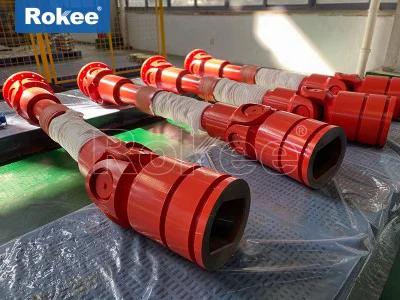
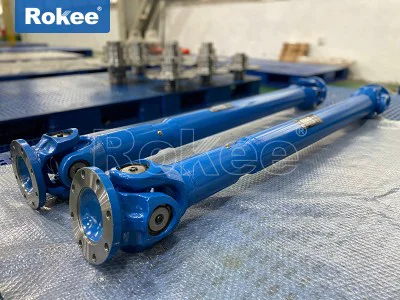
Constant velocity (CV) universal joints represent a more advanced category, engineered to maintain a perfectly constant rotational speed between the driving and driven shafts regardless of the operating angle, eliminating velocity fluctuations and associated vibration entirely. Unlike cross-type joints, CV joints feature a spherical or ball-cage structure, with steel balls positioned within precision-machined grooves to transfer torque while maintaining uniform angular velocity. This design enables CV joints to operate at larger angles, often exceeding 40 degrees, with exceptional smoothness and efficiency, making them indispensable in front-wheel-drive vehicles, all-wheel-drive systems, high-speed precision machinery, robotics and aerospace equipment where precision and smooth power delivery are non-negotiable. Another notable type is the telescopic universal joint coupling, which integrates a splined intermediate shaft with one or two universal joints, allowing for simultaneous angular misalignment compensation and axial length adjustment. This type is ideal for applications where shaft distance varies during operation, such as vehicle drive shafts, mobile machinery, and industrial equipment with dynamic component positioning, providing flexibility without compromising torque transmission. Additionally, universal joint couplings can be categorized by load capacity into light-duty, medium-duty and heavy-duty variants, each with scaled-up structural dimensions, thicker materials and reinforced bearings to handle increasing torque and load demands; light-duty units are used in small precision instruments and office machinery, medium-duty units in general industrial equipment and automotive systems, and heavy-duty units in mining machinery, metallurgical equipment, marine propulsion systems and large construction machinery.
The versatility of universal joint couplings is reflected in their extensive and diverse applications across nearly every sector of mechanical engineering, spanning automotive, industrial, agricultural, marine, aerospace and precision machinery fields. In the automotive industry, universal joint couplings are integral components of vehicle drive trains, connecting the transmission to the differential in rear-wheel-drive vehicles, enabling power transfer to the front wheels in front-wheel-drive and all-wheel-drive models, and facilitating steering linkage movement, allowing wheels to turn while maintaining power delivery and adapting to suspension travel and road surface variations. Without universal joints, vehicles would be unable to accommodate the dynamic movement of wheels and suspension, resulting in rigid, impractical drive systems prone to mechanical failure. In industrial manufacturing, universal joint couplings are widely used in conveyor systems, packaging machinery, textile equipment, machine tools and robotic arms, compensating for shaft misalignment caused by assembly errors, thermal expansion or continuous operation, ensuring uninterrupted power transmission and smooth machinery operation. Heavy-duty universal joints are deployed in mining equipment, crushing machinery, steel rolling mills and oilfield machinery, where they endure extreme torque loads, shock impacts and harsh operating conditions, reliably transferring power in high-stress environments that demand exceptional durability and strength.
Agricultural machinery relies heavily on universal joint couplings for power transmission between tractors and attached implements such as plows, harvesters, seeders and balers. These couplings adapt to the uneven terrain of farm fields, accommodating angular and axial shifts between the tractor power take-off (PTO) shaft and the implement input shaft, ensuring consistent power delivery even in rough, off-road conditions, and enhancing the efficiency and reliability of agricultural operations. Marine applications utilize waterproof, corrosion-resistant universal joint couplings in boat propulsion systems, steering mechanisms and auxiliary equipment, withstanding the corrosive effects of saltwater and harsh marine environments while maintaining reliable power transmission between engines, propellers and steering components. In aerospace and precision engineering, lightweight, high-precision universal joint couplings are used in aircraft control systems, satellite positioning mechanisms, medical devices and precision measuring instruments, where minimal backlash, smooth motion and high accuracy are critical. These precision joints are manufactured to tight tolerances, with lightweight materials and refined designs to meet the stringent performance requirements of advanced technological systems, ensuring precise motion control and reliable operation in delicate applications.
Beyond these core sectors, universal joint couplings find utility in renewable energy systems, such as wind turbine pitch control mechanisms and solar tracker drive systems, where they adapt to dynamic component movement and environmental stresses; in construction machinery, including excavators, bulldozers and cranes, enabling flexible power transmission in heavy-duty mobile equipment; and in household appliances and small power tools, providing compact, reliable power transfer for light-duty rotational motion. The widespread adoption of universal joint couplings stems from their unique ability to balance flexibility, strength and efficiency, addressing the universal challenge of shaft misalignment in mechanical systems and enabling the design of more adaptable, durable and high-performing machinery. As mechanical engineering technology continues to advance, the design and manufacturing of universal joint couplings evolve alongside, with ongoing improvements in material science, bearing technology and structural optimization enhancing their performance, durability and versatility, ensuring they remain a cornerstone of power transmission systems for years to come. Whether in heavy industrial settings, high-speed precision applications or everyday mechanical equipment, universal joint couplings continue to deliver reliable, efficient power transmission, underscoring their enduring importance in the global mechanical engineering landscape.
Coupling Categories
Links:
Related Articles
- Aug 19, 2026Universal Joint Coupling Drive Shaft
- Aug 19, 2026Universal Joint Coupling For Sale
- Aug 19, 2026Universal Joint Coupling For Steel Plant
- Aug 19, 2026Universal Joint Coupling For Metallurgy
- Aug 19, 2026Universal Joint Coupling For Pump
- Aug 19, 2026Universal Joint Coupling For Crusher
- Aug 19, 2026Precision Universal Joint Coupling
- Aug 19, 2026Universal Joint Coupling For Conveyor
- Aug 19, 2026Universal Joint Coupling For Paper Mill
- Aug 19, 2026Universal Joint Coupling For Mining Equipment