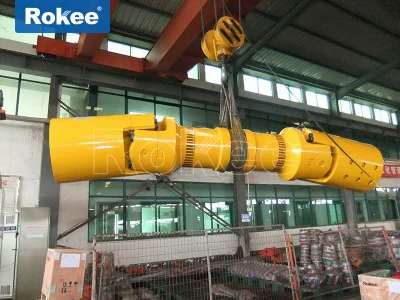
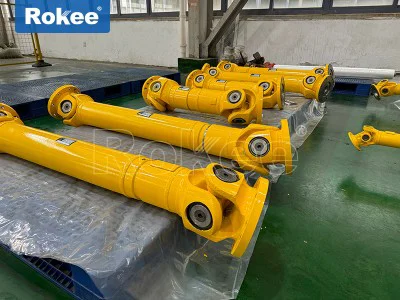
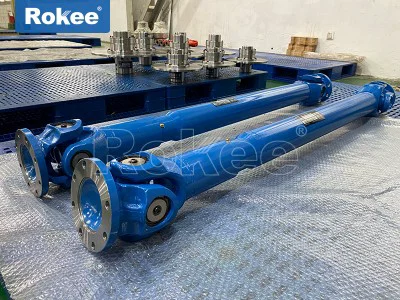
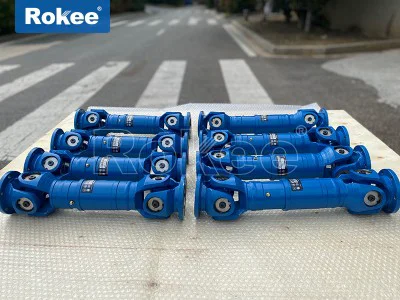
Universal Cross Joints
The universal cross joint, often referred to as a Cardan joint or Hooke’s joint, stands as one of the most fundamental and versatile mechanical components in modern engineering, designed to transmit torque and rotational motion between two shafts that are not collinear or have variable angular alignment during operation. Unlike rigid couplings that demand perfect shaft alignment, this component introduces a flexible connection that accommodates angular misalignment, axial displacement, and minor radial offsets, making it indispensable across countless mechanical systems where fixed shaft positioning is impractical or impossible. At its core, the universal cross joint relies on a straightforward yet robust structural design that balances simplicity, load-bearing capacity, and operational durability, with every component engineered to withstand dynamic stresses, friction, and environmental wear while maintaining consistent power transmission.
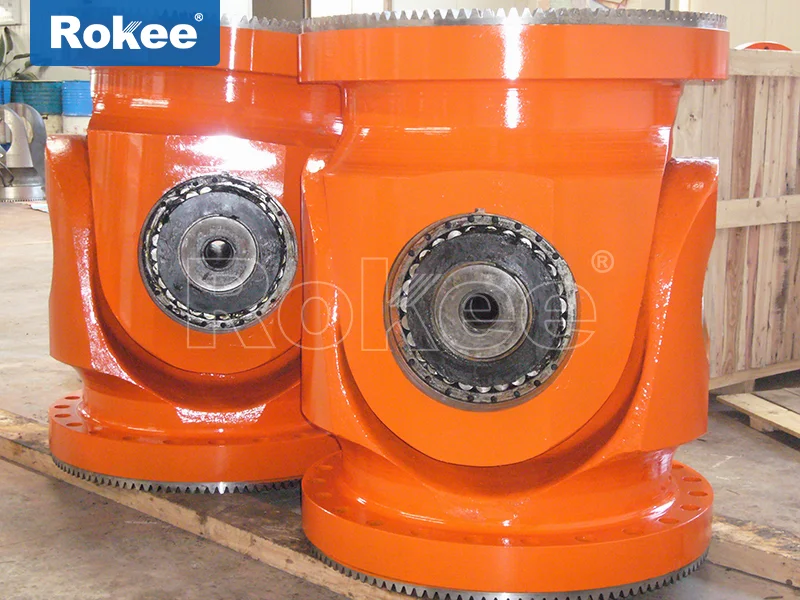
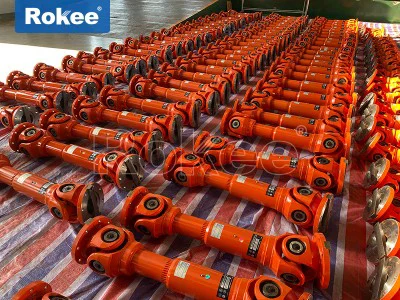
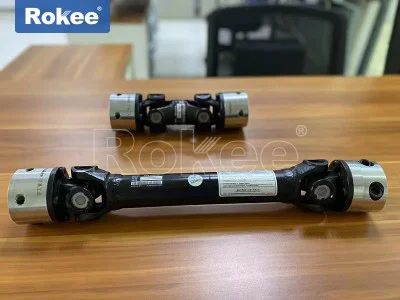
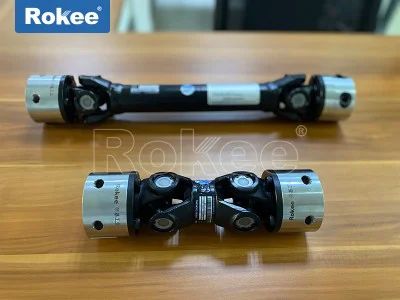
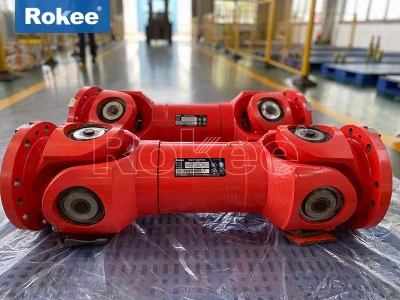
Delving into the structural makeup of the universal cross joint reveals a streamlined assembly of precision-engineered parts that work in tandem to enable flexible torque transmission. The primary components include two yoke assemblies, a cross-shaped spider (the central cross member), and four bearing sets that connect the spider to the yokes. Each yoke is typically forged or machined from high-strength alloy steel, shaped to form a fork-like structure that attaches to the driving and driven shafts via flanges, splines, or keyed connections, ensuring a secure, torque-transmitting fit without slippage under load. The cross spider, the heart of the joint, features four perpendicular trunnions that extend outward, each fitted with a bearing assembly to facilitate smooth rotational movement between the yokes. Needle roller bearings are the most common bearing type used here, chosen for their high load-carrying capacity, compact size, and ability to minimize friction between the rotating spider and stationary yoke surfaces; these bearings are often enclosed with sealing elements to retain lubrication and prevent the ingress of dust, moisture, debris, and corrosive substances, which are major contributors to premature wear and failure. The overall design is modular, allowing for easy assembly, disassembly, and maintenance, with no overly complex parts that would hinder practical use in industrial or mobile machinery. This simplicity does not compromise strength, as the cross spider and yokes are engineered to distribute stress evenly across the joint, preventing localized fatigue and ensuring the component can handle both steady torque loads and sudden impact forces common in heavy-duty operations.
The performance characteristics of the universal cross joint are what set it apart from other flexible couplings and drive components, defining its suitability for diverse operating conditions. One of its most notable performance traits is its angular misalignment capability, with standard designs accommodating shaft angles ranging from 5 degrees up to 45 degrees, depending on the specific model and size; optimal performance is typically achieved at angles between 15 and 25 degrees, as excessive angles can increase friction, vibration, and wear over time. Beyond angular flexibility, the joint exhibits excellent torque transmission efficiency, with minimal power loss even under moderate to heavy loads, a critical factor in applications where energy conservation and operational efficiency are priorities. It also demonstrates strong resistance to shock loads and torsional vibrations, absorbing sudden spikes in torque that could damage rigid drive systems, making it ideal for equipment that starts and stops frequently or operates under fluctuating load conditions. Durability is another key performance metric, with high-quality universal cross joints featuring hardened and tempered alloy steel components that resist abrasion, bending, and fatigue, even in harsh operating environments such as high temperatures, heavy dust, or moist conditions. While basic universal cross joints are non-constant velocity joints, meaning the rotational speed of the driven shaft fluctuates slightly as the joint articulates, this minor speed variation is negligible in most industrial and mobile applications, and specialized variants can mitigate this effect for precision-critical systems. Additionally, the joint offers reliable axial displacement compensation, allowing for small shifts in shaft position without compromising performance, a valuable feature in systems where thermal expansion or mechanical settling causes minor shaft movement over time. Maintenance requirements are relatively low, with periodic lubrication being the primary upkeep task, and the robust design reduces the risk of unexpected failures, minimizing downtime and operational disruptions for end-users.
Universal cross joints are categorized into distinct types based on structural design, load capacity, operational purpose, and alignment capabilities, each tailored to address specific application needs and operating conditions. The most basic and widely used variant is the single universal cross joint, consisting of a single cross spider and two yokes, designed for light to medium-duty applications with moderate angular misalignment requirements. This type is valued for its cost-effectiveness, compact footprint, and ease of installation, making it a staple in simple mechanical drives where space is limited and load demands are consistent. For applications requiring greater angular flexibility or reduced speed fluctuation, the double universal cross joint is the preferred choice; this design integrates two single joints connected by an intermediate shaft, effectively doubling the misalignment capacity and smoothing out rotational speed variations, making it suitable for medium to heavy-duty systems with larger shaft angles. Another prominent classification is based on load-bearing capacity, dividing joints into light-duty, medium-duty, heavy-duty, and extra-heavy-duty models. Light-duty joints are engineered for small-scale machinery, precision equipment, and low-torque applications, featuring thinner materials and smaller bearing assemblies to reduce weight and size. Medium-duty joints strike a balance between strength and flexibility, catering to general industrial machinery, automotive systems, and agricultural equipment with moderate torque and misalignment needs. Heavy-duty and extra-heavy-duty joints are constructed with thicker, reinforced yokes, larger cross spiders, and heavy-duty bearings, designed to withstand extreme torque loads, constant vibration, and harsh operating conditions in heavy industrial equipment. There are also specialized variants, such as constant velocity cross joints, which refine the traditional design to maintain consistent rotational speed between input and output shafts, eliminating speed fluctuations for precision applications; sealed universal joints, which feature enhanced sealing systems for use in wet, dusty, or corrosive environments; and splined universal joints, which incorporate splined connections for easier installation and greater torque transmission in heavy machinery. Each type is engineered to prioritize specific performance attributes, whether it is maximum flexibility, high load capacity, precision motion, or environmental resistance, ensuring there is a universal cross joint variant for nearly every mechanical drive scenario.
The versatility of the universal cross joint is reflected in its extensive range of applications across nearly every major industry, from automotive and agriculture to heavy manufacturing, aerospace, marine, and construction. In the automotive sector, these joints are integral components of drive shafts, connecting the transmission to the differential in rear-wheel-drive and four-wheel-drive vehicles, accommodating the vertical movement of the suspension and maintaining power delivery to the wheels even as the vehicle navigates uneven terrain. They are also used in steering systems, enabling smooth steering motion by transmitting rotational force between steering columns and steering gears despite minor alignment shifts. Agricultural machinery relies heavily on universal cross joints, particularly in power take-off (PTO) shafts that connect tractors to implements such as mowers, balers, plows, and seeders; these joints handle the significant angular misalignment that occurs as agricultural equipment moves over rough farmland, ensuring consistent power transfer to keep implements operating efficiently. In heavy industrial settings, including mining, metallurgy, and material handling, heavy-duty universal cross joints are used in large conveyor systems, rolling mills, crushers, and mixers, where they transmit high torque levels and withstand the extreme vibration and shock loads inherent to industrial processing. Construction machinery, such as excavators, cranes, bulldozers, and loaders, utilizes these joints in hydraulic drive systems and mechanical linkages, providing the flexibility needed for the machine’s articulated components to move freely while maintaining reliable power transmission. The marine industry employs universal cross joints in propulsion systems, connecting boat engines to propeller shafts and accommodating the slight movement of the hull and shaft assembly during operation, as well as in steering and control systems for watercraft of all sizes. Aerospace applications leverage precision-engineered universal cross joints in flight control systems, rotor assemblies for helicopters, and auxiliary power units, where lightweight design, high precision, and reliable performance under variable conditions are critical. Even in smaller-scale precision equipment, such as CNC machine tools, robotics, and medical devices, light-duty universal cross joints play a vital role in transmitting motion between misaligned shafts, ensuring smooth and accurate operation of automated and precision mechanical systems.
Beyond these core industries, universal cross joints find use in a multitude of specialized applications, highlighting their adaptability to unique engineering challenges. They are employed in pumping and compression systems in the petrochemical and oil and gas industries, where they maintain torque transmission in pumps and compressors that experience thermal expansion and shaft misalignment. In the renewable energy sector, they are integrated into wind turbine drive trains and solar tracking systems, accommodating the movement of turbine shafts and solar panel assemblies while transferring rotational motion efficiently. Material handling equipment, including forklifts, pallet jacks, and automated storage systems, uses these joints to ensure reliable power delivery in compact, mobile drive systems. Regardless of the industry or application, the universal cross joint’s core value lies in its ability to solve the common engineering problem of shaft misalignment, providing a reliable, cost-effective, and durable solution for torque transmission. As manufacturing and materials technology continue to advance, the design and performance of universal cross joints evolve as well, with improved materials, precision machining, and enhanced bearing systems further boosting their load capacity, efficiency, and service life. This ongoing innovation ensures that the universal cross joint will remain a cornerstone of mechanical engineering for years to come, adapting to the evolving needs of modern machinery and supporting the development of more efficient, reliable, and versatile mechanical systems across the global industrial landscape.
In summary, the universal cross joint is a masterclass in mechanical engineering simplicity and functionality, combining a basic structural design with exceptional performance to deliver flexible, reliable torque transmission in countless applications. Its well-engineered components work in harmony to accommodate shaft misalignment, withstand dynamic loads, and operate efficiently in diverse environments, while its varied classifications cater to every conceivable load and alignment requirement. From light-duty precision equipment to heavy-duty industrial machinery, the universal cross joint proves its worth by enabling the smooth operation of mechanical systems that would otherwise be limited by rigid shaft connections. Its widespread adoption across industries is a testament to its practicality, durability, and versatility, making it an irreplaceable component in the world of mechanical engineering. By understanding the intricate details of its structure, the full scope of its performance capabilities, the differences between its various types, and the breadth of its real-world uses, engineering professionals can make informed decisions when selecting and implementing universal cross joints, ensuring optimal performance, longevity, and efficiency for their mechanical drive systems.