Expansion Sleeve Couplings
Expansion sleeve coupling is a keyless connection device widely used in modern mechanical transmission systems, which achieves high-precision connection between the shaft and the hub through the principle of mechanical expansion. This type of coupling consists of an inner sleeve. When axial force is applied, the inner sleeve expands, generating a huge radial pressure between the shaft and the hub, thereby achieving a seamless and secure connection.
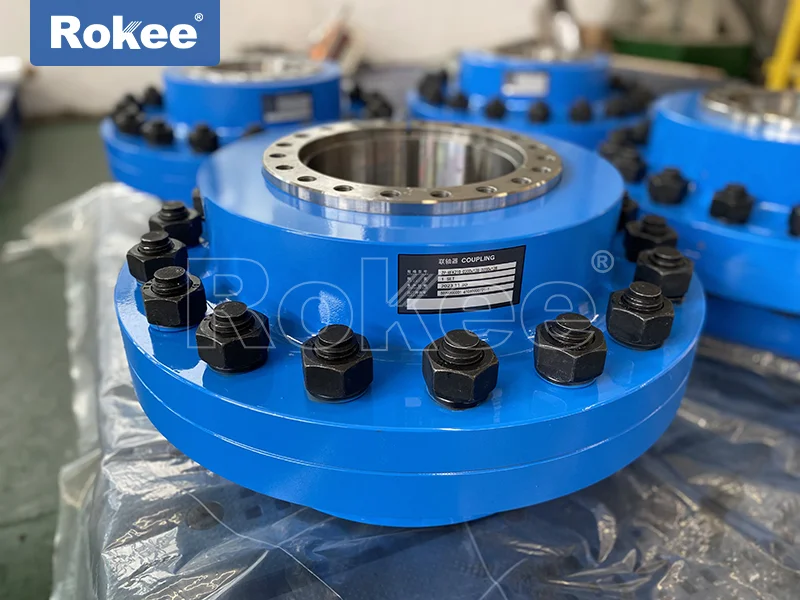
The working principle is based on the principle of elasticity: when the bolt is tightened, the conical part of the expansion sleeve expands radially, causing both the inner and outer contact surfaces to be compressed simultaneously. This design not only eliminates the stress concentration problem caused by traditional key connections, but also achieves higher concentricity, and the transmission torque can reach 2-3 times that of traditional key connections.
The main types of expansion sleeve couplings
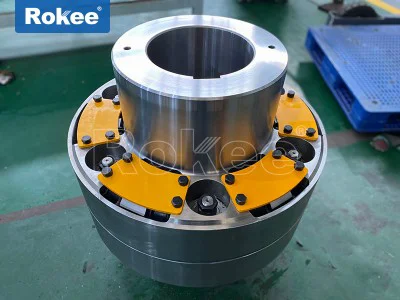
Single cone expansion sleeve: With a simple structure, it is suitable for medium load transmission, easy to install, and is the most common type in industry.
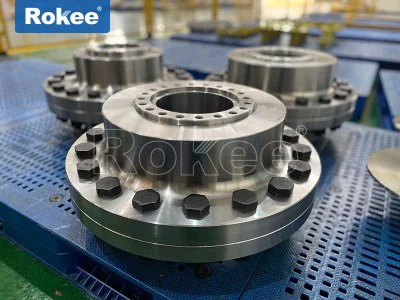
Double cone expansion sleeve: With two inner and outer conical surfaces, the clamping force distribution is more uniform, suitable for high torque and high-precision requirements.
Split type expansion sleeve: composed of multiple independent arc segments, especially suitable for connecting large equipment and large-diameter shafts.
Hydraulic expansion sleeve: It uses hydraulic principles to achieve expansion, making installation and disassembly more convenient, and is commonly used in situations that require frequent replacement.
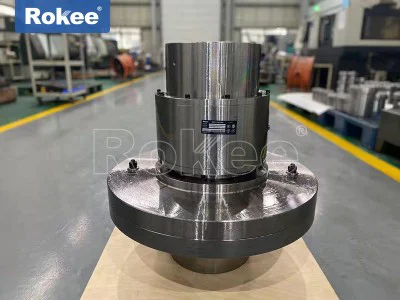
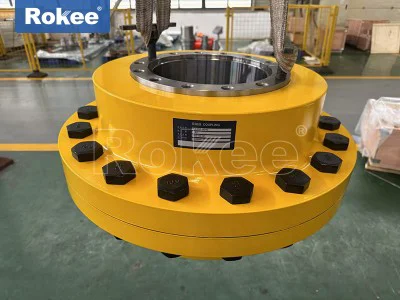
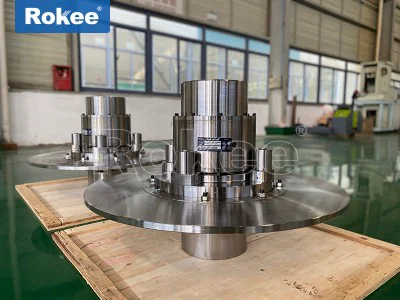
Flange type expansion sleeve: Integrated flange design, can achieve axial positioning and torque transmission simultaneously, compact structure.
Compared with traditional keyway connections, the expansion sleeve coupling has significant advantages:
No gap connection: completely eliminating the fit gap, improving transmission accuracy, and significantly reducing vibration and noise.
Uniform stress distribution: avoids stress concentration caused by keyway and extends the service life of shaft and hub.
High torque transmission capability: With a large contact area, it can transmit even greater torque, up to three times that of traditional key connections.
Easy installation: No need for precision machining of keyways, greatly simplifying assembly processes and reducing manufacturing costs.
Easy maintenance: Reusable, easy to disassemble and reinstall, reducing downtime.
Multifunctionality: Simultaneously achieve axial, radial, and angular positioning, integrating multiple functions into one.
Key application areas of expansion sleeve couplings
Wind power industry: used for connecting generators and gearboxes to withstand huge alternating loads.
Machine tool manufacturing: High precision spindle connection ensures machining accuracy.
Mining machinery: transmission systems for heavy equipment such as crushers and ball mills.
Rail transit: Reliable connection between traction motor and gearbox.
Petrochemical industry: power transmission for large compressors and pumps.
Steel metallurgy: transmission of heavy equipment such as rolling mills and straightening machines.
Shipbuilding industry: propulsion system shaft connections.
Selection considerations:
Transmission torque requirements
Materials and dimensions of shafts and hubs
Working environment temperature
speed range
Do you need axial positioning function
Dynamic load characteristics
Installation steps:
Clean all contact surfaces, remove oil stains and burrs
Check if the matching dimensions meet the requirements
Apply an appropriate amount of lubricant (usually molybdenum disulfide)
Install in the center to ensure correct initial position
Tighten the bolts gradually in diagonal order
Use a torque wrench to achieve the specified torque value
Common mistakes to avoid:
Excessive tightening causes deformation of the expansion sleeve
Improper lubrication causes changes in friction coefficient
Incorrect installation causes additional load
Ignore the influence of temperature changes on preload force
Maintenance and upkeep of the expansion sleeve coupling
Regular inspection: Check the bolt pre tightening force every 6 months and re tighten if necessary.
Lubrication management: When reinstalling after disassembly, it is recommended to replace the lubricant with high-temperature grease.
Surface protection: When used in corrosive environments, surface protection treatment should be done well.
Temperature monitoring: Abnormal temperature rise may indicate overload or poor lubrication.
Vibration analysis: Regularly conduct vibration testing to detect potential problems early on.
Life assessment: Based on usage time and operating conditions, the replacement cycle is evaluated, and the general design life is 5-10 years.
As an important component of modern mechanical transmission systems, the expansion sleeve coupling is gradually replacing traditional connection methods and becoming the mainstream choice in the industrial field due to its excellent performance and reliability. With the advancement of manufacturing technology and the increasing demand for applications, this technology will continue to develop, providing more efficient and reliable connection solutions for mechanical equipment.
Expansion sleeve coupling, as a core keyless transmission component in modern mechanical engineering, has revolutionized the traditional shaft-hub connection mode by relying on its unique structural design and mechanical principles. Unlike conventional keyway connections that rely on shear force transmission and are prone to stress concentration, wear and assembly errors, this type of coupling achieves tight, stable and high-efficiency power transmission through the friction generated by radial expansion, gradually becoming an indispensable part of precision machinery, heavy industry and high-speed transmission systems. It integrates the advantages of simple structure, convenient disassembly, high transmission accuracy and strong environmental adaptability, and its performance indicators and classification characteristics are closely matched with diverse industrial application scenarios, providing reliable connection solutions for various mechanical equipment with different load requirements, speed conditions and working environments.
To fully understand the value of expansion sleeve coupling, it is essential to start with its basic structural composition and working mechanism. Structurally, a standard expansion sleeve coupling is mainly composed of inner conical sleeve, outer conical sleeve, locking bolts, pressure rings and auxiliary limit parts, and all components are made of high-strength alloy steel with excellent elasticity and wear resistance after precise forging, heat treatment and finishing. The core design lies in the matching conical surfaces of the inner and outer sleeves, with a reasonable cone angle generally controlled within a scientific range to ensure that axial force can be efficiently converted into uniform radial pressure. During assembly, the locking bolts are tightened symmetrically and step by step, which drives the inner and outer conical sleeves to move axially relative to each other; under the extrusion of the conical surfaces, the inner sleeve shrinks radially to tightly wrap the driving shaft, while the outer sleeve expands radially to closely fit the inner hole of the hub, forming a seamless interference fit between the shaft, the coupling and the hub. This connection mode eliminates gaps completely, avoids the stress concentration caused by keyway processing, and realizes self-centering during installation, which effectively improves the coaxiality of the entire transmission system and lays a solid foundation for stable operation.
The working principle of expansion sleeve coupling is based on the combination of elastic deformation and friction transmission, which determines its outstanding mechanical properties. When the equipment is running, the torque, axial force and radial load generated by the driving shaft are all transmitted through the friction force between the contact surfaces of the coupling, the shaft and the hub. The magnitude of the friction force is positively correlated with the radial pressure generated by the conical surface extrusion, the friction coefficient of the precision-machined contact surface and the effective contact area, so that the coupling can achieve stable transmission of large loads without relative sliding. In terms of performance, first of all, it has zero backlash transmission performance, which completely eliminates the idle stroke and transmission error existing in traditional key connections, making it extremely suitable for high-precision transmission occasions such as precision machine tools and automation equipment, and significantly improving the operation accuracy and repeatability of the equipment. Secondly, it features high rigidity and high load-bearing capacity, with excellent axial and radial rigidity, able to withstand heavy torque, impact load and alternating load without deformation or loosening, ensuring the stability of the transmission system under harsh working conditions. Thirdly, it has superior disassembly and assembly performance, without the need for heating, cooling or special pressing equipment during installation and disassembly; only by loosening the locking bolts can the coupling be easily removed, which will not damage the shaft and hub surfaces, and supports repeated disassembly and assembly, greatly reducing the maintenance cost and downtime of the equipment. In addition, it has strong environmental adaptability, can operate normally in a wide temperature range, and has good resistance to dust, moisture and partial corrosion, making it suitable for both indoor precision workshops and outdoor harsh industrial sites.
Expansion sleeve couplings are divided into multiple categories according to different structural forms, performance parameters and application scenarios, and each type has unique characteristics to meet the differentiated needs of various mechanical systems. Classified by structural design, the most common ones are single-cone expansion sleeve couplings, double-cone expansion sleeve couplings and hydraulic expansion sleeve couplings. Single-cone expansion sleeve coupling adopts a single conical sleeve structure, with a simple and compact overall structure, small axial size, easy processing and low production difficulty, suitable for general industrial transmission occasions with limited installation space and medium and small torque requirements; its disadvantage is that the disassembly force is relatively large, and it is not suitable for equipment that requires frequent disassembly. Double-cone expansion sleeve coupling is optimized on the basis of single-cone structure, adopting inner and outer double conical surface design, which can reduce the disassembly force by a large margin while ensuring the transmission capacity, with more uniform stress distribution, stronger resistance to impact and vibration, and wider application in medium and high torque transmission systems. Hydraulic expansion sleeve coupling realizes radial expansion through hydraulic pressure instead of traditional bolt tightening, which can accurately control the expansion amount and radial pressure, ensuring uniform stress on the contact surface, with higher transmission accuracy and better centering effect, suitable for high-speed, high-precision and heavy-load transmission occasions such as wind power generation equipment and large-scale machine tool spindles. Classified by performance and application, it can be divided into standard type, high-torque type, high-speed type and special environment type. Standard type expansion sleeve coupling is the most widely used, with moderate performance parameters, suitable for conventional mechanical equipment such as fans, pumps and conveyor belts, meeting the basic transmission needs of general industrial scenarios. High-torque type is made of special high-strength alloy materials with reinforced structural design, which can bear extremely large torque loads, and is widely used in heavy industry fields such as metallurgy, mining and shipbuilding, undertaking the transmission task of heavy machinery. High-speed type has undergone precision dynamic balancing treatment, with small unbalance amount and good dynamic performance, suitable for high-speed rotating equipment such as high-speed motors, centrifugal compressors, and can maintain stable operation without vibration even at ultra-high speed. Special environment type is optimized for material and surface treatment, with excellent corrosion resistance, high temperature resistance or explosion-proof performance, suitable for special working conditions such as chemical industry, petroleum and underground engineering, ensuring long-term stable operation in harsh environments.
The excellent structural performance and diverse classification characteristics make expansion sleeve couplings widely used in almost all fields of mechanical engineering, covering light industry, heavy industry, high-end equipment manufacturing and emerging industries, and playing an irreplaceable role in different application scenarios. In the field of precision machine tools and automation equipment, expansion sleeve couplings are favored for their zero backlash, high precision and self-centering performance, and are widely used in CNC machining center spindles, robot joints, automatic assembly lines and measuring equipment; they can ensure the positioning accuracy and transmission stability of the equipment, reduce the wear of transmission parts, and improve the processing accuracy and service life of precision equipment. In the field of heavy machinery and equipment, including metallurgical rolling mills, mining crushers, ship propulsion systems and large-scale fans, high-torque expansion sleeve couplings bear the heavy-load transmission task, replacing traditional key connections to solve the problems of stress concentration, easy loosening and difficult maintenance of keyways, and ensuring the reliable operation of heavy equipment under long-term heavy load and impact conditions. In the field of wind power and new energy equipment, expansion sleeve couplings are used for the connection between gearboxes and generators, with high torque transmission capacity and good vibration damping performance, which can withstand the alternating load and vibration caused by wind speed changes, adapt to the harsh outdoor working environment of wind farms, and improve the stability and service life of wind power generation systems. In the field of general industrial machinery, such as pumps, fans, compressors, textile machinery and packaging machinery, standard expansion sleeve couplings are widely used due to their convenient disassembly and assembly, low maintenance cost and stable performance, optimizing the shaft-hub connection structure of equipment and improving the overall operation efficiency of industrial production lines. In addition, in the automotive, aerospace and other fields, lightweight and high-precision expansion sleeve couplings are also gradually applied, meeting the requirements of high strength, light weight and high reliability of transmission components in these fields, and promoting the upgrading and development of related equipment.
With the continuous development of mechanical engineering technology and the increasing demand for equipment performance, the application scope of expansion sleeve couplings is still expanding, and its technical level is also constantly improving. Manufacturers are continuously optimizing the structural design, material selection and processing technology of expansion sleeve couplings to further improve their load-bearing capacity, speed resistance, precision and environmental adaptability, so as to adapt to the higher requirements of modern mechanical equipment for transmission components. Compared with other shaft-hub connection methods, expansion sleeve couplings have obvious comprehensive advantages, not only solving the inherent defects of traditional connection methods, but also meeting the diversified, high-precision and high-reliability needs of modern industrial transmission. In the actual application process, selecting the appropriate type of expansion sleeve coupling according to the specific working conditions such as torque size, speed level, installation space and environmental parameters can maximize its performance advantages, improve the operation efficiency and reliability of mechanical equipment, reduce maintenance costs, and create greater economic benefits for industrial production. In summary, as an advanced and efficient keyless transmission component, expansion sleeve coupling has become an important support for the development of modern mechanical engineering, and its structural innovation, performance optimization and application expansion will continue to promote the progress of mechanical transmission technology.
In the long-term operation of mechanical systems, the selection and application of expansion sleeve couplings also need to be combined with actual working conditions for scientific matching. For example, in high-speed rotating systems, priority should be given to high-speed type products with good dynamic balance performance to avoid vibration and noise caused by unbalanced force; in corrosive environments, it is necessary to choose couplings with corrosion-resistant materials or surface anti-corrosion treatment to prevent material corrosion from affecting the connection effect; in occasions with frequent start-stop and impact loads, double-cone or high-torque type couplings with strong impact resistance should be selected to ensure the stability of the connection. At the same time, standardized installation and regular maintenance are also crucial to give full play to the performance of expansion sleeve couplings. During installation, strictly following the process of cleaning contact surfaces, applying appropriate lubricating grease, symmetrically tightening bolts step by step and checking torque can ensure the formation of uniform radial pressure and avoid damage to components caused by improper assembly. During use, regular inspection of bolt pre-tightening force, monitoring of equipment vibration and temperature changes, and timely handling of abnormal conditions can effectively extend the service life of the coupling and ensure the long-term stable operation of the transmission system.
From the perspective of industrial development trends, the intelligence, high performance and generalization of transmission components are the inevitable direction of future mechanical engineering development, and expansion sleeve couplings, as a mature and advanced connection technology, will continue to play a pivotal role. Its integration with other transmission technologies, such as combining with elastic elements to achieve both high rigidity and vibration damping, or integrating sensing devices to realize real-time monitoring of transmission status, will further expand its application scenarios and performance boundaries. Whether it is the transformation and upgrading of traditional industries or the research and development of emerging high-end equipment, expansion sleeve couplings can provide reliable, efficient and flexible shaft-hub connection solutions, promoting the improvement of mechanical transmission efficiency, the reduction of equipment failure rates and the sustainable development of the manufacturing industry. With the continuous improvement of industrial automation and precision manufacturing levels, the market demand for high-performance expansion sleeve couplings will continue to grow, and its technical research and application exploration will also be more in-depth, making greater contributions to the progress of the global mechanical engineering industry.