Cardan Joints
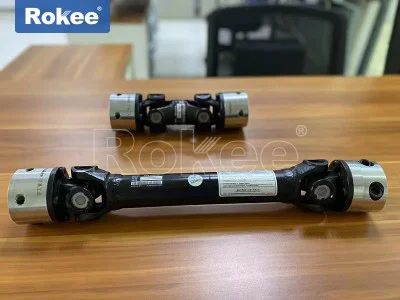
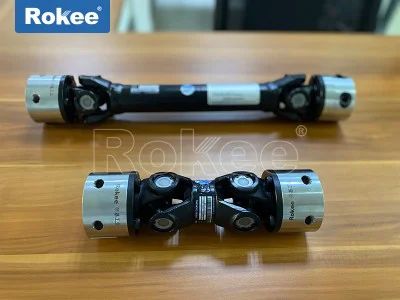
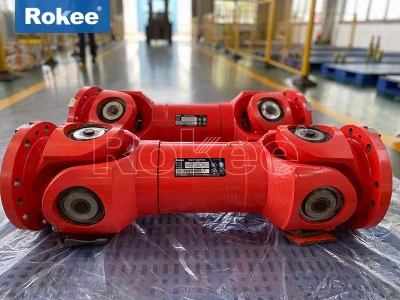
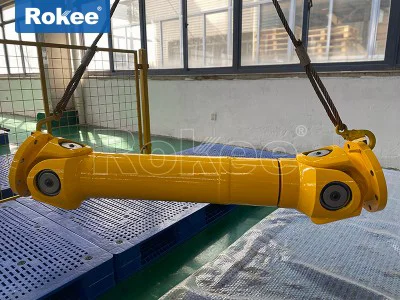
Cardan joint is a key component used in mechanical transmission to connect two shafts with non overlapping axes and achieve torque transmission.
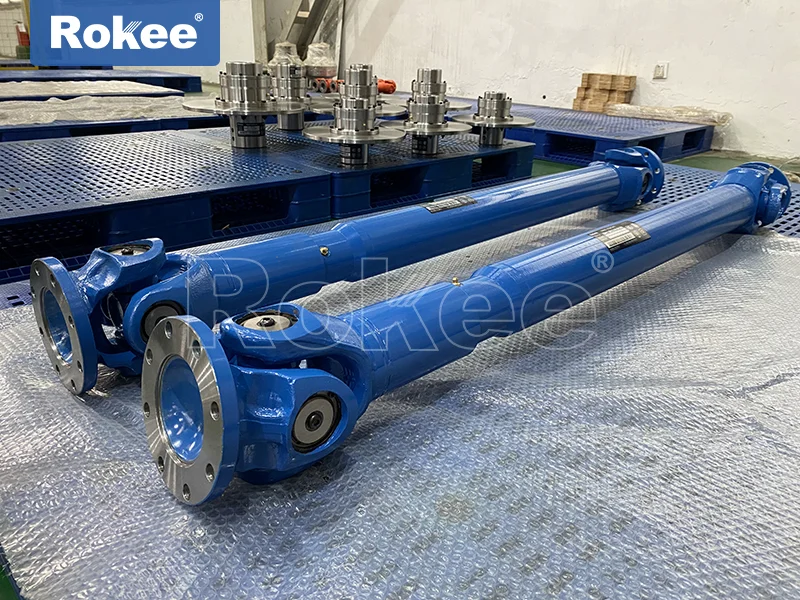
According to the structure and working principle, it is mainly divided into the following types:
Rigid cardan joint
Non constant velocity cardan joint (such as cross shaft type): suitable for transmission scenarios with small angles (usually<15 °), where the instantaneous angular velocity ratio changes but the average velocity is equal. Commonly seen in automotive driveshafts.
Quasi constant velocity cardan joint (such as double joint, three pin shaft type): reduces speed fluctuations through structural optimization, and is used in scenarios such as steering drive axles that require approximate constant velocity transmission.
Constant speed cardan joint (such as cage type and fork type): It achieves strict constant speed transmission through a spherical raceway design and is widely used for connecting the driving wheels of independent suspension vehicles.Flexible cardan joint
Relying on elastic components such as rubber and polyurethane to transmit power, it has buffering and vibration reduction characteristics, and is often used in low-speed or situations that require compensation for large axial/radial deviations (such as ships and industrial equipment).
The Cardan joint, widely recognized as a universal joint in mechanical engineering, stands as one of the most fundamental and indispensable power transmission components in modern machinery systems, designed to address the core challenge of transferring rotational torque and motion between two shafts that are not collinear or aligned at a fixed angle. Since its conceptualization and refinement, this component has evolved from a basic mechanical linkage to a highly engineered solution tailored to diverse operational demands, with its structural design, performance attributes, and functional classifications directly shaping its adaptability across countless industrial and mechanical scenarios. At its essence, the Cardan joint operates on a straightforward yet robust mechanical principle, enabling angular deflection between input and output shafts while maintaining uninterrupted power delivery, a capability that has cemented its role as a cornerstone in systems requiring flexible, reliable torque transmission even under misaligned conditions. Unlike rigid shaft couplings that demand perfect shaft alignment to function effectively, the Cardan joint accommodates angular, and in some variants axial, discrepancies between shafts, eliminating the need for ultra-precise installation and mitigating the impact of mechanical wear, thermal expansion, and operational vibration on system performance. This inherent flexibility makes it irreplaceable in machinery where shaft movement is inevitable, from small-scale precision equipment to heavy-duty industrial machinery and automotive drivetrains.
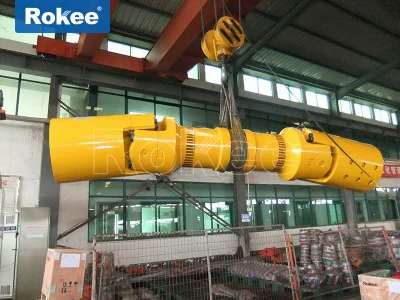
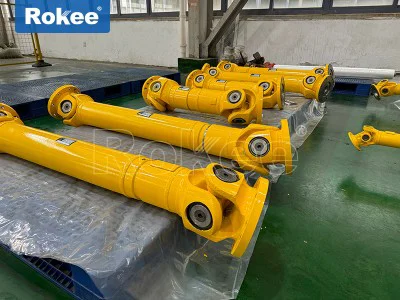
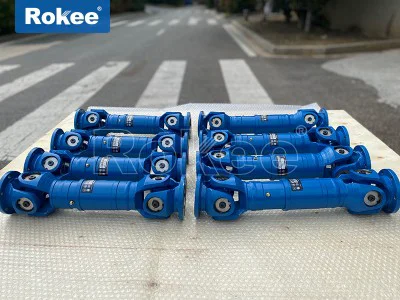
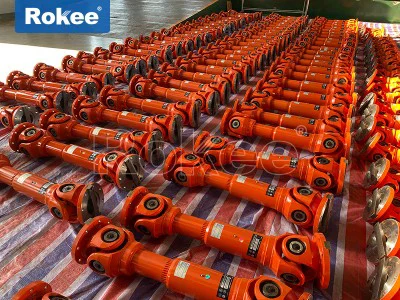
Delving into the core structure of a standard Cardan joint reveals a minimalist yet durable assembly optimized for load-bearing and rotational efficiency. The foundational configuration consists of two yoke-shaped end fittings—one attached to the driving shaft and the other to the driven shaft—and a central cross-shaped trunnion (commonly referred to as a spider) that serves as the pivotal connecting element. Each end of the cross trunnion is fitted with precision bearings, typically needle roller bearings, which reduce friction between the trunnion and the yokes, enabling smooth, low-resistance rotation even under high torque loads. This bearing integration is critical to the joint’s performance, as it minimizes wear and heat generation during continuous operation, extending the service life of the entire assembly. The yokes are engineered with precision-machined bores to securely house the bearing assemblies, ensuring a tight, stable fit that prevents radial movement and maintains concentricity between the cross and shafts. While the basic structural framework remains consistent across standard models, variations in material selection, bearing type, and dimensional proportions are implemented to enhance specific performance metrics, such as torque capacity, operating speed, and resistance to harsh environmental conditions. High-strength alloy steels are commonly used for the cross trunnion and yokes to withstand heavy compressive and torsional forces, while surface treatments like carburizing, nitriding, or hardening are applied to boost wear resistance and durability. In more specialized variants, additional components such as centering mechanisms, sealing elements, and lubrication reservoirs are integrated to refine performance and protect internal parts from contaminants, moisture, and premature degradation.
The performance characteristics of Cardan joints are defined by a set of key metrics that dictate their suitability for specific applications, with angular misalignment capacity, torque transmission capability, rotational smoothness, and operational durability standing as the most pivotal parameters. Angular misalignment tolerance is a defining trait: standard single Cardan joints typically accommodate angular deflections ranging from a few degrees up to approximately 15 to 20 degrees under normal operating conditions, with performance remaining stable and efficient within this range. Exceeding this threshold can lead to increased vibration, uneven torque transmission, and accelerated wear, as the geometric mismatch places excessive stress on the bearings and cross trunnion. Torque capacity varies significantly based on the joint’s size, material strength, and structural design; heavy-duty variants are engineered to transmit extremely high torsional loads, making them ideal for large industrial machinery, while compact, lightweight models handle lower torque levels in precision instruments and small-scale mechanical systems. A notable performance consideration of basic single Cardan joints is the inherent velocity fluctuation that occurs when operating at non-zero angles: as the joint rotates, the output shaft speed varies slightly within each revolution, even with a constant input speed, due to the geometric linkage of the yokes and cross. This fluctuation is negligible at small angles but becomes more pronounced as the deflection angle increases, leading to minor vibration and noise in high-speed applications. Despite this limitation, the joint’s exceptional durability and load-bearing capacity remain unmatched in many scenarios, with proper lubrication and maintenance further enhancing its operational lifespan by reducing friction and preventing corrosion. Additionally, Cardan joints exhibit strong resistance to shock loads and intermittent stress, a trait that makes them resilient in machinery subjected to sudden operational changes or heavy, fluctuating workloads.
Cardan joints are categorized into distinct types based on structural modifications, performance enhancements, and functional capabilities, each engineered to overcome the limitations of the basic design and cater to specialized operational needs. The most common classification includes single Cardan joints, double Cardan joints, offset Cardan joints, and constant-velocity Cardan variants, each with unique structural nuances and performance profiles. The single Cardan joint, the simplest and most widely used form, retains the classic two-yoke and cross-spider configuration, offering cost-effective, reliable torque transmission for moderate angular misalignment scenarios. Its straightforward design ensures ease of manufacturing, installation, and maintenance, making it the go-to choice for general-purpose applications where minor speed fluctuations and limited angular deflection are acceptable. Double Cardan joints, also known as constant-velocity joints in some operational contexts, represent a refined iteration that addresses the velocity fluctuation issue of single joints by integrating two single Cardan joints linked by a short intermediate shaft or a compact centering mechanism. This dual-joint configuration cancels out the speed variations caused by angular misalignment, delivering nearly uniform rotational velocity between input and output shafts even at higher deflection angles, typically up to 30 degrees or more. The inclusion of a centering element maintains equal angular distribution between the two joint sections, ensuring smooth, vibration-free operation at elevated speeds and larger angles, making this type ideal for high-performance applications requiring precision and stability. Offset Cardan joints feature a modified design that accommodates both angular misalignment and axial displacement between shafts, a dual capability that sets them apart from standard models. This design allows the shafts to move slightly along their longitudinal axes while transmitting torque, making it suitable for systems where thermal expansion, mechanical settling, or operational movement causes axial shifting. Other specialized variants include heavy-duty Cardan joints with reinforced structures and oversized bearings for extreme load conditions, compact miniature joints for small-scale precision equipment, and sealed, corrosion-resistant joints for harsh environments exposed to moisture, dust, or chemical contaminants.
The versatility of Cardan joints, stemming from their diverse structural designs and performance attributes, translates to an extensive range of applications across nearly every sector of mechanical engineering, from automotive and transportation to industrial manufacturing, agriculture, aerospace, and precision instrumentation. In the automotive industry, Cardan joints are integral components of drivetrain systems, facilitating power transfer from the transmission to the drive wheels in both two-wheel and four-wheel drive vehicles. They accommodate the angular changes between the driveshaft and axle shafts caused by suspension movement, wheel steering, and uneven road surfaces, ensuring consistent power delivery and smooth vehicle operation even over rough terrain. Double Cardan joints are particularly prevalent in heavy-duty trucks, off-road vehicles, and performance cars, where their constant-velocity capabilities enhance driving stability and reduce drivetrain vibration at high speeds and steep steering angles. Beyond passenger and commercial vehicles, Cardan joints play a vital role in agricultural machinery, including tractors, harvesters, and tillers, where they transmit power from the engine to various implements such as plows, mowers, and seeders. These joints withstand the harsh, dusty, and high-load conditions of farm operations, accommodating shaft misalignment caused by uneven ground and heavy implement use, ensuring reliable performance in critical agricultural tasks. In industrial manufacturing, Cardan joints are ubiquitous in heavy machinery such as rolling mills, crushers, conveyors, and pumps, where they transfer high torque between misaligned shafts in continuous production environments. Heavy-duty variants are engineered to endure the extreme loads and repetitive operation of industrial equipment, minimizing downtime and maintenance requirements while sustaining efficient power transmission. Offset Cardan joints are commonly used in industrial pumps and compressors, where axial shaft movement is common due to thermal expansion and operational vibration, providing a flexible, durable linkage that maintains system integrity.
Cardan joints also find critical applications in aerospace and defense systems, where precision, reliability, and lightweight design are non-negotiable. They are used in flight control mechanisms, rotor drive systems for helicopters, and auxiliary power units, transmitting torque between misaligned shafts while withstanding the extreme temperature fluctuations, vibration, and mechanical stress of aerospace operations. The compact size and high strength-to-weight ratio of specialized aerospace-grade Cardan joints make them ideal for the tight, weight-sensitive confines of aircraft and spacecraft. In precision engineering and robotics, miniature Cardan joints are employed in robotic arms, automated assembly systems, and precision instrumentation, enabling flexible, accurate motion control in confined spaces. These small-scale joints deliver smooth, precise torque transmission for delicate operations, supporting the high-precision requirements of robotic manufacturing, medical devices, and laboratory equipment. Additionally, Cardan joints are used in marine equipment, such as boat propeller drives and marine pumps, where sealed, corrosion-resistant variants withstand the moist, saline marine environment, ensuring reliable power transmission in watercraft and offshore machinery. Even in consumer goods and small-scale mechanical devices, simplified Cardan joint designs are integrated into power tools, household appliances, and recreational equipment, demonstrating the component’s universal adaptability across scales and operational intensities.
As mechanical engineering continues to advance, the evolution of Cardan joints persists, with ongoing innovations in material science, bearing technology, and structural design further enhancing their performance, durability, and versatility. Modern manufacturing techniques, such as precision forging, CNC machining, and advanced heat treatment, have elevated the precision and load-bearing capacity of Cardan joints, while improved sealing and lubrication technologies have extended their service life in harsh environments. Research into low-friction bearing materials and optimized cross-yoke geometries continues to minimize speed fluctuations and vibration in single joints, blurring the performance gap between standard and constant-velocity variants. Despite the emergence of alternative power transmission technologies, the Cardan joint remains irreplaceable due to its simple, robust design, cost-effectiveness, and unparalleled ability to transmit torque under misaligned conditions. Its enduring relevance across diverse industries underscores its status as a foundational mechanical component, with its structure, performance, and types continuously adapted to meet the evolving demands of modern machinery. Whether in heavy industrial equipment, high-performance vehicles, precision robotics, or everyday consumer devices, the Cardan joint remains a critical enabler of efficient, flexible mechanical power transmission, embodying the perfect balance of simplicity, durability, and functional versatility in mechanical engineering design.