Brake Drum Gear Couplings
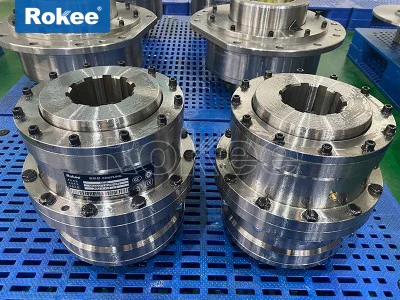
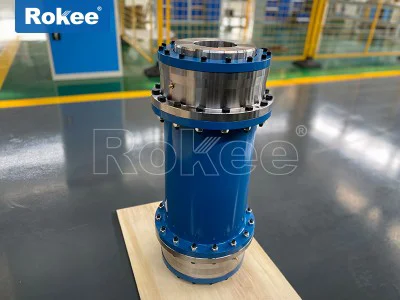
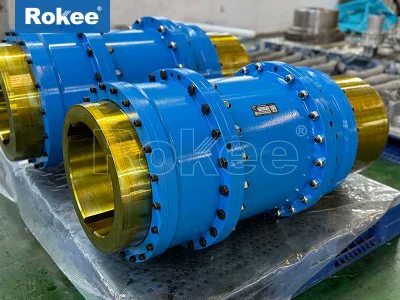
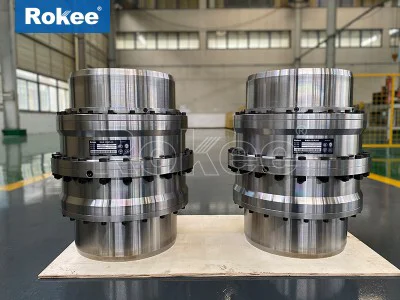
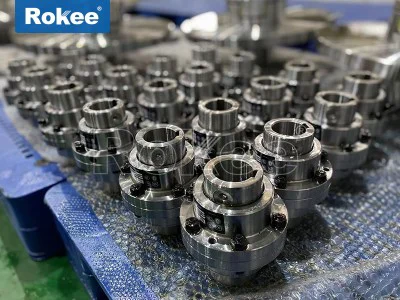
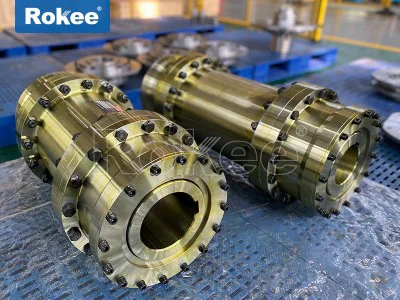
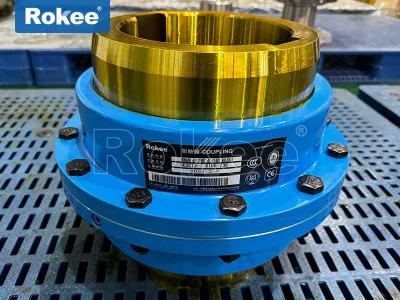
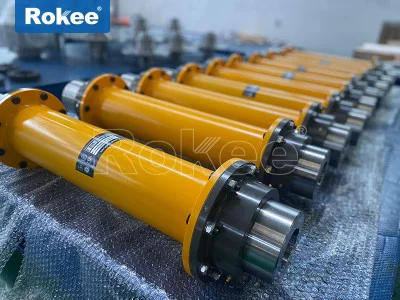
The brake drum gear coupling integrates brake function components on the basis of the standard drum gear coupling, forming a composite coupling device that combines transmission and braking functions. This special design gives it an irreplaceable advantage in situations where rapid braking is required, such as lifting and transportation, metallurgical steel rolling, etc.
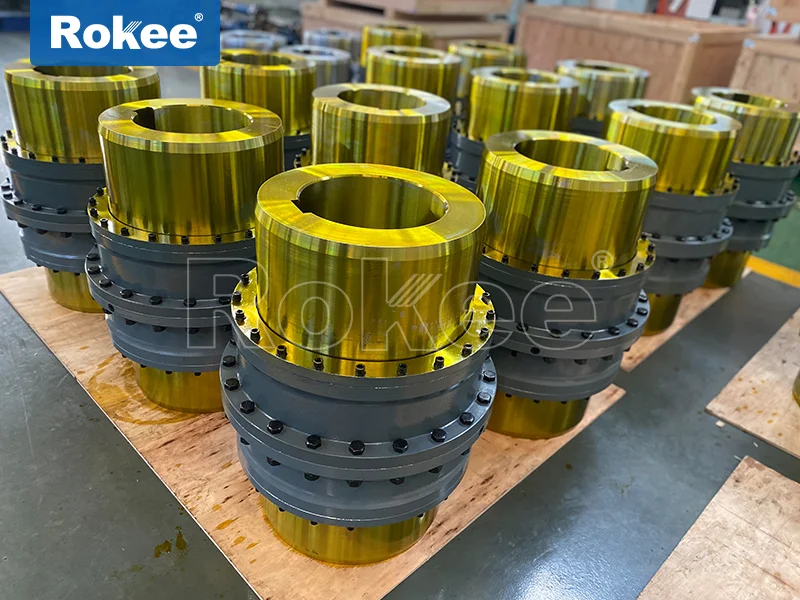
The brake drum gear coupling integrates drum gear transmission technology and braking function, forming a series of significant technical advantages, making it an irreplaceable key transmission component in the heavy industry field. By analyzing its performance characteristics and technical parameters in depth, we can have a more comprehensive understanding of the engineering value of this type of coupling.
Core performance advantages
Excellent bearing capacity: Under the same external dimensions, the torque transmission capacity of the drum gear coupling is on average 15% -20% higher than that of the spur gear coupling. This characteristic originates from the optimized contact mechanism of the drum shaped tooth surface, which enables the load to be evenly distributed along the tooth width direction, avoiding the phenomenon of stress concentration at the end. Taking the G Ⅱ CLZ type coupling as an example, its nominal torque range can reach 0.4-4500kN · m, covering various application requirements from light to super heavy. In a practical engineering case, a certain metallurgical enterprise's 1800mm hot rolling production line replaced the traditional straight tooth coupling with a drum gear coupling, resulting in a significant reduction in equipment vibration value from 6.5mm/s to 2.1mm/s. The annual downtime maintenance time was reduced by 120 hours, and the annual single line efficiency was improved by more than 800000 yuan.
Excellent compensation capability: The drum gear coupling exhibits all-round displacement compensation performance, with angular compensation up to ± 1.5 ° or even higher (compared to the ± 1 ° of the straight tooth coupling), radial compensation capability typically ranging from 0.2% -0.3% of the coupling outer diameter, and axial compensation ranging from ± 1mm to ± 5mm. This multi-directional compensation characteristic enables it to effectively absorb equipment installation errors, foundation settlement, and thermal deformation during operation, protecting bearings and shaft systems from the influence of additional loads. Especially in heavy equipment, this compensation capability can significantly extend the service life of various components in the transmission system.
Integrated braking function: The brake drum gear coupling integrates transmission and braking functions, saving installation space and simplifying the transmission chain structure. The brake wheel surface of WGZ type coupling has undergone special hardening treatment, with stable friction coefficient and strong wear resistance, and can withstand frequent start stop working conditions. Actual testing has shown that a properly configured braking system can enable heavy equipment to achieve complete braking within 2-3 seconds in emergency situations, greatly improving operational safety. At the same time, integrated design reduces the alignment issues of traditional split brake systems and lowers maintenance complexity.
Efficient lubrication and thermal management: In response to the heat generated during the braking process, the high-end brake drum gear coupling adopts a forced thin oil lubrication system. The lubricating oil is used as both a tooth surface lubricant and a cooling medium for circulation. Test data shows that the wear of gear surfaces lubricated with thin oil is only about 10% of that lubricated with grease, and it can effectively remove braking heat and prevent material performance degradation. Some models also adopt optimized oil circuit design, using centrifugal force to accurately spray oil into the meshing area, ensuring reliable operation under high temperature conditions.
From the perspective of material and process, high-quality brake drum gear couplings adopt multi-layer composite heat treatment technology: the gear blank is first quenched and tempered to obtain core toughness (hardness HRC28-32), the gear surface is then carburized and quenched to achieve high hardness (HRC58-62), and finally stabilized to eliminate internal stress. This "hard on the outside and tough on the inside" structure ensures the wear resistance of the tooth surface and prevents the risk of brittle fracture. In terms of dynamic performance, the drum gear coupling that has undergone precise dynamic balancing can adapt to high-speed working conditions, with a maximum allowable speed of 4000r/min (depending on the specifications).
The correct selection of brake drum gear coupling is a key link to ensure the reliable operation of the transmission system. Reasonable selection can not only fully leverage the performance advantages of couplings, but also significantly extend the service life of equipment and reduce overall operating costs.
Core selection elements
Torque parameter calculation: The primary consideration for selection is the amount of torque that the coupling needs to transmit. When calculating, it is necessary to distinguish between steady-state torque and peak torque, especially for impact load situations, and it is recommended to take a safety factor of 2.5-3.0. The formula for calculating dynamic torque is: dynamic torque=theoretical torque x operating condition factor x safety factor. The operating condition coefficient needs to consider the type of driving source (such as electric motors, turbines, etc.) and the characteristics of the driven equipment (such as fans, compressors, etc.).
Compensation requirements for shaft displacement: Different equipment produces different shaft deviations during operation, and when selecting, it is necessary to evaluate the radial, axial, and angular displacement of the system. Generally speaking, drum toothed couplings can withstand angular deviations of ± 1.5 ° and axial deviations within 0.3mm. For special working conditions such as large rolling mills, significant axial displacement may occur due to roll adjustment, requiring the use of specially designed large compensation couplings, such as WGT type with intermediate sleeves or special drum shaped GII-CLZ type.
Braking performance requirements: The selection of braking type couplings requires additional consideration of parameters such as braking torque, braking frequency, and heat dissipation conditions. The WGZ type brake wheel coupling is suitable for medium braking frequencies (≤ 120 times per hour), while the WGP type brake disc design is more suitable for high-frequency braking or harsh environments that require liquid cooling for heat dissipation. The selection of brake surface diameter should ensure sufficient heat capacity to prevent performance degradation caused by overheating of the brake. Experience has shown that the surface temperature of brake discs/wheels should be controlled below 250 ℃, and if it exceeds this temperature, forced cooling measures should be considered.
In the complex landscape of industrial power transmission systems, the brake drum gear coupling stands out as a highly versatile and functional mechanical component, seamlessly integrating the dual functions of torque transmission and braking control. Unlike standard gear couplings that only focus on connecting driving and driven shafts to transfer rotational power, this specialized coupling incorporates a robust brake drum assembly into its core structure, making it an indispensable part of machinery that requires precise stopping, emergency halting, or speed regulation during operation. Designed to withstand heavy loads, variable operating conditions, and frequent dynamic stresses, it has carved out a critical niche across numerous heavy-duty industrial sectors, where reliability, durability, and multifunctionality are non-negotiable.
At its core, the brake drum gear coupling features a sophisticated yet robust structural composition that balances mechanical strength, transmission efficiency, and braking functionality. The primary structure consists of two key sub-assemblies: the gear coupling core and the integrated brake drum, along with auxiliary components that ensure stable operation and long service life. The gear coupling core adheres to the classic crown gear coupling design, which is renowned for its superior load-bearing capacity and misalignment compensation capabilities. It comprises two inner gear sleeves with precision-machined internal teeth and two outer gear hubs with curved external teeth, often referred to as crown teeth. The crown-shaped profile of the external teeth is engineered with a spherical center aligned with the gear axis, a design that eliminates edge contact and stress concentration during shaft misalignment, a common issue with straight-tooth gear couplings. This curved tooth design allows for smooth meshing even when the connected shafts exhibit radial, axial, or angular deviations, ensuring uniform load distribution across the entire tooth surface and minimizing wear and tear over prolonged use.
The brake drum, the defining feature of this coupling type, is rigidly integrated with one of the outer gear hubs or positioned between the two coupling halves, creating a unified structure that eliminates the need for separate braking components and simplifies the overall transmission system layout. The brake drum is typically forged from high-strength alloy steel or ductile iron, materials chosen for their exceptional thermal conductivity, wear resistance, and mechanical toughness to withstand the frictional heat and mechanical stress generated during repeated braking operations. The outer surface of the brake drum is precision-machined to a smooth, cylindrical finish, optimized for contact with brake shoes or pads to deliver consistent braking torque. In terms of connection and fixation, the inner gear sleeves are mounted onto the driving and driven shafts via keyways or interference fits, ensuring a tight, backlash-free connection that prevents slippage even under peak torque loads. High-strength fastening bolts secure the two halves of the coupling together, with precision gaskets or sealing rings integrated into the assembly to prevent lubricant leakage and block the ingress of dust, moisture, and abrasive contaminants from the surrounding operating environment. Additionally, internal lubrication channels are machined into the gear sleeves and hubs, facilitating the even distribution of lubricating grease or oil to reduce friction between meshing teeth, dissipate heat, and extend the service life of the gear components.
The performance attributes of brake drum gear couplings are directly derived from their specialized structural design, making them uniquely suited for demanding industrial operating conditions. Foremost among these is exceptional torque transmission capacity, enabled by the large contact area of the crown gear meshing and the high-strength materials used in construction. Compared to other types of flexible couplings, brake drum gear couplings can transmit significantly higher torque within a compact spatial footprint, making them ideal for heavy machinery where space is limited but power transmission demands are extreme. Their ability to compensate for shaft misalignment is another standout performance feature; the curved crown teeth allow for moderate angular misalignment (typically up to 1.5 degrees), radial misalignment, and axial displacement without compromising transmission efficiency or causing excessive wear. This misalignment compensation is crucial in industrial settings where shaft alignment deviations occur due to foundation settling, thermal expansion, mechanical vibration, or installation inaccuracies, preventing premature component failure and reducing maintenance requirements.
Durability and wear resistance are integral performance metrics for these couplings, especially given their dual role in transmission and braking. The hardened and tempered gear teeth, often treated with surface hardening processes such as carburizing and quenching, exhibit high hardness and excellent fatigue resistance, capable of withstanding repeated impact loads, frequent start-stop cycles, and the abrasive effects of minor contaminants. The brake drum’s high-quality material and precision finishing ensure consistent frictional performance during braking, resisting thermal deformation and wear even under continuous, heavy-duty braking operations. Thermal stability is another critical performance aspect: the brake drum efficiently dissipates the heat generated by frictional braking, while the internal lubrication system manages heat buildup from gear meshing, preventing thermal degradation of lubricants and structural distortion of the coupling components. Furthermore, brake drum gear couplings offer reliable operational stability, maintaining consistent performance across a wide range of rotational speeds, from low-speed, high-torque operation to moderate high-speed running. They also exhibit low noise and vibration levels during operation, thanks to the smooth meshing of crown teeth and balanced structural design, contributing to a safer and more comfortable working environment for industrial operators.
While maintaining core structural and functional consistency, brake drum gear couplings are classified into distinct variants based on structural design, braking configuration, installation requirements, and application-specific needs, each tailored to address unique operational challenges. One primary classification is based on the integration method of the brake drum, distinguishing between single brake drum couplings and dual brake drum couplings. Single brake drum gear couplings feature a single brake drum integrated with one half of the coupling, a compact and cost-effective design suitable for machinery with basic braking requirements, such as general-purpose conveyors, mixers, and small-scale industrial pumps. Dual brake drum couplings, by contrast, incorporate two brake drums, one on each coupling half, delivering enhanced braking torque and improved braking stability, making them the preferred choice for heavy-duty equipment that demands rapid, precise stopping, such as large lifting machinery, mining conveyors, and metallurgical rolling equipment.
Another key classification criterion is the gear tooth configuration and coupling size, which differentiates standard brake drum gear couplings from heavy-duty and compact variants. Standard models follow universal design specifications, offering balanced performance in torque transmission, misalignment compensation, and braking, suitable for a broad spectrum of general industrial applications with moderate load and speed requirements. Heavy-duty brake drum gear couplings feature enlarged gear modules, thicker gear teeth, and reinforced brake drum structures, engineered to handle extreme torque loads, heavy impact forces, and harsh operating environments typical of mining, metallurgy, and large-scale construction machinery. Compact brake drum gear couplings are designed with a reduced axial and radial footprint, optimized for equipment with limited installation space, such as marine propulsion systems, mobile industrial machinery, and precision manufacturing equipment, without sacrificing core transmission and braking performance. Additionally, these couplings can be classified by lubrication method: grease-lubricated models, which are maintenance-friendly and suitable for low-to-moderate speed applications, and oil-lubricated models, which offer superior heat dissipation and wear protection, ideal for high-speed, heavy-load operations where continuous lubrication is critical.
A further classification relates to the connection interface and shaft mounting style, including keyed connections, keyless interference fits, and flanged connections. Keyed brake drum gear couplings use traditional keyway and key assemblies for shaft attachment, offering easy installation and removal, making them suitable for equipment that requires frequent maintenance or component replacement. Keyless interference fit couplings rely on frictional contact between the coupling hub and shaft, eliminating backlash and ensuring concentricity, which enhances dynamic balance and reduces vibration, perfect for high-precision and high-speed machinery. Flanged connection couplings feature extended flanges for rigid connection with large-diameter shafts or equipment flanges, providing exceptional torsional rigidity and load-bearing capacity, tailored for heavy industrial machinery with oversized shafting.
The unique combination of torque transmission, misalignment compensation, and reliable braking functionality makes brake drum gear couplings indispensable across a vast array of industrial sectors, where they enhance equipment performance, operational safety, and system efficiency. In the mining and quarrying industry, these couplings are widely deployed in conveyor systems, crushing equipment, grinding mills, and hoisting machinery. Mining operations involve heavy loads, continuous operation, and harsh environmental conditions, including dust, moisture, and impact loads; the high torque capacity, wear resistance, and reliable braking of these couplings ensure smooth material transportation and safe emergency stopping, preventing equipment damage and operational accidents. In the metallurgical industry, which encompasses steel rolling mills, continuous casting equipment, and furnace auxiliary machinery, brake drum gear couplings excel in high-temperature, high-load, and high-vibration environments. Their thermal stability and heavy-duty design withstand the extreme conditions of metal processing, while precise braking control supports accurate positioning of metal billets and stable operation of rolling equipment, critical for maintaining product quality and production continuity.
The lifting and hoisting industry relies heavily on brake drum gear couplings for cranes, winches, elevators, and gantry equipment, where operational safety is paramount. The integrated braking system delivers instant and reliable stopping power, preventing load slippage and ensuring the safety of personnel and materials during lifting, lowering, and positioning operations. The misalignment compensation capability also accommodates shaft deviations caused by heavy load stress, extending equipment service life and reducing downtime. In the construction machinery sector, these couplings are integrated into concrete mixers, asphalt pavers, pile drivers, and heavy-duty trucks, where they endure frequent start-stop cycles, variable load conditions, and outdoor environmental challenges. Their robust construction and versatile performance ensure reliable operation of construction equipment, supporting efficient execution of construction projects.
Beyond these heavy industries, brake drum gear couplings find extensive use in the chemical and petrochemical industry, power generation facilities, marine and offshore engineering, and general manufacturing machinery. In chemical and petrochemical plants, they drive pumps, compressors, agitators, and conveyor systems, with corrosion-resistant material options available to withstand harsh chemical environments; their reliable braking prevents material spills and equipment malfunctions, ensuring safe handling of hazardous substances. In power plants, they support the operation of fans, water pumps, feedwater equipment, and generator auxiliary systems, delivering stable torque transmission and emergency braking to maintain uninterrupted power generation. Marine and offshore applications, including ship propulsion systems, deck machinery, and offshore drilling equipment, benefit from their compact design, high load capacity, and resistance to salt spray and moisture, ensuring reliable performance in demanding marine environments. In general manufacturing, they are used in machine tools, textile machinery, printing equipment, and packaging lines, providing precise transmission and controlled braking to support high-precision manufacturing processes and automated production lines.
In summary, the brake drum gear coupling represents a pinnacle of functional integration in mechanical transmission engineering, merging robust torque transmission, effective misalignment compensation, and reliable braking control into a single, compact component. Its meticulously engineered structure, encompassing crown gear meshing, high-strength brake drum, and efficient lubrication and sealing systems, underpins its exceptional performance characteristics, including high load capacity, wear resistance, thermal stability, and operational durability. The diverse classification of these couplings ensures adaptability to a wide range of operational requirements, from standard industrial tasks to extreme heavy-duty and space-constrained applications. Across mining, metallurgy, lifting, construction, chemical, power generation, marine, and general manufacturing sectors, brake drum gear couplings play a pivotal role in enhancing equipment reliability, operational safety, and production efficiency. As industrial technology continues to advance and machinery demands evolve, ongoing refinements in material science, manufacturing precision, and structural design will further elevate the performance and versatility of brake drum gear couplings, solidifying their status as a cornerstone component in modern industrial power transmission systems.