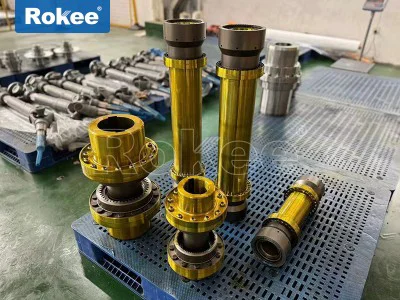
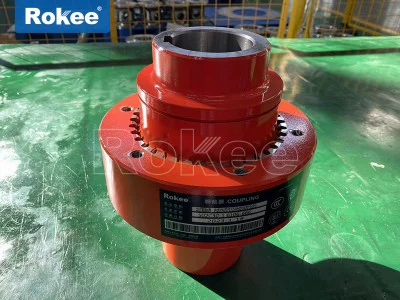
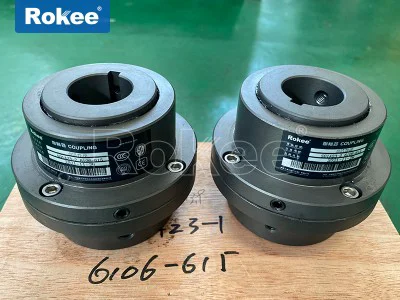
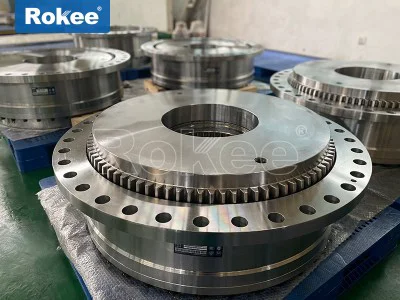
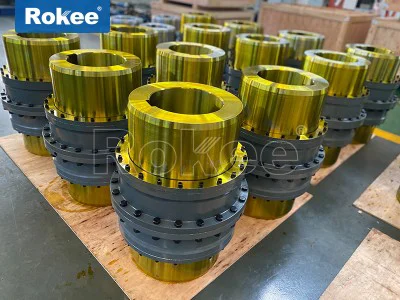
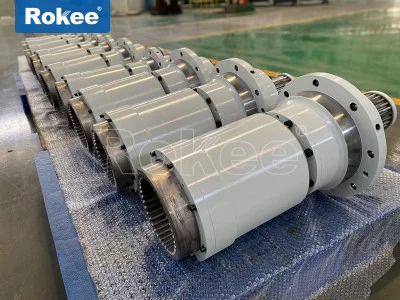
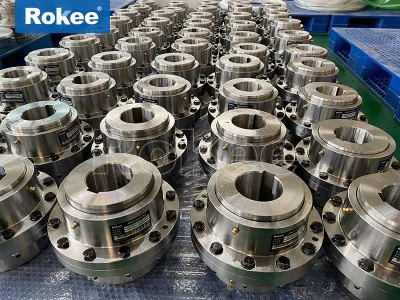
Full Gear Couplings
As a key component in mechanical transmission systems, full gear couplings play an indispensable role in modern industrial equipment. This device that achieves power transmission through gear meshing can not only efficiently transmit torque, but also compensate for various deviations between shaft systems, ensuring the smooth operation of the transmission system.
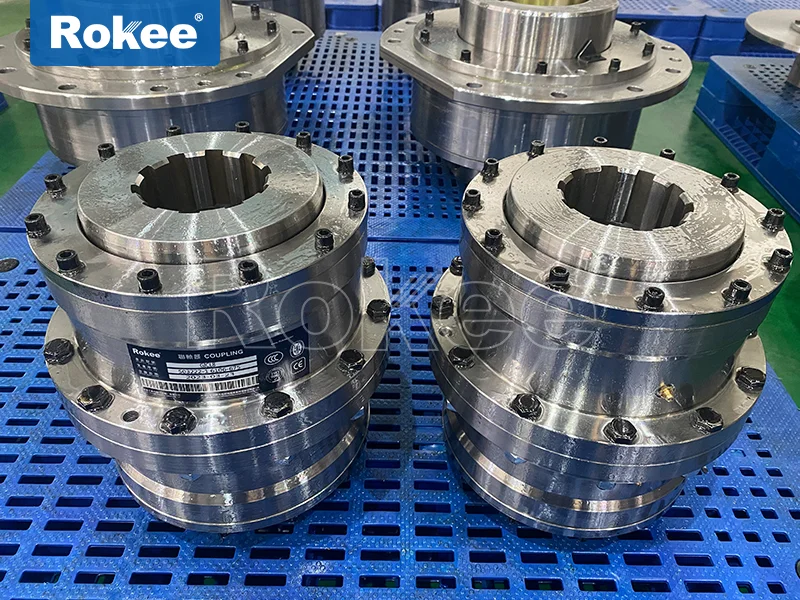
The full gear coupling is a flexible coupling, and its core design is based on the principle of precision gear meshing. A typical structure consists of three main parts: two shaft sleeves with external teeth (connecting the input shaft and output shaft respectively) and an outer sleeve with internal teeth. The meshing of internal and external gears constitutes the basic path of torque transmission, while the backlash and special tooth profile design endow the coupling with the ability to compensate for deviations.
Transmission mechanism: When the driving shaft rotates, power is transmitted to the driven shaft through the meshing effect between the outer gear shaft sleeve and the inner gear ring. This process achieves synchronous rotation between the two shafts, with a transmission efficiency of up to 99.7% and almost no power loss.
Deviation compensation: The full gear coupling can compensate for three basic types of shaft system deviations: axial displacement (relative movement of the two shafts along the axis direction), radial displacement (parallel offset of the two shaft centerlines), and angular displacement (angle formed by the two shaft centerlines). This compensation capability originates from the special design of gear meshing, especially the application of drum teeth, which enables the coupling to adapt to more complex working conditions.
Torque transmission: Thanks to the large contact area of the gear meshing surface, the full gear coupling has excellent torque transmission capability, up to 4500kN · m level, which can meet the transmission needs of heavy machinery.
Types and characteristics of full gear couplings
According to specific structural and functional characteristics, full gear couplings can be divided into multiple types, each with its unique advantages and application scenarios.
Classified by structural form
Flange sleeve type: composed of short sleeves surrounded by vertical flanges, with one sleeve installed on each shaft, and two flanges fixed together by bolts. This structure is compact, easy to install, and suitable for situations with limited space.
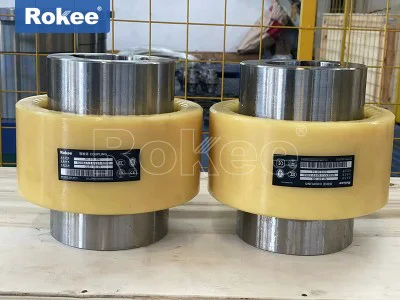
Continuous sleeve type: The shaft end is directly connected and surrounded by a continuous sleeve, making the structure simpler. Sleeves are usually made of metal materials, but non-metallic materials such as nylon can also be used in light load situations, which have the advantages of shock absorption and noise reduction.
Classified by tooth profile design
Straight tooth coupling: The gear teeth are straight, the structure is simple, and the manufacturing cost is low. However, the ability to compensate for deviations is limited, and the allowable angular deviation usually does not exceed 1 °.
Drum gear coupling: The external teeth are made into a spherical shape, with the center of the spherical surface on the gear axis, significantly improving the adaptability to shaft system deviations. The allowable angular deviation can reach 6 ° (generally recommended for use within the range of 1.5 ° -2.5 °). Compared with straight teeth, the torque transmission capacity of drum gear couplings is increased by 15-30%, and by optimizing the contact stress distribution, the problem of concentrated load at the tooth end is eliminated, extending the service life.
Advantages and performance of full gear couplings
The reason why full gear couplings are widely used in the industrial field is due to a series of outstanding performance characteristics:
High torque density: Under the same size, gear couplings can transmit greater torque than other types of couplings, making them particularly suitable for heavy-duty situations with limited space.
Excellent deviation compensation capability: Typical parameters allow for a parallel offset of 0.01-0.02 inches (0.25-0.5mm) and an angle misalignment of 2 °, and the drum tooth design is more adaptable to larger deviations.
High speed adaptability: Gear couplings that have undergone precision machining and dynamic balancing can be used for high-speed transmission, such as shaft transmission in gas turbines, with speeds reaching thousands of revolutions per minute.
Strong durability: Made of high-strength alloy steel material, combined with heat treatment processes such as carburizing and quenching, the tooth surface has high hardness, good wear resistance, and long service life.
Relatively easy to maintain: Although regular lubrication is required, modern sealing technology has greatly extended the maintenance cycle, and some new designs even adopt lifelong lubrication systems.
Industrial application field
The powerful performance of full gear couplings makes them play a key role in many industrial fields:
Metallurgical industry: In heavy equipment such as rolling mills and coiling machines, couplings need to transmit huge torque and compensate for shaft system deviations caused by thermal deformation. The main drive system of the hot strip rolling mill commonly uses gear couplings.
Mining and lifting equipment: Ball mills, crushers, bridge cranes, and other equipment work in harsh environments with large vibrations and impacts. Gear couplings can reliably transmit power and absorb some of the impacts.
In the field of energy, the key components connecting the gearbox and generator in wind turbines need to adapt to complex loads and yaw movements; Large pumps and fans in thermal power plants also rely on gear couplings.
Transportation: In high-speed trains with speeds ranging from 160 to 350 kilometers per hour, gear couplings are the core components of the gear transmission system, ensuring efficient and smooth power transmission.
Marine engineering: Gear couplings made of special materials and sealed designs perform well in corrosive environments such as ship propulsion systems and offshore platform equipment.
General machinery: various pumps, compressors, conveying equipment, etc., as long as there is a need for shaft connection and power transmission, gear couplings may be used.
Selection and installation points
The correct selection and installation of full gear couplings are crucial for ensuring reliable system operation, and multiple factors need to be considered:
Selection parameters
Torque requirement: Calculate the required torque to be transmitted based on the driving power and speed, select the corresponding specification of coupling, and consider a certain safety factor.
Shaft diameter size: The shaft hole of the coupling must match the equipment shaft diameter, and various fitting methods can be used, such as cylindrical (Y-shaped), with shaft end retaining ring (J-shaped), or conical (Z-shaped).
Deviation compensation requirement: Evaluate the possible axial, radial, and angular deviations in the system and select a coupling type with sufficient compensation capability.
Environmental conditions: Consider factors such as temperature, humidity, and corrosiveness, and select appropriate materials and sealing designs for the coupling. Special environments may require stainless steel materials or special coatings.
Installation precautions
Alignment accuracy: Although gear couplings can compensate for certain deviations, good initial alignment can significantly extend their service life. It is recommended to use professional tools such as laser alignment instruments to ensure installation accuracy.
Hot fitting process: For large couplings with interference fit, the hot fitting method is usually used for installation. The coupling is heated to around 170 ℃ and then fitted onto the shaft. After cooling, a firm connection is formed.
Bolt tightening: Tighten bolts according to the specified torque value and sequence to avoid deformation or loosening during operation due to uneven stress.
Lubrication preparation: Apply an appropriate amount of recommended lubricating grease on the tooth surface before installation to ensure sufficient lubrication during initial operation.
As a classic solution in the industrial transmission field, full gear couplings continue to play a key role in modern production due to their reliable structure and excellent performance. With the application of new technologies and materials, this traditional mechanical component is emitting new vitality, providing more efficient and intelligent power transmission solutions for various rotating equipment. Correctly selecting, installing, and maintaining gear couplings will significantly improve equipment operating efficiency and reliability, creating greater value for industrial production.
In the vast landscape of mechanical power transmission systems, full gear couplings stand as one of the most robust and versatile components, engineered to connect two rotating shafts while efficiently transferring torque and accommodating minor misalignments that are inevitable in real-world industrial operations. Unlike rigid couplings that demand perfect shaft alignment and offer no flexibility, full gear couplings strike a critical balance between torsional rigidity and adaptive flexibility, making them indispensable in heavy-duty machinery and high-torque transmission scenarios across countless industrial sectors.
At its core, a full gear coupling features a symmetric, dual-gear design that distinguishes it from other coupling types, with a construction centered on two key modular components: external toothed hubs and internal toothed sleeves. Each full gear coupling consists of two identical hubs, each precision-machined with external spur or helical gear teeth around its outer circumference, and these hubs are securely mounted onto the driving and driven shafts respectively, typically via keyway connections, interference fits, or tapered locking mechanisms that eliminate slippage and ensure uniform torque transfer. The two hubs are then enclosed and interconnected by one or two cylindrical sleeves, each fitted with precision internal gear teeth that mesh seamlessly with the external teeth on the hubs. This full-to-full meshing configuration—where both shaft ends feature geared hubs and connect via fully toothed sleeves—defines the full gear coupling, setting it apart from half gear couplings that combine a geared hub with a rigid, non-toothed hub on one end. The gear teeth are engineered with specific profiles, often crowned or modified, to enhance contact area, reduce stress concentrations, and enable smooth relative movement between the meshing surfaces, which is vital for compensating shaft misalignment without compromising torque transmission efficiency. Additional auxiliary components, such as sealing elements, lubrication ports, and fastening hardware, are integrated into the assembly to protect the internal gear surfaces from contamination, retain lubricating media, and maintain structural integrity under dynamic operating conditions, though these secondary parts do not alter the core full gear design that defines the component’s functionality.
The structural design of full gear couplings directly translates to a unique set of performance characteristics that make them ideal for demanding industrial environments, with standout attributes including exceptional torque-carrying capacity, reliable misalignment compensation, high torsional stiffness, and durable operational resilience. One of the most prominent performance features is their ability to transmit extremely high torque relative to their compact physical size, a trait rooted in the full-surface gear meshing that distributes torsional load evenly across multiple teeth simultaneously, rather than concentrating stress on a single contact point as seen in some flexible coupling designs. This even load distribution minimizes wear and allows the coupling to handle peak torque loads and sudden shock loads without premature failure, a critical advantage in heavy machinery where torque spikes are common. In terms of misalignment accommodation, full gear couplings are designed to address three primary types of shaft misalignment: angular misalignment, parallel misalignment, and combined axial and radial misalignment. The curved or crowned gear teeth enable a small degree of angular pivoting between the hubs and sleeves, while the axial clearance within the gear mesh allows for limited parallel offset and axial movement, typically within precise industry-standard ranges that vary based on size and design. Unlike more flexible couplings that prioritize misalignment tolerance over torque transfer, full gear couplings maintain high torsional stiffness, meaning they minimize windup and rotational lag between the driving and driven shafts, ensuring precise power delivery and consistent operational timing for machinery that requires synchronized movement. They also exhibit strong resistance to torsional vibration, dampening minor fluctuations in rotational speed without transmitting excessive stress to the connected shafts and gearboxes, while their all-metal construction (typically high-grade alloy steel or carbon steel, heat-treated for enhanced strength and wear resistance) delivers exceptional durability, with the ability to withstand high operating temperatures, heavy continuous loads, and harsh industrial contaminants when properly sealed and lubricated.
While all full gear couplings share the core dual-geared hub and internal sleeve structure, they are classified into distinct subtypes based on design modifications, structural configurations, and functional specializations, each tailored to address specific operational requirements and installation constraints. The most fundamental classification is based on the number of sleeves and engagement style, dividing full gear couplings into single engagement full gear couplings and double engagement full gear couplings. Single engagement models feature a single internal toothed sleeve that connects both external geared hubs, creating a compact, close-coupled design ideal for applications with limited axial space between shafts, where the distance between shaft ends is minimal. This compact structure reduces overall weight and rotational inertia, making it suitable for moderate-speed, high-torque applications where space efficiency is a priority. Double engagement full gear couplings, by contrast, utilize two separate internal sleeves, with a spacer or intermediate member positioned between them to increase the distance between the two hubs. This extended configuration allows for greater axial shaft separation and enhanced misalignment compensation, particularly for parallel and angular misalignment, making them the preferred choice for larger machinery with greater potential for shaft displacement due to thermal expansion, foundation settling, or operational vibration. Beyond engagement style, full gear couplings are also categorized by tooth profile, with standard straight tooth designs and crowned tooth designs being the two main variants. Straight tooth full gear couplings offer simplicity in manufacturing and high torque density, suitable for general heavy-duty applications with moderate misalignment; crowned tooth designs feature slightly curved gear teeth that improve contact geometry, reduce edge stress during misalignment, and extend service life by minimizing wear, making them ideal for applications with higher misalignment values and continuous heavy-duty operation. Additional specialized classifications include floating shaft full gear couplings, which feature a longer intermediate floating shaft between two geared hub assemblies to bridge large gaps between driving and driven equipment, and brake wheel or brake disc integrated full gear couplings, which incorporate a braking surface directly into the hub or sleeve assembly to combine power transmission and braking functions in a single compact unit, eliminating the need for separate braking components in certain machinery setups. Each subtype retains the core full gear meshing principle but adapts the structural layout to meet specific operational needs, from space constraints to misalignment tolerance and functional integration.
The performance versatility and structural robustness of full gear couplings make them a staple in a wide range of industrial applications where high torque transmission, reliable misalignment compensation, and long-term durability are non-negotiable. Their usage spans nearly every heavy industrial sector, with deployment in scenarios that range from stationary manufacturing equipment to mobile heavy machinery and large-scale power generation systems. In the mining and mineral processing industry, full gear couplings are extensively used in crushers, grinding mills, conveyors, and hoisting equipment, where they transfer massive torque from electric motors or engines to heavy-duty working components, enduring constant shock loads, dust, and vibration while compensating for shaft misalignment caused by the rugged operating conditions and frequent load fluctuations. In the metalworking and steel production sector, they are critical components in rolling mills, forging presses, and continuous casting equipment, where high temperatures, heavy continuous loads, and precise shaft synchronization are required; the high torsional stiffness of full gear couplings ensures consistent material processing and prevents production delays caused by component failure. The power generation industry relies heavily on full gear couplings for connecting turbines, generators, and auxiliary equipment such as pumps and fans, where they handle high rotational speeds and substantial torque loads while accommodating thermal expansion of shafts during startup and continuous operation, maintaining efficient power transfer without compromising system stability. In marine and offshore engineering, full gear couplings are used in propulsion systems, deck machinery, and auxiliary pump drives, where they withstand saltwater exposure, vibration, and shaft misalignment caused by vessel movement, with sealed designs preventing corrosion and contamination. They are also widely employed in material handling equipment, including cranes, elevators, and heavy-duty conveyor systems, where reliable torque transfer and misalignment tolerance ensure smooth and safe movement of heavy loads, as well as in pulp and paper manufacturing, chemical processing plants, and cement production facilities, where they operate in harsh environments with high dust, moisture, and temperature levels. Additionally, full gear couplings find application in large-scale pumping and compression systems, including water treatment pumps, oil and gas compressors, and industrial refrigeration compressors, where they provide a durable, low-maintenance connection between motors and pump/compressor shafts, ensuring uninterrupted fluid transfer and process efficiency.
Beyond their core industrial applications, the performance characteristics of full gear couplings also influence their selection and usage based on specific operational parameters, such as rotational speed, torque range, environmental conditions, and maintenance requirements. While they excel in high-torque, moderate-to-high-speed applications, their design is less suited for extremely high-speed systems that demand minimal rotational inertia or maximum vibration dampening, where other flexible coupling types may be preferred. Proper lubrication is a key factor in maintaining their performance, as the meshing gear surfaces require consistent lubrication to reduce friction, prevent wear, and dissipate heat generated during operation; sealed full gear coupling designs retain lubricant effectively and protect internal components from external contaminants, reducing maintenance frequency and extending service life in harsh environments. Unlike some flexible couplings that rely on elastic elements prone to fatigue and degradation, the all-metal construction of full gear couplings means they have a long operational lifespan when installed and maintained correctly, with minimal risk of sudden failure due to elastic component breakdown. This longevity, combined with their high torque capacity and misalignment tolerance, makes them a cost-effective long-term solution for heavy-duty industrial applications, even in scenarios where initial installation requires precise alignment and setup. It is important to note that while full gear couplings offer significant flexibility for minor misalignments, they are not designed to compensate for extreme shaft displacement, and proper initial installation and periodic alignment checks are still necessary to maximize their performance and prevent premature wear, ensuring that the gear teeth mesh correctly and load distribution remains uniform across all contact surfaces.
In summary, full gear couplings represent a pinnacle of robust mechanical power transmission design, merging a straightforward yet highly effective structural layout with exceptional performance attributes that address the most demanding challenges of industrial shaft connection. Their core dual-geared structure, consisting of external toothed hubs and internal toothed sleeves, enables unparalleled torque transmission, reliable misalignment compensation, and high torsional stiffness, while their diverse classifications—from single to double engagement, straight to crowned teeth, and specialized integrated designs—allow for tailored solutions to meet specific industrial needs. From mining and metalworking to power generation and material handling, full gear couplings serve as critical connecting components that keep heavy machinery operating efficiently, reliably, and safely in environments where failure is not an option. Their enduring relevance in modern industrial systems stems from their ability to balance strength, flexibility, and durability, adapting to the evolving demands of heavy-duty manufacturing and processing while maintaining the fundamental mechanical principles that make them an essential part of global industrial infrastructure. As industrial machinery continues to evolve toward higher torque capacities and more robust operational requirements, full gear couplings will remain a foundational component, continuously refined in design to enhance performance, extend service life, and meet the ever-growing needs of critical industrial applications worldwide.