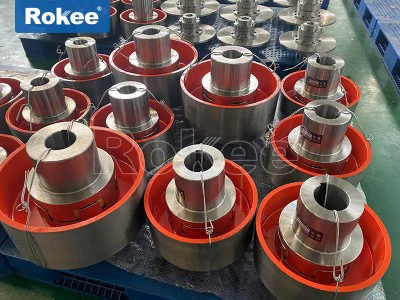
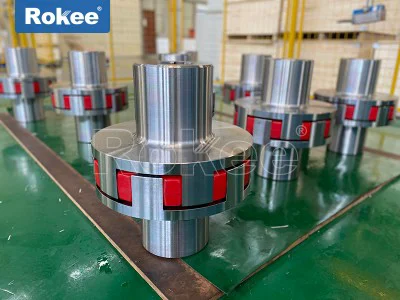
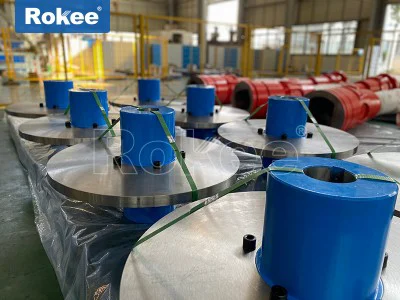
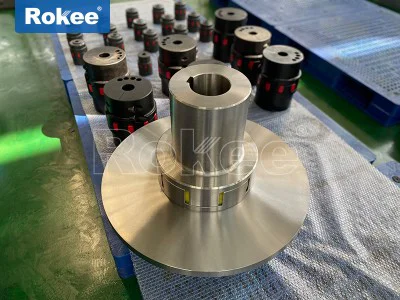
Spider Couplings
Spider coupling is a flexible coupling widely used in mechanical
transmission systems, named after the protruding structures resembling
"claws" distributed on the flanges on both sides. This type of coupling
compensates for misalignment between two shafts and transmits torque
through the deformation of an elastic material (usually polyurethane or
rubber material).
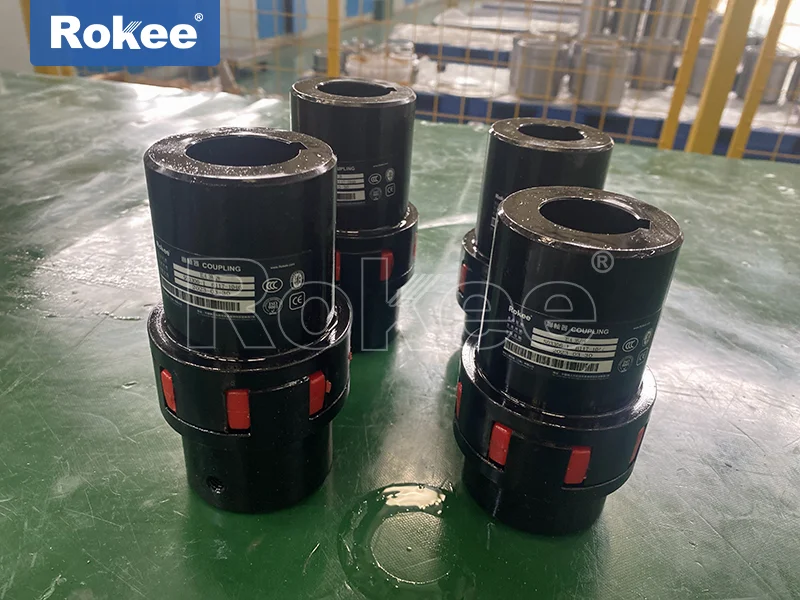
The structural composition of spider coupling
main components
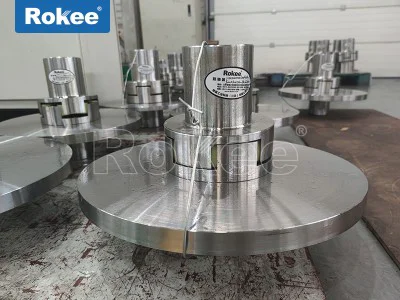
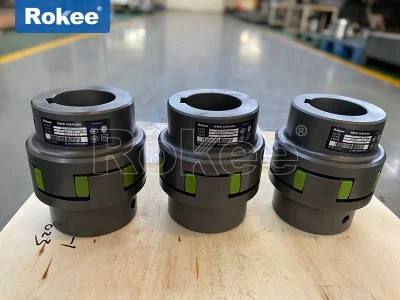
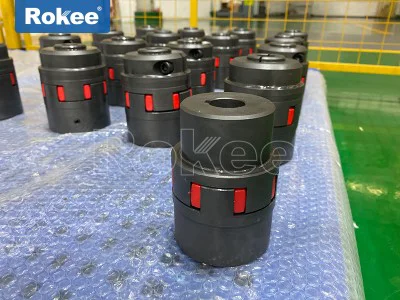
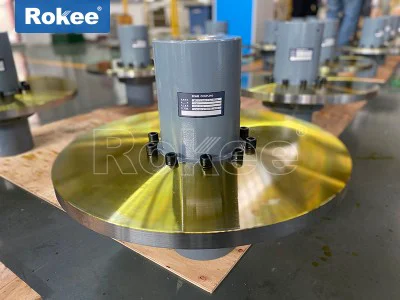
Metal flange: usually made of aluminum alloy or steel material, with "claw" shaped protrusions symmetrically arranged on both sides
Spider: a polyurethane or rubber component located between two flange plates, providing cushioning and compensation
Fasteners: bolts, nuts, etc. used to secure the connection between the coupling and the shaft endClaw shaped structure design
The claw design of spider couplings is usually divided into:
Straight claw type: The claw shape is distributed in a straight radial pattern, with a simple structure
Curved claw shape: The claw shape has a certain curvature, which can better disperse stress
Interlocking Claw Type: The claw shapes of two flanges are arranged in a staggered manner to improve torque transmission capabilityType of elastomer
Standard type: Moderate hardness, suitable for general industrial applications
High temperature type: resistant to high temperatures up to 120 ℃ or above
Oil resistant type: suitable for oily environments
The working principle of spider coupling is based on the dual effects of elastic deformation and mechanical meshing:
Torque transmission: The flange at the driving end meshes with the elastic body through a claw structure, and the elastic body then transmits the torque to the claw structure at the driven end
Compensation for misalignment:
Radial misalignment: compensation through compression deformation of elastic bodies
Misalignment of angles: compensation is achieved through the relative tilt of claw shaped structures
Axial displacement: compensation for axial clearance through claw shaped structureVibration damping and buffering: The elastic deformation of an elastic body absorbs impact and vibration
Main advantages
Easy installation: No special tools required, relatively low requirements for alignment
Maintenance free: No lubrication required, long service life
High cost-effectiveness: relatively low price, can be repaired by replacing the elastomer
Electrical insulation: suitable for applications that require isolated current
Lightweight: especially for products made of aluminum alloy material
Limitation
Limited torque capacity: generally not exceeding 2000N · m
Speed limit: Special design is required for high-speed applications
Temperature limit: The working temperature of standard elastomers is usually between -30 ℃ and+90 ℃
Weak axial displacement compensation capability
Selection considerations
Torque demand: Calculate or determine the maximum working torque and peak torque of the system
Speed range: Consider the effect of centrifugal force on the elastic body
Environmental conditions: temperature, humidity, chemical contact, etc
Inaccurate situation: Estimate possible installation deviations and displacement during operation
Space limitations: Installation size and weight requirements
Common selection errors
Ignore peak torque during start-up and braking
Underestimating the impact of environmental temperature
Not considering the aging of elastomers after long-term operation
Choosing too large a specification leads to an increase in system rigidity
Correct installation steps
Clean the shaft end and coupling inner hole
Check the fit tolerance between the shaft and coupling (usually H7/k6)
Use specialized tools for installation and avoid knocking
Preliminary alignment (laser alignment instrument or dial gauge)
Gradually tighten the bolts using a cross tightening method
Final alignment inspection
Maintenance check
Daily inspection: abnormal vibration and noise monitoring
Regular inspection (every 3-6 months):
Wear and crack conditions of elastomers
Bolt tightening status
Surface temperature of coupling
Replacement standard: When the elastic body shows significant deformation (more than 10%), cracks, or significant changes in hardness
Common faults and their solutions
Abnormal vibration: check the alignment and elastic state
High temperature: possible overload or grease contamination
Premature wear: Check installation alignment and environmental factors
Loosening of bolts: Re tighten and use thread locking agent
Industry Applications
General industrial field
Pumps: centrifugal pumps, gear pumps, etc
Fan: Industrial ventilation equipment
Conveyor system: driven by conveyor belt
Packaging machinery: filling machine, labeling machineSpecial application scenarios
Food processing: using stainless steel material and food grade elastomers
Semiconductor Manufacturing: High Precision, Low Particle Generation Models
Ship engineering: corrosion-resistant and seawater resistant modelsEmerging application trends
New energy field: wind power auxiliary system
Robotics Technology: Collaborative Robot Joint Transmission
Electric vehicles: auxiliary drive system
The correct selection and use of spider couplings can significantly improve the reliability and efficiency of transmission systems, reduce maintenance costs, and are key components that cannot be ignored in modern industrial equipment design.
In the realm of mechanical power transmission, flexible couplings serve as indispensable components that bridge rotating shafts, mitigate operational stresses, and sustain the efficiency of diverse machinery systems. Among these, the spider coupling, widely recognized as a jaw-type flexible coupling, stands out for its simplistic yet robust design, versatile performance attributes, and broad adaptability across countless industrial scenarios. Unlike rigid couplings that demand perfect shaft alignment and offer no tolerance for misalignment or vibration, spider couplings integrate flexible elements to address common mechanical challenges, making them a staple in both light-duty precision equipment and heavy-duty industrial machinery.
At its core, the spider coupling features a minimalist three-part construction that prioritizes functionality and ease of assembly, a design hallmark that has cemented its popularity across mechanical engineering disciplines. The assembly consists of two metallic hubs and an intermediate elastomeric spider insert, forming a compact, symmetric unit that connects driving and driven shafts seamlessly. Each hub is engineered with a central bore for shaft mounting, available in keyway, clamping, or taper-lock configurations to accommodate diverse shaft connection requirements, ensuring secure torque transmission without slippage under operational loads. The outer face of each hub is equipped with evenly spaced, contoured jaws—typically ranging from six to eight in standard designs—that interlock alternately with the lobes of the central spider, creating a meshed structure that distributes torque evenly across the coupling. The spider, the heart of the assembly, is a star-shaped flexible component crafted from high-performance elastomeric materials, engineered to compress and rebound under torsional load while maintaining structural integrity. This unique interlocking design eliminates direct metal-to-metal contact between the two hubs during normal operation, reducing wear, dampening vibration, and absorbing sudden shock loads that could compromise adjacent machinery components such as motors, gearboxes, pumps, and conveyors.
The structural simplicity of spider couplings translates to a host of exceptional performance characteristics that define their suitability for varied operational environments, with misalignment compensation, shock absorption, torsional flexibility, and fail-safe functionality standing as the most prominent. One of the primary advantages of spider couplings is their ability to accommodate multiple forms of shaft misalignment, a common issue in real-world machinery installations where perfect alignment is rarely achievable. These couplings effectively handle angular misalignment, radial misalignment, and axial displacement simultaneously, with the elastomeric spider flexing to compensate for positional discrepancies without imposing excessive radial or axial loads on shaft bearings. This misalignment tolerance not only extends the service life of connected equipment but also simplifies installation and alignment procedures, reducing setup time and labor costs for maintenance teams.
Vibration damping and shock absorption represent another critical performance trait of spider couplings, driven by the inherent elasticity of the spider insert. In mechanical systems, sudden load fluctuations, startup shocks, and operational vibrations are inevitable, and these forces can trigger premature wear, noise, and even catastrophic failure if left unmanaged. The elastomeric spider acts as a natural shock absorber, compressing under impact loads to dissipate kinetic energy and attenuate vibrational transfer between shafts, creating a smoother, quieter operational experience. This damping capability is particularly valuable in systems with intermittent operation, reversing loads, or high-cycle startup sequences, as it safeguards sensitive internal components from fatigue damage and maintains consistent power delivery. Additionally, spider couplings exhibit favorable torsional stiffness characteristics, balancing flexibility and torque transmission efficiency; the elastomer provides sufficient give to absorb shocks while retaining the rigidity needed to transmit rotational power accurately, minimizing energy loss during operation.
A defining safety feature of spider couplings is their fail-safe design, which ensures continued operational functionality even in the event of spider degradation or failure. Unlike some flexible couplings that rely solely on shear forces for torque transmission and cease operation if the flexible element breaks, the jaw-and-spider structure allows the metal jaws of the two hubs to make direct contact once the elastomeric spider fails. While this backup mode results in increased noise, reduced vibration damping, and accelerated jaw wear, it prevents sudden, unplanned downtime, enabling machinery to operate temporarily until maintenance can be performed and the damaged spider replaced. This fail-safe attribute is invaluable in critical industrial processes where interruptions can lead to significant production losses, safety hazards, or compromised product quality, adding a layer of reliability to the coupling’s performance profile. Furthermore, spider couplings are maintenance-friendly, requiring no lubrication during regular use due to their dry-running design, which eliminates the need for periodic lubrication tasks and reduces long-term maintenance overhead; only routine visual inspections to assess spider condition for wear, cracking, or material degradation are necessary to sustain optimal performance.
The performance versatility of spider couplings is further enhanced by the availability of diverse types, categorized primarily by hub design, spider material composition, and structural variations, each tailored to specific operational demands and environmental conditions. Hub design variations are a key classification factor, with standard jaw hubs, curved jaw hubs, and compact low-inertia hubs being the most prevalent. Standard jaw hubs feature straight, rigid jaws and are engineered for heavy-duty, high-torque applications, prioritizing load-bearing capacity and durability under extreme operational stresses. Curved jaw hubs, by contrast, have contoured, rounded jaws that optimize contact with the spider lobes, enhancing misalignment capabilities, reducing stress concentrations on the elastomer, and enabling zero-backlash operation—making them ideal for precision motion control systems where positional accuracy is paramount. Compact low-inertia hubs, typically machined from lightweight aluminum alloys, minimize rotational inertia, making them suitable for high-speed applications such as servo motor drives, where rapid acceleration and deceleration cycles demand reduced mass to maintain dynamic responsiveness.
Spider material selection is equally critical to coupling performance, as different elastomers exhibit distinct mechanical properties, temperature resistances, and chemical compatibilities, allowing engineers to customize couplings for specific operating environments. Polyurethane is the most widely used spider material, prized for its exceptional wear resistance, high tensile strength, good oil and chemical tolerance, and balanced flexibility and rigidity; it performs reliably across moderate temperature ranges and suits the majority of general industrial applications. Natural rubber spiders offer superior vibration damping and shock absorption properties, with enhanced elasticity that excels in applications requiring maximum vibration isolation, though they exhibit lower resistance to oil, abrasion, and extreme temperatures compared to polyurethane. Hytrel, a thermoplastic elastomer, blends the durability of plastic with the flexibility of rubber, delivering excellent thermal stability, chemical resistance, and long-term fatigue life, making it suitable for high-temperature, harsh chemical environments where standard elastomers would degrade rapidly. Nitrile rubber (NBR) spiders offer enhanced oil resistance, performing well in applications involving exposure to lubricants, fuels, and hydraulic fluids, while still providing reliable misalignment compensation and shock absorption. Each material variant alters the coupling’s torque capacity, operating temperature range, and service life, allowing for precise matching to application-specific requirements without compromising core structural integrity.
Beyond hub and spider variations, specialized spider coupling subtypes have emerged to address niche mechanical challenges, expanding their utility across specialized industrial sectors. Oldham-style spider couplings, a modified variant, feature a central sliding disc between two hubs, delivering exceptional parallel misalignment compensation and zero-backlash operation, ideal for precision machinery such as CNC machines, stepper motor systems, and robotic assemblies where positional accuracy is non-negotiable. Highly resilient (HR) spider couplings are engineered for heavy-duty industrial use, with reinforced hubs and ultra-durable elastomeric spiders that handle high torque loads, extreme shock, and continuous heavy operation, commonly deployed in mining equipment, large-scale conveyor systems, and industrial pump drives. Miniature precision spider couplings, designed with compact dimensions and lightweight materials, cater to small-scale motion control systems, medical devices, and laboratory equipment, where space constraints and high precision take precedence over high torque capacity. These specialized subtypes retain the core three-part spider coupling structure but refine design elements to meet the unique demands of targeted applications, solidifying the coupling’s reputation as a versatile power transmission solution.
The combination of robust structure, adaptable performance, and diverse typology has positioned spider couplings as one of the most widely utilized flexible couplings across global industrial sectors, with applications spanning nearly every field that relies on rotational power transmission. In general manufacturing and industrial machinery, spider couplings are ubiquitous, connecting motors to gearboxes, pumps, fans, compressors, and conveyors, providing reliable torque transmission while protecting equipment from misalignment and vibration-related damage. Their ease of installation and low maintenance requirements make them a cost-effective choice for assembly lines, material handling systems, and factory automation setups, where consistent performance and minimal downtime are critical to operational efficiency.
In the realm of motion control and precision engineering, spider couplings—particularly curved jaw and zero-backlash variants—play a pivotal role in high-precision equipment, including CNC machining centers, robotic arms, servo motor drives, and measuring instruments. The zero-backlash design ensures precise positional transfer, critical for maintaining accuracy in cutting, milling, and positioning tasks, while the vibration damping properties protect delicate internal components from operational stresses, preserving measurement and machining precision over extended use. In HVAC and fluid handling systems, spider couplings connect motors to pumps, blowers, and fans, absorbing the inherent vibration of these systems and reducing noise pollution in commercial and residential buildings; their chemical-resistant spider variants also withstand exposure to lubricants and coolants commonly used in these applications, ensuring long service life in fluid transfer environments.
Spider couplings also find extensive use in automotive and transportation-related machinery, powering auxiliary systems such as water pumps, cooling fans, and hydraulic drives in commercial vehicles and industrial automotive equipment. Their shock absorption capabilities mitigate the vibrations generated by engine operation, enhancing the durability of auxiliary components and improving overall vehicle performance. In agricultural machinery, where equipment operates in rugged, dusty environments with frequent load fluctuations, spider couplings deliver reliable performance, connecting tractor power take-offs to implements, irrigation systems, and processing machinery; their robust construction withstands harsh outdoor conditions, and misalignment tolerance accommodates the structural flex of heavy agricultural equipment.
Additional key applications include food and beverage processing machinery, packaging equipment, printing presses, and textile manufacturing systems, where spider couplings meet the demands of high-speed, continuous operation while adhering to strict hygiene and operational standards. In food processing, for example, food-grade elastomer spiders can be deployed to comply with industry safety requirements, while in printing and packaging, the precision and zero-backlash capabilities ensure consistent, high-quality output at high production speeds. Even in marine and offshore applications, corrosion-resistant hub materials and chemical-resistant spiders enable spider couplings to operate reliably in saltwater environments, powering marine pumps, winches, and propulsion auxiliary systems.
The enduring appeal of spider couplings stems from their harmonious blend of simplicity, performance, and adaptability; their uncomplicated three-part structure minimizes failure points, while customizable materials and designs allow them to adapt to an unparalleled range of operational conditions. Unlike complex, specialized couplings that are limited to niche applications, spider couplings strike a balance between performance and practicality, making them suitable for both routine industrial tasks and high-precision, high-stress operations. As mechanical engineering continues to evolve, with a growing emphasis on equipment durability, energy efficiency, and low maintenance, the fundamental advantages of spider couplings ensure their continued relevance in modern power transmission systems.
In summary, spider couplings represent a cornerstone of flexible power transmission technology, defined by their straightforward structural design, exceptional misalignment compensation, vibration damping, and fail-safe performance. Diverse variations in hub geometry and spider material composition enable these couplings to cater to a vast spectrum of industrial needs, from light-duty precision instruments to heavy-duty industrial machinery. Their widespread adoption across manufacturing, automation, motion control, fluid handling, automotive, agricultural, and marine sectors underscores their versatility and engineering value. By effectively addressing common mechanical challenges such as shaft misalignment, vibration, and shock loads, spider couplings enhance equipment reliability, extend service life, and optimize operational efficiency across countless applications, solidifying their status as an essential component in the global mechanical engineering landscape.