Claw Couplings
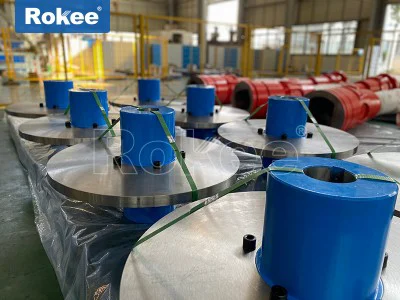
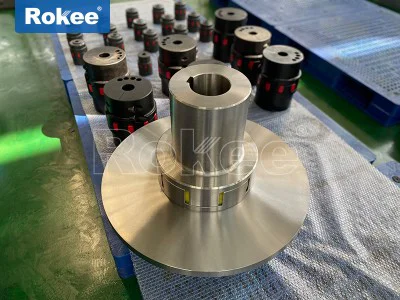
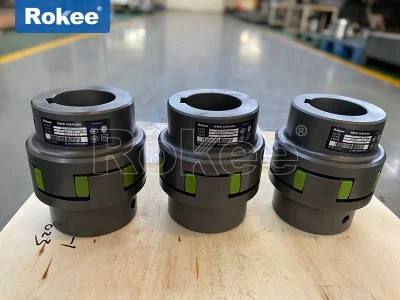
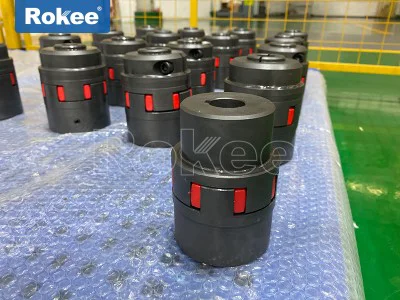
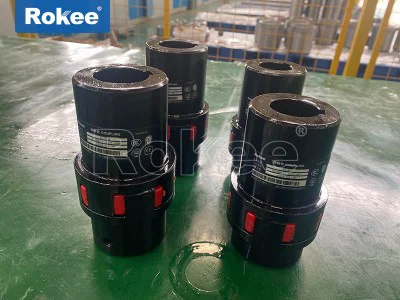
Claw coupling is a flexible coupling widely used in industrial machinery transmission systems, occupying an important position in modern mechanical engineering with its unique structure and reliable performance. This type of coupling consists of two claw shaped end flanges made of metal or polymer and an intermediate elastic body (called a "spider"), which transmits torque through the engagement between the claws and the elastic body.
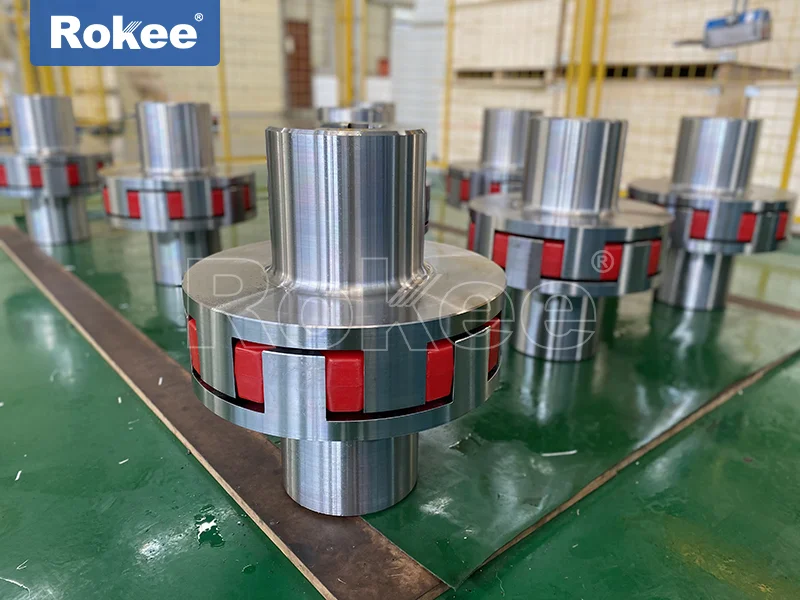
The working principle is based on a simple mechanical meshing principle: when the drive shaft rotates, the claw at the active end pushes the claw at the passive end by compressing the elastic body "spider", thereby achieving power transmission. Elastic components not only transmit torque during operation, but also effectively absorb vibration, compensate for axial, radial, and angular deviations, and protect connected equipment from the effects of impact and vibration.
Core structural characteristics of claw coupling
Claw shaped flange design: usually made of high-strength cast iron, steel or aluminum alloy, with 6-24 claws commonly used. Claw shaped design allows for a certain degree of deflection while maintaining torque transmission efficiency.
Elastic body "spider": As the core buffering element of the coupling, the material is mostly polyurethane, Hytrel or natural rubber. Elastic bodies with different hardness can meet the needs of different working conditions.
Compact construction: Compared to other types of couplings, the claw design structure is more compact, especially suitable for applications with limited space.
Maintenance free feature: Most claw couplings are designed as closed structures that do not require lubrication, significantly reducing maintenance costs and usage complexity.
The outstanding performance advantages of claw type couplings
Vibration damping capability: Elastic components can absorb up to 30% of vibration energy, effectively protecting the transmission system
Deviation compensation performance: Typical parameters are axial deviation ± 0.5mm, radial deviation 0.4mm, and angular deviation 1 °
Torque transmission efficiency: can reach over 98% under rated operating conditions
Overload protection function: When the torque exceeds the design value, the elastic body will be damaged first, protecting expensive equipment
Electrical insulation characteristics: Non metallic elastomers provide excellent electrical insulation performance
Typical application areas of claw couplings
Industrial automation equipment: widely used in precision transmission systems such as CNC machine tools, packaging machinery, textile machinery, etc
Pump equipment: particularly suitable for centrifugal pumps, gear pumps, and other occasions that require vibration isolation
Ventilation system: effectively reducing vibration transmission in fan drive
Food and pharmaceutical machinery: Material selection that meets hygiene requirements meets special industry standards
Servo Drive System: High precision models for demanding motion control applications
Selection considerations:
Torque demand (rated torque and peak torque)
Axis diameter size matching
Working environment (temperature, humidity, chemical exposure)
Speed range (not exceeding the limit of elastic material)
Deviation compensation requirements
Installation precautions:
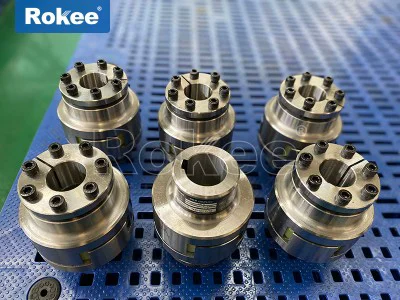
Ensure that the interference fit between the shaft and the coupling meets the standard
Use specialized tools for installation to avoid damaging the elastic body by knocking
Control the centering accuracy within the allowable deviation range
Check the fastening status after initial operation
Regularly check the wear of the elastomer (recommended every 2000 working hours)
Claw couplings continue to play an irreplaceable role in the field of industrial transmission due to their excellent comprehensive performance and reliability. With the advancement of materials science and manufacturing technology, its application scope will further expand and its performance will continue to improve.
In the complex and interconnected world of mechanical power transmission, couplings serve as the unsung heroes that bridge rotating shafts, enabling the seamless transfer of torque while accommodating misalignments, absorbing shocks, and reducing vibrations that could otherwise damage sensitive equipment or compromise operational efficiency. Among the diverse array of couplings available for industrial and commercial use, the claw coupling stands out for its inherent simplicity, reliable performance, cost-effectiveness, and remarkable versatility, making it a staple component in countless mechanical systems across various sectors. Also commonly referred to as a jaw coupling, this type of flexible coupling is designed to balance the need for efficient torque transmission with the ability to adapt to real-world operational imperfections, such as minor shaft misalignments and sudden load fluctuations, without requiring excessive maintenance or complex installation procedures. Its widespread adoption is a testament to its practical design, which combines robust construction with functional flexibility, allowing it to perform consistently in both standard and specialized applications. To fully appreciate the value of claw couplings in modern mechanical engineering, it is essential to explore their core structure, key performance characteristics, the different types available, and the wide range of applications where they play a critical role.
The fundamental structure of a claw coupling is elegantly simple, consisting of three core components that work in harmony to facilitate power transmission while providing the necessary flexibility. These components include two metal hubs, often referred to as half-couplings, each featuring evenly spaced claw-shaped projections (or jaws) around their circumference, and an elastomeric element—commonly known as a spider or insert—that fits snugly between the claws of the two hubs to create a secure, non-slip connection. The metal hubs are typically crafted from high-strength materials to withstand the torque and stresses of operational use, with common choices including cast iron, carbon steel, alloy steel, and in some cases, aluminum alloy for applications where weight reduction is a priority. Cast iron hubs offer a cost-effective solution for low to medium load scenarios, boasting good castability and durability, while carbon steel and alloy steel hubs provide enhanced strength and toughness, making them suitable for higher torque applications and more demanding operating conditions. Aluminum alloy hubs, on the other hand, are favored for their lightweight properties and corrosion resistance, ideal for use in precision equipment, portable machinery, or applications where reduced inertia is critical. The claws themselves are precision-machined to ensure a tight, uniform fit with the elastomeric element, and their design can vary slightly depending on the specific type of claw coupling and its intended use—common configurations include straight claws, curved claws, and composite surface claws, each offering distinct advantages in terms of load distribution, contact area, and ease of manufacturing. Straight claws are the most basic design, simple to produce and suitable for standard applications, while curved claws provide a larger contact area with the elastomeric element, resulting in improved load-bearing capacity and smoother torque transmission. Composite surface claws feature a more complex profile that distributes stress more evenly, reducing wear and extending the service life of both the claws and the elastomeric insert.
The elastomeric element is the heart of the claw coupling’s flexible performance, responsible for absorbing vibrations, compensating for shaft misalignments, and protecting the connected equipment from shock loads. This component is typically made from polymer materials selected for their elasticity, wear resistance, and ability to withstand the operational environment, with common options including polyurethane, natural rubber, synthetic rubber (such as nitrile rubber), engineering plastics (like nylon), and in some high-torque applications, metal spring plates. Polyurethane is one of the most widely used materials for elastomeric inserts due to its excellent balance of elasticity, wear resistance, oil resistance, and versatility—it is available in a range of hardness levels, allowing it to be tailored to specific torque and vibration requirements. Natural rubber offers superior shock absorption capabilities but is less resistant to oil and high temperatures, making it suitable for dry, moderate-temperature environments. Synthetic rubbers, such as nitrile rubber, are formulated to withstand exposure to oils and greases, making them ideal for use in automotive, industrial, and hydraulic applications where contact with lubricants is common. Engineering plastics like nylon are lightweight, corrosion-resistant, and require no lubrication, making them suitable for high-speed applications and environments where maintenance access is limited. The shape of the elastomeric element also varies, with the most common design being a plum-shaped (or star-shaped) insert that fits perfectly between the claws of the two hubs, ensuring uniform torque distribution and maximum contact with the metal surfaces. Some designs feature a split elastomeric element, which allows for easy replacement without the need to disassemble the entire coupling or move the connected shafts—a feature that significantly reduces maintenance downtime and operational costs. In addition to the three core components, some claw couplings may include optional features such as protective covers to shield the internal components from dust, debris, and external damage, or connecting bolt assemblies to secure the two half-couplings and apply pre-tension force, ensuring a secure and stable connection.
The performance characteristics of claw couplings are directly influenced by their structural design and the materials used, and these characteristics determine their suitability for different applications. One of the most notable performance advantages of claw couplings is their ability to compensate for shaft misalignments, which are common in mechanical systems due to installation errors, thermal expansion, foundation settlement, or component wear. Claw couplings can accommodate three types of misalignments: axial (parallel) misalignment, where the shafts are offset along their central axes; radial misalignment, where the shafts are offset perpendicular to their central axes; and angular misalignment, where the shafts are tilted relative to each other. The extent of misalignment compensation varies depending on the design of the coupling and the material of the elastomeric element, with typical values ranging from ±0.5 mm to 3 mm for axial misalignment, 0.2 mm to 1.5 mm for radial misalignment, and 1° to 3° for angular misalignment. This compensation capability reduces the stress on the connected shafts, bearings, and other components, extending their service life and improving the overall reliability of the mechanical system. Another key performance feature of claw couplings is their vibration damping and shock absorption capabilities. As the driving shaft rotates, it transmits torque to the elastomeric element through the claws of the active half-coupling, and the elastomeric material deforms slightly under the applied force, absorbing vibrations generated by the rotating machinery. This vibration damping effect can reduce system vibrations by 40% to 60% in some cases, minimizing noise and preventing the transmission of harmful vibrations to other parts of the equipment, which can cause premature wear, fatigue, or failure. Additionally, the elastomeric element acts as a buffer against shock loads, such as those caused by sudden starts, stops, or load fluctuations, absorbing the impact energy and protecting the connected shafts and equipment from damage. In the event of an overload, the elastomeric element will typically fail first—this intentional design feature acts as a form of overload protection, preventing more costly damage to the connected machinery, motors, or gearboxes.
Torque transmission efficiency is another critical performance characteristic of claw couplings, with most designs achieving an efficiency of over 98% under rated operating conditions. This high efficiency is due to the direct, positive connection between the claws and the elastomeric element, which minimizes slip and energy loss during power transmission. The maximum torque capacity of a claw coupling varies depending on its size, material, and design, ranging from small couplings capable of transmitting just a few newton-meters of torque for precision instruments to large industrial couplings capable of handling several thousand newton-meters for heavy machinery. The torque capacity is primarily determined by the strength of the metal hubs and the shear strength of the elastomeric element—larger hubs with thicker claws and high-strength elastomeric materials can withstand higher torques. Claw couplings also offer the advantage of maintenance-free operation in most cases, as the elastomeric element does not require lubrication, unlike other types of couplings such as gear couplings. This eliminates the need for regular lubrication checks and maintenance, reducing operational costs and downtime. Additionally, claw couplings have a compact design and short overall length, making them suitable for applications where space is limited, such as in small machinery, precision equipment, or tight installation environments. Electrical insulation is another beneficial performance feature of many claw couplings, as the non-metallic elastomeric element provides excellent electrical insulation between the two connected shafts, preventing the transfer of electrical current and protecting sensitive electronic components from electrical interference.
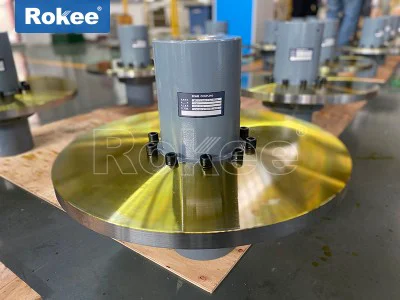
There are several different types of claw couplings available, each designed with specific features and modifications to suit particular applications, operating conditions, and performance requirements. These types can be categorized based on their structural design, the shape of the claws, the type of elastomeric element, or the presence of additional features such as brake wheels or flanges. One of the most common classifications is based on the design of the half-couplings and the method of elastomeric element replacement. The basic type of claw coupling, often referred to as the standard or plum-shaped flexible coupling, features two identical half-couplings with straight or curved claws and a single plum-shaped elastomeric insert. This type is simple in design, easy to install, and suitable for general-purpose applications with moderate torque requirements and minimal misalignments. A modified version of this type is the single flange claw coupling, which includes an additional transition flange on one of the half-couplings. This design eliminates the need to axially move the half-coupling when replacing the elastomeric element, making maintenance faster and more convenient. The double flange claw coupling takes this a step further, featuring transition flanges on both half-couplings, providing even greater ease of maintenance and flexibility in installation.
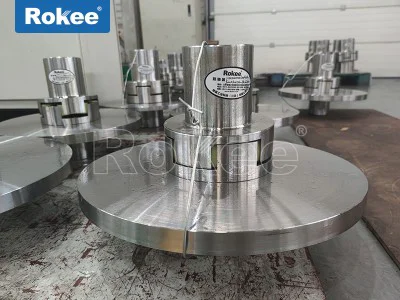
Another category of claw couplings is those designed for applications that require braking functionality. These types include couplings with split brake wheels, integral brake wheels, or split brake discs. The split brake wheel claw coupling features a split brake wheel design, which allows for easy installation and removal without disassembling the entire coupling or moving the connected shafts, making it suitable for situations where braking is required and maintenance access is limited. The integral brake wheel claw coupling has a one-piece brake wheel, offering greater structural rigidity and stability, ideal for applications with higher braking loads or more demanding operating conditions. The split brake disc claw coupling combines the advantages of a split design with a brake disc, eliminating the need for axial movement during elastomeric element replacement while providing efficient braking performance, suitable for applications that require both reliable torque transmission and precise braking. Claw couplings can also be categorized based on the shape of the claws, with common variations including C-style, S-style, A-style, and Q-style claws. C-style claw couplings have claws shaped like the letter “C,” providing a strong grip when the two half-couplings are joined together. They can be easily connected or disconnected with a simple quarter turn, making them practical for applications where equipment needs regular maintenance or swapping, such as in pumps, compressors, and other industrial machinery. S-style claw couplings feature S-shaped claws, which provide enhanced flexibility and the ability to accommodate greater misalignments, making them suitable for environments with vibration, temperature changes, or component expansion and contraction, such as in the automotive and aviation industries.
A-style claw couplings are designed for low-power applications, featuring a straightforward structure that is easy to install and cost-effective. Although they have a lower torque capacity than other types, their lightweight construction makes them ideal for smaller, less powerful machines and general-purpose applications where budget constraints are a consideration. Q-style claw couplings are a more modern design, featuring wider claws with a larger contact area, which distributes the load more evenly across the elastomeric element. This design provides improved durability, higher torque capacity, and better performance in high-load or harsh environments, making it a popular choice for heavy machinery, factories, and applications where minimizing downtime due to component wear is critical. Other specialized types of claw couplings include micro claw couplings, high-temperature resistant claw couplings, and corrosion-resistant claw couplings. Micro claw couplings have a compact, small-size design (with minimum diameters as small as 10 mm), making them suitable for precision instruments, small motors, and miniature mechanical systems where space is extremely limited. High-temperature resistant claw couplings use special heat-resistant elastomeric materials, such as silicone rubber or high-temperature polyurethane, allowing them to operate reliably in environments with elevated temperatures, such as in industrial ovens, furnaces, or high-temperature processing equipment. Corrosion-resistant claw couplings are crafted from materials such as stainless steel or aluminum alloy for the hubs and corrosion-resistant elastomers, making them suitable for use in wet, humid, or corrosive environments, such as in marine applications, chemical processing plants, or food and pharmaceutical manufacturing facilities where hygiene and corrosion resistance are critical.
The versatility of claw couplings is reflected in their wide range of applications across numerous industries, where they play a critical role in ensuring the reliable and efficient operation of mechanical systems. One of the most common application areas is industrial automation and precision machinery, where claw couplings are used to connect motors, gearboxes, and other components in CNC machines, lathes, milling machines, processing centers, engraving machines, and robot joint transmission systems. In these applications, the high torque transmission efficiency, vibration damping capabilities, and precise misalignment compensation of claw couplings help to maintain the accuracy and stability of the equipment, reducing machining errors and improving the quality of finished products. The compact design and maintenance-free operation of claw couplings also make them ideal for use in automated production lines, where space is limited and downtime must be minimized.
Pump and fan systems are another major application area for claw couplings, as they are well-suited to the demands of these systems, which often involve high speeds, moderate torques, and minor shaft misalignments. Claw couplings are widely used in centrifugal pumps, gear pumps, plunger pumps, vacuum pumps, centrifugal fans, axial flow fans, and blowers, where they connect the motor to the pump or fan shaft. The vibration damping and shock absorption capabilities of claw couplings help to reduce noise and vibration in these systems, extending the service life of the pumps, fans, and their components, while the misalignment compensation capability accommodates the slight offsets that can occur due to thermal expansion or installation errors. In chemical processing plants, oil and gas facilities, and water treatment plants, claw couplings are used in pump and fan systems that handle corrosive or hazardous fluids, with corrosion-resistant designs ensuring reliable operation in these harsh environments.
The industrial and manufacturing sector also relies heavily on claw couplings for a wide range of applications, including conveyor systems, elevators, mixing equipment, compressors, and material handling machinery. In conveyor systems, claw couplings connect motors to conveyor belts, ensuring the smooth and consistent transfer of materials, while their vibration damping capabilities reduce noise and wear on the conveyor components. In compressors—including screw-type, reciprocating, and rotary compressors—claw couplings handle the torque transmission between the motor and the compressor shaft, absorbing the shock loads generated during startup and operation and protecting the compressor from damage. The maintenance-free operation of claw couplings is particularly beneficial in these applications, as it reduces the need for regular maintenance and minimizes downtime, which is critical for maintaining production efficiency.
The automotive and transportation industries also utilize claw couplings in various applications, such as in vehicle powertrains, auxiliary systems, and marine propulsion systems. In automotive applications, claw couplings are used in components such as water pumps, alternators, and air conditioning compressors, where their compact design, vibration damping, and oil resistance make them well-suited to the harsh operating environment of a vehicle engine bay. In marine applications, corrosion-resistant claw couplings are used to connect motors to propeller shafts and other components, withstanding the saltwater environment and ensuring reliable power transmission. Rail transit auxiliary equipment also uses claw couplings in systems such as ventilation fans, compressors, and hydraulic pumps, where their durability and misalignment compensation capabilities are essential.
Other application areas for claw couplings include the construction industry, where they are used in construction machinery such as excavators, loaders, and cranes, connecting motors to hydraulic pumps and other components; the food and pharmaceutical industries, where corrosion-resistant and hygiene-friendly designs are used in mixing machines, conveyors, and processing equipment; and the energy sector, where they are used in wind turbines, generators, and other energy equipment, handling the torque transmission and absorbing vibrations to ensure reliable operation. In the mining and metallurgy industries, heavy-duty claw couplings with high torque capacity and robust construction are used in crushers, grinders, and conveyor systems, where they withstand the high loads and harsh operating conditions common in these applications. Even in household and commercial appliances, such as washing machines, dryers, and small pumps, claw couplings are used to connect motors to the working components, providing reliable torque transmission and vibration damping for quiet and efficient operation.
As industrial technology continues to evolve, claw couplings are also advancing to meet the changing demands of modern mechanical systems. New materials and manufacturing processes are being used to improve the performance and durability of claw couplings, with advancements in polymer technology leading to the development of elastomeric elements with enhanced wear resistance, temperature tolerance, and torque capacity. The integration of new design features, such as optimized claw profiles and split elastomeric elements, is also improving the maintenance convenience and operational efficiency of claw couplings. Additionally, the trend towards miniaturization and precision in mechanical systems is driving the development of smaller, more precise claw couplings for use in micro-machinery and precision instruments. Despite these advancements, the core design principle of claw couplings—simplicity, reliability, and versatility—remains unchanged, ensuring that they will continue to be a critical component in mechanical power transmission systems for years to come.
In conclusion, claw couplings are essential mechanical components that offer a unique combination of simplicity, reliability, and versatility, making them indispensable in countless applications across various industries. Their basic structure—consisting of two metal half-couplings with claw-shaped projections and an elastomeric insert—enables efficient torque transmission while providing vibration damping, shock absorption, and misalignment compensation. The key performance characteristics of claw couplings, including high torque transmission efficiency, maintenance-free operation, compact design, and electrical insulation, make them suitable for a wide range of operating conditions and applications. With various types available—from standard general-purpose designs to specialized models with brake wheels, flanges, or corrosion-resistant materials—claw couplings can be tailored to meet the specific requirements of nearly any mechanical system. Whether in industrial automation, pump and fan systems, automotive applications, or heavy machinery, claw couplings play a critical role in ensuring the reliable, efficient, and safe operation of mechanical systems, reducing downtime, extending component life, and improving overall operational performance. As technology continues to advance, claw couplings will undoubtedly evolve to meet the new challenges of modern engineering, but their fundamental value as a practical and cost-effective power transmission solution will remain unchanged.