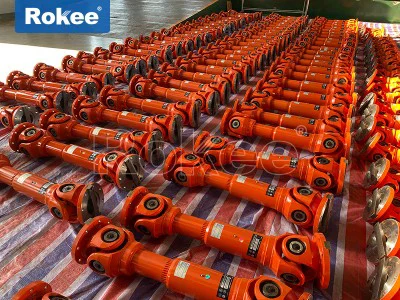
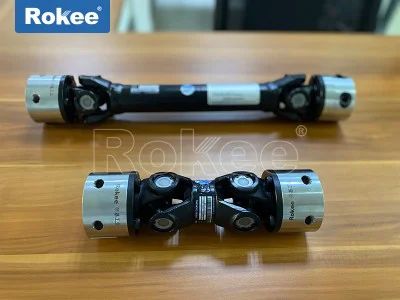
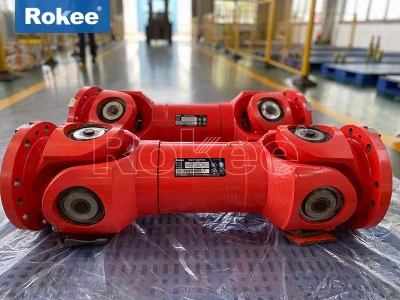
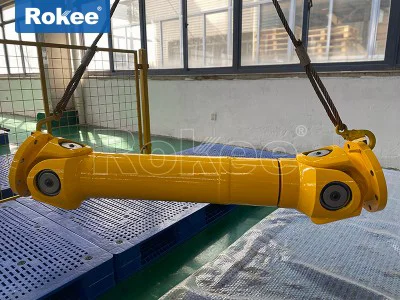
Cardan Universal Joints
As a core component in mechanical transmission systems, cardan universal joints play an indispensable role in fields such as automobiles, industrial equipment, and aerospace. It is like the joints of the human body, capable of flexibly transmitting power at different angles, making the mechanical system more adaptable and functional.
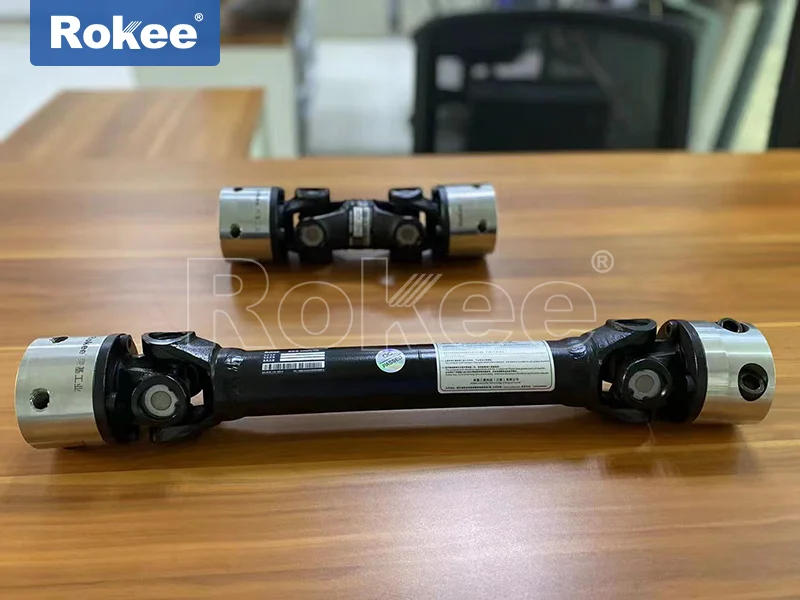
Universal joint is a mechanical device that enables variable angle power transmission, mainly used for parts that require changing the direction of the transmission axis. Its core function is to connect two axes that are not on the same straight line and allow the angle between them to vary within a certain range, while reliably transmitting rotational motion and torque.
Structurally, the cardan universal joint is similar to the joints of the human limbs. Just as our wrists can bend and rotate in multiple directions, universal joints also allow for changes in the relative position between connected mechanical components. In the automotive transmission system, this characteristic is particularly important because the relative position between the transmission and the drive axle will constantly change with factors such as uneven road surfaces and load changes during vehicle operation. The universal joint ensures smooth power transmission under these dynamic conditions through its flexibility and adaptability.
In terms of basic working principle, the simplest cross axis universal joint consists of two universal joint forks and a cross axis. When one universal joint fork rotates, it drives the other universal joint fork to rotate through the cross shaft, and can swing in any direction around the center of the cross shaft. The setting of needle roller bearings reduces friction and makes rotation smoother. However, this basic design has an inherent characteristic: when there is an angle between the two shafts, the speed of the output shaft will fluctuate periodically, even if the input shaft maintains a constant speed. This inequality needs to be overcome through paired use of universal joints or other more advanced designs.
According to different classification standards, cardan universal joints can be divided into multiple types, each with its unique structural characteristics and applicable scenarios. From the perspective of torsional elasticity, it can be divided into two categories: rigid universal joints and flexible universal joints. Rigid universal joints can be further divided into three main types: non constant velocity universal joints, quasi constant velocity universal joints, and constant velocity universal joints.
The Cardan universal joint, often referred to simply as a universal joint or U-joint, stands as one of the most fundamental and indispensable mechanical components in modern engineering and industrial systems. Designed to transmit rotational torque and motion between two shafts that are not collinear, misaligned at an angle, or subject to dynamic displacement during operation, this versatile joint has revolutionized power transmission across countless applications, from lightweight precision machinery to heavy-duty industrial equipment and automotive drivetrains. Unlike rigid shaft couplings that demand perfect axial alignment, the Cardan universal joint accommodates angular, and in some variants axial, misalignment while maintaining consistent power delivery, making it a cornerstone of mechanical design where flexibility and reliability are non-negotiable.
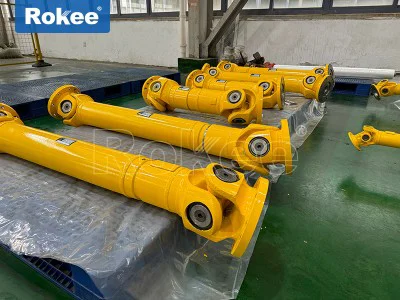
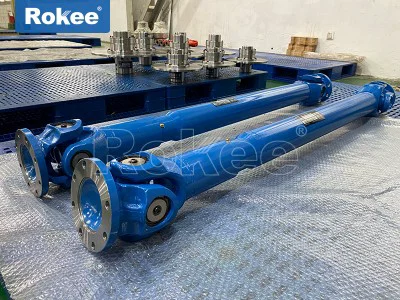
At its core, the standard Cardan universal joint features a straightforward yet mechanically robust structure that enables its unique motion-transmission capabilities. The most prevalent design, the cross-type or spider-type Cardan joint, consists of three primary interconnected components: two yoke-shaped end fittings (also known as fork ends) and a central cross-shaped spider member. Each yoke is securely attached to the driving and driven shafts respectively, with precision-machined bores designed to interface with the four arms of the central spider. The spider, a rigid cross component, serves as the pivotal link between the two yokes, allowing rotational movement around two perpendicular axes. To minimize friction, reduce wear, and enhance load-bearing capacity, high-precision needle bearings are typically installed between the spider arms and the inner surfaces of the yoke bores; these bearings facilitate smooth articulation while withstanding radial and thrust loads generated during torque transmission. Complementary components such as bearing caps, seals, and lubrication passages are integrated to protect internal bearing surfaces from contaminants, retain lubricating fluids, and extend the joint’s service life in harsh operating conditions. This minimalist structural design is a key strength, as it balances mechanical simplicity with exceptional functional versatility, enabling the joint to operate efficiently even under moderate to high angular misalignment between shafts.
The structural integrity of a Cardan universal joint directly dictates its performance characteristics, which are defined by key metrics including torque capacity, angular misalignment tolerance, rotational speed limits, transmission efficiency, and operational durability. Torque capacity, a critical performance parameter, is determined by the material strength of the spider and yokes, the size and quality of the needle bearings, and the overall dimensional proportions of the joint; heavy-duty variants are engineered with forged alloy steel components to handle extreme torsional loads, while lightweight versions use aluminum or precision-machined mild steel for low-torque, high-speed applications. Angular misalignment tolerance refers to the maximum angle between the driving and driven shafts that the joint can accommodate without compromising performance or structural integrity, with standard single Cardan joints typically supporting angles ranging from 15 to 30 degrees, and specialized high-angle designs capable of exceeding 45 degrees in specific configurations. Rotational speed performance is equally vital: while Cardan joints are highly effective at low to moderate speeds, single joint designs exhibit inherent velocity fluctuations at higher speeds and larger misalignment angles, a mechanical trait that can induce vibration, noise, and accelerated wear if unaddressed. Transmission efficiency remains consistently high across most operating conditions, with minimal power loss attributed to bearing friction, making these joints ideal for energy-efficient power transmission systems. Durability is further enhanced by sealed, lubricated designs that resist dust, moisture, and debris, ensuring reliable performance in rugged outdoor, industrial, and automotive settings where exposure to harsh elements is unavoidable.
Beyond the standard cross-type single Cardan joint, the broader family of Cardan universal joints encompasses several specialized classifications, each engineered to address specific operational limitations and application requirements, expanding the joint’s utility across diverse mechanical systems. The single Cardan joint, the most basic and widely adopted variant, excels in applications with moderate angular misalignment and low to moderate rotational speeds, offering cost-effective, easy-to-install power transmission for simple mechanical setups. However, its inherent non-constant velocity output at steep angles limits its use in high-speed, precision-critical systems. To mitigate this limitation, the double Cardan joint was developed, featuring two single Cardan joints linked by a short intermediate shaft and a centering mechanism. This dual-joint configuration cancels out velocity fluctuations, delivering near-constant velocity rotation even at significant misalignment angles, making it suitable for high-speed drivetrains and precision machinery where smooth, vibration-free operation is essential. Offset Cardan joints represent another specialized variation, designed to accommodate both angular misalignment and axial shaft displacement simultaneously; unlike standard joints that only handle angular shifts, offset variants feature a modified spider and yoke design that permits limited axial movement, ideal for systems where shafts experience thermal expansion, installation tolerances, or dynamic axial shifting during operation.
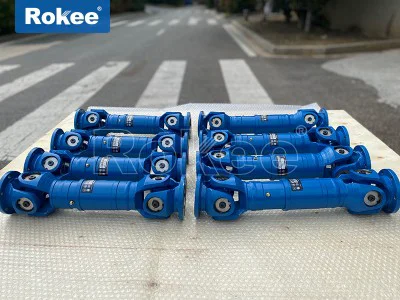
Additional specialized Cardan joint variants include high-angle universal joints, engineered with modified yoke and spider geometries to support extreme angular misalignment without binding or reducing torque capacity, and heavy-duty industrial Cardan joints, reinforced with thicker cross-sections, hardened alloy steel components, and oversized bearings to withstand extreme torsional loads, shock vibrations, and continuous heavy-duty operation. There are also compact miniature Cardan joints, crafted with precision micro-machining techniques for use in small-scale precision equipment, medical devices, and instrumentation where space is constrained and lightweight, low-torque transmission is required. Each classification is tailored to balance key performance trade-offs: simplicity versus smoothness, load capacity versus size, and misalignment tolerance versus operational speed, allowing engineers to select the optimal joint design based on the unique demands of their specific application, from delicate precision mechanisms to massive industrial processing equipment.
The adaptability of Cardan universal joints, rooted in their structural flexibility and diverse performance profiles, has led to their pervasive use across nearly every major industrial and mechanical sector, forming an integral part of countless systems that rely on efficient misalignment-tolerant power transmission. In the automotive industry, Cardan universal joints are ubiquitous, serving as critical components in drivetrain systems for passenger vehicles, commercial trucks, off-road vehicles, and agricultural machinery. They connect the transmission output shaft to the drive axle, accommodating the vertical movement of the suspension and angular shifts between the chassis and axle assembly, ensuring consistent power delivery to the wheels even as the vehicle traverses uneven terrain. Double Cardan joints are particularly prevalent in four-wheel-drive and high-performance vehicles, where they enable smooth high-speed operation and handle the increased torque and misalignment associated with off-road driving and heavy towing. Beyond drivetrains, Cardan joints are also used in automotive steering systems, transmitting rotational motion from the steering wheel to the steering gear while compensating for minor misalignment between steering column components.
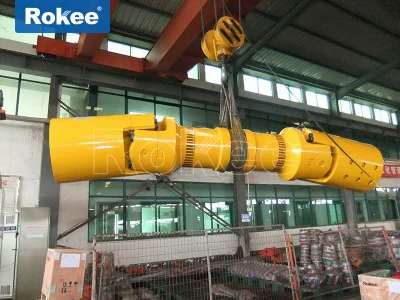
In the realm of industrial machinery and manufacturing equipment, Cardan universal joints play an indispensable role in a vast array of applications, from conveyor systems and material handling equipment to rolling mills, pumps, compressors, and machine tools. In manufacturing assembly lines, they connect drive motors to conveyor shafts, accommodating misalignment caused by installation errors or thermal expansion, ensuring uninterrupted material flow and consistent production output. In heavy industrial settings such as steel mills and mining operations, heavy-duty Cardan joints transmit high torque between large drive shafts and processing equipment, withstanding extreme loads, shock loads, and continuous operation in harsh, high-wear environments. Machine tools, including lathes, milling machines, and grinders, rely on precision Cardan joints to deliver smooth rotational motion to cutting and grinding mechanisms, maintaining accuracy even when minor shaft misalignment occurs during operation. Agricultural machinery, such as tractors, harvesters, and tillers, depends heavily on PTO (power take-off) Cardan joints to transfer power from the tractor engine to attached implements, adapting to the variable angles and rugged terrain typical of farming operations, ensuring reliable performance in field conditions.
Cardan universal joints also find critical applications in marine and aerospace engineering, where reliability and performance under extreme conditions are paramount. In marine propulsion systems, they connect boat engines to propeller shafts, accommodating the flexing of the hull and misalignment between the engine mount and propeller shaft, ensuring efficient power transfer through the water. Marine-grade Cardan joints are specially sealed to resist saltwater corrosion and moisture ingress, extending their service life in harsh marine environments. In aerospace systems, lightweight, high-precision Cardan joints are used in rotorcraft drive systems, flight control mechanisms, and auxiliary power units, transmitting motion between misaligned shafts while meeting strict weight and reliability standards for airborne operations. Additionally, these joints are utilized in specialized equipment such as robotics, medical devices, and optical instrumentation, where compact size, precise motion control, and misalignment tolerance are critical; miniature Cardan joints enable the articulation of robotic arms, the precise movement of medical imaging equipment, and the alignment of optical components, showcasing their versatility beyond traditional industrial and automotive use cases.
The enduring relevance of Cardan universal joints stems from their unique ability to solve a universal mechanical challenge: transmitting rotational power efficiently between non-aligned shafts. Their simple, rugged design ensures ease of manufacturing, installation, and maintenance, while ongoing engineering refinements—including advanced material science, precision bearing technology, and optimized geometric designs—continue to enhance their performance, durability, and adaptability. Unlike complex transmission components that require specialized maintenance or precise calibration, Cardan joints offer a cost-effective, reliable solution for misalignment-tolerant power transmission, making them a staple in both traditional and cutting-edge mechanical engineering. As industrial automation, automotive technology, and precision manufacturing continue to evolve, the demand for high-performance Cardan universal joints remains steady, with specialized variants constantly being developed to meet the evolving needs of modern machinery. Whether in a heavy-duty industrial mill, a high-speed automotive drivetrain, a compact robotic assembly, or a critical aerospace system, the Cardan universal joint remains a timeless, irreplaceable component that embodies the essence of practical, efficient mechanical design.
In summary, the Cardan universal joint’s structural ingenuity, diverse performance capabilities, and wide-ranging classifications make it an essential element in modern mechanical engineering. Its core cross-type design provides a reliable foundation for power transmission, while specialized variants address the limitations of standard models to suit high-speed, high-load, high-angle, and space-constrained applications. From automotive and industrial machinery to marine, aerospace, and precision equipment, Cardan universal joints deliver consistent, efficient performance where rigid couplings fail, adapting to dynamic operating conditions and ensuring the reliability of countless mechanical systems worldwide. As a testament to its engineering excellence, the Cardan universal joint continues to evolve alongside technological advancements, retaining its status as a foundational component that bridges the gap between theoretical mechanical design and real-world functional performance.