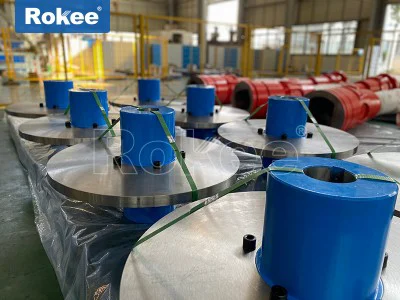
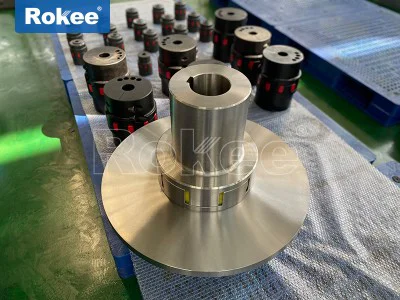
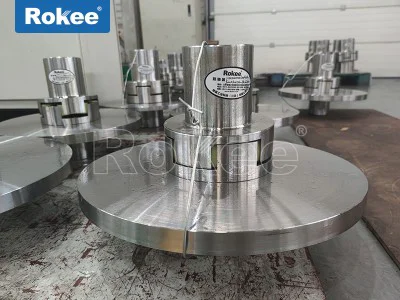
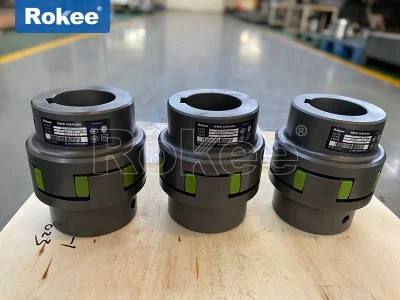
Star Flex Couplings
Star flex coupling is a high-performance elastic coupling named after its internal use of star shaped arranged elastic elements. This type of coupling plays a crucial role in mechanical transmission systems, effectively compensating for various deviations between shaft systems, while absorbing impact vibrations and protecting connected equipment from damage.
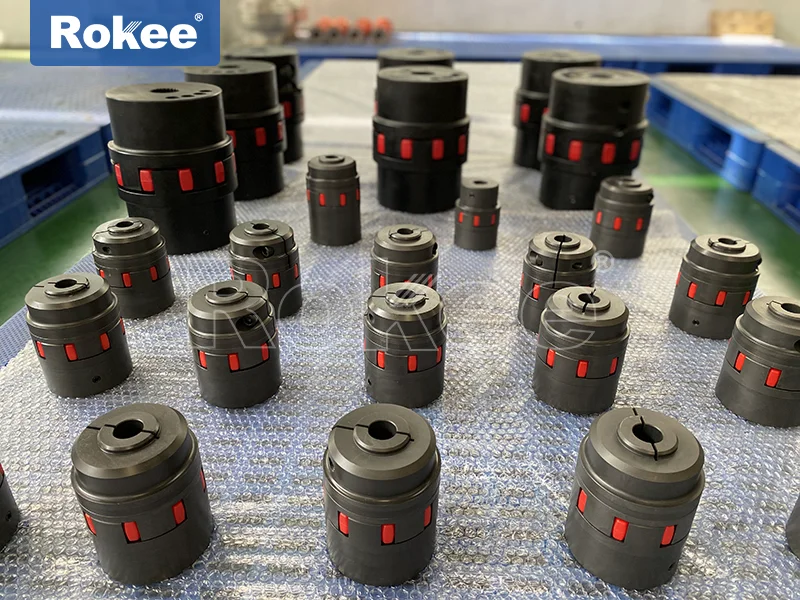
Compared with traditional couplings, star flex couplings have significant advantages such as compact structure, high torque transmission, strong compensation capability, and maintenance free, making them widely used in industrial automation, robotics technology, precision machinery, and other fields.
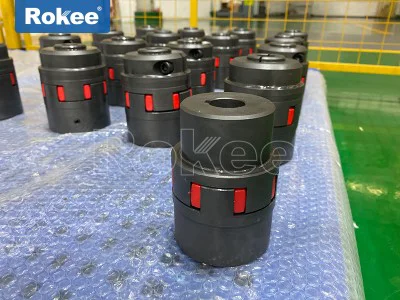
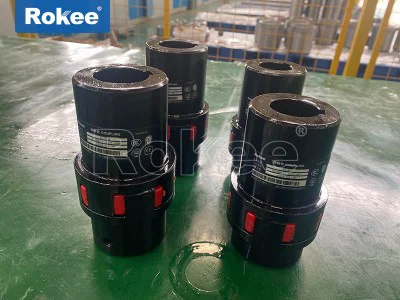
Star flex couplings typically consist of the following parts:
Two metal wheels: usually made of aluminum alloy or stainless steel, connecting the drive shaft and the driven shaft respectively
Star shaped elastomer: The core component is made of high elasticity polyurethane or Hytrel materials, arranged in a star shape
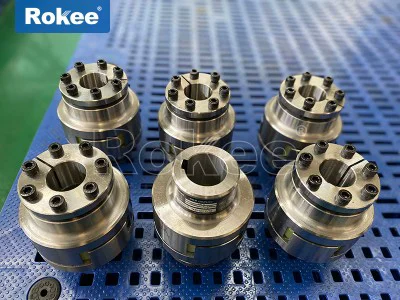
Locking device: including clamping screws or conical clamping sleeves to ensure a secure connection between the wheel hub and the shaft
When power is transmitted from the drive shaft to the coupling, torque first acts on one hub and is transmitted to the other hub through the elastic deformation of the star shaped elastic body. The deformability of elastomers enables them to:
Compensate for axial, radial, and angular deviations
Absorb impact loads and vibrations
Provide electrical insulation
Allow for a certain degree of thermal expansion difference
Technical features and advantages
Deviation compensation capability
Axial deviation: usually compensated by ± 0.5-3mm
Radial deviation: The compensation range is generally between 0.2-1.5mm
Angular deviation: a maximum allowable deviation angle of 1 ° -3 °
Comprehensive deviation: a combination that can compensate for multiple deviations simultaneouslyperformance advantage
High torsional stiffness: maintaining precise synchronous transmission
Low backlash: suitable for precision positioning applications
Damping characteristics: effectively suppress resonance and vibration
Maintenance free: No lubrication required, long service life
Electrical insulation: prevent stray current from damaging bearingsMaterial Properties
The elastic body of modern star flex couplings usually adopts:
Polyurethane: an economical choice with excellent comprehensive performance
Hytrel: High performance thermoplastic elastomer with a wider temperature resistance range
Special rubber: used for specific chemical or high-temperature environments
Star flex couplings are widely used in applications that require precision transmission and deviation compensation:
Industrial automation: robotic arms, CNC machine tools, assembly lines
Packaging Machinery: Filling Machine, Labeling Machine, Packaging Machine
Medical equipment: CT scanners, laboratory automation equipment
Semiconductor manufacturing: wafer processing equipment, lithography machines
Aerospace: Avionics equipment, satellite organizations
New energy: solar tracking system, wind power yaw system
Choosing a suitable star flex coupling requires consideration of the following factors:
Torque requirements: including rated torque and peak torque
Speed range: not exceeding the maximum speed allowed by the coupling
Deviation situation: Estimated axial, radial, and angular deviations
Environmental conditions: temperature, humidity, chemical contact, etc
Space limitations: Dimensional constraints on installation space
Inertial matching: impact on system dynamic response
Installation and maintenance
Installation key points
Ensure that the shaft end is clean and free of burrs
Control the deviation of the alignment within the allowable range
Tighten the fastening bolts gradually in diagonal order
Avoid excessive compression of elastomersMaintenance Recommendations
Although star flex couplings are generally maintenance free, it is still recommended to:
Regularly check whether the elastomer is aging or cracking
Observe if there are any abnormal vibrations during the operation of the coupling
Check if the fasteners are loose
Record the number of operating hours and estimate the replacement cycle
As an important component of modern mechanical transmission systems, the star flex coupling technology continues to evolve, providing reliable and efficient connection solutions for various industrial applications. Choosing the appropriate model and installing and maintaining it correctly can significantly improve equipment performance and lifespan.
Star flex couplings are essential components in mechanical power transmission systems, designed to connect two rotating shafts while accommodating misalignments, dampening vibrations, and ensuring efficient torque transfer. Unlike rigid couplings that require precise alignment and offer no flexibility, star flex couplings integrate elastic elements to bridge the gap between shafts, protecting machinery from damage caused by misalignment, shock loads, and vibration. Their simple yet robust design makes them suitable for a wide range of industrial and commercial applications, from small electric motors to heavy-duty industrial machinery.
The basic structure of a star flex coupling consists of three main components: two hubs and a central elastic element, often referred to as the "star" or "spider" due to its shape. The hubs are typically cylindrical components made from lightweight and durable materials, designed to attach to the input and output shafts of the machinery being connected. These hubs feature a series of evenly spaced projections or "jaws" around their inner circumference, which are specifically shaped to mate with the elastic star element. The design of the hubs varies slightly depending on the intended application, with options for different shaft connection methods such as pilot bore, key and set screw, or clamp-type fittings. Pilot bore hubs allow for free drilling to match specific shaft sizes, making them versatile for custom applications. Key and set screw hubs provide a secure connection for high torque transmission, while clamp-type hubs offer easy installation and removal without the need for keyways, reducing assembly time and simplifying maintenance. The hubs are commonly made from aluminum alloy for lightweight applications, while steel or cast iron hubs are used for heavier loads or high-speed operations, ensuring the coupling can withstand the demands of the operating environment.
The central elastic element is the heart of the star flex coupling, responsible for its flexibility, vibration damping, and misalignment compensation capabilities. This element is typically made from elastomeric materials such as polyurethane or synthetic rubber, chosen for their excellent elasticity, durability, and resistance to wear, oil, and chemicals. Polyurethane is a particularly common material for the star element due to its high torque capacity—often more than double that of older jaw coupling designs—and its ability to maintain performance across a wide range of temperatures. The star element is shaped like a cross or star, with projections that fit snugly into the jaws of the two hubs. These projections are designed to absorb and distribute forces evenly, ensuring smooth torque transfer while allowing for slight movements of the hubs relative to each other. The elastic element may be designed with a tight fit (preloaded construction) to eliminate backlash, making it suitable for precision applications, or a loose fit to accommodate larger misalignments and simplify assembly. Some star elements feature a crowned or clouning shape on their torque-transmitting surfaces, which enhances their ability to absorb radial and angular misalignments while reducing stress on the hubs and shafts.
The performance of star flex couplings is defined by several key characteristics that make them indispensable in power transmission systems. One of their most important performance features is misalignment compensation. In real-world applications, shafts are rarely perfectly aligned due to manufacturing tolerances, installation errors, thermal expansion, or structural deflection during operation. Star flex couplings can compensate for three types of misalignment: angular, radial, and axial. Angular misalignment occurs when the two shafts are not colinear but intersect at a small angle, while radial misalignment refers to offset between the shafts’ centerlines. Axial misalignment occurs when the shafts move along their axial direction relative to each other. The elastic star element deforms slightly to accommodate these misalignments, reducing stress on the shafts, bearings, and other mechanical components, thereby extending the service life of the entire system. Typical radial displacement compensation ranges from 0.4 to 2.2 millimeters, axial displacement from 1.2 to 6.4 millimeters, and angular misalignment up to 1.5 degrees, depending on the size and design of the coupling.
Another critical performance characteristic of star flex couplings is vibration damping. Mechanical systems often generate vibrations due to unbalanced rotating parts, gear meshing, or irregular load application. These vibrations can cause noise, reduce precision, and lead to premature wear or failure of components. The elastomeric star element acts as a shock absorber, absorbing and dissipating vibrational energy through its elastic deformation. This damping effect not only reduces noise but also protects sensitive components such as motors, sensors, and control systems from the harmful effects of vibration. The damping capacity of the coupling depends on the material and hardness of the star element; softer materials offer better damping but lower torque capacity, while harder materials provide higher torque transmission but reduced damping. This balance allows for customization based on the specific needs of the application.
Torque transmission capability is another key performance metric of star flex couplings. The coupling must be able to transmit the full torque generated by the driving shaft to the driven shaft without slipping or failing. The torque capacity is determined by the material of the hubs, the design of the jaws, and the strength of the elastic star element. Polyurethane star elements typically offer higher torque capacity compared to rubber elements, making them suitable for medium to heavy-duty applications. The torque range of star flex couplings varies widely, from as low as 1.2 N·m for small precision applications to over 35,000 N·m for heavy industrial machinery. It is important to select a coupling with a torque capacity that exceeds the maximum operating torque of the system to account for occasional peak loads, such as during startup or sudden changes in load. Additionally, star flex couplings exhibit high torsional stiffness, which ensures precise torque transfer and responsiveness, making them suitable for applications that require accurate motion control, such as servo systems and machine tools.
Durability and maintenance requirements are also important performance considerations. Star flex couplings are designed to be low-maintenance, with no need for lubrication due to the self-lubricating properties of the elastomeric star element. This reduces maintenance costs and downtime, making them ideal for applications where accessibility is limited or continuous operation is required. The service life of a star flex coupling is primarily determined by the service life of the elastic element, which can last up to 10 years under normal operating conditions. However, factors such as extreme temperatures, chemical exposure, excessive misalignment, or overloading can reduce the lifespan of the element. Fortunately, the star element is a replaceable component, allowing for easy maintenance without replacing the entire coupling. The hubs, made from durable metals, typically have a much longer service life, further enhancing the overall reliability of the coupling.
Star flex couplings are available in a variety of types, each designed to meet specific application requirements based on torque capacity, misalignment tolerance, operating temperature, and shaft connection method. One common classification is based on the fit of the star element: tight fit (preloaded) and loose fit. Tight fit couplings feature a star element that is precompressed between the hubs, eliminating backlash and ensuring precise torque transfer. These couplings are ideal for precision applications such as servo motors, stepper motors, and machine tools, where backlash can cause positioning errors. The tight fit design also provides better responsiveness, making it suitable for applications that require rapid acceleration and deceleration. Loose fit couplings, on the other hand, have a star element that fits more loosely in the hubs, allowing for greater misalignment compensation and easier assembly. These couplings are commonly used in general industrial applications where precise positioning is not critical, such as pumps, fans, and conveyors.
Another classification of star flex couplings is based on the material of the star element. Polyurethane star elements are the most common, offering a balance of torque capacity, flexibility, and durability. They are available in different hardness levels, typically measured using the JIS A or Shore hardness scales, to suit different applications. Harder polyurethane elements (e.g., 97 JIS A) provide higher torque capacity and are suitable for high-torque applications, while softer elements (e.g., 64 ShD) offer better flexibility and damping for high-speed or precision applications. Synthetic rubber star elements are also available, offering excellent vibration damping and resistance to harsh environments, making them suitable for applications where chemical exposure or extreme temperatures are a concern. In some cases, metal star elements (such as bronze) are used for slow-speed, high-torque applications, offering exceptional durability and resistance to extreme conditions, though they provide little to no vibration damping.
The design of the hubs also leads to different types of star flex couplings. Aluminum hub couplings are lightweight and corrosion-resistant, making them suitable for applications where weight is a concern, such as portable machinery or automotive systems. Steel or cast iron hubs are heavier but offer higher strength and torque capacity, making them ideal for heavy-duty industrial applications such as construction machinery, compressors, and generators. Some hubs are designed with additional features, such as flanges for easy mounting to equipment, or expansion sleeves for a secure connection to shafts without keyways. There are also specialized types of star flex couplings, such as dual-flange couplings for applications with long shaft distances, and torque-limiting couplings that protect machinery from overload by slipping when the torque exceeds a predetermined limit. These specialized designs expand the range of applications for star flex couplings, making them versatile components in various industries.
The versatility of star flex couplings is reflected in their wide range of applications across numerous industries. One of the most common applications is in machine tools, where precision and reliability are critical. Star flex couplings are used to connect motors to spindles, feed drives, and other components, providing precise torque transfer and compensating for small misalignments that could affect machining accuracy. The backlash-free design of tight fit couplings makes them particularly suitable for CNC machines and other precision equipment, where even small positioning errors can result in defective parts. Additionally, the vibration damping capabilities of star flex couplings help reduce noise and extend the life of machine tool components, such as bearings and gears.
Pumps and compressors are another major application area for star flex couplings. These machines often operate under varying loads and speeds, generating vibrations that can damage components over time. Star flex couplings absorb these vibrations, reduce stress on the pump or compressor shaft and bearings, and compensate for misalignments between the motor and the pump/compressor. The easy installation and maintenance of star flex couplings make them ideal for these applications, as they can be quickly replaced if the star element wears out, minimizing downtime. They are used in a variety of pump types, including centrifugal pumps, vacuum pumps, and hydraulic pumps, as well as in air compressors and gas compressors.
Star flex couplings are also widely used in automotive and transportation applications. In vehicles, they are used to connect the engine to the transmission, driveshaft, or other components, accommodating misalignments caused by engine movement and thermal expansion. The lightweight design of aluminum hub couplings makes them suitable for automotive applications, where weight reduction is important for fuel efficiency. They are also used in rail vehicles, connecting motors to axles and other components, where their durability and vibration damping capabilities help ensure reliable operation under harsh conditions. Additionally, star flex couplings are used in marine applications, where they must withstand exposure to saltwater and extreme temperatures, making synthetic rubber or metal star elements the preferred choice.
Industrial machinery, such as construction equipment, hydraulic systems, and injection molding machines, also relies heavily on star flex couplings. Construction machinery, such as excavators, bulldozers, and cranes, operates in harsh environments with high loads and significant misalignments, making the robust design and misalignment compensation capabilities of star flex couplings essential. Hydraulic systems use star flex couplings to connect motors to hydraulic pumps, ensuring efficient power transmission and reducing vibration that could affect the performance of hydraulic components. Injection molding machines require precise torque transfer and positioning, making backlash-free star flex couplings ideal for connecting the motor to the screw drive, ensuring consistent molding quality.
Other applications of star flex couplings include generators, where they connect the prime mover (such as a diesel engine or turbine) to the generator shaft, compensating for misalignments and damping vibrations to ensure stable power output. They are also used in textile machinery, conveyors, and packaging equipment, where their flexibility and low maintenance requirements make them suitable for continuous operation. In precision applications such as robotics and automation systems, star flex couplings are used to connect motors to robotic arms and other components, providing precise motion control and reducing vibration that could affect the accuracy of robotic movements.
When selecting a star flex coupling for a specific application, several factors must be considered to ensure optimal performance and reliability. The first factor is torque capacity, which must be sufficient to handle the maximum operating torque of the system, including peak loads. The second factor is misalignment compensation, which depends on the type and magnitude of misalignment expected in the application. For precision applications with minimal misalignment, a tight fit, high-hardness polyurethane element is recommended, while applications with larger misalignments may require a loose fit or softer element. Operating temperature is another important factor, as elastomeric materials have specific temperature ranges in which they perform optimally. For applications with extreme temperatures, synthetic rubber or metal star elements may be necessary. The shaft size and connection method must also be considered, as the hubs must be compatible with the shafts of the driving and driven machinery. Finally, the environment in which the coupling will operate, such as exposure to chemicals, moisture, or dust, should be taken into account to select a coupling with appropriate material resistance.
In conclusion, star flex couplings are versatile and reliable components that play a critical role in mechanical power transmission systems. Their simple structure, consisting of two hubs and a central elastic star element, provides excellent misalignment compensation, vibration damping, and torque transfer capabilities. The various types of star flex couplings, differentiated by fit, material, and hub design, allow for customization to meet the specific requirements of different applications. From precision machine tools to heavy-duty industrial machinery, star flex couplings are used across numerous industries, ensuring efficient and reliable operation while protecting equipment from damage. Their low maintenance requirements and long service life make them a cost-effective choice for power transmission, and their ability to adapt to varying operating conditions makes them an essential component in modern mechanical systems. As technology advances, the design and materials of star flex couplings continue to evolve, further enhancing their performance and expanding their range of applications.