Drum Gear Couplings
As a key component in modern industrial transmission systems, drum gear couplings play an irreplaceable role in the field of heavy machinery. Compared with traditional spur gear couplings, this coupling device with a special drum shaped tooth design has significantly improved load-bearing capacity, compensation performance, and durability.
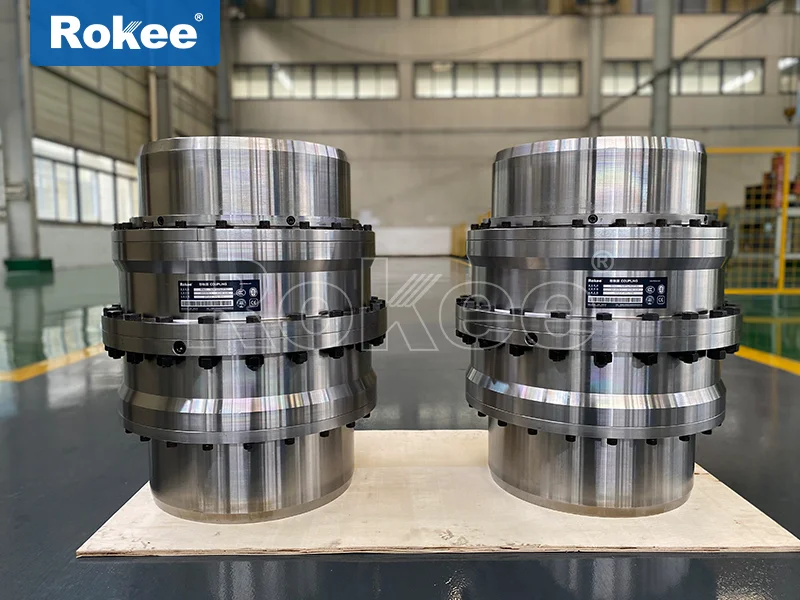
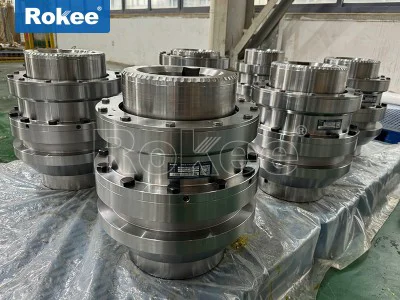
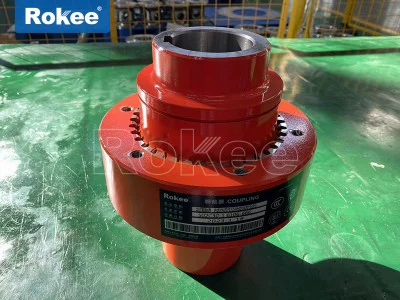
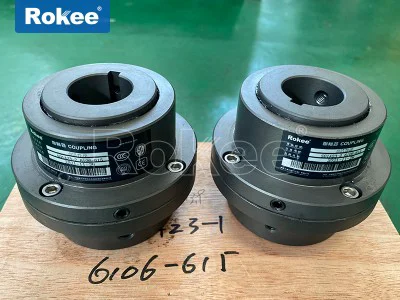
Drum gear coupling belongs to rigid flexible coupling, and its core structure consists of two main parts: inner gear ring and flange half coupling with outer teeth. The unique feature of this coupling lies in its external tooth design - the external teeth are made into a spherical shape, with the center of the sphere located on the gear axis, forming the so-called "drum shaped teeth". Compared with ordinary spur gear couplings, the tooth clearance of drum gear couplings is significantly increased, and this special design endows it with a series of excellent performance.
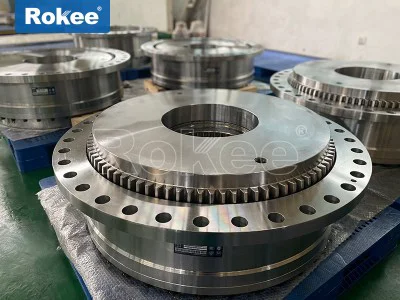
The geometric features of drum shaped teeth are very unique. In the longitudinal direction of the tooth, the tooth thickness gradually decreases from the center to both ends, forming a drum shaped curve as a whole. This type of curve is usually composed of single or multiple arcs, and the radius of the bulge circle directly affects the compensation ability and tooth contact state of the coupling. A well-designed drum shaped curve needs to meet two basic requirements: first, there should be no edge contact phenomenon at the maximum axial inclination angle; The second is to minimize the concentrated load on the gear teeth as much as possible, which requires the radius of the bulge circle to be as large as possible.
From the perspective of material selection, high-quality drum gear couplings are usually made of high-quality alloy steels such as 42CrMo, 20CrMnTi, etc. After undergoing precise carburizing and quenching processes, these materials can achieve a tooth surface hardness of HRC58-62 and a wear-resistant layer depth of 1.2-1.8mm, far exceeding the industry average. The combination of this material and process ensures the long-term reliable operation of the coupling under heavy load conditions.
In terms of working principle, the drum gear coupling transmits torque and rotational motion through the meshing of inner and outer teeth. When there is relative displacement between the two axes, the special design of the drum shaped teeth allows the inner and outer tooth surfaces to slide relative to each other within a certain range, thereby compensating for the axis deviation. Specifically, it can handle three basic types of displacement simultaneously: axial displacement (offset along the axis direction), radial displacement (parallel offset between axes), and angular displacement (angle between axes). This multi-directional compensation capability makes it an ideal choice for complex operating conditions.
It is worth mentioning that drum gear couplings have special lubrication requirements. Due to the periodic axial relative sliding between the inner and outer tooth surfaces during operation, good lubrication is crucial for reducing wear and power loss. According to different application scenarios, grease lubrication or forced thin oil lubrication systems can be used. The latter can significantly reduce tooth surface wear, with wear only about 10% of grease lubrication, while also taking away the heat generated by friction to prevent material performance degradation.
Drum gear couplings are highly favored in the industrial transmission field, mainly due to their excellent technical performance. Compared with traditional spur gear couplings, it has a series of obvious advantages, which directly translate into the reliability and economy of equipment operation.
The significant improvement in load-bearing capacity is one of the most notable features of drum toothed couplings. Under the same outer diameter size conditions, the torque transmission capacity of the drum toothed coupling is on average 15% to 20% higher than that of the straight toothed coupling. This improvement is due to the optimization of the tooth surface contact conditions in the design of the drum shaped teeth, which makes the load distribution more uniform.
The enhancement of displacement compensation capability is another major advantage. When the radial displacement is zero, the allowable angular displacement of a spur gear coupling is usually only 1 °, while a drum gear coupling can reach 1 ° 30 ', with an increase of 50%. This enhanced compensation capability effectively reduces the requirements for installation accuracy, while also minimizing additional loads caused by misalignment of the axis. In practical applications, drum gear couplings can handle angular deviations of up to 6 °, but it is generally recommended to use them within a range of 1.5 ° to 2.5 ° for optimal lifespan.
In terms of transmission efficiency, the drum gear coupling also performs well, with a theoretical transmission efficiency of up to 99.7%. This high efficiency is due to optimized tooth profile design that reduces friction losses, while precise manufacturing processes ensure meshing accuracy. High efficiency not only means less energy waste, but also less heat generation, which helps to extend the life of the coupling.
The drum gear coupling has also significantly improved in terms of service life and maintenance cycle. The drum shaped tooth surface avoids stress concentration caused by the edge compression of the tooth end under angular displacement conditions in straight tooth couplings, while improving the friction condition of the tooth surface. With appropriate lubrication system, the maintenance cycle can be extended to three times that of a spur gear coupling. Models that use forced thin oil lubrication can even achieve 10000 hours of maintenance free operation, significantly reducing downtime.
In addition, the drum gear coupling also has the advantage of compact structure. Compared to other coupling types with similar compensation capabilities, its radial size is smaller and the turning radius is smaller, which is particularly valuable in space limited applications. The horn shaped design of the outer gear sleeve teeth also makes installation and disassembly more convenient, reducing maintenance time consumption.
The comprehensive manifestation of these technological advantages makes the drum gear coupling the preferred solution for coupling selection under heavy load, high precision, or complex working conditions. With the continuous advancement of manufacturing technology and the improvement of design theory, the performance of drum gear couplings continues to improve, providing a more reliable transmission solution for modern industrial equipment.
After years of development, drum gear couplings have formed a series of standardized and specialized product types to meet the needs of different industrial scenarios. Understanding these types and their characteristics is crucial for proper selection and application.
The standard model series forms the foundation of drum gear coupling products. According to Chinese machinery industry standards such as JB/T 8854, drum gear couplings are mainly divided into multiple series such as GICL, GIICL, GCLD, etc. Among them, GIICL type is further divided into Type I and Type II: Type I adopts a separated sealing end, allowing for larger radial displacement and adapting to Y, J1, and Z1 axial extensions; Type II is an integral sealed end with a more compact structure, suitable for Y and J1 type shaft extensions. These standard models have a wide range of nominal torque, ranging from 0.4kN · m to 4500kN · m, with shaft hole diameters covering 16mm to 1040mm, and a maximum allowable speed of 4000r/min, which can meet most conventional application requirements.
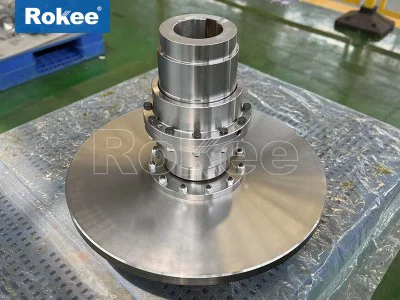
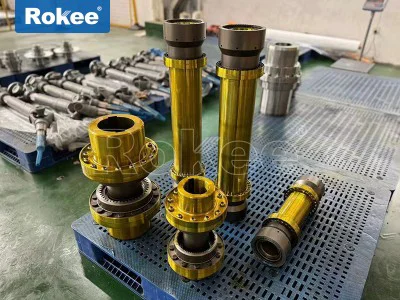
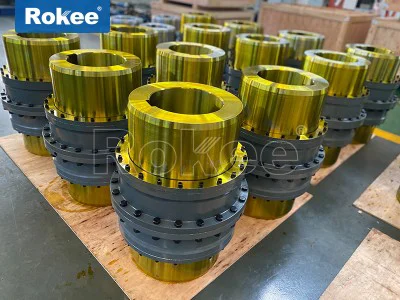
Special function models are variant products developed for specific working conditions. The WGP type drum shaped toothed coupling with brake disc integrates braking function, saving installation space; The WGC type is designed specifically for vertical installation, solving the special requirements of vertical equipment transmission; The WGZ model comes with brake wheels, making it easy to integrate with the braking system; The WGJ and WGT models are equipped with intermediate sleeves or shafts, which are used in situations where the connection distance needs to be extended. These special models greatly expand the application range of drum gear couplings, enabling them to adapt to various complex mechanical layouts and functional requirements.
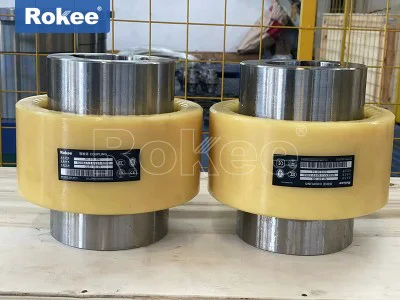
Industry specific models reflect the customized development of drum gear couplings in different fields. For example, the TGL type uses nylon inner gear rings, which have better cushioning and vibration reduction performance; NGCL type is designed specifically for applications with brake wheels and complies with JB/ZQ4644 standards; The NL type also uses nylon internal gear rings and is manufactured according to the DB 3202-87 standard. These specialized models have been optimized for specific industry operating conditions, such as hygiene requirements in the food and beverage industry and frequent start stop of logistics equipment, providing more professional solutions.
From the perspective of size specifications, the selection range of drum gear couplings is extremely wide. There are 28 basic specifications and 20 structural types of drum gear couplings commonly found in the market, with a maximum aperture of 1200mm and a maximum torque bearing capacity of approximately 8.19 million Newton meters. This wide parameter range ensures that almost any equipment with power and speed requirements can find a matching coupling model. Taking the GIICL series as an example, there are 20 specific models ranging from GII-CL1 to GII-CL20, and users can make precise selections based on parameters such as torque, speed, and shaft diameter.
In the realm of mechanical power transmission, drum gear couplings stand as one of the most widely utilized and reliable flexible coupling components, bridging the gap between driving and driven shafts while addressing the inherent challenges of shaft misalignment, torque transmission, and operational stability across diverse industrial scenarios. Unlike rigid couplings that offer no tolerance for positional deviations, drum gear couplings integrate a unique curved-tooth design that combines the high torque-carrying capacity of rigid connections with the flexibility to compensate for multiple forms of shaft displacement, making them indispensable in heavy-duty, high-load, and precision-demanding transmission systems.
At its core, the drum gear coupling features a streamlined yet robust structural framework, engineered to optimize power transfer and misalignment compensation simultaneously. The primary components typically include two hub units with external curved drum teeth, two inner gear sleeves with matching internal teeth, sealing elements to retain lubrication and prevent contamination, and fastening hardware to secure the assembly between the driving and driven shafts. The defining characteristic of this structure lies in the curved profile of the external teeth, which are machined to form a spherical contour centered along the gear axis, a design that sets drum gear couplings apart from conventional straight-tooth gear couplings. This curved tooth geometry ensures uniform contact across the entire tooth surface during meshing, eliminating the edge stress concentration that plagues straight-tooth designs and significantly reducing wear and tear over prolonged operation. The inner gear sleeves are precision-machined to mate seamlessly with the curved external teeth, creating a tight, efficient power transmission path while allowing controlled relative movement between the meshing tooth surfaces. Sealing components are strategically integrated into the assembly to enclose the gear meshing area, retaining specialized lubricants that minimize friction, dissipate heat, and protect the tooth surfaces from dust, moisture, and abrasive particles present in harsh industrial environments. The hub units are designed with precision boreholes to fit snugly onto shaft ends, with various connection methods available to accommodate different shaft sizes and transmission requirements, ensuring a secure, backlash-free connection that maintains torque integrity even under fluctuating loads.
The structural ingenuity of drum gear couplings translates directly to exceptional performance metrics that make them suitable for the most demanding operational conditions. Foremost among these performance traits is their exceptional torque transmission capacity, which far surpasses many other flexible coupling types of comparable dimensions. The multi-tooth meshing design distributes torque evenly across multiple contact points, enabling the coupling to handle heavy, shock, and impact loads without compromising structural integrity or transmission efficiency. This high load-bearing capability is further enhanced by the durable materials typically used in their construction, such as high-quality carbon steels and alloy steels that undergo specialized heat treatment to boost surface hardness, wear resistance, and fatigue strength, ensuring prolonged service life even under continuous heavy-duty operation. Another pivotal performance advantage is the superior misalignment compensation ability, a critical feature in real-world mechanical systems where perfect shaft alignment is rarely achievable. Drum gear couplings can effectively compensate for three primary forms of shaft displacement: axial displacement, radial displacement, and angular displacement, either individually or in combination. The curved tooth design allows for greater angular misalignment tolerance compared to straight-tooth couplings, with the capacity to accommodate moderate angular shifts without inducing excessive stress on the shafts, bearings, or adjacent machinery components. This flexibility not only prevents premature component failure but also simplifies installation and alignment procedures, reducing downtime and maintenance costs for industrial equipment.
Additional performance benefits of drum gear couplings include high transmission efficiency, stable operational performance, and adaptability to varying speed ranges. The precise meshing of curved teeth minimizes power loss due to friction and slippage, resulting in transmission efficiency levels that approach nearly full power transfer from the driving to the driven shaft, a crucial factor in energy-intensive industrial operations where efficiency directly impacts operational costs. The coupling’s rigid yet flexible nature also dampens minor vibrations and shocks generated during operation, reducing noise levels and enhancing the overall stability of the transmission system, protecting sensitive downstream components from damage. Furthermore, drum gear couplings exhibit excellent adaptability to both low-speed, high-torque applications and moderate-to-high-speed transmission scenarios, with the structural design optimized to maintain balance and performance across a wide range of rotational speeds. The enclosed lubrication system ensures consistent lubrication of the gear surfaces, preventing dry running, reducing frictional heat buildup, and extending the operational lifespan of both the coupling and connected machinery. When properly maintained with regular lubricant checks and replacements, drum gear couplings demonstrate remarkable reliability, requiring minimal upkeep and delivering consistent performance over extended service intervals, even in harsh operating environments characterized by extreme temperatures, dust, and mechanical stress.
Drum gear couplings are categorized into several distinct types based on structural variations, functional adaptations, and application-specific design modifications, each tailored to meet unique operational requirements and installation constraints. The most fundamental classification is the standard basic drum gear coupling, a versatile variant designed for general-purpose power transmission applications where moderate misalignment compensation and high torque capacity are required. This basic type features a compact, symmetrical structure with standard curved tooth profiles, sealed lubrication systems, and universal shaft connection interfaces, making it suitable for a broad spectrum of industrial machinery with standard shaft configurations and operating conditions. It serves as the foundational design upon which other specialized variants are developed, offering a balance of performance, durability, and cost-effectiveness for everyday transmission needs.
A second prominent category is the extended shaft drum gear coupling, engineered to address scenarios where there is a significant distance between the driving and driven shafts that cannot be bridged by standard couplings. This type incorporates an intermediate shaft or sleeve assembly between the two main hub units, extending the overall length of the coupling while retaining the core curved tooth meshing mechanism and misalignment compensation capabilities. The intermediate component is precision-machined to maintain torque transmission efficiency and structural rigidity, ensuring that power is transferred seamlessly across the extended distance without sagging, vibration, or loss of performance. This variant is particularly valuable in industrial setups where machinery components are physically separated, such as in large-scale conveyor systems, long-line transmission shafts, and equipment layouts with spaced-apart motor and load units.
Specialized drum gear couplings are also designed to integrate functional accessories for enhanced operational utility, with brake wheel or brake disc drum gear couplings representing a key category. These variants feature integrated brake wheels or discs mounted onto one or both hub units, enabling the coupling to serve dual purposes: transmitting torque during operation and providing a reliable braking surface for emergency stops or controlled deceleration of the transmission system. This integrated design eliminates the need for separate braking components, streamlining the mechanical assembly, reducing space requirements, and enhancing the responsiveness of the braking system. It is ideal for machinery that requires frequent starting, stopping, or speed regulation, where reliable braking performance is critical to operational safety and process control.
Other specialized classifications include vertical installation drum gear couplings, engineered specifically for vertical shaft transmission systems where gravitational forces and axial load distribution differ significantly from horizontal setups. These couplings feature reinforced structural designs and modified sealing and lubrication systems to ensure optimal performance in vertical orientations, preventing lubricant leakage and maintaining consistent tooth meshing under vertical load conditions. Additionally, there are drum gear couplings with non-metallic inner gear components, such as those utilizing high-strength engineering polymers for inner gear sleeves, which offer enhanced vibration damping, noise reduction, and corrosion resistance, making them suitable for light to moderate load applications where quiet operation and chemical resistance are prioritized. Each classification retains the core advantages of the drum gear coupling design while adapting to specific installation orientations, load profiles, and functional needs, ensuring versatility across a vast array of industrial applications.
The unique combination of high torque capacity, misalignment compensation, durability, and adaptability makes drum gear couplings a staple component across nearly every heavy industry and mechanical engineering sector, with applications spanning mining, metallurgy, construction, marine engineering, power generation, chemical processing, and heavy machinery manufacturing. In the mining industry, drum gear couplings are extensively used in ore crushing equipment, conveyor systems, grinding mills, and hoisting machinery, where they withstand extreme shock loads, heavy continuous torque, and harsh dusty environments, ensuring reliable power transmission in rugged mining operations. The ability to compensate for shaft misalignment caused by heavy load-induced machinery deflection is particularly critical here, preventing premature bearing and shaft failure in equipment that operates around the clock.
In metallurgical and steelmaking facilities, drum gear couplings play a vital role in rolling mills, continuous casting equipment, blast furnace auxiliary machinery, and metal processing lines, where they handle extremely high torque loads, elevated temperatures, and harsh industrial contaminants. The robust construction and heat-resistant materials of these couplings enable them to maintain performance in the high-temperature, high-stress environment of steel production, ensuring uninterrupted power transfer for critical metal forming and processing operations. Similarly, in the construction machinery sector, drum gear couplings are integrated into excavators, bulldozers, concrete mixers, and crane systems, providing the flexibility and load-bearing capacity needed to handle the variable, shock-heavy loads inherent to construction equipment operation, while compensating for shaft misalignment caused by uneven terrain and heavy-duty maneuvering.
Marine engineering represents another key application area for drum gear couplings, where they are utilized in ship propulsion systems, deck machinery, and auxiliary marine equipment. The marine-grade variants of these couplings are designed to resist corrosion from saltwater and harsh marine atmospheres, while their misalignment compensation capabilities accommodate shaft movement caused by wave-induced vessel flexing, ensuring reliable power transmission for shipboard machinery. In power generation facilities, including thermal power plants, hydropower stations, and industrial power generation units, drum gear couplings connect turbines, generators, and drive motors, transmitting high-power torque efficiently while accommodating thermal expansion-induced shaft displacement, a common occurrence in power generation equipment due to extreme temperature fluctuations during operation.
Beyond heavy industry, drum gear couplings find use in chemical and petrochemical processing plants, paper manufacturing facilities, textile machinery, and general industrial transmission systems, adapting to the unique demands of each sector. In chemical plants, they provide reliable power transmission for pumps, compressors, and mixing equipment, with sealed designs preventing lubricant contamination and ensuring safe operation in corrosive chemical environments. In paper mills, they handle the continuous, high-torque loads of paper processing machinery, maintaining stable operation and reducing downtime for maintenance. Even in general manufacturing and machinery assembly, standard drum gear couplings serve as a reliable solution for connecting motors, gearboxes, and working components, offering a cost-effective, long-lasting transmission solution for a wide range of light to heavy-duty applications.
In summary, drum gear couplings represent a pinnacle of flexible power transmission design, merging structural robustness, exceptional performance, and versatile adaptability to meet the diverse needs of modern industrial machinery. Their unique curved tooth structure delivers unparalleled torque transmission and misalignment compensation capabilities, while the range of specialized classifications ensures compatibility with every conceivable operational scenario, from basic general-purpose use to extreme heavy-duty and environment-specific applications. As a critical link in mechanical power transmission systems, drum gear couplings continue to be a preferred choice for engineers and industrial operators worldwide, valued for their reliability, durability, and ability to maintain consistent performance in the face of challenging operational conditions. Their enduring relevance across countless industries underscores their status as an essential component in the evolution of mechanical engineering, supporting the efficiency, safety, and productivity of industrial operations on a global scale.