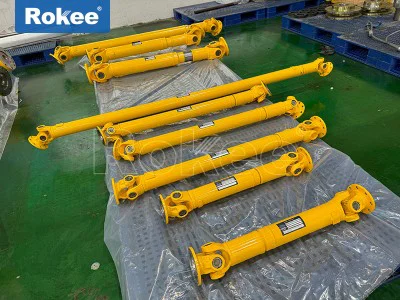
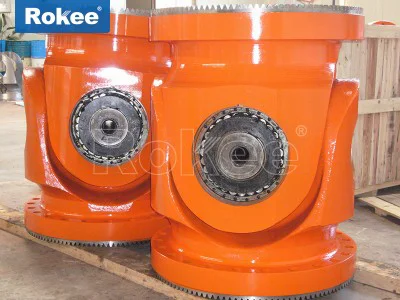
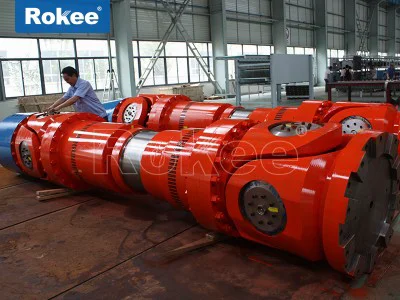
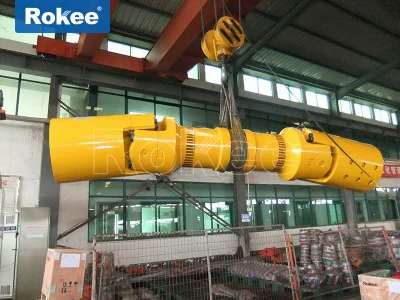
Telescopic Drive Shafts
In the realm of mechanical power transmission, the telescopic drive shaft stands as a versatile and indispensable component, engineered to address the inherent challenges of variable shaft distances, angular misalignment, and dynamic operational movements across countless industrial and mechanical systems. Unlike rigid drive shafts that are limited to fixed spatial configurations, telescopic drive shafts integrate a unique sliding mechanism that enables axial length adjustment while maintaining consistent torque transmission, making them a cornerstone of flexible power delivery.
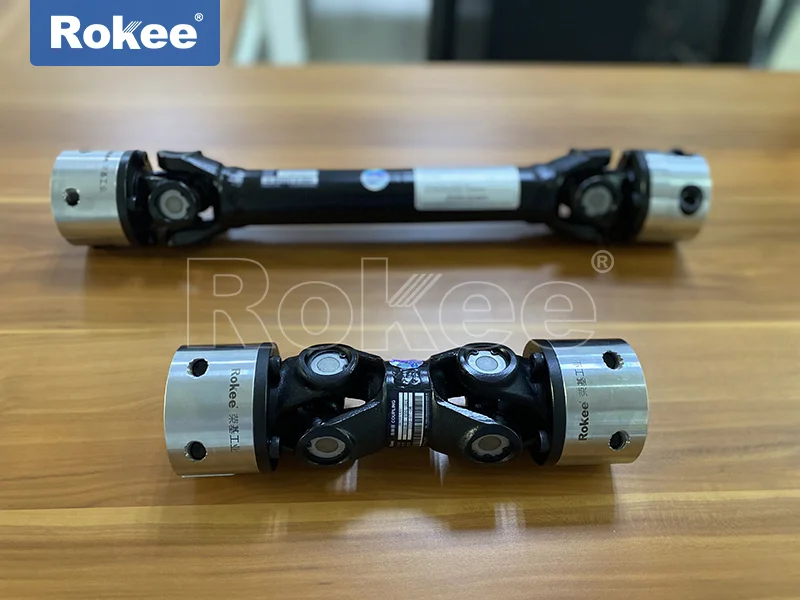
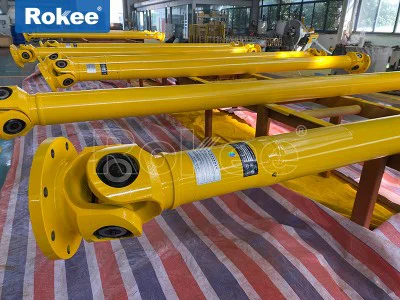
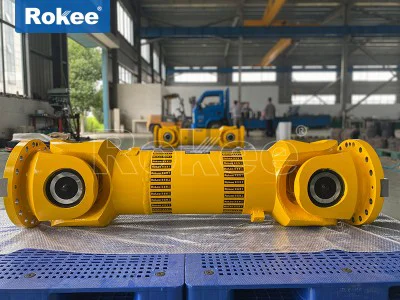
At its core, the telescopic drive shaft is a precision-engineered assembly composed of several key interlocking components that work in tandem to facilitate smooth power transfer and axial adjustability. The primary structural elements include a splined shaft, a mating sleeve, universal joints, bearing assemblies, sealing components, and lubrication systems, each crafted to fulfill a specialized function within the overall mechanism. The splined shaft and sleeve form the heart of the telescopic feature, with external splines on the shaft and internal splines on the sleeve creating a tight, intermeshed connection that allows linear sliding movement while securely transmitting rotational torque. This splined interface is meticulously machined to ensure minimal backlash, precise alignment, and uniform load distribution, preventing slippage or premature wear even under heavy operational loads. Universal joints, typically positioned at both ends of the telescopic assembly, compensate for angular misalignment between the driving and driven shafts, a critical capability in systems where perfect coaxial alignment is unachievable. These joints can accommodate varying degrees of angular offset, enabling the shaft to transmit power efficiently even when the connected components are not perfectly straight.
Bearing assemblies are integrated to support radial and axial loads, reduce friction between moving parts, and enhance the shaft’s rotational stability. High-precision bearings, often constructed from hardened alloy steels, are selected to withstand continuous rotational movement, shock loads, and prolonged operational stress, ensuring consistent performance over extended service life. Sealing components, such as dust boots, gaskets, and lip seals, encase the splined sliding section and bearing areas, acting as a protective barrier against contaminants like dust, dirt, moisture, and debris. This sealing mechanism is vital for preserving the integrity of internal lubrication and preventing abrasive wear on critical surfaces, especially in harsh operating environments. Lubrication systems, including built-in oil passages, grease fittings, and sealed lubrication chambers, ensure that all friction-prone components receive adequate lubrication, minimizing heat generation, reducing wear, and extending the overall durability of the shaft. Together, these structural elements form a robust, cohesive unit that balances flexibility, strength, and precision, laying the foundation for the telescopic drive shaft’s exceptional performance characteristics.
The performance of a telescopic drive shaft is defined by a set of core attributes that determine its suitability for diverse operational conditions, with axial adjustability, torque transmission capacity, misalignment tolerance, operational smoothness, and durability standing out as the most critical. Axial adjustability, the defining feature of these shafts, allows for controlled length variation within a specified range, typically spanning from a few dozen millimeters to several hundred millimeters depending on the design. This adjustability accommodates thermal expansion and contraction of connected components, suspension movement in mobile machinery, installation tolerances, and dynamic positional shifts during operation, eliminating the need for custom-sized rigid shafts and simplifying system assembly and maintenance. Torque transmission capacity is engineered to match the demands of the application, with heavy-duty designs capable of transferring high levels of rotational force for industrial heavy machinery, while lighter variants cater to precision equipment with lower torque requirements. The splined interface and universal joint design are optimized to maximize torque efficiency, minimizing power loss during transmission and ensuring that nearly all input power is delivered to the driven component.
Misalignment tolerance is another standout performance trait, as telescopic drive shafts can simultaneously compensate for angular, parallel, and axial misalignment between driving and driven shafts. This versatility eliminates the need for overly precise installation alignment, reducing assembly time and costs while preventing excessive stress on connected components that could lead to premature failure. Operational smoothness is achieved through precision machining of splines, balanced rotational components, and low-friction bearings, which minimize vibration, noise, and rotational irregularities even at varying speeds and lengths. This smooth operation is crucial for high-speed applications, as excessive vibration can compromise system stability, damage adjacent components, and reduce overall operational efficiency. Durability is engineered through the use of high-strength materials, specialized heat treatment processes, and robust sealing and lubrication systems, enabling the shaft to withstand harsh operating conditions including extreme temperatures, heavy shock loads, continuous use, and exposure to abrasive or corrosive elements. Resistant to fatigue, wear, and deformation, telescopic drive shafts deliver consistent performance over long service intervals, reducing downtime and maintenance costs for end-users.
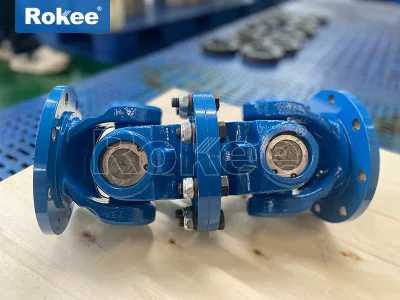
Telescopic drive shafts are categorized into distinct types based on structural design, operational functionality, joint configuration, and intended application, each tailored to meet specific mechanical requirements. One primary classification is based on the type of universal joint integrated, distinguishing between single-joint telescopic drive shafts and double-joint telescopic drive shafts. Single-joint variants feature a single universal joint at one end, offering compact dimensions and basic angular misalignment compensation, ideal for simple mechanical systems with minimal offset and limited space constraints. Double-joint designs, equipped with universal joints at both ends, provide enhanced angular flexibility, capable of accommodating larger misalignment angles and delivering smoother power transfer in more complex systems. This dual-joint setup also reduces rotational speed fluctuations, making it suitable for high-speed operational scenarios where uniform motion is critical.
Another key classification is based on the sliding mechanism and spline profile, differentiating between involute spline telescopic shafts, rectangular spline shafts, and ball spline telescopic shafts. Involute spline shafts feature curved spline teeth that distribute load evenly across the contact surface, offering high torque capacity, self-centering properties, and exceptional durability, making them the preferred choice for heavy-duty industrial applications. Rectangular spline shafts, with straight, parallel splines, provide a simpler, more cost-effective design with reliable torque transmission, suitable for moderate-load applications where precision is important but extreme durability is not a primary requirement. Ball spline telescopic shafts incorporate recirculating ball bearings between the shaft and sleeve, drastically reducing friction during axial sliding and enabling smoother, more responsive length adjustment. This low-friction design is ideal for high-precision, high-speed applications where minimal resistance and precise positional control are essential, though it typically comes with a more complex construction compared to traditional spline designs.
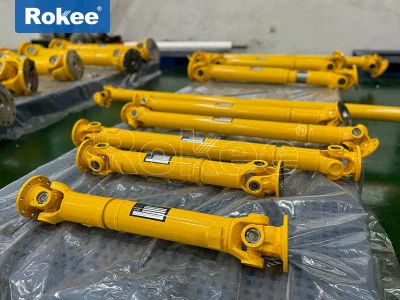
Telescopic drive shafts can also be classified by load capacity and operational scale, encompassing light-duty, medium-duty, and heavy-duty variants. Light-duty telescopic drive shafts are designed for small-scale precision equipment, such as laboratory machinery, office automation devices, and small residential tools, featuring compact dimensions, low torque capacity, and lightweight construction. Medium-duty shafts strike a balance between strength and flexibility, catering to a broad range of general industrial machinery, automotive subsystems, and agricultural equipment, handling moderate torque loads and offering reliable adjustability for everyday operational demands. Heavy-duty telescopic drive shafts are engineered for extreme operational conditions, constructed from ultra-high-strength alloy steels with reinforced splines and bearings, capable of transmitting massive torque loads and withstanding continuous heavy use in large-scale industrial and mobile machinery. Additionally, specialized telescopic drive shafts are designed for specific environmental conditions, including corrosion-resistant variants for marine or chemical environments, high-temperature resistant shafts for industrial furnaces and processing equipment, and dust-proof sealed shafts for construction and mining applications.
The adaptability and reliable performance of telescopic drive shafts have led to their widespread adoption across countless industries and mechanical systems, serving as a critical link in power transmission for applications ranging from mobile machinery to stationary industrial equipment. In the automotive and transportation sector, telescopic drive shafts play a vital role in passenger vehicles, commercial trucks, and off-road vehicles, particularly in models with independent suspension systems or variable wheelbase configurations. These shafts compensate for the vertical movement of suspension components during vehicle operation, adjusting their length to maintain consistent power delivery from the transmission to the drive wheels, even as the vehicle navigates uneven terrain. They also accommodate thermal expansion of the drivetrain components, ensuring smooth acceleration, stable handling, and reduced wear on other drivetrain parts, enhancing overall vehicle performance and longevity.
In the realm of construction and heavy machinery, telescopic drive shafts are integral to excavators, loaders, cranes, bulldozers, and other mobile construction equipment. These machines frequently undergo dynamic positional changes, with articulated arms, rotating cabins, and adjustable undercarriages creating variable distances between power sources and driven components. Telescopic drive shafts adapt to these constant shifts, transmitting power reliably to hydraulic systems, drive tracks, and operational attachments, even under heavy loads and extreme angular misalignment. Their robust construction and sealed design also make them resistant to the dust, mud, and debris prevalent on construction sites, ensuring uninterrupted operation in harsh outdoor environments.
Agricultural machinery relies heavily on telescopic drive shafts to power a wide range of farming equipment, including tractors, harvesters, plows, and irrigation systems. Agricultural operations often involve detachable implements and variable working widths, requiring flexible power transmission that can adjust to different equipment configurations. Telescopic drive shafts connect the tractor’s power take-off (PTO) to various attachments, adjusting their length to fit different implement sizes and accommodating the uneven movement of machinery across farmland. Their durable design withstands the rigors of agricultural use, including exposure to soil, water, and crop debris, while maintaining efficient power delivery to maximize farming productivity.
Industrial manufacturing and processing equipment also extensively utilize telescopic drive shafts, spanning metalworking machinery, textile mills, packaging lines, conveyor systems, and heavy industrial pumps. In stationary industrial setups, these shafts compensate for installation inaccuracies, thermal expansion of long transmission lines, and minor positional shifts of machinery during operation, ensuring consistent power flow across production lines. Heavy-duty industrial variants are employed in rolling mills, mining equipment, and material handling systems, where they transmit high torque loads over variable distances, supporting continuous industrial production with minimal downtime. Precision-engineered telescopic shafts are also used in automated manufacturing cells and robotic systems, enabling flexible movement of robotic arms and precision power transmission for intricate assembly tasks.
Marine and offshore applications benefit from specialized telescopic drive shafts designed to withstand corrosive saltwater environments and dynamic marine conditions. These shafts are used in ship propulsion systems, marine winches, and offshore drilling equipment, adjusting to the movement of ship hulls and compensating for misalignment caused by wave-induced vessel motion. Corrosion-resistant materials and enhanced sealing systems protect the shafts from saltwater damage, ensuring reliable operation in demanding marine environments. Additionally, telescopic drive shafts find use in aerospace support equipment, renewable energy systems such as wind turbine yaw mechanisms, and material handling equipment like forklifts and aerial work platforms, each application leveraging the shaft’s unique combination of axial adjustability, torque transmission, and misalignment tolerance.
Beyond these core industries, telescopic drive shafts continue to find new applications as mechanical systems evolve toward greater flexibility and adaptability. Advances in material science, precision manufacturing, and design engineering are further enhancing their performance, with lighter weight materials, improved spline profiles, and enhanced sealing technologies expanding their operational capabilities and service life. As industries increasingly demand mechanical components that can adapt to variable conditions, reduce maintenance needs, and optimize system efficiency, the telescopic drive shaft remains a vital and evolving solution. Its ability to balance flexibility, strength, and precision ensures that it will continue to be a cornerstone of power transmission across global industrial and mechanical sectors, supporting innovation and reliability in countless applications for years to come.