Gear Couplings
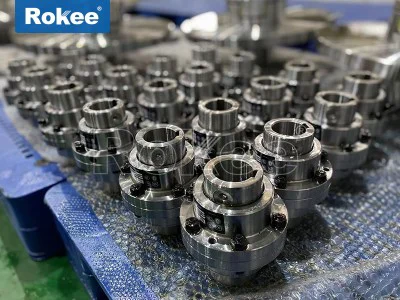
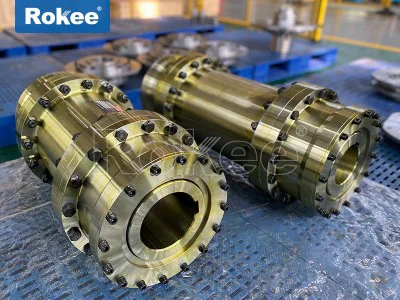
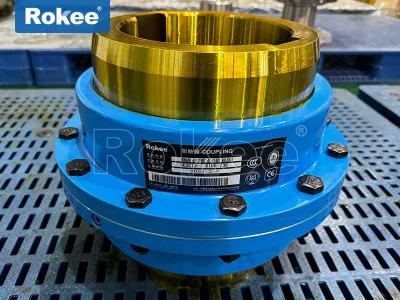
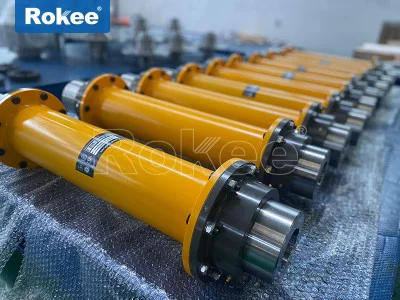
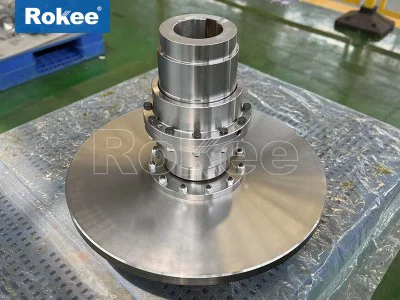
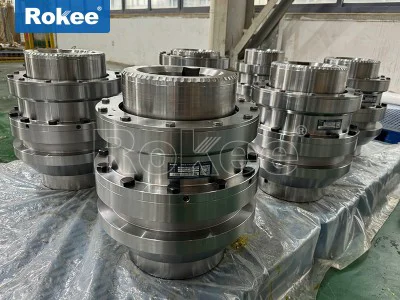
Gear coupling is a type of rigid movable coupling, whose core structure consists of an inner gear ring and a flange half coupling with outer teeth. Through the meshing of the inner and outer teeth, torque transmission and rotational synchronization between the two shafts are achieved. This type of coupling is suitable for connecting two concentric shafts in a transmission shaft system and has a certain ability to compensate for the relative displacement between the two shafts.
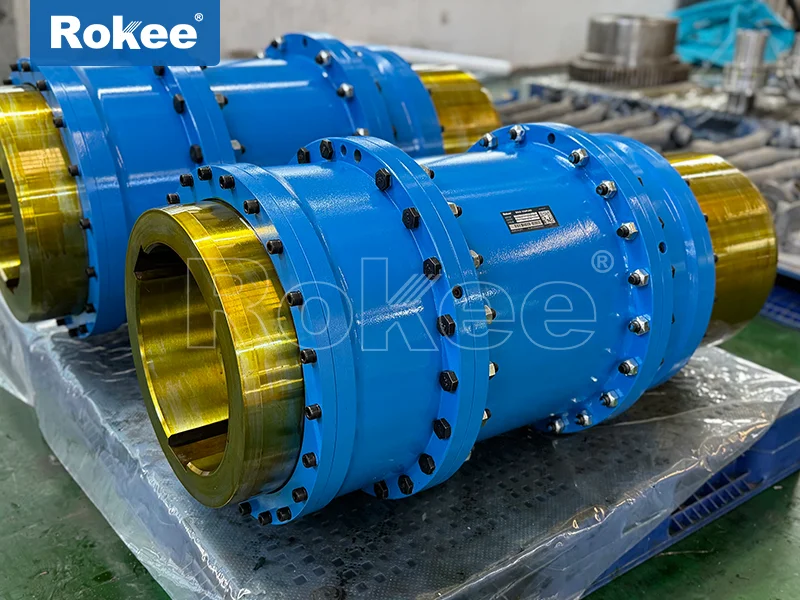
The external teeth design of gear couplings can be divided into two basic forms: straight teeth and drum teeth. Drum shaped teeth are made by shaping the outer teeth into a spherical surface, with the center of the spherical surface located on the gear axis. This design results in a larger backlash between the teeth compared to regular gears. Compared to straight tooth couplings, drum shaped couplings can allow for greater angular displacement (usually up to 1 ° 30 ', which is 50% higher than straight tooth couplings), significantly improving tooth contact conditions, thereby enhancing the ability to transmit torque and extending service life.
During the working process, when there is relative displacement between the two axes, the tooth surfaces of the inner and outer teeth will periodically slide axially, which inevitably leads to tooth surface wear and power loss. Therefore, gear couplings need to work in a well lubricated and sealed state to reduce friction losses and prevent contaminants from entering the meshing area.
The main types and characteristics of gear couplings
Drum gear coupling
Crown gear coupling is currently the most widely used type, which has several significant advantages compared to spur gear coupling:
Load bearing capacity improvement: Under the same outer diameter and maximum outer diameter of the inner gear sleeve, the average load bearing capacity is increased by 15-20% compared to the straight tooth type
Enhanced compensation capability: allowing for greater angular displacement (up to 1 ° 30 ′) and improving tooth contact conditions
Stress distribution optimization: avoids stress concentration caused by edge compression of straight tooth ends
Easy maintenance: The outer gear sleeve has a trumpet shaped tooth end, making assembly and disassembly more convenient
Efficient transmission: transmission efficiency up to 99.7%
Drum gear couplings are particularly suitable for low-speed and heavy-duty working conditions, such as metallurgy, mining, lifting and transportation industries, and are also widely used in shaft transmission of various machinery such as petroleum, chemical, and general machinery. The drum shaped gear coupling with high precision and dynamic balance processing can also be used in high-speed transmission scenarios, such as shaft transmission of gas turbines.
Spur gear coupling
The axial gear blank of the external gear sleeve of the spur gear coupling can be processed into two types: straight line and circular arc. The indexing circle and root circle are both straight lines, and their meshing form is exactly the same as that of the involute cylindrical gear. Compensating for the relative displacement between two shafts by increasing the tooth flank clearance between the inner and outer teeth, but the compensation capability is limited and has gradually been phased out. It should be avoided as much as possible in the design of new equipment.
Elastic column pin toothed coupling
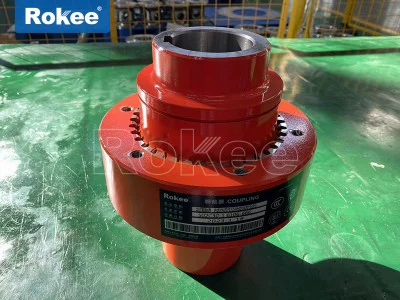
Elastic pin toothed coupling is a special type of toothed coupling that belongs to flexible couplings with elastic elements. It consists of two half couplings with semi-circular grooves, an outer ring, and nylon pins, which transmit torque through the pins. Its main features include:
Lubrication free maintenance: Nylon column pins are made of self-lubricating material and do not require additional lubrication
Compensation capability: capable of compensating for axial, radial, and angular axis offsets
Good economy: simple structure, good processability, and low cost
Applicable scenarios: Suitable for medium and high power transmission, but not suitable for situations with high requirements for vibration reduction and noise control
Technical advantages and application areas of gear couplings
Gear couplings have the characteristics of small radial size and high load-bearing capacity, making them widely used in various industrial scenarios
In the field of heavy industry: metallurgical equipment (such as rolling mills), mining machinery, lifting and transportation equipment, and other low-speed heavy-duty working conditions
Energy sector: High speed transmission systems such as gas turbines and wind turbines (requiring high-precision dynamic balancing processing)
General machinery: petrochemical equipment, ship propulsion systems, water pump units, etc
Special equipment: such as DC series drum gear couplings specifically used for lifting equipment lifting mechanisms
Gear couplings can compensate for installation errors and displacement during operation, including axial displacement, radial displacement, angular displacement, and comprehensive displacement. This compensation capability is particularly important for modern industrial equipment, as manufacturing and installation errors, part deformation, wear, foundation sinking, and other factors can all cause displacement of the two axis positions.
Selection and maintenance points of gear coupling
Selection considerations
When choosing a gear coupling, the following parameters should be considered comprehensively:
Torque requirements: from light (such as GIICLZ1 rated torque of 0.4kN · m) to heavy (such as CLZ19 capable of up to 1000kN · m)
Speed range: General models allow a speed of 4000r/min, but special design is required for high-speed applications
Shaft hole size: diameter range from 16mm to 530mm, to match the equipment shaft diameter
Displacement compensation requirement: Select the appropriate type based on the expected axis deviation (drum teeth have stronger compensation capability)
Environmental conditions: The working temperature range is usually -20 ℃ to+80 ℃, and special considerations are needed for special environments
Key points for installation and maintenance
Proper installation and maintenance are crucial for the performance and lifespan of gear couplings
Installation alignment: Although gear couplings can compensate for certain deviations, good alignment can significantly extend their service life
Lubrication management: It is necessary to ensure good lubrication condition, and it is recommended to use lithium based grease or forced thin oil lubrication system
Sealing inspection: Regularly check the sealing condition to prevent contaminants from entering and lubricating oil leakage
Wear monitoring: Some models (such as DC series) are equipped with wear indicator devices and should be checked regularly
Regular maintenance: Check the meshing condition of the tooth surface (with a contact area of not less than 50% along the tooth height and not less than 70% along the tooth width), and observe for severe pitting, wear, and cracks
Common faults and their solutions
Typical problems that may occur during the use of gear couplings include:
Tooth surface wear: usually caused by poor lubrication or excessive centering error
Abnormal noise: may indicate meshing problems or loose components
Overheating phenomenon: often related to insufficient lubrication or excessive load
Increased vibration: may be caused by coupling imbalance or changes in alignment status
The corresponding solutions to these problems include calibrating the center, improving lubrication, replacing couplings with suitable materials, and filtering lubricating oil.
Technological Development and Innovation of Gear Coupling
With the advancement of industrial technology, gear couplings are constantly innovating in design and manufacturing
Material Innovation: Adopting high-strength alloy steel and special heat treatment process to improve tooth surface hardness (HRC50-60) and overall durability
Structural optimization: such as the locking block and spring washer design of the elastic column pin toothed coupling, which enhances stability under high-speed rotation
Lubrication system improvement: from grease lubrication to forced thin oil lubrication, significantly reducing wear (thin oil lubrication wear is about 10% of grease lubrication)
Intelligent monitoring: Integrated sensor technology, real-time monitoring of the working status and wear degree of the coupling
Specialized design: Develop specialized models for specific application scenarios, such as drum toothed couplings for drums, couplings for high-speed gas turbines, etc
These technological innovations have significantly improved the load-bearing capacity, reliability, efficiency, and service life of modern gear couplings, enabling them to meet increasingly demanding industrial application requirements.
As a key component of mechanical transmission systems, the performance of gear couplings directly affects the efficiency and reliability of the entire equipment. The technological development in this field fully reflects the progress of mechanical engineering discipline, from traditional straight tooth type to modern drum shaped tooth type, and then to various specially designed special couplings. Proper selection, installation, and maintenance of gear couplings can not only ensure efficient and stable operation of the equipment, but also reduce maintenance costs and extend the service life of the equipment. With the advancement of Industry 4.0 and intelligent manufacturing, gear couplings will continue to evolve, providing more reliable and efficient connection solutions for various mechanical systems.
Gear couplings are essential mechanical components widely utilized in industrial power transmission systems, designed specifically to connect two rotating shafts and transmit torque efficiently while accommodating various forms of misalignment that may occur during operation. Unlike other types of couplings, gear couplings are distinguished by their robust construction, high torque-bearing capacity, and ability to operate reliably under harsh industrial conditions, making them indispensable in numerous heavy-duty and precision applications across diverse industries. The core functionality of a gear coupling revolves around the meshing of gear teeth, which enables the seamless transfer of rotational power from one shaft to another while compensating for minor deviations in shaft alignment, thermal expansion, or mechanical wear over time. To fully understand the value and versatility of gear couplings, it is necessary to explore their intricate structure, key performance characteristics, various classification types, and the wide range of practical applications where they play a critical role.
The structure of a gear coupling is relatively straightforward yet engineered for maximum durability and efficiency, consisting of several key components that work in tandem to achieve optimal power transmission. At the heart of every gear coupling are two gear hubs, each featuring external gear teeth that are precision-machined to ensure smooth meshing with a corresponding internal gear sleeve. The gear hubs are typically mounted on the ends of the two shafts that need to be connected, secured in place using keys, set screws, or hydraulic fitting methods to prevent slippage during high-torque operation. The internal gear sleeve, also known as the coupling sleeve, encloses the external gear teeth of the hubs and features matching internal gear teeth that engage with the hubs’ external teeth, creating a secure and rigid connection when rotating. In some designs, the internal gear sleeve may be split into two halves, which are joined together using bolts to facilitate easy installation and maintenance, allowing for quick assembly and disassembly without the need to remove the entire coupling or disconnect the shafts. Additionally, many gear couplings incorporate a sealing mechanism, such as rubber seals or labyrinth seals, to prevent the ingress of contaminants such as dust, dirt, and moisture, which can cause premature wear of the gear teeth and reduce the overall lifespan of the coupling. Lubrication is another critical aspect of the gear coupling structure, as the meshing gear teeth require consistent lubrication to minimize friction, reduce wear, and dissipate heat generated during operation; this is often achieved through pre-lubricated designs or dedicated lubrication ports that allow for periodic re-lubrication.
The gear teeth themselves are a defining feature of the coupling’s structure, with their design and machining precision directly influencing the coupling’s performance and reliability. Most gear couplings utilize involute gear teeth, which are characterized by their curved profile that ensures gradual and smooth meshing between the external and internal teeth, reducing shock loads and vibration during operation. The number of teeth, tooth pitch, and tooth width can vary depending on the specific application requirements, with larger tooth widths and more teeth typically associated with higher torque capacity. Some gear couplings feature crowned external gear teeth, where the tooth profile is slightly curved along the length of the tooth, allowing for greater flexibility in compensating for angular misalignment between the shafts. This crowned design ensures that the gear teeth make contact evenly across their entire width, even when the shafts are slightly misaligned, reducing stress concentration on individual teeth and preventing premature failure. The materials used in the construction of gear coupling components are also carefully selected to withstand the demands of industrial operation; common materials include high-strength alloy steels, carbon steels, and stainless steels, which are heat-treated to enhance hardness, toughness, and resistance to wear and corrosion. In applications where weight is a concern, such as in aerospace or portable machinery, lightweight materials like aluminum alloys may be used, though these are typically limited to lower torque applications.
The performance characteristics of gear couplings are what make them stand out among other types of power transmission couplings, with each performance attribute tailored to meet the demands of specific industrial applications. One of the most prominent performance features of gear couplings is their high torque capacity, which allows them to transmit large amounts of rotational power efficiently, even in compact designs. This high torque density makes gear couplings ideal for heavy-duty applications where space is limited but high power transmission is required, such as in mining equipment, steel rolling mills, and marine propulsion systems. Unlike flexible couplings that rely on elastic materials to transmit torque, gear couplings use rigid gear meshing, which results in minimal torsional backlash and high torsional stiffness, ensuring precise power transmission with little to no rotational lag. This precision is particularly important in applications where accurate speed and torque control are critical, such as in precision machining, robotics, and automated manufacturing systems.
Another key performance characteristic of gear couplings is their ability to accommodate various types of shaft misalignment, which is inevitable in most industrial setups due to factors such as installation errors, thermal expansion, shaft deflection, and mechanical wear. Gear couplings can effectively compensate for three main types of misalignment: angular misalignment, where the two shafts are inclined at a small angle relative to each other; parallel misalignment, where the shafts are offset parallel to each other; and axial misalignment, where the shafts move back and forth along their axial direction. The degree of misalignment that a gear coupling can accommodate varies depending on its design, with crowned gear teeth typically allowing for greater angular misalignment (up to 2 degrees) compared to straight gear teeth. This flexibility in accommodating misalignment helps to reduce stress on the shafts, bearings, and other connected components, extending the overall lifespan of the entire power transmission system and minimizing downtime due to mechanical failure.
Durability and reliability are also critical performance attributes of gear couplings, as they are often used in harsh industrial environments where they are exposed to high temperatures, heavy loads, vibration, and contaminants. The robust construction of gear couplings, combined with the use of high-strength materials and precision machining, ensures that they can withstand these harsh conditions and operate continuously for extended periods with minimal maintenance. Gear couplings have a long service life compared to many other types of couplings, particularly when properly lubricated and maintained, making them a cost-effective solution for long-term industrial applications. Additionally, gear couplings exhibit high efficiency in power transmission, with typical efficiency ratings above 99%, meaning that very little power is lost during the transfer from one shaft to another. This high efficiency is particularly important in energy-intensive applications, as it helps to reduce energy consumption and lower operational costs.
Despite their numerous advantages, gear couplings do have some performance limitations that must be considered when selecting the appropriate coupling for a specific application. One such limitation is their noise level, as the meshing of gear teeth can generate a certain amount of noise during high-speed operation, particularly if the gear teeth are worn or poorly lubricated. This noise can be mitigated through the use of helical gear teeth, which mesh more smoothly than straight gear teeth, or through the incorporation of noise-dampening materials in the coupling design. Another limitation is that gear couplings require regular lubrication to maintain optimal performance, as insufficient lubrication can lead to increased friction, wear, and heat generation, which can damage the gear teeth and reduce the coupling’s lifespan. In applications where lubrication is difficult or impractical, this can be a significant drawback, though some modern gear couplings are designed with self-lubricating materials to address this issue.
Gear couplings are classified into several different types based on their design, construction, and intended application, each with its own unique characteristics and advantages. The most common classification of gear couplings is based on the type of gear teeth used, with the two main categories being straight gear couplings and helical gear couplings. Straight gear couplings, also known as spur gear couplings, feature straight gear teeth that are cut parallel to the axis of the shafts. These couplings are relatively simple to manufacture, cost-effective, and suitable for applications with moderate torque requirements and minimal misalignment. Straight gear couplings are commonly used in light to medium-duty applications such as pumps, fans, and small motors, where high precision and high torque are not the primary concerns. However, their ability to accommodate misalignment is limited compared to other types of gear couplings, making them less suitable for heavy-duty or high-misalignment applications.
Helical gear couplings, on the other hand, feature helical gear teeth that are cut at an angle to the axis of the shafts, resulting in a more gradual and smooth meshing action compared to straight gear teeth. This helical design reduces noise and vibration during operation, making them ideal for high-speed applications where noise reduction is important. Additionally, helical gear couplings have a higher torque capacity than straight gear couplings due to the increased contact area between the gear teeth, and they can accommodate greater degrees of angular and parallel misalignment. The helical design also helps to distribute the load more evenly across the gear teeth, reducing stress concentration and extending the coupling’s lifespan. Helical gear couplings are commonly used in heavy-duty applications such as steel mills, mining equipment, marine propulsion systems, and power generation turbines, where high torque, high speed, and misalignment compensation are critical.
Another common classification of gear couplings is based on their construction type, with the main categories being solid gear couplings, split gear couplings, and floating shaft gear couplings. Solid gear couplings consist of a one-piece internal gear sleeve that encloses the two external gear hubs, providing a rigid and secure connection. These couplings are simple in design, durable, and suitable for applications where installation and maintenance access is not a concern. However, their one-piece design makes them difficult to install and remove, as the entire coupling must be slid onto the shafts during assembly, which can be challenging in tight spaces. Split gear couplings, as the name suggests, feature a split internal gear sleeve that is divided into two halves, which are joined together using bolts. This split design allows for easy installation and maintenance, as the two halves of the sleeve can be attached around the gear hubs without the need to remove the shafts or other connected components. Split gear couplings are widely used in applications where downtime must be minimized, such as in continuous production lines, and they offer the same torque capacity and misalignment compensation as solid gear couplings.
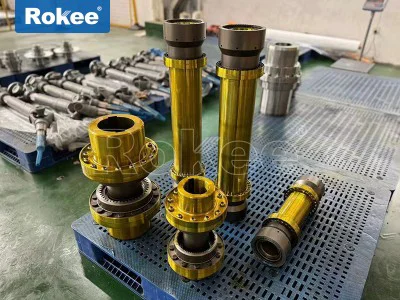
Floating shaft gear couplings, also known as spacer gear couplings, are designed for applications where the two shafts to be connected are separated by a large distance. These couplings consist of two gear hubs mounted on the respective shafts, connected by a floating shaft (or spacer) that features gear teeth at both ends, meshing with the hubs’ external teeth. The floating shaft allows for greater flexibility in compensating for misalignment, particularly parallel misalignment, and it can be customized to various lengths to accommodate different shaft distances. Floating shaft gear couplings are commonly used in large industrial machinery such as pumps, compressors, and turbines, where the shafts are spaced far apart but require reliable high-torque transmission. Additionally, there are specialized types of gear couplings designed for specific applications, such as bevel gear couplings, which are used to connect shafts that are perpendicular to each other, and worm gear couplings, which are used in applications requiring high torque reduction and precise speed control.
The applications of gear couplings are vast and diverse, spanning nearly every major industry where power transmission between rotating shafts is required, particularly in heavy-duty, high-torque, or precision applications. One of the largest application areas for gear couplings is the manufacturing industry, where they are used in a wide range of machinery such as conveyors, mixers, extruders, and machining centers. In steel manufacturing, gear couplings play a critical role in rolling mills, where they transmit high torque to the rolls that shape and form steel products, withstanding extreme temperatures and heavy loads. Similarly, in the automotive manufacturing industry, gear couplings are used in assembly lines, stamping machines, and robotic arms, providing precise and reliable power transmission to ensure efficient production.
The mining and construction industries also rely heavily on gear couplings, as they are well-suited for the harsh conditions and heavy-duty equipment used in these sectors. In mining, gear couplings are used in crushers, grinders, conveyor systems, and mine hoists, transmitting high torque to process and transport raw materials such as coal, ore, and minerals. These applications require couplings that can withstand dust, moisture, and heavy vibrations, making gear couplings an ideal choice due to their robust construction and sealing mechanisms. In construction, gear couplings are used in excavators, bulldozers, cranes, and concrete mixers, enabling the transfer of power from the engine to the various hydraulic and mechanical components that drive the equipment.
The energy sector is another major user of gear couplings, with applications in both traditional and renewable energy systems. In traditional power generation, such as thermal power plants and hydroelectric power plants, gear couplings are used in turbines, generators, and pumps, transmitting high torque to generate electricity efficiently. In hydroelectric power plants, for example, gear couplings connect the water turbine to the generator, allowing for the transfer of rotational power from the turbine (driven by water flow) to the generator, which converts it into electrical energy. In renewable energy systems such as wind turbines, gear couplings are used in the gearbox to connect the rotor (driven by wind) to the generator, transmitting high torque while accommodating the misalignment caused by wind-induced vibrations and thermal expansion. The oil and gas industry also uses gear couplings extensively in pumps, compressors, and drilling equipment, where they operate under high pressure, high temperature, and corrosive conditions, requiring reliable and durable power transmission.
Marine and aerospace industries also utilize gear couplings in various applications, though with specialized designs to meet the unique requirements of these sectors. In marine applications, gear couplings are used in ship propulsion systems, connecting the engine to the propeller shaft, transmitting high torque to propel the ship through water. These marine-grade gear couplings are designed to withstand saltwater corrosion, high vibrations, and extreme temperatures, with materials such as stainless steel and corrosion-resistant alloys used to ensure longevity. In the aerospace industry, gear couplings are used in aircraft engines, auxiliary power units, and landing gear systems, where lightweight construction, high precision, and reliability are critical. These aerospace-grade gear couplings are typically made from lightweight materials such as titanium alloys and feature precision-machined gear teeth to ensure minimal weight and maximum efficiency.
Precision machinery and automation systems also benefit from the use of gear couplings, particularly in applications requiring accurate speed and torque control. In robotics, for example, gear couplings are used in robotic arms and joints, providing precise power transmission to enable smooth and accurate movements. In precision machining, such as CNC lathes and milling machines, gear couplings are used to connect the motor to the spindle, ensuring that the spindle rotates at the exact speed required for machining operations, with minimal torsional backlash. Additionally, gear couplings are used in medical equipment such as MRI machines, centrifuges, and surgical robots, where reliability, precision, and cleanliness are critical, with specialized designs that meet the strict requirements of the medical industry.
In conclusion, gear couplings are versatile and reliable mechanical components that play a critical role in industrial power transmission systems, offering a unique combination of robust construction, high torque capacity, misalignment compensation, and durability. Their intricate structure, centered around precision-machined gear teeth and complementary components, enables them to transmit rotational power efficiently while accommodating the inevitable misalignments and harsh conditions of industrial operation. The various types of gear couplings, including straight, helical, solid, split, and floating shaft designs, allow for customization to meet the specific requirements of different applications, from light-duty pumps to heavy-duty turbines. Across industries such as manufacturing, mining, energy, marine, aerospace, and precision machinery, gear couplings are indispensable, ensuring the reliable and efficient operation of countless pieces of equipment. As industrial technology continues to advance, gear couplings are likely to evolve further, with improvements in materials, design, and lubrication leading to even higher performance, longer lifespans, and greater versatility, solidifying their position as a cornerstone of modern power transmission systems.