Flexible Snake Couplings
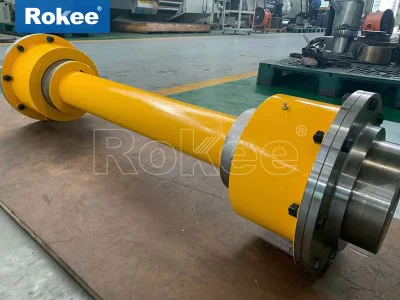
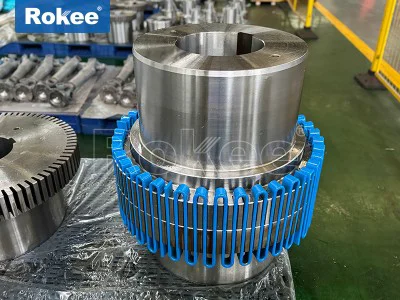
The flexible snake coupling is an advanced mechanical transmission component that achieves a perfect balance between power transmission and displacement compensation through a specially designed serpentine spring structure. This type of coupling mainly consists of two wheel hubs with toothed flanges and a metal spring band that is bent in a snake shape. The spring band is carefully installed in the tooth grooves of the two wheel hubs, forming a flexible and sturdy connection system.
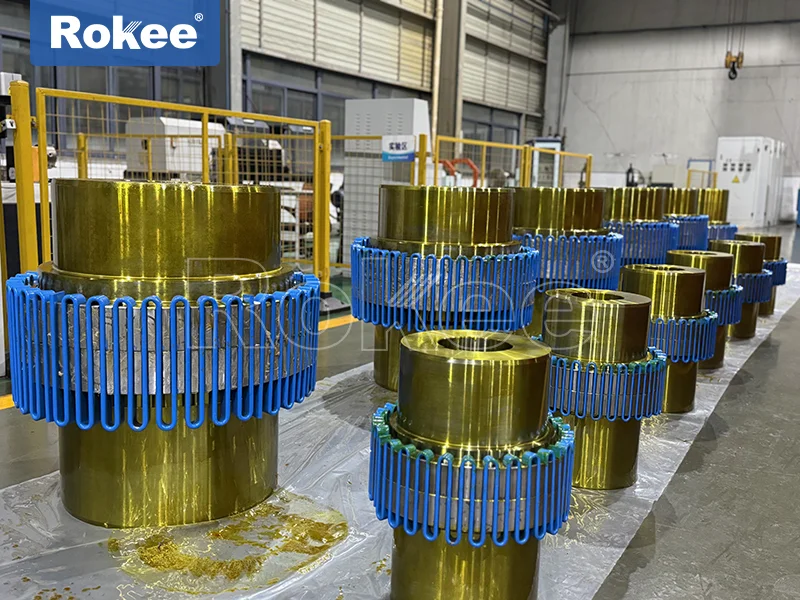
When the driving shaft rotates, the teeth of the hub push the spring belt, which in turn drives the driven wheel to rotate. The unique design of the snake shaped spring enables it to compensate for various shaft deviations through the elastic deformation of the spring while transmitting torque. This structure can not only effectively transmit power, but also absorb impact loads, reduce vibration transmission, and protect connected equipment from damage.
The flexible snake coupling exhibits multiple outstanding performances in modern industrial applications:
Excellent displacement compensation capability:
Axial displacement compensation: ± 1-5mm (depending on the model)
Radial displacement compensation: 0.5-3mm
Angular deviation compensation: 1 ° -3 °
This multi-directional compensation capability enables it to adapt to various installation errors and dynamic offsets during operation.Efficient torque transmission:
Wide torque range, from a few Newton meters to tens of thousands of Newton meters
High torque density, small size yet capable of transmitting large torque
Zero backlash design ensures precise transmissionExcellent vibration damping performance:
The high damping characteristics of springs can absorb up to 30% of vibration energy
Significantly reduce transmission system noise (can reduce noise by 5-10 decibels)
Effectively suppress resonance phenomenonLong life design:
Made of high-quality alloy spring steel, with a fatigue life of millions of cycles
Wear free design, no lubrication required
Special coating treatment, strong corrosion resistance
flexible snake couplings are widely used in various industrial fields due to their excellent performance:
In the field of heavy industry:
Metallurgical equipment: rolling mill, straightening machine
Mining machinery: crushers, ball mills
Ship propulsion system: main propulsion shaft connectionEnergy industry:
Generator set: connection between turbine and generator
Wind power generation: transmission between the gearbox and the generator
Pump system: high-power water pump driveManufacturing equipment:
Machine tool industry: high-precision machining centers
Plastic machinery: extruders, injection molding machines
Paper Machinery: Large Roll Diameter Transmission SystemSpecial environmental applications:
Chemical industry: occasions requiring corrosion resistance
Ocean engineering: high salt spray environment
Military equipment: high reliability requirement system
To ensure optimal performance of the flexible snake coupling, professional installation and maintenance standards must be followed:
Precision installation process:
Using laser centering instrument to ensure axis centering accuracy ≤ 0.05mm
Use hydraulic tools to install the wheel hub and avoid hammering
Tighten the bolts in stages using a cross sequenceKey points of operation monitoring:
Regularly inspect the spring for cracks or permanent deformation
Monitor operating temperature, abnormal temperature rise may indicate problems
Pay attention to abnormal vibrations or noise changesPreventive maintenance strategy:
Check the alignment status every 2000 operating hours
Conduct a comprehensive inspection once a year
Establish vibration monitoring files to track performance changesFault diagnosis techniques:
Periodic vibration: usually indicates poor alignment
Random vibration: The spring may be damaged or loose
Abnormal temperature: Check for overload or lubrication contamination
As a key component of modern mechanical transmission systems, the flexible snake coupling's technological innovation will continue to promote the development of industrial equipment towards high efficiency, reliability, and intelligence. Choosing and applying this type of coupling correctly can significantly improve equipment performance and reduce maintenance costs, making it an indispensable transmission solution for modern engineers.
In the realm of mechanical power transmission, flexible couplings serve as indispensable components that bridge driving and driven shafts, mitigating misalignment, absorbing vibration, and ensuring smooth torque transfer across diverse industrial systems. Among these critical components, the flexible snake coupling stands out for its distinctive structural design, exceptional operational performance, and wide-ranging adaptability to demanding working conditions. Unlike conventional rigid couplings that offer no tolerance for shaft misalignment or vibration damping, the flexible snake coupling integrates a specialized serpentine elastic element, which redefines the efficiency and durability of power transmission in both light-duty and heavy-duty machinery.
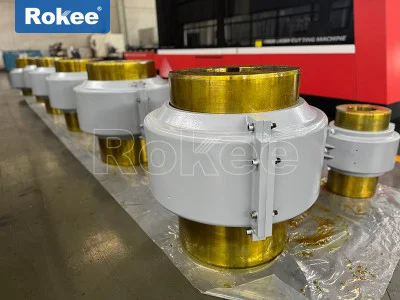
At its core, the flexible snake coupling is constructed around a few key modular components that work in tandem to deliver reliable power transmission and mechanical flexibility. The primary constituents include two robust half-coupling hubs, a precision-engineered serpentine spring element, protective housing components, and sealing mechanisms to preserve internal lubrication and prevent contamination. The half-coupling hubs are typically forged from high-strength alloy steel or ductile cast iron, materials selected for their exceptional tensile strength, wear resistance, and ability to withstand repeated torsional stress without deformation. These hubs feature precision-machined curved tooth grooves along their inner circumferences, designed to perfectly cradle and engage with the serpentine spring, creating a secure, backlash-free connection that optimizes torque transfer efficiency. The serpentine spring, the heart of the coupling, is crafted from heat-treated alloy steel wire with a unique wave-like, snake-shaped profile, which enables it to flex elastically under load while maintaining structural integrity. This elastic element is not a single solid piece but a layered or segmented structure in many designs, allowing for controlled deformation that accommodates shaft misalignment and cushions sudden impact loads. The protective outer housing encloses the spring and hub interface, shielding internal components from dust, moisture, debris, and other environmental contaminants that could accelerate wear or compromise performance. Complementary sealing elements are integrated into the housing to retain lubricating grease or oil within the coupling cavity, reducing friction between the spring and hub teeth, minimizing heat buildup, and extending the service life of moving parts. The seamless assembly of these components ensures that the flexible snake coupling maintains a compact form factor while delivering robust mechanical performance, making it suitable for installation in space-constrained mechanical setups.
The structural design of the flexible snake coupling directly translates to a suite of outstanding performance characteristics that set it apart from other flexible coupling variants, such as gear couplings, elastomeric couplings, and grid couplings. One of the most prominent performance advantages is its exceptional misalignment compensation capability, which addresses three primary types of shaft displacement: axial, radial, and angular. Axial misalignment, caused by thermal expansion or mechanical movement of shafts along their longitudinal axis, is readily accommodated by the axial flexibility of the serpentine spring, which can stretch or compress slightly without losing torque transmission capacity. Radial misalignment, the lateral offset between the central axes of driving and driven shafts, is mitigated by the spring’s ability to bend horizontally, maintaining continuous contact with the hub teeth and preventing uneven stress distribution. Angular misalignment, the tilting of shafts relative to one another, is managed by the spring’s curved profile, which flexes to match the angular offset while distributing torsional load evenly across its surface. This multi-directional misalignment tolerance eliminates the need for ultra-precise shaft alignment during installation, reducing assembly time and labor costs while minimizing the risk of premature bearing failure in connected machinery.
Beyond misalignment compensation, the flexible snake coupling excels in vibration and shock absorption, a critical trait for machinery operating under fluctuating load conditions. The elastic nature of the serpentine spring acts as a natural damping mechanism, absorbing up to a significant portion of transient impact loads and vibrational energy generated by engine pulses, gear meshing, or sudden load changes in the transmission system. This damping effect not only reduces noise levels during operation but also protects sensitive drive components, such as motors, gearboxes, pumps, and compressors, from fatigue damage and premature wear. Additionally, the coupling exhibits high torque transmission efficiency with minimal power loss, even under heavy load and misaligned conditions. The curved tooth interface between the hubs and serpentine spring ensures a large contact area, distributing torsional stress evenly and preventing localized overloading that could lead to component failure. This design also delivers zero-backlash operation, a key performance metric for precision-driven machinery where positional accuracy and responsive torque transfer are paramount. Zero backlash eliminates play between driving and driven shafts, ensuring synchronous rotation and preventing jerky movement or positioning errors in applications such as conveyor systems, machine tools, and material handling equipment.
Further performance attributes of the flexible snake coupling include excellent thermal stability and high load-carrying capacity. The high-grade alloy materials used in its construction resist thermal deformation across a wide range of operating temperatures, maintaining consistent flexibility and strength in both extreme cold and high-heat industrial environments. The coupling can withstand short-term overload conditions without permanent damage, thanks to the elastic deformation of the serpentine spring, which acts as a mechanical safety buffer to prevent catastrophic failure of the transmission system. It also features low moment of inertia, reducing energy consumption during start-stop cycles and high-speed operation, making it an energy-efficient choice for variable-speed drive systems. Maintenance requirements are relatively minimal as well; the sealed housing and effective lubrication retention reduce the need for frequent upkeep, and the durable construction of components ensures long service life even in continuous-operation industrial settings.
Flexible snake couplings are categorized into distinct varieties based on several key design and functional criteria, each tailored to meet specific operational demands, load requirements, and environmental conditions. The primary classification parameters include torque capacity, structural configuration, material composition, and application-specific design modifications, with each variant offering unique advantages for targeted industrial use cases. The most fundamental categorization is based on torque transmission capacity, dividing the couplings into light-duty, medium-duty, and heavy-duty models. Light-duty flexible snake couplings are engineered for low-torque, high-speed applications, featuring compact hubs and thinner serpentine springs optimized for small-scale machinery such as portable power tools, small pumps, fans, and precision instrumentation. These models prioritize high-speed rotational stability and minimal vibration, making them ideal for equipment that requires smooth, quiet operation with moderate load demands. Medium-duty couplings strike a balance between torque capacity and flexibility, featuring thicker spring elements and reinforced hubs to handle moderate torsional loads and intermittent shock. They are versatile workhorses suitable for a broad spectrum of general industrial machinery, including centrifugal pumps, blowers, mixers, and small to medium-sized conveyor drives, where consistent performance and moderate misalignment tolerance are essential.
Heavy-duty flexible snake couplings represent the most robust variant, designed to transmit extremely high torque levels and withstand severe shock loads and harsh operating conditions. Constructed with oversized, heavily reinforced hubs and thick, high-strength serpentine springs, these couplings are built for large-scale industrial machinery that operates under extreme stress, such as mining equipment, steel rolling mills, marine propulsion systems, and heavy-duty crushers. They offer enhanced misalignment compensation and superior damping capabilities, ensuring reliable operation even in environments with excessive vibration, heavy impact, and continuous high-load operation. Another classification dimension is structural configuration, distinguishing between standard open-design couplings and fully enclosed, sealed couplings. Standard open designs are cost-effective and easy to install, suitable for clean, low-contamination environments where regular maintenance is feasible. Fully enclosed sealed couplings, by contrast, feature heavy-duty housing and multi-layer sealing systems, engineered for harsh, contaminated environments such as mining, construction, and chemical processing, where dust, moisture, and corrosive substances pose a threat to internal components.
Material-based classification further differentiates flexible snake couplings, with variations in hub and spring materials to suit specific environmental and operational needs. Standard alloy steel constructions are the most common, offering a balanced blend of strength, durability, and cost-effectiveness for general industrial use. For corrosive environments, such as marine, offshore, or chemical processing facilities, couplings with stainless steel hubs and springs are available, providing exceptional resistance to rust, oxidation, and chemical degradation without compromising mechanical performance. For applications requiring reduced weight or non-magnetic properties, hubs fabricated from lightweight high-strength aluminum alloys are utilized, ideal for aerospace, automotive, and precision machinery where weight savings and magnetic neutrality are critical. Additionally, some specialized variants feature surface treatments such as quenching, tempering, or nitriding to enhance wear resistance and fatigue life, extending operational durability in high-friction, high-cycle applications.
The unique combination of structural resilience, exceptional performance, and diverse design variations enables flexible snake couplings to be deployed across an extensive array of industrial sectors, serving as a critical link in countless power transmission systems. In the heavy machinery and mining industry, these couplings are integral to the operation of ore crushers, conveyor belts, drilling rigs, and mineral processing equipment, where they absorb heavy shock loads, compensate for significant shaft misalignment caused by rugged terrain and heavy material handling, and ensure uninterrupted power transfer in harsh, dusty environments. Their high torque capacity and shock resistance make them indispensable for preventing downtime and extending the service life of costly mining machinery.
In the marine and offshore engineering sector, flexible snake couplings play a vital role in ship propulsion systems, auxiliary power units, pump systems, and deck machinery. The marine environment demands components that can withstand saltwater corrosion, vibration from engine operation, and shaft misalignment caused by hull flexing, and the corrosion-resistant variants of snake couplings meet these requirements flawlessly. They provide reliable torque transmission for propeller shafts, seawater pumps, and winch systems, ensuring safe and efficient operation of vessels ranging from small workboats to large cargo ships and offshore drilling platforms.
The energy and power generation industry relies heavily on flexible snake couplings for both conventional and renewable energy systems. In thermal power plants, they connect steam turbines, gas turbines, and generators, damping vibration from turbine rotation and compensating for thermal expansion-induced shaft misalignment, while maintaining high torque transmission efficiency. In wind turbine systems, they are used in the drivetrain between the rotor hub and gearbox, absorbing the irregular, fluctuating loads from wind gusts and protecting sensitive gearbox and generator components from fatigue damage. Hydroelectric power plants also utilize these couplings for turbine and pump drives, where their robust performance and misalignment tolerance ensure stable operation in underwater and high-moisture environments.
In general manufacturing and industrial processing, flexible snake couplings are ubiquitous across a wide range of equipment, including centrifugal pumps, fans, blowers, mixers, extruders, and paper processing machinery. Their versatility allows them to adapt to varying load conditions, speed ranges, and misalignment levels, making them a preferred choice for assembly lines, packaging machinery, and material handling systems. For precision engineering and machine tool applications, the zero-backlash and high-precision torque transfer capabilities of light and medium-duty snake couplings ensure accurate positioning and smooth operation of CNC machines, lathes, milling machines, and grinding equipment, enhancing machining precision and product quality.
The automotive and transportation industry also benefits from the application of flexible snake couplings, particularly in heavy-duty vehicles such as trucks, buses, and construction equipment. They are used in drive trains, transmission systems, and auxiliary equipment drives, absorbing vibration from engine operation and road shocks, while compensating for minor shaft misalignment that occurs during vehicle movement. This not only improves ride comfort and vehicle durability but also reduces wear on transmission components, lowering maintenance costs for commercial and heavy-duty transportation fleets.
Beyond these core sectors, flexible snake couplings find utility in specialized applications such as food and beverage processing, pharmaceutical manufacturing, and wastewater treatment, where hygienic, reliable, and low-maintenance power transmission is required. In food and pharmaceutical plants, stainless steel variants ensure compliance with strict hygiene standards, resisting contamination and facilitating easy cleaning, while in wastewater treatment facilities, they power pumps, aerators, and sludge handling equipment, operating reliably in wet, corrosive, and debris-laden environments.
The enduring popularity and widespread adoption of flexible snake couplings stem from their ability to address the most pressing challenges in mechanical power transmission: misalignment, vibration, shock loads, and environmental stress. Their modular, durable design ensures long-term reliability, while the diverse range of variants allows for precise customization to meet the unique demands of every industrial application. As industrial machinery continues to evolve toward higher loads, faster speeds, and more demanding operating conditions, the flexible snake coupling remains a cornerstone component, adapting to emerging engineering needs and delivering consistent, high-performance power transmission across global industrial landscapes. Its combination of structural ingenuity, exceptional performance metrics, and broad functional versatility cements its status as an essential and irreplaceable element in modern mechanical engineering and industrial automation.