Spherical Gear Couplings
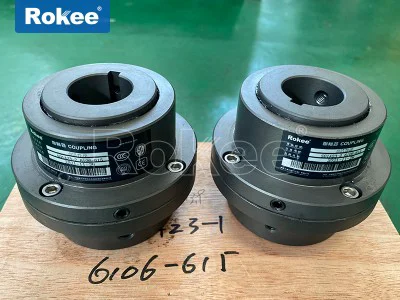
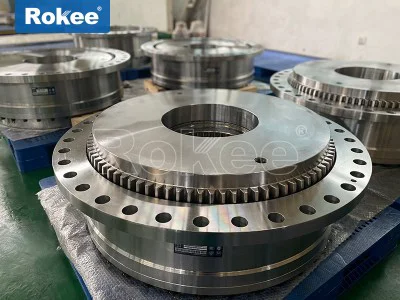
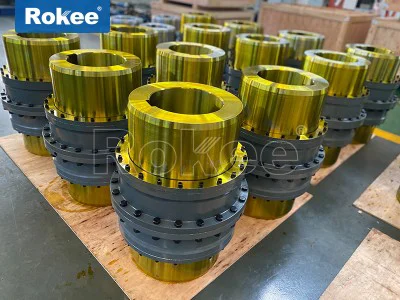
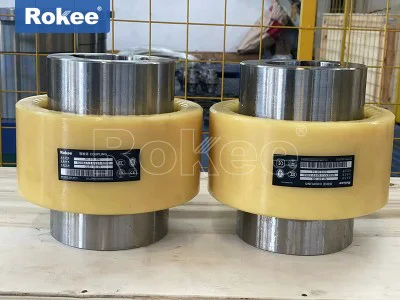
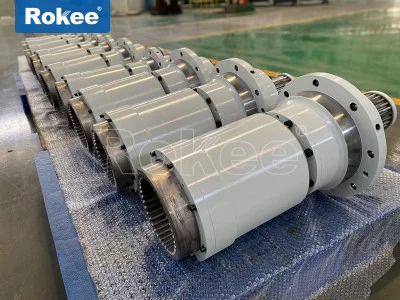
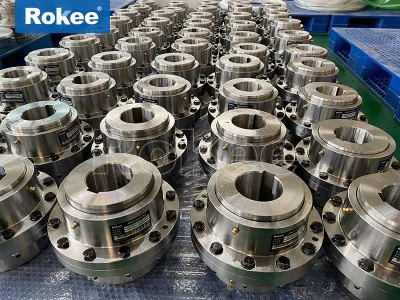
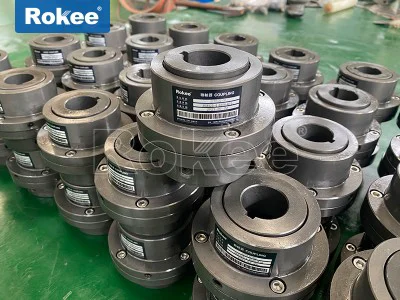
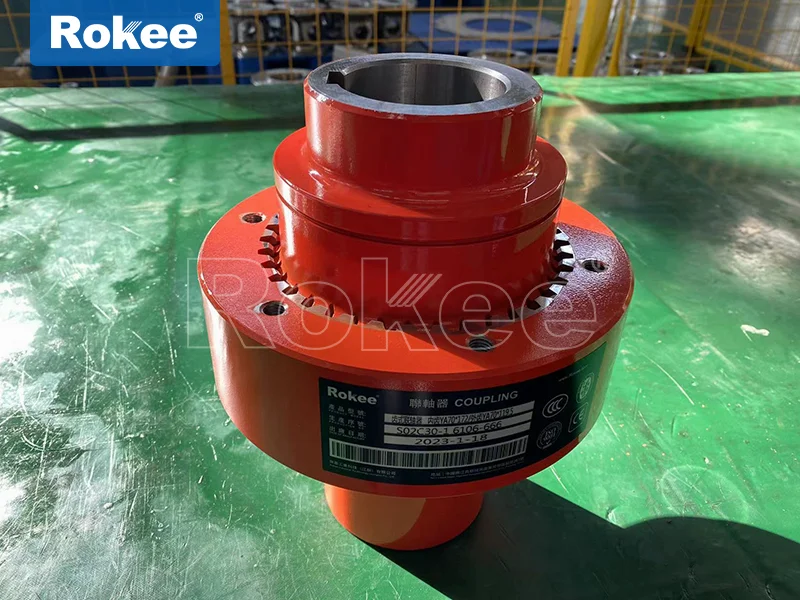
The spherical gear coupling consists of an inner ring gear and a half coupling with spherical outer teeth. Its core feature is that the outer teeth are machined into a spherical profile, and the center of the spherical surface is located on the gear axis. This design transmits torque through spherical meshing between tooth surfaces, while allowing for greater axial, radial, and angular displacement compensation. Compared to traditional spur gear couplings, spherical contact can increase torque transmission capacity by 15% -30% and significantly reduce edge stress concentration.
Performance Advantage
Dynamic compensation capability
Angular compensation: allows axis deviation of 1.5 ° -2.5 °, and extreme working conditions can reach 6 °;
Radial compensation: can adapt to parallel offset of 0.01-0.02 inches;
Axial floating: Absorb axial displacement through tooth flank clearance design.
Efficient transmission
The transmission efficiency is as high as 99.7%, and the torque carrying range covers 1000N · m to 4500kN · m, suitable for low-speed heavy-duty (such as metallurgical rolling mills) and high-speed precision (such as gas turbines) scenarios.
Lifespan and Maintenance
Spherical meshing increases the contact area by more than 50% (tooth width direction ≥ 70%, tooth height direction ≥ 50%), and with regular maintenance of lithium based grease, the service life can reach 1.3-1.5 times that of traditional drum shaped gear couplings.
Application Field
Heavy industry: metallurgical rolling mills, mining crushers (capable of withstanding instantaneous impact loads);
Energy equipment: wind turbine main shaft, gas turbine (requiring dynamic balance accuracy ≤ 0.03mm);
Special machinery: marine propulsion system, lifting equipment drum (compensating drum and reducer shaft deviation).
In the realm of mechanical power transmission, spherical gear couplings stand as a pivotal class of flexible coupling components, engineered to bridge the gap between rotating shafts while accommodating misalignment and transmitting substantial torque efficiently. Unlike rigid couplings that demand perfect shaft alignment and offer no tolerance for positional deviations, spherical gear couplings blend the torque-carrying robustness of gear-based connections with the flexibility to compensate for axial, radial, and angular displacements, making them indispensable across heavy-duty, high-precision, and dynamic industrial operating environments. At their core, these couplings rely on a uniquely designed spherical tooth profile that redefines load distribution, wear resistance, and operational adaptability, setting them apart from conventional straight-tooth gear couplings and other flexible coupling variants. Delving into their structural composition, inherent performance traits, diverse classifications, and real-world applications reveals why they remain a preferred choice for engineers seeking reliable power transmission solutions in demanding mechanical systems.
The fundamental structural design of a spherical gear coupling is defined by precision-engineered mating components that work in tandem to facilitate smooth torque transfer and misalignment accommodation. The primary assembly consists of two key subassemblies: outer gear hubs with spherical crowned teeth and inner gear sleeves with matching internal gear teeth. The defining structural feature is the spherical contour of the external gear teeth, where the center of the spherical surface aligns precisely with the gear’s central axis, a design that eliminates edge contact and ensures uniform load distribution across the entire tooth surface during operation. This spherical crowning is meticulously machined to create a curved tooth profile, distinguishing it from the flat, straight teeth of standard gear couplings. The outer gear hubs are typically mounted onto the driving and driven shafts via secure shaft connections, which may include keyways, tapered bores, or interference fits to prevent slippage and ensure rigid torque transmission. The inner gear sleeves encase the outer gear hubs, with internal teeth that mesh seamlessly with the spherical external teeth, creating a enclosed gear mesh that retains lubrication and shields the contact surfaces from external contaminants such as dust, debris, and moisture. Additional structural elements often include sealing components integrated into the coupling ends to maintain lubricant integrity and prevent leakage, as well as fastening mechanisms to secure the coupling assembly firmly in place. Unlike more complex flexible couplings with elastomeric or spring elements, the spherical gear coupling’s structure is mechanically robust, with no fragile components that are prone to fatigue or failure under heavy loads, contributing to its inherent durability and long service life. The compact, symmetrical design also ensures balanced rotational performance, minimizing vibration and radial forces even at varying operating speeds, a critical advantage in high-speed and heavy-load machinery.
The performance characteristics of spherical gear couplings are a direct product of their specialized structural design, delivering a unique combination of high torque capacity, exceptional misalignment tolerance, efficient power transmission, and enhanced durability. One of the most prominent performance advantages is their superior load-carrying capability; the spherical tooth contact pattern expands the effective load-bearing area compared to straight-tooth couplings, boosting torque transmission capacity by a significant margin while reducing stress concentration at the tooth edges. This even load distribution prevents premature tooth wear, pitting, and fatigue cracking, common failure modes in lesser-designed couplings operating under cyclic or shock loads. In terms of misalignment compensation, spherical gear couplings excel at accommodating multiple forms of shaft displacement simultaneously: angular misalignment, radial parallel offset, and axial float. Angular misalignment tolerance typically ranges from 1.5 degrees to 2.5 degrees under standard operating conditions, with specialized designs capable of handling up to 6 degrees in extreme applications, a far greater range than straight-tooth gear couplings. Radial offset compensation addresses parallel shaft misalignment, absorbing small positional deviations that occur due to thermal expansion, mechanical settling, or installation inaccuracies, while axial float allows for limited shaft movement along the rotational axis, relieving axial stresses that could damage connected equipment such as bearings or gearboxes. Transmission efficiency is another standout performance metric, with spherical gear couplings achieving efficiency rates as high as 99.7% in optimal operating conditions, minimizing energy loss through friction and ensuring maximum power is transferred from the driving source to the driven load. This high efficiency is sustained even under misaligned conditions, as the spherical tooth profile maintains consistent contact and avoids the increased friction and wear that plague other coupling types when shafts are not perfectly aligned. Durability is further enhanced by the reduced wear rates associated with spherical meshing; the larger contact area distributes operational stresses, extending service life significantly compared to conventional gear couplings, especially when paired with regular lubrication maintenance. Additionally, these couplings exhibit excellent resistance to shock loads and torsional vibrations, absorbing sudden torque spikes and dampening rotational fluctuations to protect sensitive drivetrain components, making them suitable for applications with intermittent or heavy impact loading.
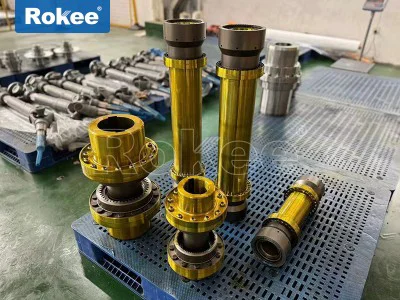
Spherical gear couplings are categorized into distinct types based on structural variations, installation configurations, and functional adaptations, each tailored to meet specific operational requirements and spatial constraints in mechanical systems. The primary classification revolves around design configurations that address different shaft connection needs, misalignment ranges, and mounting scenarios. A core distinction is between standard single-span spherical gear couplings and floating-shaft or intermediate-shaft spherical gear couplings. Standard single-span models are the most common, designed for direct connection between two closely spaced shafts, offering a compact footprint and straightforward installation; they are ideal for machinery where shafts are positioned in close proximity and moderate misalignment compensation is sufficient. Floating-shaft variants incorporate an extended intermediate shaft between two sets of spherical gear mesh assemblies, enabling power transmission over longer distances between driving and driven shafts while retaining full misalignment compensation capabilities. This type is crucial in applications where the driving and driven components are physically separated, such as large-scale industrial machinery, conveyor systems, and remote drivetrain setups. Another key classification is based on shaft connection styles, including cylindrical bore couplings, tapered bore couplings, and splined bore couplings. Cylindrical bore models feature straight shaft bores with keyways, offering universal compatibility with standard shaft diameters and ease of installation and removal. Tapered bore couplings use tapered shaft interfaces for a tighter, more secure fit, eliminating backlash and ensuring zero slippage under heavy torque loads, making them suitable for high-torque, high-speed applications. Splined bore couplings utilize internal or external splines for torque transmission, distributing load across multiple spline teeth to handle extremely high torque values and resist torsional fatigue, ideal for heavy industrial equipment with extreme load demands. Spherical gear couplings are also classified by mounting orientation, including horizontal and vertical installation designs. Vertical mount models feature enhanced sealing systems to prevent lubricant leakage due to gravity, a critical modification for vertical shaft applications such as pumps, mixers, and vertical drive systems. Additionally, specialized variants are engineered for specific operational conditions, such as high-temperature resistant couplings for furnace and kiln drivetrains, corrosion-resistant couplings for chemical and marine environments, and high-speed balanced couplings for turbomachinery and precision rotating equipment. Each classification retains the core spherical tooth design but incorporates targeted modifications to optimize performance for its intended application, ensuring versatility across diverse industrial settings.
The versatility of spherical gear couplings, rooted in their robust structure and exceptional performance, translates to a wide array of industrial applications across sectors that demand reliable, high-torque power transmission with misalignment tolerance. In heavy industry, they are a cornerstone component in metallurgical machinery, including rolling mills, blooming mills, and steel processing equipment, where they transmit extreme torque levels and withstand constant shock loads from metal forming operations. The ability to compensate for thermal expansion and shaft misalignment in hot rolling environments ensures uninterrupted operation, reducing downtime and maintenance costs in high-production steel facilities. Mining machinery also relies heavily on spherical gear couplings, with applications in crushers, conveyors, hoists, and drilling equipment; these couplings endure the harsh, dusty conditions of mining operations, absorb heavy impact loads from ore processing, and maintain performance despite significant shaft misalignment caused by uneven terrain and mechanical wear. In the energy sector, spherical gear couplings are integral to power generation equipment, including gas turbines, steam turbines, wind turbine drivetrains, and generator sets. Their high-speed rotational balance, efficient power transmission, and misalignment compensation make them ideal for turbomachinery, where precision and reliability are paramount, while their durability supports long-term operation in both conventional and renewable energy systems. They are also widely used in pumping and compression equipment across the oil and gas, petrochemical, and water treatment industries, connecting motors to pumps, compressors, and mixers. In these applications, they handle variable load conditions, compensate for pipe-induced shaft misalignment, and resist corrosion in harsh fluid handling environments, ensuring consistent fluid transfer and processing. Marine and shipbuilding applications leverage spherical gear couplings for propulsion systems, auxiliary machinery, and deck equipment, where they withstand saltwater exposure, vibration, and shaft misalignment inherent to marine vessel operation, delivering reliable power transmission in both commercial and naval marine systems. Beyond heavy industry, they find use in precision manufacturing equipment, heavy-duty machine tools, material handling systems, and construction machinery, serving as critical drivetrain components that balance torque capacity, flexibility, and durability. Whether in low-speed, heavy-load scenarios or high-speed, precision applications, spherical gear couplings deliver consistent performance, reducing drivetrain wear, minimizing maintenance needs, and enhancing the overall reliability and longevity of connected mechanical systems.
Beyond their core functional roles, spherical gear couplings also contribute to improved operational sustainability and cost-effectiveness in industrial systems. Their extended service life reduces the frequency of component replacements, cutting down on maintenance labor, material costs, and production downtime associated with coupling failures. The high transmission efficiency minimizes energy waste, lowering operational power consumption and supporting more sustainable industrial practices. Furthermore, their ability to accommodate shaft misalignment reduces the need for ultra-precise shaft alignment during installation, simplifying assembly processes and reducing setup time and labor costs. As industrial machinery continues to evolve toward higher load capacities, greater operational flexibility, and increased durability, the demand for spherical gear couplings remains steady, driven by their unmatched combination of structural strength, performance versatility, and adaptability to diverse operating conditions. While other coupling technologies continue to emerge, the spherical gear coupling’s proven design, reliable performance, and wide-ranging applicability solidify its position as a fundamental component in modern mechanical power transmission systems, catering to the ever-growing demands of global industrial operations.