Cross Type Universal Joints
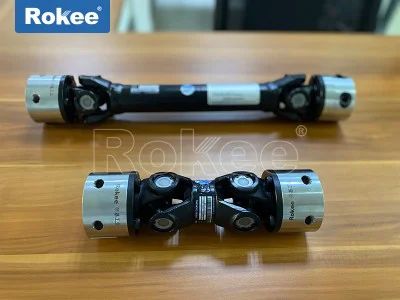
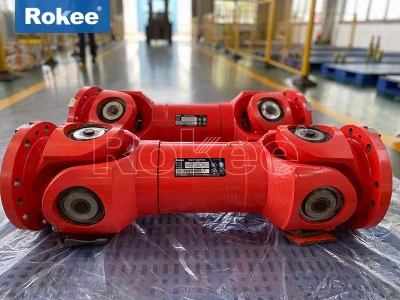
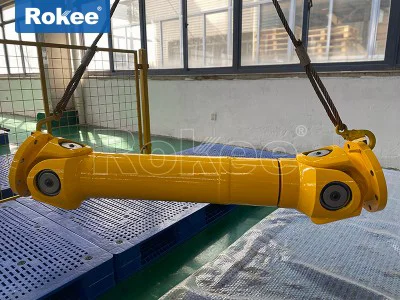
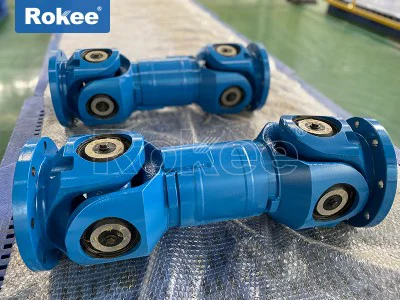
Cross type universal joint is an important transmission component in the field of mechanical engineering, widely used in various situations that require power transmission and allow for a certain angle between the two axes.
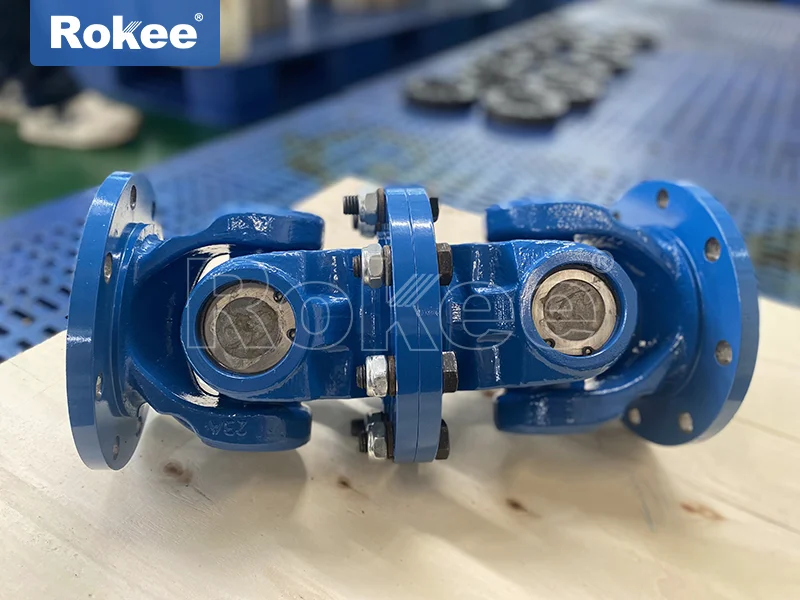
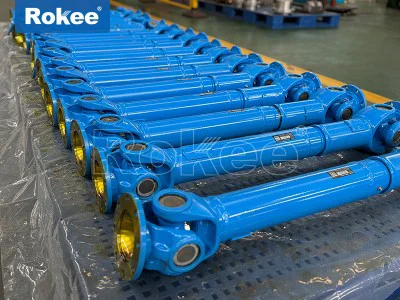
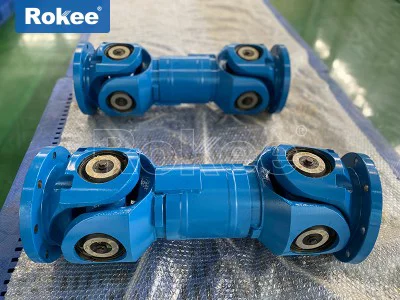
The cross type universal joint is a typical non-uniform universal joint, and its core structure consists of the following parts:
Cross shaft: As the core component of the entire universal joint, it is usually made of high-strength alloy steel and undergoes precision machining and heat treatment to improve wear resistance and load-bearing capacity.
Universal joint fork: There are usually two, which connect the input shaft and output shaft respectively, and are connected to the cross shaft through bearings. According to different structures, it can be divided into two designs: integral fork heads and split fork heads.
Bearing components: Needle roller bearings are usually used and installed between the cross shaft and the universal joint fork to reduce friction and withstand radial loads.
This structure enables the cross type universal joint to transmit torque and rotational motion at an angle between the two axes (usually within the range of 5 ° -45 °). However, it should be noted that when there is an angle between the two shafts, the rotational speed of the output shaft will exhibit periodic fluctuations, therefore it belongs to the "non-uniform universal joint".
The cross shaped universal joint has several outstanding technical features:
Angular compensation capability: Standard cross type universal joints can provide angular compensation capability of over 25 °, and specially designed products can even achieve larger compensation angles.
Axial displacement adaptability: Some models (such as SWP type) adopt a split fork design, which can adapt to a certain degree of axial displacement and is suitable for heavy-duty equipment with a rotation diameter of up to 1200mm.
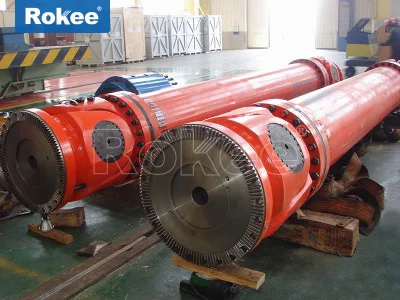
Torque transmission capability: The SWC type integral fork structure can cover a rotation diameter of 1600mm and a torque transmission distance of over 30 meters, making it particularly suitable for steel rolling machinery and heavy transportation equipment.
Transmission efficiency: A well-designed cross shaped universal joint has high transmission efficiency and low noise, but the transmission efficiency decreases with the increase of the angle between the two axes.
Service life: Under normal working conditions and appropriate maintenance, the service life of cross type universal joints can reach thousands of hours, with key influencing factors including lubrication conditions, load characteristics, and installation accuracy.
Classified by structure:
Cross axis universal joint (most common)
Ball cage cross universal joint
Ball fork cross universal joint
Convex block cross universal joint
Three pin cross universal joint
Classified by carrying capacity:
Heavy duty: such as SWC type, suitable for heavy-duty applications such as metallurgy and mining
Medium size: such as SWP type, suitable for construction machinery, etc
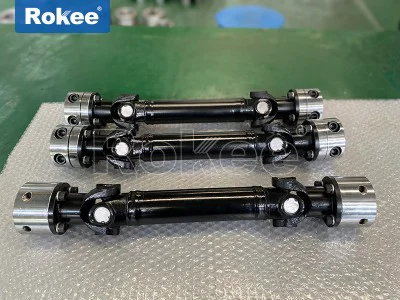
Lightweight and compact: such as WSD type, suitable for precision machinery and control machinery
Special design type:
Scalable type: such as WSP type, with sliding spline structure, can compensate for axial displacement
High speed type: adopting a special balance design, suitable for high-speed occasions
Corrosion resistant type: made of stainless steel and other materials, suitable for corrosive environments such as chemical and marine industries
Cross shaped universal joints are widely used in many industrial fields due to their unique performance advantages
Automotive industry: Used for transmission systems, especially for rear wheel drive vehicles, to solve the problem of relative position changes between the engine and the drive axle.
Metallurgical equipment: applied to the main transmission system of steel rolling mills, capable of withstanding heavy loads and adapting to the adjustment and movement of rolling rolls.
Construction machinery: In the transmission system of equipment such as excavators and cranes, it adapts to various motion postures of the working device.
Petroleum machinery: In the rotating system of drilling equipment, it transmits large torque and adapts to the inclination of the wellhead.
Rail transit: In the drive system of locomotives and vehicles, the problem of relative motion between the motor and the wheel axle is solved.
Precision Machinery: Used in equipment such as machine tools and robots for applications that require precise transmission.
Agricultural machinery: power transmission systems for tractors, harvesters, and other equipment.
Installation technical requirements:
Thoroughly clean all parts and remove burrs before assembly
Ensure that the centerlines of the two welded fork bearing holes in the middle are on the same plane, with a permissible deviation of no more than 1 °
The spline part should slide freely and the joint rotation should be flexible
Except for the flange end face and end face key, which need to be coated with anti rust grease, the rest of the parts should be coated with anti rust primer and painted
Daily maintenance:
Regular lubrication is crucial. It is recommended to lubricate once a week under standard operating conditions, and daily lubrication is necessary under high temperature conditions
Adjust the cross axis by 180 ° during each disassembly to alternate the use of the cross axis journal and balance wear
Regularly check the bearing clearance and wear of the cross shaft
Pay attention to the vibration and noise changes during operation, and promptly detect any abnormalities
Fault diagnosis:
Abnormal vibration: may be caused by wear, imbalance, or poor alignment
Overheating: usually related to poor lubrication or overload
Increased noise: often indicates increased wear on bearings or cross shafts
Precautions for purchasing:
Clear operating conditions: including parameters such as transmitted torque, speed, and range of two axis angle
Determine installation dimensions: including shaft diameter, spline specifications, flange dimensions, etc
Consider environmental factors such as temperature, humidity, corrosiveness, etc., and choose appropriate materials and sealing forms
Evaluate supplier qualifications: prioritize selecting suppliers with professional technical capabilities and comprehensive after-sales service
Although the cross shaped universal joint has a relatively simple structure, it plays an irreplaceable role in mechanical transmission systems. From heavy metallurgical equipment to precision instruments, from traditional automobiles to emerging robotics fields, its presence is everywhere. Understanding the working principle, selection criteria, and maintenance points of cross type universal joints is of great significance for mechanical designers, equipment maintenance personnel, and procurement personnel. With the continuous development of industrial technology, this classic mechanical component will continue to evolve, providing reliable transmission solutions for more complex and precise mechanical systems.
The cross type universal joint, commonly referred to as a Cardan joint or U-joint, stands as one of the most fundamental and widely utilized mechanical coupling components in modern mechanical transmission systems. Engineered to transmit rotational torque and motion between two shafts that are not collinear or exhibit angular misalignment, it addresses a core challenge in mechanical engineering: achieving reliable power transfer in configurations where rigid shaft connections are unfeasible. Unlike fixed couplings that demand perfect shaft alignment, the cross type universal joint offers exceptional angular flexibility, making it indispensable across automotive, industrial, agricultural, aerospace, and marine sectors. Its enduring prevalence stems from a harmonious blend of straightforward structural design, robust load-bearing capabilities, and adaptable performance traits, which have been refined over decades of engineering evolution to meet diverse operational demands.
At its core, the cross type universal joint features a minimalist yet mechanically efficient structure, composed of four primary integral components: a central cross-shaped spindle (commonly called a spider), two yoke assemblies (drive yoke and driven yoke), precision bearing sets, and sealing components. The central cross spindle is the heart of the joint, characterized by four perpendicular journal ends that form a symmetrical cross configuration, ensuring balanced load distribution and smooth rotational movement. Each journal is meticulously machined to accommodate a set of needle roller bearings, which are critical for minimizing friction between the cross spindle and the yoke assemblies; needle bearings are preferred for their high load capacity, compact size, and ability to withstand both radial and slight axial loads, a necessity given the dynamic pivoting motion of the joint. The two yoke assemblies, typically forged or machined from high-strength metallic materials, feature fork-shaped ends that encase the bearing-equipped journals of the cross spindle, creating a articulated connection that allows angular deflection between the drive and driven shafts. Sealing elements, such as rubber or synthetic grease seals, are integrated around each bearing journal to retain lubrication, prevent the ingress of contaminants like dust, moisture, and debris, and shield internal components from premature wear and corrosion. This uncomplicated structural layout eliminates complex moving parts, reducing manufacturing complexity and enhancing overall durability, while the symmetrical design ensures uniform stress distribution across the joint during operation, mitigating the risk of fatigue failure under cyclic loading.
The performance of cross type universal joints is defined by a suite of critical mechanical attributes that dictate their suitability for specific operational scenarios, with angular misalignment tolerance, torque transmission capacity, rotational speed limits, transmission efficiency, and fatigue resistance standing as the most pivotal metrics. Foremost, angular flexibility is the defining performance trait: standard cross type universal joints can accommodate angular misalignments ranging from 5 degrees to 45 degrees between the input and output shafts, with specialized variants engineered to handle even greater angles for extreme applications. This flexibility allows the joint to compensate for shaft misalignment caused by assembly tolerances, structural vibration, thermal expansion, or dynamic movement during operation, a capability that rigid couplings lack entirely. Torque transmission capacity varies significantly based on the joint’s physical dimensions, material composition, and bearing design; heavy-duty variants are built to transfer extremely high torque loads, making them suitable for heavy machinery and industrial equipment, while compact models cater to low-torque, precision-driven applications in small-scale devices and instruments. Rotational speed performance is equally vital, as excessive speeds can induce centrifugal forces that strain bearings and cause vibration; high-precision cross type universal joints undergo dynamic balancing processes to minimize imbalance, enabling stable operation at elevated rotational speeds without compromising performance or longevity. Transmission efficiency is another key consideration, with most well-designed cross type universal joints boasting efficiency rates of 90% or higher under optimal operating conditions, though efficiency may dip slightly at extreme angles due to increased friction and minor angular velocity fluctuations. Fatigue resistance is enhanced through material selection and heat treatment processes, with components hardened to withstand repeated cyclic loading, shock impacts, and torsional stress, ensuring prolonged service life even in harsh, high-demand operating environments. Additionally, maintenance requirements and environmental adaptability contribute to overall performance; sealed, lubricated-for-life variants reduce upkeep needs, while corrosion-resistant materials expand usability in harsh settings like marine or chemical processing environments.
Cross type universal joints are categorized into distinct variants based on multiple criteria, including structural configuration, load-bearing capacity, operational design, and specialized functional features, each tailored to address unique transmission challenges. The most fundamental classification differentiates between single cross type universal joints and double cross type universal joints, a distinction rooted in structural complexity and transmission uniformity. Single cross type universal joints, the simplest and most cost-effective variant, consist of a single cross spindle and two yokes, offering reliable angular compensation but exhibiting a minor non-uniform rotational output at significant shaft angles; this slight fluctuation in angular velocity is negligible for low-speed, general-purpose applications but becomes problematic for high-precision or high-speed systems. Double cross type universal joints, also known as constant velocity (CV) adjacent universal joints, integrate two single joints connected by an intermediate shaft, with the two cross spindles aligned in a specific phased configuration to counteract non-uniform rotation. This design eliminates angular velocity fluctuations, delivering consistent, uniform power transmission even at moderate to high angles, making it ideal for applications demanding smooth, precise motion transfer. Beyond this core split, classification by load-bearing capacity divides joints into heavy-duty, medium-duty, light-duty, and miniature variants. Heavy-duty cross type universal joints feature oversized cross spindles, reinforced yokes, and heavy-gauge bearings, engineered to endure extreme torque, shock loads, and heavy continuous operation in industrial machinery, construction equipment, and marine propulsion systems. Medium-duty variants strike a balance between load capacity and compactness, serving as a versatile option for general industrial machinery, automotive auxiliary systems, and agricultural equipment. Light-duty and miniature joints are compact, lightweight, and optimized for low-torque, high-precision applications such as precision instruments, small mechanical devices, office machinery, and automotive control linkages, where space is limited and load demands are minimal.
Further classification is based on structural design modifications that enhance functionality for specialized use cases, including split yoke joints, solid yoke joints, telescopic universal joints, and high-seal universal joints. Split yoke cross type universal joints feature a two-piece yoke assembly, simplifying installation, maintenance, and component replacement without requiring full disassembly of connected shafts, a critical advantage in confined spaces or equipment where accessibility is limited. Solid yoke joints boast a one-piece, rigid yoke construction, maximizing structural strength and torsional rigidity for heavy-load, high-stress applications where durability is non-negotiable. Telescopic cross type universal joints integrate a sliding spline mechanism within the joint assembly, enabling both angular misalignment compensation and axial length adjustment to accommodate shaft movement caused by thermal expansion or mechanical vibration; this dual functionality makes them particularly valuable in automotive drive shafts and long-distance industrial transmission systems. High-seal universal joints are equipped with enhanced, multi-layer sealing systems and specialized lubricants, engineered to operate reliably in extreme environments with high levels of dust, moisture, corrosive chemicals, or debris, such as agricultural machinery, marine equipment, and mining machinery. Each classification offers distinct performance advantages, allowing engineers to select the optimal joint variant by evaluating operational parameters including torque load, rotational speed, shaft angle, installation space, environmental conditions, and precision requirements.
The versatility of cross type universal joints is reflected in their extensive, cross-industry applications, where they serve as critical components in countless mechanical systems requiring flexible torque transmission. In the automotive industry, they are integral to vehicle drive trains, particularly in rear-wheel drive, four-wheel drive, and all-wheel drive models, connecting the transmission output shaft to the differential input shaft and compensating for angular changes caused by suspension movement during vehicle operation. They also feature in steering linkages, propeller shafts, and auxiliary drive systems, enabling smooth power delivery and handling responsiveness across diverse road conditions. Agricultural machinery relies heavily on cross type universal joints, especially in power take-off (PTO) shafts that transfer power from tractors to attached implements such as plows, harvesters, mowers, and balers. The joints’ ability to withstand rough terrain, heavy shock loads, and variable shaft angles ensures uninterrupted power transmission in demanding farming operations, enhancing equipment efficiency and reliability. Industrial machinery represents another major application area, with cross type universal joints deployed in conveyor systems, rolling mills, printing presses, mixers, crushers, and machine tools. They facilitate power transfer between misaligned shafts in fixed industrial setups, absorb vibration and shock during heavy-duty operation, and maintain transmission stability in continuous production environments, reducing downtime and extending equipment service life.
Aerospace and marine engineering utilize specialized cross type universal joints engineered to meet stringent performance and durability standards. In aerospace systems, lightweight, high-strength variants are integrated into flight control mechanisms, undercarriage actuation systems, and auxiliary power transmission components, where they provide precise, reliable motion transfer while enduring extreme altitude, temperature, and vibration conditions. Marine applications, including ship propulsion systems, steering linkages, and deck machinery, employ corrosion-resistant cross type universal joints constructed from stainless steel or alloy materials, designed to resist saltwater corrosion, humid conditions, and heavy marine loads, ensuring consistent performance in harsh maritime environments. Beyond these core sectors, cross type universal joints find utility in construction machinery, material handling equipment, robotics, medical devices, and precision instrumentation. In robotic systems, they enable flexible, multi-axis movement in robotic arms and manipulators, supporting precise positioning and smooth operation in automated manufacturing and assembly lines. In medical devices and precision instruments, miniature, low-friction variants deliver accurate motion transmission without introducing excessive backlash or vibration, upholding the precision required for delicate operations and measurements. Even in household appliances and office equipment, compact light-duty cross type universal joints facilitate smooth mechanical operation in small-scale transmission systems, demonstrating their adaptability across every scale of mechanical engineering.
In summary, the cross type universal joint remains a cornerstone of modern mechanical transmission technology, valued for its simplistic yet robust structure, adaptable performance characteristics, diverse classification options, and unparalleled versatility across industrial sectors. Its ability to transmit torque efficiently between misaligned shafts addresses a pervasive challenge in mechanical design, enabling the development of more flexible, durable, and functional mechanical systems. While alternative coupling technologies have emerged over time, the cross type universal joint retains its dominance due to its cost-effectiveness, ease of manufacturing, reliable performance, and ability to operate in diverse conditions. Ongoing advancements in material science, precision manufacturing, and bearing technology continue to enhance its performance, expanding its operational capabilities, extending service life, and broadening its application scope. As mechanical engineering evolves to meet demands for higher efficiency, greater precision, and enhanced durability, the cross type universal joint will remain an indispensable component, adapting to emerging technological needs while upholding its legacy as a foundational element of mechanical power transmission across global industries.