Snake Spring Couplings
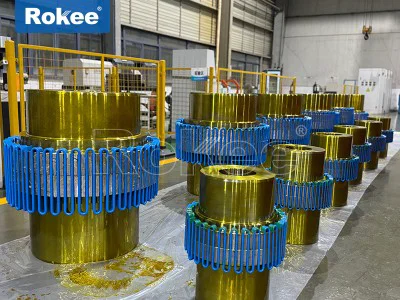
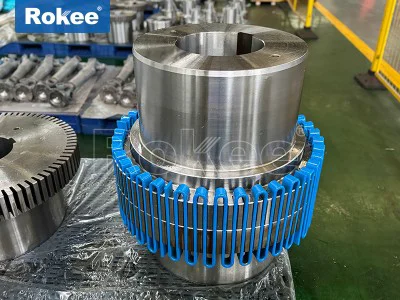
The snake spring coupling is a high-performance mechanical transmission connection device, named after its core component that uses specially designed snake shaped springs. This type of coupling is known for its excellent shock absorption performance and reliability in the industrial transmission field, and is widely used in various situations that require torque transmission and compensation for axial, radial, and angular deviations.
Compared with traditional rigid couplings, snake spring couplings absorb and buffer impact loads through elastic elements, effectively protecting the driving and driven end equipment. Its unique design enables it to maintain stable operation under harsh working conditions, making it an important component in modern industrial transmission systems.
The snake spring coupling is mainly composed of the following components:
Two half couplings: usually made of high-strength cast iron or steel materials, installed on the drive shaft and the driven shaft respectively
Serpentine spring: a wavy elastic element made of special alloy steel, which is the core component of a coupling
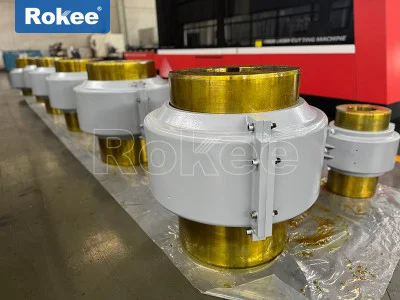
Cover: A metal shell that protects the spring and prevents lubricant leakage
Sealing element: a sealing device that maintains internal lubrication
The snake spring coupling achieves its function by generating elastic deformation through its unique snake shaped spring when transmitting torque:
When the drive shaft rotates, torque is transmitted to the coil spring through the half coupling
The serpentine spring undergoes elastic deformation under the action of torque, transmitting power to the other half of the coupling
The elastic deformation of springs can effectively absorb impacts and vibrations
The wavy shape of the spring allows for a certain degree of deviation compensation between the two axes
This working principle enables the snake spring coupling to achieve dual functions of power transmission and system protection simultaneously.
Main performance characteristics
Excellent shock absorption performance: The elastic deformation of the spring can absorb up to 80% of the impact load
Large angle compensation capability: allows for larger axial, radial, and angular deviations
High torque density: can transmit large torque under compact design
No reverse clearance: ensuring the accuracy and responsiveness of the transmission
Maintenance free design: Some models adopt long-term lubrication and do not require regular maintenance
The selection of snake spring couplings needs to consider the following key parameters:
Rated torque (Tn): The maximum torque that the coupling can transmit continuously during operation
Maximum torque (Tmax): the peak torque that can be sustained in a short period of time
Allowable speed: the maximum working speed related to the size of the coupling
Torsional stiffness: reflects the ability of the coupling to resist torsional deformation
Moment of inertia: an important parameter that affects the dynamic response of a system
Compensation capability: allowable deviation values for axial, radial, and angular directions
Working temperature range: typically -40 ℃ to+150 ℃
Snake spring couplings are widely used in the following industries and scenarios:
Heavy Industry Applications
Steel mill equipment
mining machinery
Heavy duty compressor
Ship propulsion systemenergy sector
Wind turbine
Steam turbine generator set
Hydroelectric power generation equipmentGeneral Industry
Large pump unit
fan system
Conveying equipment
paper-making machineryspecial application
high-precision machine tool
Military equipment
Oil drilling equipment
Installation and maintenance
Installation key points
Alignment requirement: Even if the snake spring coupling has deviation compensation capability, good alignment can still extend its service life
Bolt tightening: Use a torque wrench to tighten the bolts according to the specified tightening torque
Lubrication inspection: For models that require lubrication, ensure an appropriate amount of lubricant before installation
Phase marking: Ensure that the installation phase of the two half couplings is correctMaintenance Recommendations
Regular inspection: Check the coupling status every 3-6 months
Lubrication management: Supplement or replace lubricants according to the manufacturer's requirements
Abnormal monitoring: Pay attention to vibration, noise, and temperature changes
Preventive replacement: Replace the spring according to the operating hours or the manufacturer's recommended cycle
Snake spring couplings play an important role in modern industrial transmission systems due to their unique structure and excellent performance. Correctly selecting, installing, and maintaining the snake spring coupling can not only ensure the reliable operation of the transmission system, but also significantly extend the service life of the equipment and reduce maintenance costs. With the advancement of materials science and manufacturing technology, the performance of snake spring couplings will be further improved, and their application fields will continue to expand.
When choosing a snake spring coupling, it is recommended to communicate fully with professional suppliers and provide detailed operating parameters to obtain the most suitable product solution. At the same time, regular maintenance and condition monitoring can maximize the performance advantages of the coupling, providing stable and reliable power transmission guarantees for industrial production.
In the realm of mechanical power transmission, couplings serve as critical components that bridge driving and driven shafts, enabling efficient torque transfer while accommodating misalignment and dampening mechanical shocks. Among the diverse array of coupling designs, the snake spring coupling stands out as a versatile and robust solution, renowned for its unique structural composition, exceptional performance attributes, and wide-ranging industrial applicability. Unlike rigid couplings that offer no flexibility or elastomeric couplings that rely on non-metallic components for resilience, the snake spring coupling leverages precision-engineered metallic snake-shaped springs to deliver a balanced blend of rigidity, flexibility, and durability, making it a staple in heavy-duty and high-demand mechanical systems across countless industrial sectors.
At its core, the snake spring coupling features a streamlined yet highly functional structural design that prioritizes efficiency and reliability. The fundamental assembly consists of two symmetrical hub halves, a set of curved snake-shaped spring elements, and a protective outer housing that encloses the internal components. Each hub half is precision-machined with a series of evenly spaced, contoured tooth grooves along its inner circumference, tailored to securely seat the snake springs and facilitate seamless torque transmission. The snake springs, the heart of the coupling, are crafted from high-grade alloy spring steel subjected to specialized heat treatment processes, endowing them with exceptional tensile strength, fatigue resistance, and elastic deformability. These springs are installed axially into the matching tooth grooves of both hub halves, creating a flexible mechanical link between the two shafts. The outer housing, typically constructed from lightweight yet durable metal alloys, serves multiple key purposes: it contains lubricating media to reduce friction between the springs and hub teeth, prevents the ejection of springs under high rotational speeds, shields internal components from dust, debris, and environmental contaminants, and contributes to the overall structural stability of the coupling. Unlike many flexible couplings that incorporate complex auxiliary parts, the snake spring coupling maintains a compact, modular structure with minimal moving components, simplifying assembly, disassembly, and routine maintenance while minimizing the risk of mechanical failure.
The operational principle of the snake spring coupling is rooted in the elastic deformation and load-bearing capacity of its metallic spring elements. During operation, torque generated by the driving shaft is transferred to the driving hub, which then exerts axial and radial force on the embedded snake springs. The springs, in turn, deform elastically to absorb minor shocks and vibrations, before transmitting the torque to the driven hub and ultimately the driven shaft. A defining structural feature that enhances its performance is the contoured profile of the hub teeth, which interacts dynamically with the snake springs as load fluctuates. Under low to moderate torque loads, the springs maintain consistent contact with the tooth surfaces, delivering stable torque transfer with moderate stiffness. As torque loads increase, the contact points between the springs and teeth shift, altering the effective length of the spring segments engaged in load bearing and resulting in a progressive increase in stiffness. This variable stiffness characteristic is a hallmark of snake spring couplings, allowing them to adapt seamlessly to fluctuating load conditions—from steady-state operation to sudden overloads—without compromising transmission efficiency or structural integrity. Additionally, the curved design of the snake springs enables the coupling to compensate for multiple forms of shaft misalignment, including radial displacement, angular misalignment, and axial end play, which are inevitable in real-world mechanical installations due to manufacturing tolerances, thermal expansion, and operational wear. This misalignment compensation capability not only prevents excessive stress on shafts and bearings but also extends the service life of connected equipment by reducing premature wear and tear.
The performance profile of snake spring couplings is distinguished by a suite of advantageous traits that set them apart from other flexible coupling variants, solidifying their status as a top choice for demanding industrial applications. Foremost among these is exceptional load-bearing capacity and overload resilience. Engineered to handle substantial torque outputs, these couplings exhibit impressive short-term overload tolerance, capable of withstanding sudden load spikes well beyond their rated torque without permanent deformation or failure. This makes them particularly well-suited for equipment subjected to intermittent heavy loads, impact shocks, and frequent start-stop cycles, where lesser couplings would succumb to fatigue or breakage. Equally notable is their superior vibration and shock dampening performance. The elastic snake springs act as a natural buffer, absorbing and dissipating mechanical vibrations generated by rotating machinery, reducing noise levels, and mitigating the transfer of shocks between driving and driven components. This dampening effect not only improves operational smoothness but also protects sensitive drivetrain parts from damage, enhancing overall system stability and longevity.
Efficiency is another cornerstone performance metric of snake spring couplings. Thanks to the low-friction contact between the precision-machined hub teeth and lubricated snake springs, these couplings achieve exceptionally high power transmission efficiency, minimizing energy loss during operation even under heavy loads. This high efficiency translates to reduced energy consumption for connected machinery, contributing to improved operational sustainability and cost-effectiveness over time. Durability and longevity further bolster their performance appeal. The high-strength alloy steel construction of the snake springs, combined with corrosion-resistant and wear-resistant surface treatments, ensures resistance to mechanical fatigue, abrasion, and environmental degradation. Unlike elastomeric couplings that rely on plastic or rubber components prone to hardening, cracking, and degradation over time, snake spring couplings maintain their functional integrity for extended periods, even in harsh operating environments characterized by extreme temperatures, dust, or moisture. They also boast a wide operating temperature range, remaining fully functional in both sub-zero cold and high-heat conditions without compromising elastic properties or load-bearing performance. Furthermore, snake spring couplings offer reliable operational consistency across varying rotational speeds, performing effectively in both low-speed, high-torque applications and moderate to high-speed drivetrains, making them highly adaptable to diverse mechanical setups.
Snake spring couplings are categorized into several distinct types based on structural variations, installation configurations, and specialized functional adaptations, each tailored to address specific operational requirements and installation constraints. The most common classification is based on hub and housing design, which dictates installation method and operational suitability. The standard radial installation type is the most widely used variant, featuring a split outer housing that allows for easy radial mounting and disassembly without requiring the movement or repositioning of connected shafts or equipment. This design is ideal for compact mechanical setups where axial space is limited, offering convenience in installation and routine maintenance tasks such as spring replacement or lubrication replenishment. In contrast, the axial installation type features a solid, unslit housing and is designed for axial mounting along the shaft length, preferred in applications where high rotational speed stability and enhanced structural rigidity are prioritized, as the solid housing minimizes rotational imbalance and reduces noise at higher speeds.
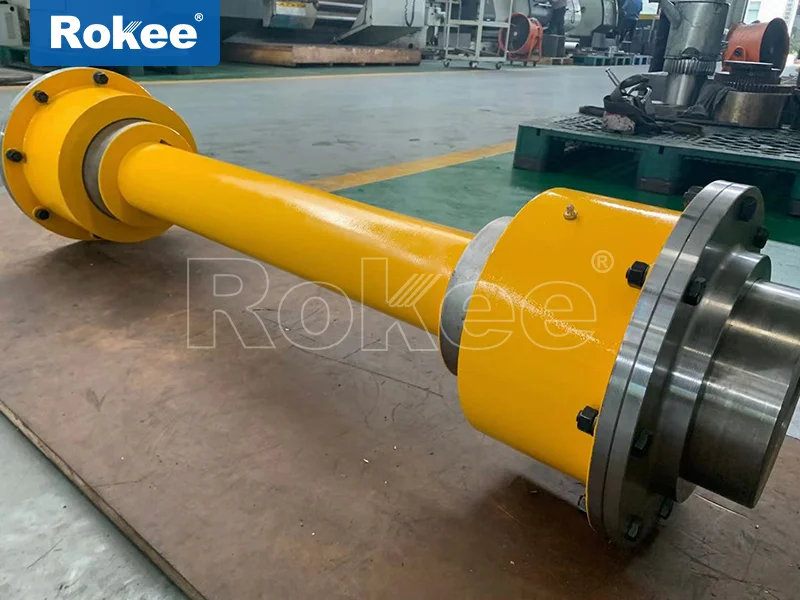
Additional specialized variants cater to unique operational needs, expanding the versatility of snake spring couplings. Flanged snake spring couplings, available in single-flange and double-flange configurations, feature integrated flanges on the hub halves, enabling direct bolted connection to flanged shafts or equipment hubs. This design eliminates the need for additional connecting components, streamlining assembly and enhancing torque transfer efficiency in heavy-duty industrial machinery. Intermediate shaft snake spring couplings are engineered with an extended intermediate shaft section between the two hub halves, designed to bridge larger gaps between driving and driven shafts that are not in close proximity. This type is invaluable in applications where shaft separation is unavoidable, such as in long-distance power transmission setups or complex drivetrain layouts. High-speed dedicated snake spring couplings are optimized for elevated rotational speeds, featuring balanced hub and spring components, streamlined housing profiles, and precision-engineered tooth profiles to minimize centrifugal force effects, reduce vibration, and maintain stable performance at high RPMs, making them suitable for high-speed pumps, compressors, and turbine-driven systems.
Other specialized variants include brake wheel-equipped snake spring couplings, which integrate a brake wheel into one of the hub halves to facilitate mechanical braking functionality for connected machinery, eliminating the need for separate brake components and simplifying system design. Safety-focused snake spring couplings incorporate built-in overload protection mechanisms, designed to disengage or slip momentarily under extreme overload conditions to protect drivetrain components from catastrophic failure, before resetting to normal operation once the overload is resolved. Each type retains the core performance benefits of standard snake spring couplings—flexibility, shock absorption, and misalignment compensation—while adding targeted features to meet niche industrial demands, ensuring there is a suitable variant for nearly every mechanical power transmission scenario.
The exceptional structural and performance attributes of snake spring couplings translate to extensive, cross-industry applications, where they serve as indispensable components in a vast array of mechanical systems and heavy machinery. In the mining and mineral processing industry, these couplings are widely deployed in crushing equipment, grinding mills, conveyors, and hoisting systems. The harsh operating conditions of mining operations—including heavy shock loads, continuous vibration, and dust-laden environments—demand robust, reliable couplings, and snake spring variants excel here, absorbing the intense shocks generated by rock crushing and material handling, compensating for shaft misalignment caused by heavy equipment movement, and maintaining consistent performance despite abrasive contaminants.
In the metallurgical and steel manufacturing sector, snake spring couplings play a pivotal role in high-load production equipment such as rolling mills, continuous casting machines, forging presses, and metal processing lines. These applications involve extreme torque loads, frequent load fluctuations, and high operational temperatures, and the variable stiffness and overload resistance of snake spring couplings ensure stable torque transfer, protect delicate mill components from damage, and sustain reliable operation in the demanding thermal and mechanical environment of steel production. The power generation industry also relies heavily on snake spring couplings, integrating them into generator sets, steam turbines, water turbines, large-scale water pumps, and fan systems. Whether in thermal power plants, hydropower facilities, or other power generation setups, the couplings facilitate efficient power transmission between turbines, generators, and auxiliary equipment, dampening turbine-induced vibrations and compensating for thermal expansion-related shaft misalignment to maintain uninterrupted power generation.
Construction machinery represents another key application area, with snake spring couplings utilized in excavators, cranes, bulldozers, concrete mixers, and pile drivers. The heavy-duty, mobile nature of construction equipment subjects drivetrains to constant shocks, uneven loads, and frequent repositioning, and the couplings’ shock absorption and misalignment compensation capabilities enhance equipment durability, reduce downtime, and improve operational efficiency on construction sites. In the chemical and petroleum industries, snake spring couplings are employed in pumps, compressors, mixers, and conveyor systems for fluid and material handling. The couplings’ resistance to harsh environmental conditions, including exposure to chemical fumes and extreme temperatures, coupled with their high transmission efficiency, makes them ideal for safely and reliably transferring power in critical processing equipment.
Beyond these core sectors, snake spring couplings find utility in general manufacturing machinery, marine propulsion systems, agricultural equipment, and transportation machinery. They are used in machine tools, printing presses, and textile manufacturing equipment to ensure precise, vibration-free power transfer; in marine engines and propulsion shafts to withstand saltwater exposure and operational shocks; in agricultural harvesters, tractors, and tillers to handle uneven field loads; and in automotive and rail transmission systems to enhance drivetrain resilience. Across all these applications, the unifying factor is the coupling’s ability to deliver reliable, efficient power transfer while addressing the inherent challenges of mechanical operation—shock, vibration, misalignment, and load fluctuation.
In summary, the snake spring coupling represents a pinnacle of flexible mechanical coupling design, merging a simplified, robust structure with exceptional performance versatility to meet the diverse needs of modern industrial power transmission. Its unique snake spring-based design delivers variable stiffness, superior shock and vibration dampening, reliable misalignment compensation, and exceptional durability, while its range of structural variants ensures adaptability to specialized installation and operational requirements. From heavy mining and metallurgical equipment to precision manufacturing machinery and power generation systems, snake spring couplings have cemented their role as critical components that enhance equipment reliability, extend service life, and improve overall operational efficiency. As industrial machinery continues to evolve toward higher loads, faster speeds, and harsher operating environments, the inherent advantages of snake spring couplings will ensure their enduring relevance and widespread adoption across global industrial sectors, solidifying their position as a cornerstone of modern mechanical power transmission technology.