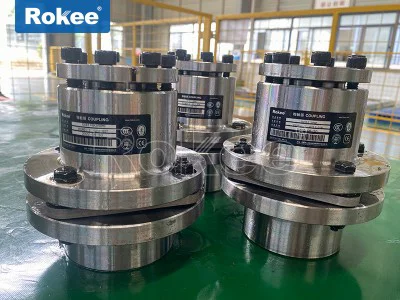
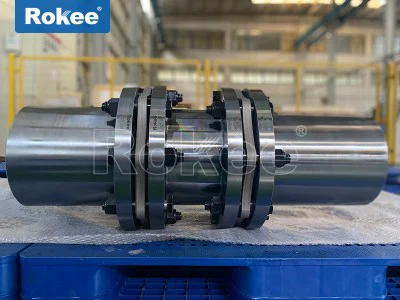
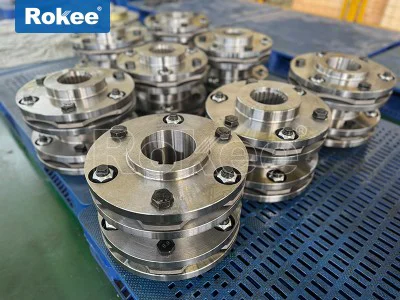
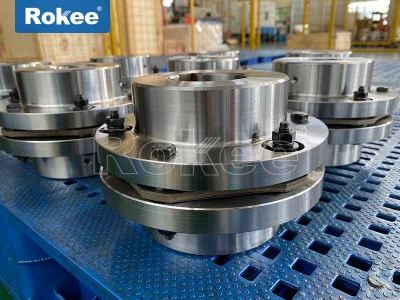
Flexible Diaphragm Couplings
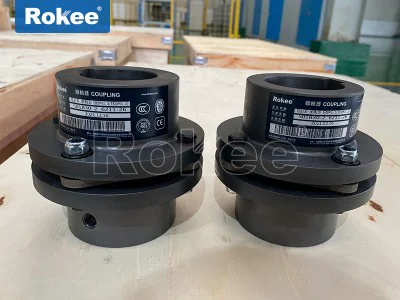
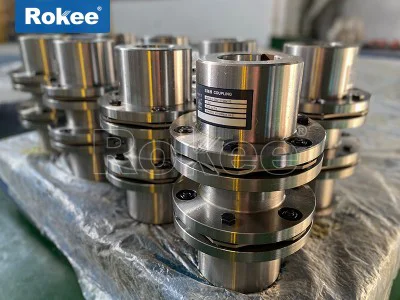
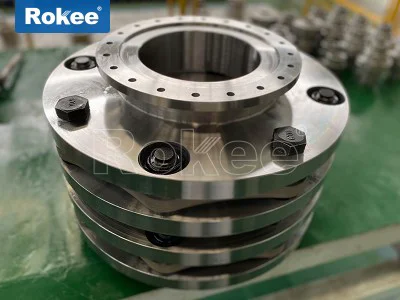
Flexible diaphragm coupling is a high-performance metal elastic element flexible coupling, which is composed of a diaphragm group composed of multiple layers of stainless steel thin plates stacked together and connected by bolts in a staggered manner to form two halves of the coupling.
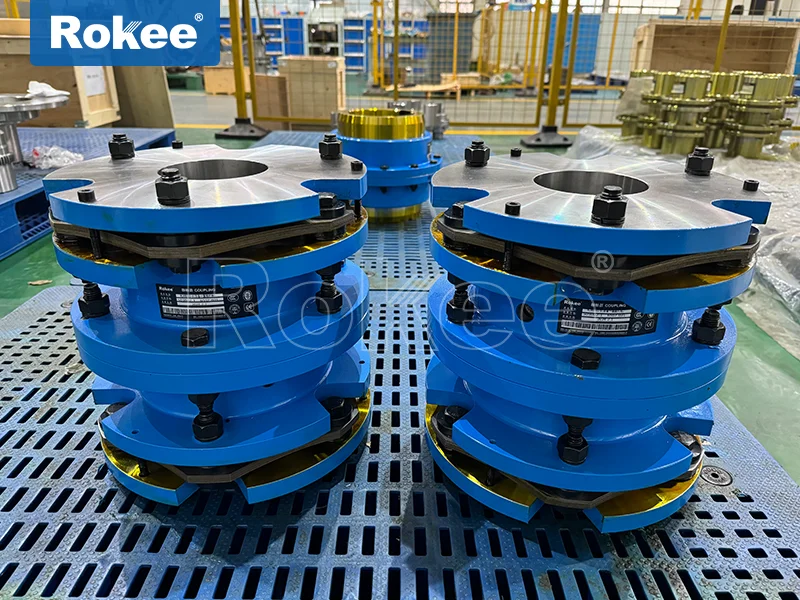
The core principle of flexible diaphragm coupling is to compensate for the axial, radial, and angular displacement between two shafts through the elastic deformation of the diaphragm, achieving efficient transmission without lubrication. Typical structures are divided into:
Single diaphragm coupling: suitable for low eccentricity scenarios, with a simple structure but limited compensation capability.
Double diaphragm coupling: By synergistically deforming two sets of diaphragms, it can simultaneously handle multi-directional deviations, and its angular displacement compensation capability is twice that of traditional gear couplings (about 1.5 °).
Core performance characteristics
High precision transmission
The transmission efficiency is as high as 99.86%, with no rotational clearance, and can accurately transmit speed, suitable for precision machinery such as servo systems.
Zero rotation clearance design ensures the response speed and positioning accuracy of the motion control system.Excellent environmental adaptability
Wide temperature resistance range (-80 ℃ to+300 ℃), stable operation in corrosive media (acid, alkali) and high vibration conditions.
No need for lubrication and maintenance, avoiding oil pollution, suitable for industries with high cleanliness requirements such as food and medicine.Dynamic performance optimization
The metal diaphragm absorbs vibration, reduces bearing load, reduces noise below 65dB (A), and significantly extends equipment life.
Strong impact resistance, with peak torque carrying capacity up to twice the rated value.
Application Fields and Typical Cases
Energy industry: coupling of gas turbines and steam turbines to compensate for shaft displacement caused by thermal expansion.
Process industry: corrosion-resistant transmission of high-power chemical pumps (such as sulfuric acid transfer pumps).
High end equipment: Helicopter main rotor transmission system, meeting the requirements of lightweight and high reliability.
Intelligent manufacturing: CNC machine tool feed axis connection ensures micrometer level transmission accuracy.
Installation specifications
Use a torque wrench to tighten the bolts in stages (50% rated torque first, then 100%), ensuring a flange clearance of 0.2-0.3mm.
When multiple deviations coexist, the compensation amount should be controlled at 50% of the allowable value.
Life management
Regularly check for fatigue cracks in the diaphragm (it is recommended to stop the machine every 5000 hours for inspection).
Apply molybdenum disulfide coating on the bolt threads to prevent micro motion wear.
A flexible diaphragm coupling is a high-performance mechanical component designed to connect two rotating shafts in industrial machinery, enabling efficient torque transmission while accommodating various types of misalignment between the shafts. Unlike many other coupling types that rely on rubber or plastic elastomers or require continuous lubrication, this coupling uses metal elastic elements—specifically thin, flexible diaphragm plates—to achieve flexibility and compensate for deviations, making it a reliable choice for a wide range of critical applications. The core design philosophy of the flexible diaphragm coupling revolves around leveraging the elastic deformation capabilities of metal materials, allowing it to balance two key functions: transferring power smoothly and reliably, and mitigating the stresses caused by shaft misalignment, thermal expansion, and vibration. This unique combination of features has made it an indispensable component in industries where precision, durability, and low maintenance are paramount.
At the heart of a flexible diaphragm coupling is the diaphragm itself, typically constructed from thin sheets of high-strength stainless steel, though other corrosion-resistant and high-temperature alloys may be used for specialized applications. These diaphragms are often stacked in multiple layers to enhance their load-bearing capacity and flexibility, with each layer ranging in thickness from a fraction of a millimeter to several millimeters depending on the intended torque and misalignment requirements. The diaphragms are precision-manufactured using processes such as laser cutting or stamping to ensure consistent thickness, uniform flexibility, and resistance to fatigue, which is critical for long-term operation under cyclic loads. The edges of the diaphragms are often rounded or treated with stress-relief grooves to minimize stress concentration, a common issue in thin metal components that can lead to premature failure if not addressed. The diaphragms are attached to hubs on either end of the coupling using bolts, which are tightened to specific torque values to ensure a secure connection without restricting the diaphragm’s ability to flex.
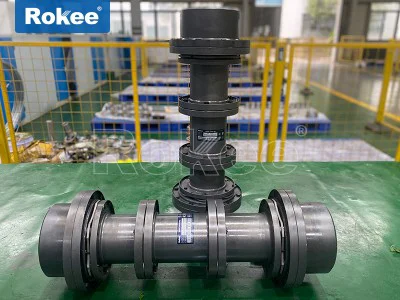
The basic structure of a flexible diaphragm coupling typically includes two hubs, a set of diaphragms, and in some cases, an intermediate shaft or spacer. The hubs are designed to fit onto the shafts of the driver and driven equipment, with various mounting options such as keyways, set screws, or interference fits to ensure a tight, slip-free connection. The diaphragms are clamped between the hubs and the spacer (if present), creating a flexible link that transmits torque from one shaft to the other. When torque is applied, the diaphragms undergo shear deformation, transferring the rotational force while allowing for slight movements to compensate for misalignment. There are two primary configurations of flexible diaphragm couplings: single diaphragm and double diaphragm. A single diaphragm coupling features a single set of diaphragms between two hubs, making it suitable for applications with minimal misalignment and shorter shaft distances. A double diaphragm coupling, on the other hand, uses two sets of diaphragms separated by a spacer, which significantly enhances its ability to compensate for angular, radial, and axial misalignment—often up to twice the capacity of a single diaphragm design. The spacer also allows for easier installation and maintenance, as it can be removed without moving the connected equipment, simplifying assembly and disassembly processes.
The working principle of a flexible diaphragm coupling is rooted in the elastic properties of the metal diaphragms. When the two connected shafts are misaligned—whether angularly (where the shafts are not colinear), radially (where the shafts are offset parallel to each other), or axially (where the shafts move towards or away from each other)—the diaphragms flex to absorb the deviation without transmitting excessive stress to the shafts, bearings, or other components. This flexibility is crucial because even minor misalignment can cause significant wear and tear on machinery over time, leading to increased maintenance costs, unplanned downtime, and reduced equipment lifespan. Unlike gear couplings, which rely on sliding contact between gear teeth and require constant lubrication to prevent friction and wear, flexible diaphragm couplings have no moving parts in relative motion, eliminating the need for lubrication. This not only reduces maintenance requirements but also eliminates the risk of oil leaks and contamination, making them ideal for applications in clean environments such as food processing, pharmaceuticals, and semiconductor manufacturing.
One of the key performance advantages of flexible diaphragm couplings is their high transmission efficiency. Due to their rigid yet flexible design, they can transmit torque with minimal energy loss—often exceeding 99.8% efficiency—even under high-speed and high-torque conditions. This high efficiency is particularly beneficial in energy-intensive applications such as power generation, where minimizing energy waste is critical for operational cost savings. Additionally, flexible diaphragm couplings exhibit excellent torsional stiffness, which means they can transmit torque with minimal angular deflection, ensuring precise speed and position control. This makes them well-suited for precision machinery such as CNC machine tool, servo systems, and robotic arms, where accurate motion control is essential. The zero-backlash design of most flexible diaphragm couplings further enhances their precision, as there is no play or clearance between components, ensuring immediate response to changes in torque and speed.
Durability and reliability are also defining characteristics of flexible diaphragm couplings. The metal diaphragms are resistant to aging, fatigue, and environmental factors such as temperature extremes, corrosion, and vibration. Unlike rubber or plastic elastomers, which can degrade over time due to exposure to heat, chemicals, or ozone, metal diaphragms maintain their elastic properties and structural integrity even in harsh operating conditions. They can operate effectively in temperatures ranging from -80°C to +300°C, making them suitable for use in both cryogenic applications and high-temperature environments such as gas turbines and exhaust systems. In corrosive environments—such as petrochemical plants, marine applications, and chemical processing facilities—diaphragms made from corrosion-resistant alloys like 316L stainless steel or Hastelloy can withstand exposure to acids, alkalis, and saltwater, ensuring long-term performance without degradation. Experimental data shows that proper design and material selection can extend the service life of diaphragm couplings to tens of thousands of operating hours, significantly reducing the frequency of replacement and maintenance.
The versatility of flexible diaphragm couplings is evident in their wide range of applications across various industries. In the energy sector, they are commonly used in gas turbines, steam turbines, and generators, where they compensate for the thermal expansion of shafts during operation and transmit high torque with minimal energy loss. In the aerospace industry, they are used in aircraft engines and auxiliary systems, where their lightweight design, high reliability, and ability to withstand extreme temperatures and vibrations are critical. In the automotive and transportation industry, they find applications in electric vehicle drivetrains, railway traction systems, and ship propulsion systems, where they provide reliable torque transmission while accommodating misalignment caused by dynamic loads and structural flexing. In industrial automation, they are used in conveyor systems, pumps, compressors, and fans, where their low maintenance requirements and high durability help minimize downtime and improve operational efficiency.
In precision manufacturing, flexible diaphragm couplings play a vital role in ensuring the accuracy of machinery such as CNC lathes, milling machines, and laser cutting equipment. The precise torque transmission and zero-backlash design of these couplings ensure that the cutting tools or workpieces move with exact precision, resulting in higher quality products and reduced waste. In the semiconductor industry, where cleanroom conditions are required, the lubrication-free design of flexible diaphragm couplings prevents contamination, while their precision ensures the accurate positioning of wafers and other delicate components. In the medical device industry, they are used in diagnostic equipment, surgical tools, and laboratory instruments, where reliability, precision, and sterility are paramount.
Proper installation and maintenance are essential to ensure the optimal performance and longevity of flexible diaphragm couplings. While these couplings are generally low-maintenance, certain precautions must be taken during installation to avoid damaging the diaphragms or reducing their performance. One of the most critical installation considerations is shaft alignment. Even though flexible diaphragm couplings can compensate for misalignment, excessive misalignment can significantly reduce their service life. Experimental data shows that increasing angular deviation from 0.5° to 1° can shorten the diaphragm’s lifespan by 60% to 70%. Therefore, it is essential to align the shafts as accurately as possible using precision alignment tools before installing the coupling. The bolts used to attach the diaphragms to the hubs must be tightened to the specified torque values in a staggered sequence to ensure uniform clamping force and prevent stress concentration. Over-tightening can damage the diaphragms, while under-tightening can result in loose connections and vibration.
Regular inspection is also important to identify potential issues before they lead to failure. During inspections, the diaphragms should be checked for signs of fatigue, such as cracks, corrosion, or deformation. It is recommended to stop the machine every 5000 operating hours for a thorough inspection, though this interval may vary depending on the application and operating conditions. The bolts should also be checked for tightness, as vibration can cause them to loosen over time. In corrosive environments, additional inspections may be necessary to check for signs of corrosion on the diaphragms and hubs. If any damage is detected, the affected components should be replaced immediately to prevent further damage to the coupling or connected equipment. Proper storage of spare diaphragms and other components is also important, as exposure to moisture, chemicals, or extreme temperatures can degrade their performance.
The design and manufacturing of flexible diaphragm couplings have evolved significantly in recent years, driven by advances in materials science, manufacturing technology, and finite element analysis (FEA). FEA has become an essential tool in the design process, allowing engineers to simulate the behavior of the diaphragms under various load conditions and optimize their design for maximum performance and durability. By using FEA, engineers can analyze stress distribution in the diaphragms, identify high-stress areas, and modify the design to reduce stress concentration. For example, optimizing the geometric shape of the diaphragms—such as using variable thickness designs or stress-relief grooves—can reduce the stress concentration factor (KT) from 2.0-3.5 to below 1.5. A recent design trend is the addition of reinforcement patches in high-stress areas, which FEA has shown can reduce peak stress by 30%-40% and significantly extend the service life of the coupling.
Advances in materials technology have also contributed to the improved performance of flexible diaphragm couplings. New high-strength, corrosion-resistant alloys have been developed that offer superior fatigue resistance and temperature tolerance compared to traditional materials. For example, 15-5 PH stainless steel is increasingly used in high-performance applications due to its excellent strength, corrosion resistance, and fatigue life, making it suitable for critical applications in aerospace, marine, and petrochemical industries. Additionally, improvements in manufacturing processes—such as precision laser cutting, CNC machining, and heat treatment—have allowed for more consistent and accurate production of diaphragms and other components, ensuring that each coupling meets strict performance standards.
Despite their many advantages, flexible diaphragm couplings are not suitable for all applications. They have certain limitations that must be considered during the selection process. One of the main limitations is their relatively high initial cost compared to some other coupling types, such as elastomeric couplings. However, this higher initial cost is often offset by their lower maintenance requirements, longer service life, and higher efficiency, resulting in lower total cost of ownership over time. Another limitation is their limited ability to compensate for extremely large misalignments. While double diaphragm designs can handle significant misalignment, applications with extreme radial or angular deviation may require other types of couplings, such as universal joints or flexible couplings with larger compensation capacities. Additionally, flexible diaphragm couplings are sensitive to improper installation and overloading, which can cause premature failure. Therefore, proper selection, installation, and maintenance are critical to ensuring their optimal performance.
In conclusion, flexible diaphragm couplings are a versatile, reliable, and high-performance solution for torque transmission and misalignment compensation in a wide range of industrial applications. Their unique design, which leverages the elastic properties of metal diaphragms, offers numerous advantages over other coupling types, including high efficiency, precision, durability, and low maintenance. From energy generation and aerospace to precision manufacturing and medical devices, these couplings play a critical role in ensuring the smooth and reliable operation of machinery. As technology continues to advance, further improvements in materials, design, and manufacturing processes are likely to enhance the performance and versatility of flexible diaphragm couplings, making them even more valuable in the ever-evolving industrial landscape. Whether in high-speed, high-torque applications or precision, cleanroom environments, flexible diaphragm couplings provide a robust and efficient solution that meets the demanding requirements of modern industry.