Tooth Couplings
As a core component in mechanical transmission systems, tooth couplings play an indispensable role in modern industrial equipment. This type of coupling, through a precise gear meshing structure, can not only efficiently transmit torque and rotational motion, but also effectively compensate for various deviations between shaft systems, thereby ensuring the smooth operation of the transmission system.
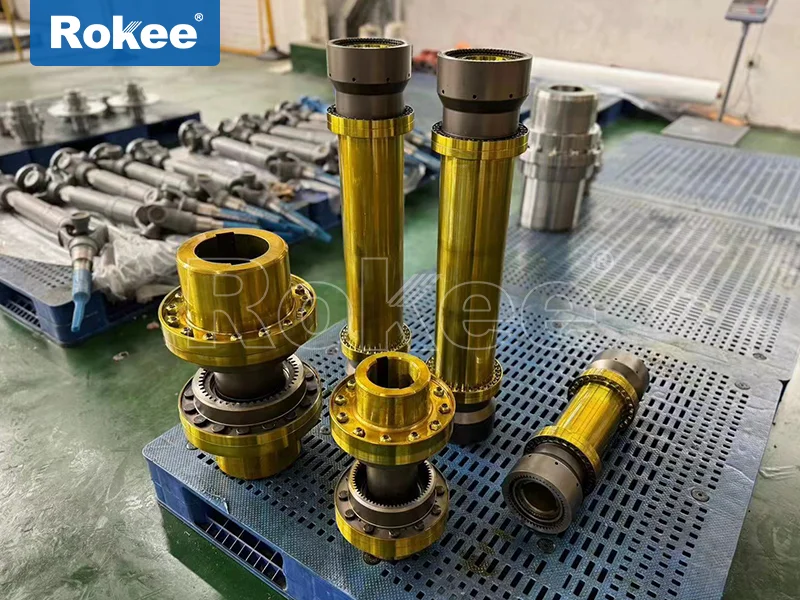
Tooth coupling is a mechanical transmission device that achieves power transmission through gear meshing. As a type of movable rigid coupling, it mainly consists of two core components: an inner gear ring and an outer gear shaft sleeve. It uses the mutual meshing of the inner and outer teeth to connect two concentric shafts and transmit torque. This type of coupling has the ability to compensate for the relative displacement of two shafts while transmitting power, making it an ideal choice for many industrial applications.
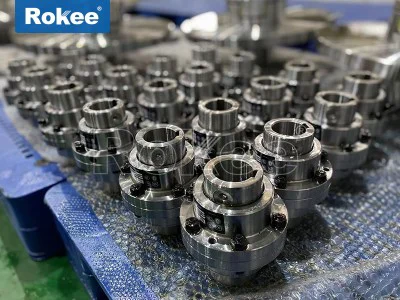
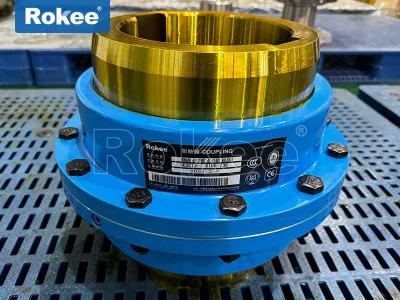
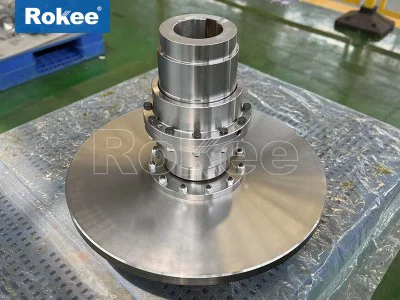
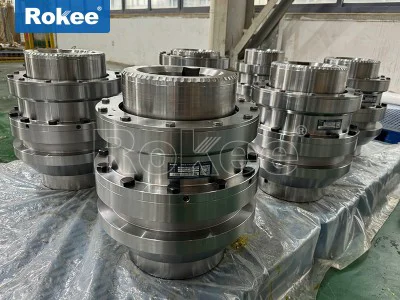
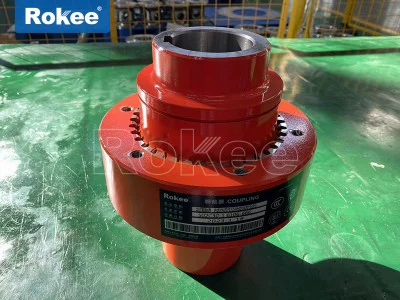
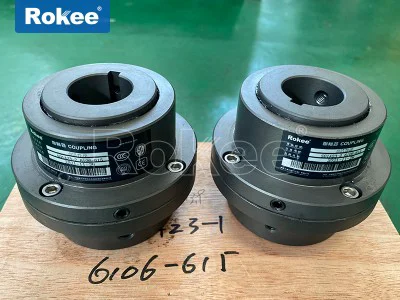
Structurally, the basic components of a toothed coupling include an inner ring gear, a flanged half coupling with outer teeth, and end caps. According to design requirements, small tooth couplings often adopt an integrated structure of end caps and inner gear rings, which simplifies the assembly process and improves the compactness of the overall structure. This sophisticated structural design enables the toothed coupling to achieve maximum transmission efficiency within a limited space, with relatively small radial dimensions yet capable of bearing significant torque loads.
The working principle of tooth coupling is based on the basic mechanism of gear meshing. When the driving shaft rotates, the meshing inner gear ring is driven by the outer gear shaft sleeve to rotate, thereby transmitting power to the driven shaft. During the transmission process, if there is a certain relative displacement between the two shafts (including radial, axial, or angular deviations), the inner and outer tooth surfaces can adapt to these deviations through relative sliding, thereby ensuring the continuity and stability of the transmission. It is worth noting that although this relative sliding solves the problem of deviation compensation, it also brings challenges of tooth surface wear and power loss. Therefore, a good lubrication and sealing system is crucial for the long-term stable operation of the toothed coupling.
From the perspective of performance characteristics, tooth couplings have several significant advantages: firstly, they have a compact structure, and their ability to transmit torque is often superior to other types of couplings under the same outer diameter size; Secondly, it has a high load-bearing capacity and is particularly suitable for low-speed and heavy-duty working conditions; Furthermore, it has a wide speed range, with ordinary models suitable for conventional speeds, while tooth couplings that have undergone high-precision dynamic balancing processing can even be used in high-speed transmission scenarios such as gas turbines. In addition, the coupling designed with drum shaped teeth also has a large angular compensation capability, which can adapt to more complex shaft deviation situations.
In terms of industrial applications, tooth couplings cover almost all heavy industry fields. Toothed couplings can be seen in steel rolling equipment in the metallurgical industry, crushers and ball mills in mining machinery, winches and walking mechanisms in lifting and transportation equipment, and large equipment in petrochemical, shipbuilding, water conservancy and other industries. Its reliability and adaptability make it the preferred connecting component in heavy-duty transmission systems, providing a solid foundation for the stable operation of modern industrial machinery.
Gear couplings can be divided into various types based on their structural characteristics and design concepts, each with its unique advantages and application scenarios. Understanding these different types of tooth couplings is crucial for selecting and using couplings correctly. In practical applications, engineers need to choose the most suitable coupling type based on the specific requirements of the transmission system, such as torque size, speed range, deviation compensation requirements, and working environment.
Drum gear coupling is currently the most widely used type of tooth coupling. Its biggest feature is that the tooth tips of the outer gear shaft sleeve are machined into a circular arc shape, and the entire gear blank is designed as a spherical surface. This drum shaped tooth structure brings multiple performance advantages: firstly, the compensation capability is significantly improved, allowing for a maximum angular displacement of 1.5 ° (50% higher than that of straight tooth couplings), and it can also better adapt to radial and axial deviations; Secondly, the improvement of contact conditions is achieved. The drum shaped tooth surface expands the contact area between the inner and outer teeth, avoiding the problem of stress concentration at the edge of the tooth end under angular displacement conditions in straight tooth couplings, thereby improving transmission stability and component life; Furthermore, the load-bearing capacity has been improved. Under the same structural dimensions, the torque transmission capacity of the drum toothed coupling is on average 15% -20% higher than that of the straight toothed coupling. Typical drum shaped tooth couplings include GIICL, GCLD and other series, among which GIICL type is further divided into Type I and Type II. Type I adopts a separated sealing end, allowing for larger radial displacement, while Type II is an integral sealing end with a more compact structure. The nominal torque range of these couplings is wide, ranging from 0.4kN · m to 4500kN · m, which can meet various transmission needs from ordinary machinery to heavy equipment.
The spur gear coupling is the basic form of a toothed coupling, in which the axial tooth blank of the outer gear sleeve is machined into a straight shape, and the indexing circle and root circle are both straight lines. The meshing form is exactly the same as that of the inner and outer teeth of a regular involute cylindrical gear. This type of coupling achieves limited compensation capability by increasing the backlash between the inner and outer teeth, but the compensation amount is relatively small, generally allowing only about 1 ° angular displacement. With the popularization of drum tooth technology, spur tooth couplings have gradually been regarded as obsolete products due to their limitations in compensation performance and load-bearing capacity, and are generally not recommended for use in new construction projects. However, in some situations with low requirements or strict space limitations, spur tooth couplings still have certain application space due to their simple structure and low cost.
The elastic pin gear coupling represents the combination design of toothed coupling and elastic coupling, and belongs to a type of flexible coupling with elastic elements. This type of coupling consists of two half couplings with semi-circular grooves, an outer ring, and nylon pins, which transmit torque through the pins instead of direct gear engagement. Its biggest feature is the use of nylon column pins instead of traditional metal tooth structures. One end of the column pin is made into a drum shape to increase compensation, and fixed retaining rings are installed at both ends to prevent slipping. The elastic pin tooth coupling has the ability to compensate for axial, radial, and angular axis offsets, and has a simple structure, good processability, no need for lubrication and maintenance, and operates smoothly, reliably, and noiselessly. According to different structures, it can be divided into LZ type (basic type), LZD type (tapered shaft hole), LZJ type (connecting intermediate shaft), and LZZ type (with brake wheel) series. However, due to the temperature sensitivity of nylon material (temperature resistance range is generally -20 ℃~70 ℃) and low damping coefficient, the vibration reduction performance of this type of coupling is weak and not suitable for situations that require strict control of vibration and noise.
Special application type tooth coupling is a specialized product developed for specific working conditions. The CLZ type tooth coupling is designed specifically for large-diameter pipe mills and metallurgical equipment, with excellent impact bearing performance. It includes 19 specifications and models from CLZ1 to CLZ19, covering a nominal torque range of 103780N · m to 1000000N · m. The GCLD type is a drum shaped tooth coupling specially designed for motor shaft extension, using GIICL basic gear meshing parameters. It has the characteristics of small tooth spacing, compact structure, and low moment of inertia, allowing for forward and reverse rotation and transmitting nominal torque range of 1120-50000N · m. The DY series tooth coupling is known for its unique closed design and specially hardened tooth surface, which can prevent dust from entering and lubricating oil leakage. It is suitable for high load and high-speed rotation scenarios under harsh working conditions. Although these specialized couplings have limitations in universality, they perform well in their respective target application areas and provide reliable solutions for solving special transmission problems.
Tooth couplings play an important role in the field of mechanical transmission, mainly due to their excellent performance characteristics and significant technological advantages. Compared with other types of couplings, toothed couplings perform outstandingly in terms of load-bearing capacity, deviation compensation, and transmission efficiency, making them an ideal choice for heavy-duty, high-speed, or precision transmission systems. A deep understanding of these performance characteristics can help engineers fully unleash the potential of toothed couplings in equipment design and maintenance.
Excellent load-bearing capacity is one of the most prominent features of toothed couplings. Due to the design of multiple teeth meshing simultaneously, the load is evenly distributed on multiple tooth surfaces, greatly improving the ability of torque transmission. Under the same outer diameter size, the load-bearing capacity of the drum toothed coupling is increased by an average of 15% -30% compared to the straight toothed coupling. This advantage is particularly valuable in applications with limited space but high torque requirements. For example, in the steel rolling equipment of the metallurgical industry, the nominal torque of the GIICL drum tooth coupling can reach 4500kN · m, which can meet the most demanding heavy-duty requirements. This high load-bearing capacity originates from the optimized design of the drum shaped teeth: the spherical tooth shape expands the contact area, making the load distribution more uniform and avoiding the stress concentration phenomenon at the tooth end of traditional straight tooth couplings. At the same time, the tooth surface that has undergone precision machining and hardening treatment has extremely high wear resistance, which can maintain good meshing even under long-term heavy load operation, extending the service life of the coupling.
Excellent deviation compensation capability is another major technical advantage of toothed couplings. In practical mechanical systems, due to manufacturing errors, installation deviations, thermal deformation during operation, or foundation settlement, various forms of relative displacement between connected shafts are inevitable, including radial displacement, axial displacement, and angular deflection. tooth couplings, especially drum shaped gear designs, can effectively compensate for these deviations and ensure the smooth operation of the transmission system. Specifically, the drum shaped tooth coupling allows for an angular displacement of up to 1.5 °, which is 50% higher than that of the spur tooth coupling; At the same time, it can also compensate for parallel offset of 0.01-0.02 inches. This compensation capability originates from the special geometric shape of the drum shaped teeth and the large tooth flank clearance. When there is a deviation in the shaft system, the inner and outer tooth surfaces can adapt through relative sliding without generating excessive additional loads. For example, in the transmission system of a large mining ball mill, due to the large size of the equipment, it is inevitable that there will be axis misalignment during installation and operation. After using the GCLZ drum shaped tooth coupling, the system can automatically compensate for these deviations, significantly reducing vibration and noise, and extending the service life of components such as bearings and seals.
The efficient transmission performance makes the toothed coupling perform excellently in energy transfer. The optimized design of the tooth coupling has a transmission efficiency of up to 99.7%, which means that only a very small portion of the input power is lost during transmission. Efficient transmission not only saves energy, but also reduces heat generation caused by power loss, which helps maintain stable operation of the system. This characteristic makes the toothed coupling particularly suitable for high-power transmission applications, such as auxiliary systems in power plants, ship propulsion systems, etc. The realization of high transmission efficiency mainly benefits from several aspects: precision machined tooth surfaces ensure good meshing quality; The optimized tooth profile curve reduces sliding friction; An effective lubrication system reduces the friction coefficient between tooth surfaces. It is worth noting that although there is relative sliding between the inner and outer tooth surfaces of the toothed coupling during operation, which may result in certain power losses, these losses can be controlled at a very low level by using appropriate lubricants and maintaining good sealing conditions.
The wide application adaptability demonstrates the multifunctionality of the toothed coupling. From low-speed heavy-duty metallurgical rolling mills to high-speed precision gas turbines, from dry and clean indoor environments to humid and dusty open-pit mining areas, tooth couplings can adapt to various harsh conditions through different designs and material choices. In low-speed and heavy-duty situations, such as the walking mechanism of lifting and transportation equipment, the design of couplings focuses on load-bearing capacity and impact resistance, using large modulus gears and sturdy structures; In high-speed applications such as steam turbine generator sets, emphasis is placed on high-precision dynamic balancing and vibration reduction design, with speeds up to 4000r/min or even higher. In addition, for special environmental requirements such as explosion-proof environments in the petrochemical industry or corrosion resistance requirements in marine engineering, tooth couplings can be made of stainless steel material or have special sealing designs.
These performance characteristics of tooth couplings do not exist in isolation, they are interrelated and influence each other, together constituting the technical advantages of tooth couplings. In practical engineering applications, it is necessary to weigh various indicators and select the most suitable type and specification of coupling based on specific working conditions and performance requirements. For example, in the transmission system of a steel continuous casting machine, it is necessary to consider both high torque requirements and adapt to shaft system deviations caused by thermal deformation. Generally, large-sized drum shaped tooth couplings are selected and equipped with high-pressure automatic lubrication systems to meet the requirements of bearing capacity, deviation compensation, and long-term reliable operation at the same time. It is precisely this comprehensive performance advantage that maintains the irreplaceable position of tooth couplings in the field of mechanical transmission.
A tooth coupling is a type of movable rigid coupling widely used in mechanical transmission systems, designed to connect two rotating shafts to transmit torque and rotational motion while compensating for relative displacements between the shafts. Unlike other coupling types that rely on elastic components or flexible connections, tooth couplings achieve power transmission through the meshing of internal and external gears, combining the advantages of high rigidity, strong load-bearing capacity, and reliable performance, making them indispensable components in various industrial fields. The design and manufacturing of tooth couplings are based on precise gear processing technology, and their structural characteristics directly determine their performance, application scope, and service life.
The basic structure of a tooth coupling is relatively compact and mainly consists of several core components that work together to ensure stable torque transmission and displacement compensation. The most critical components are internal gear rings and flange half-couplings with external teeth, which have the same number of teeth to ensure accurate meshing. The internal gear ring is an annular component with precision-processed internal teeth on its inner surface, while the flange half-coupling (also known as the external gear sleeve) is equipped with external teeth matching the internal gear ring on its surface. The meshing of internal and external teeth is the core principle of torque transmission in tooth couplings, and the precision of the tooth profile directly affects the transmission efficiency and stability. In addition to these two core components, tooth couplings also include end caps and sealing devices; for small-sized tooth couplings, the end cap and the internal gear ring are often processed as an integral structure to simplify the overall structure while ensuring connection reliability. The end cap plays a role in fixing and protecting the internal components, while the sealing device is used to isolate dust, impurities, and moisture from the external environment, preventing lubricant leakage and avoiding wear or corrosion of the tooth surface, thereby extending the service life of the coupling. Some special tooth couplings may also be equipped with intermediate sleeves or other auxiliary components according to application needs to adapt to specific installation conditions, such as long-distance shaft connection or vertical installation.
The material selection of tooth coupling components is crucial to their performance and service life, as they need to withstand large torque, friction, and occasional impact loads during operation. Most tooth couplings use high-strength metal materials with excellent mechanical properties. Common materials include high-strength steel alloys, which have outstanding wear resistance, fatigue resistance, and deformation resistance under high torque, making them suitable for heavy-duty and high-speed transmission scenarios. Nodular cast iron is also sometimes used for certain components due to its good toughness and machinability, which can reduce manufacturing costs while meeting the basic performance requirements of general working conditions. The tooth surfaces of internal and external gears are usually subjected to surface hardening treatment, such as carburizing, quenching, or nitriding, to improve their hardness and wear resistance, reduce tooth surface wear caused by relative sliding during operation, and enhance the overall service life of the coupling. The processing accuracy of the components is another key factor; the tooth profile, pitch, and dimensional accuracy of internal and external gears need to meet strict standards to ensure smooth meshing, reduce transmission vibration and noise, and avoid stress concentration at the tooth roots, which could lead to tooth breakage under heavy loads.
The performance characteristics of tooth couplings are determined by their structural design, material selection, and processing accuracy, and these characteristics make them stand out in various mechanical transmission systems. One of the most prominent performance advantages is their high load-bearing capacity and ability to transmit large torques. Due to the large contact area between the meshed internal and external teeth, the torque can be evenly distributed over multiple teeth, avoiding excessive stress on a single tooth and enabling the coupling to withstand high torque loads. Compared with straight tooth couplings, drum tooth couplings, which have an optimized tooth profile design, can transmit 15% to 30% more torque under the same conditions, making them more suitable for heavy-duty transmission scenarios. Another important performance characteristic is their good displacement compensation capability. In actual industrial operations, due to installation errors, thermal expansion of equipment during operation, load fluctuations, and other factors, relative displacements often occur between the two connected shafts, including axial displacement, radial displacement, and angular displacement. Tooth couplings can compensate for these displacements within a certain range through their structural design and reasonable tooth side clearance, avoiding transmission jams, component wear, or equipment vibration caused by displacements, thereby ensuring the stable operation of the entire transmission system.
The displacement compensation capability of tooth couplings varies according to their tooth profile design. Straight tooth couplings compensate for relative displacements between shafts by increasing the tooth side clearance, but their compensation capacity is limited; the allowable angular displacement is usually no more than 1 degree, and the radial and axial compensation amounts are also relatively small. In addition, straight tooth couplings are prone to load concentration at the tooth ends during operation, which accelerates tooth surface wear and shortens their service life. Drum tooth couplings, on the other hand, have an optimized tooth profile design where the tooth tips of the external gear sleeve are processed into circular arcs, and the tooth blank is formed into a spherical surface, with the center of the spherical surface coinciding with the gear axis. This design not only increases the contact area between the teeth but also improves the contact conditions, avoiding edge compression at the tooth ends. Drum tooth couplings can tolerate angular displacements of up to 6 degrees, with a recommended working angular displacement of 1.5 degrees to 2.5 degrees, and their radial and axial compensation capabilities are also significantly better than those of straight tooth couplings, making them more adaptable to complex working conditions with large displacements. In addition to load-bearing capacity and displacement compensation, tooth couplings also have the advantages of high transmission efficiency, compact structure, and a wide range of operating speeds. The transmission efficiency of well-designed and processed tooth couplings can reach up to 99.7%, which means that little power is lost during torque transmission, improving the overall energy efficiency of the mechanical system. Their compact structure allows them to be installed in limited space, while their wide operating speed range enables them to adapt to both low-speed heavy-duty and high-speed transmission scenarios; after high-precision dynamic balance treatment, tooth couplings can also be used in high-speed transmission systems such as gas turbines.
However, tooth couplings also have certain limitations that need to be considered in practical applications. First, they require good lubrication and sealing conditions to ensure normal operation. During operation, when there is relative displacement between the two shafts, the tooth surfaces of the internal and external gears will slide axially relative to each other periodically, which inevitably causes tooth surface wear and power loss. Good lubrication can reduce friction between the tooth surfaces, reduce wear rate, and reduce power loss; common lubrication methods include grease lubrication and forced thin oil lubrication, depending on the operating speed and load. The sealing device must effectively prevent lubricant leakage and external impurities from entering the meshing surface, otherwise, it will lead to increased tooth surface wear, corrosion, and even tooth breakage. Second, tooth couplings have higher requirements for installation accuracy. Although they can compensate for a certain amount of displacement, excessive initial installation deviation will exceed the compensation range of the coupling, leading to increased stress concentration, vibration, and noise, and accelerating component wear. Therefore, during installation, it is necessary to strictly control the alignment of the two shafts to ensure that the initial deviation is within the allowable range. In addition, the manufacturing cost of tooth couplings is relatively high compared to some simple couplings, mainly due to the high precision requirements of gear processing and surface treatment, which may increase the initial investment cost of the equipment.
Tooth couplings can be divided into various types according to different classification standards, each with unique structural characteristics and performance advantages, suitable for different application scenarios. The most common classification method is based on the shape of the external teeth of the external gear sleeve, which divides tooth couplings into straight tooth couplings and drum tooth couplings. Straight tooth couplings are the earliest type of tooth coupling, with a simple structure; the axial tooth blank of the external gear sleeve is processed into a straight line, and both the indexing circle and the tooth root circle are straight lines, with a meshing form completely the same as that of internal and external teeth of involute cylindrical gears. Due to their limited displacement compensation capability and poor wear resistance, straight tooth couplings are gradually being phased out in new projects and are only occasionally used in simple, low-load, and small-displacement transmission systems where the requirements for performance are not high.
Drum tooth couplings are currently the most widely used type of tooth coupling, thanks to their excellent performance. As mentioned earlier, their external gear sleeve has a spherical tooth top and a drum-shaped tooth profile in the cross-section tangent to the pitch cylinder at the tooth center plane. This structural design not only improves the displacement compensation capability and load-bearing capacity but also improves the tooth contact conditions, reducing stress concentration and extending service life. According to their structural form, drum tooth couplings can be further divided into single-tooth couplings and double-tooth couplings. Single-tooth couplings only allow angular displacement; if the same floating amount as that of double-tooth couplings is to be achieved, the length of the gear sleeve needs to be increased, which will increase the axial size of the transmission mechanism, so they are less commonly used. Double-tooth couplings allow both radial and angular displacements, with good floating effect, more compact structure, and wider application range than single-tooth couplings, and are widely used in various heavy-duty and complex transmission systems.
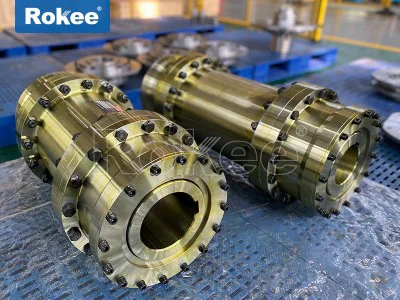
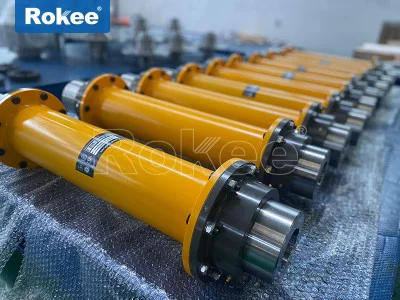
In addition to straight tooth and drum tooth couplings, there are also some special types of tooth couplings designed for specific working conditions. For example, nylon tooth couplings use nylon as the material for the external gear or internal gear, which has the advantages of corrosion resistance, low noise, and light weight, suitable for light-load, low-speed, and corrosive working environments. According to the derived models, drum tooth couplings can also be divided into various subtypes to adapt to specific installation and functional requirements. For example, some drum tooth couplings are equipped with brake discs or brake wheels, which can be matched with different types of brakes to achieve reliable braking functions, suitable for low-speed heavy-duty equipment that requires frequent braking. Some drum tooth couplings are equipped with intermediate sleeves, which are suitable for long-distance shaft connection, solving the problem of long-distance shaft system transmission. Vertical installation drum tooth couplings are specially optimized for vertical shaft connection, with a structural design that adapts to the characteristics of vertical installation, ensuring stable operation under vertical load conditions. In addition, there are drum tooth couplings with separate or integral end caps; those with separate end caps have a larger tooth spacing, allowing larger radial displacements and facilitating installation and disassembly, while those with integral end caps have a more compact structure, smaller tooth spacing, and smaller allowable radial displacements, suitable for occasions with limited installation space.
The wide range of applications of tooth couplings is closely related to their excellent performance characteristics, especially their high load-bearing capacity, good displacement compensation, and wide operating speed range. They are widely used in various industrial fields, including metallurgy, mining, lifting and transportation, petroleum and chemical, power generation, cement, marine, and general machinery industries, playing a key role in ensuring the stable operation of equipment. In the metallurgical industry, tooth couplings are widely used in rolling mills, continuous casting machines, and other key equipment. These equipment operate under high torque, high load, and large vibration conditions, and the shafts are prone to thermal expansion and displacement during operation. Tooth couplings can effectively transmit large torques, compensate for displacements caused by thermal expansion and installation errors, and withstand impact loads during equipment startup and operation, ensuring the stable operation of the rolling and continuous casting processes. For example, in steel rolling production lines, tooth couplings connect the reducer and the rolling mill rolls, transmitting the torque of the motor to the rolls to realize the rolling of steel plates or steel bars, and their reliable performance directly affects the quality and efficiency of steel production.
In the mining industry, tooth couplings are used in crushers, conveyors, and other heavy-duty equipment. Mining equipment often operates in harsh environments with large dust, vibration, and impact loads, and the shafts are prone to displacement due to uneven ground and equipment wear. Tooth couplings with strong load-bearing capacity and good sealing performance can adapt to such harsh environments, stably transmit torque, compensate for shaft displacements, and ensure the continuous operation of mining equipment. For example, crushers need to transmit large torques to crush ore, and the tooth couplings used must withstand the impact load generated during crushing, while compensating for the displacement caused by the vibration of the equipment, avoiding damage to the shafts and other components. Conveyors, which are used to transport ore and other materials over long distances, require tooth couplings to connect the motor and the conveyor roller, ensuring stable torque transmission and adapting to the displacement caused by the long-distance installation of the conveyor.
The lifting and transportation industry is another important application field of tooth couplings, including cranes, hoists, and other equipment. These equipment need to transmit large torques during lifting and lowering operations, and the shafts are prone to displacement due to the change of load and the swing of the lifting mechanism. Tooth couplings can ensure stable torque transmission, compensate for these displacements, and ensure the safety and reliability of lifting operations. For example, in bridge cranes, tooth couplings connect the motor, reducer, and lifting drum, transmitting the torque required for lifting, and their reliable performance directly affects the safety of personnel and equipment. In hoists, tooth couplings adapt to the frequent start-stop and load changes of the equipment, withstanding impact loads and ensuring smooth operation.
In the petroleum and chemical industry, tooth couplings are used in pumps, compressors, and other equipment that operate in harsh environments such as high pressure, high temperature, and corrosive media. These equipment require couplings with good sealing performance, corrosion resistance, and reliable torque transmission capability. Tooth couplings made of high-strength corrosion-resistant materials and equipped with effective sealing devices can adapt to such working conditions, ensuring the stable operation of pumps and compressors, and avoiding leaks of harmful media caused by coupling failure. For example, in gas compressors, tooth couplings connect the motor and the compressor shaft, transmitting high torque while absorbing vibration and compensating for displacement, protecting the system from overload and ensuring efficient operation. In submersible pumps, tooth couplings are used as torque transmission links, compensating for shaft displacements caused by long-distance installation and ensuring the normal operation of the pump.
The power generation industry also uses a large number of tooth couplings, especially in thermal power, hydropower, wind power, and nuclear power plants. In thermal power plants, tooth couplings are used in steam turbines, generators, and other key equipment, transmitting large torques at high speeds; after high-precision dynamic balance treatment, they can adapt to the high-speed operation requirements of steam turbines and generators, ensuring stable power generation. In wind power plants, tooth couplings connect the wind turbine hub and the gearbox, as well as the gearbox and the generator, transmitting the torque generated by the wind turbine to the generator while compensating for the displacement caused by the wind load and installation errors, and absorbing vibration, ensuring the reliable operation of the wind power generation system. In nuclear power plants, tooth couplings are used in various auxiliary equipment, requiring high reliability and safety to adapt to the harsh operating environment of nuclear power plants.
In addition to the above industries, tooth couplings are also widely used in the cement industry, marine industry, and general machinery industry. In the cement industry, they are used in rotary kilns, material handling systems, and other equipment, withstanding high temperature, high load, and large displacement, ensuring the stable operation of the cement production line. In the marine industry, tooth couplings are used in marine propulsion systems, connecting the marine engine and the propeller, transmitting large torque while adapting to the displacement caused by the hull's swing, ensuring the reliable operation of the ship. In general machinery, such as machine tools, fans, and blowers, tooth couplings are used to connect motors and working machines, adapting to different speed and load requirements, and ensuring stable operation.
The selection and maintenance of tooth couplings are crucial to ensuring their performance and service life, as well as the stable operation of the entire mechanical system. In the selection process, it is necessary to comprehensively consider various factors, including the transmitted torque, operating speed, relative displacement between shafts, operating environment (temperature, humidity, corrosion, etc.), installation space, and maintenance conditions. First, the rated torque of the coupling must be greater than the maximum working torque of the transmission system, and a certain safety margin should be reserved to avoid coupling failure due to overload. Second, the displacement compensation capability of the coupling must match the relative displacement between the shafts in the actual working conditions; if the displacement is large, drum tooth couplings should be selected, while straight tooth couplings can be considered for simple working conditions with small displacement. Third, the operating speed of the coupling must be within its allowable speed range; for high-speed transmission, it is necessary to select tooth couplings that have undergone high-precision dynamic balance treatment to avoid vibration and noise caused by unbalance. In addition, the material and sealing performance of the coupling should be selected according to the operating environment; for corrosive environments, corrosion-resistant materials and reliable sealing devices should be selected, while for high-temperature environments, high-temperature resistant materials and lubricants should be selected.
Regular maintenance is another key factor to extend the service life of tooth couplings. The core of maintenance is to ensure good lubrication and sealing, and to check the working status of the coupling regularly. First, lubricants should be replaced regularly according to the operating conditions; the replacement cycle depends on the operating speed, load, and environment, and the type of lubricant should be selected according to the manufacturer's recommendations. During the replacement of lubricants, the meshing surface should be cleaned to remove wear debris and impurities. Second, the sealing device should be checked regularly to ensure that it is intact and effective, and if leakage or damage is found, it should be repaired or replaced in time. Third, the meshing condition of the teeth should be checked regularly, including the tooth surface wear, tooth root cracks, and contact area; the contact area of the tooth surface along the tooth height should not be less than 50%, and along the tooth width should not be less than 70%. If severe wear, pitting, or cracks are found on the tooth surface, the coupling should be replaced in time to avoid tooth breakage and equipment failure. In addition, the alignment of the two shafts should be checked regularly; if the alignment deviation exceeds the allowable range, it should be adjusted in time to reduce stress concentration and vibration. During maintenance, it is also necessary to check the fastening condition of bolts and other connecting components to ensure that they are not loose, so as to avoid component damage caused by loose connections.
With the continuous development of industrial automation and mechanical manufacturing technology, the performance requirements of tooth couplings are also constantly improving. In the future, the development trend of tooth couplings will focus on improving manufacturing precision, optimizing structural design, and developing new materials and lubrication technologies. The application of advanced CNC gear cutting machines and automatic loading and unloading systems will further improve the processing precision of gears, reducing transmission vibration and noise, and improving transmission efficiency. The optimization of structural design, such as the adoption of large pressure angle tooth profiles and optimized tooth root fillets, will further improve the load-bearing capacity and fatigue life of tooth couplings. The development and application of new materials, such as high-strength, corrosion-resistant, and wear-resistant alloys, will enable tooth couplings to adapt to more harsh operating environments. In addition, the development of intelligent monitoring technology will enable real-time monitoring of the operating status of tooth couplings, such as temperature, vibration, and tooth surface wear, realizing predictive maintenance, reducing downtime, and improving the reliability and service life of the coupling.
In conclusion, tooth couplings are important components in mechanical transmission systems, with unique structural characteristics, excellent performance, and a wide range of applications. Their core structure, composed of internal gear rings, external gear sleeves, end caps, and sealing devices, enables them to transmit large torques, compensate for relative displacements between shafts, and adapt to a wide range of operating speeds. According to the shape of the external teeth and structural form, tooth couplings can be divided into straight tooth, drum tooth, and various special types, each suitable for different application scenarios. They are widely used in metallurgy, mining, lifting and transportation, petroleum and chemical, power generation, and other industrial fields, playing a crucial role in ensuring the stable operation of equipment. However, tooth couplings require good lubrication and sealing conditions and higher installation accuracy, and regular maintenance is necessary to extend their service life. With the continuous progress of technology, tooth couplings will be further optimized and improved, adapting to more complex and harsh working conditions, and making greater contributions to the development of the mechanical manufacturing industry.