Gear Type Couplings
Gear type couplings as the core components of mechanical transmission systems, play a crucial role in various industrial equipment. It achieves power transmission through gear meshing and has the ability to compensate for shaft system deviations, making it an indispensable component of modern mechanical design.
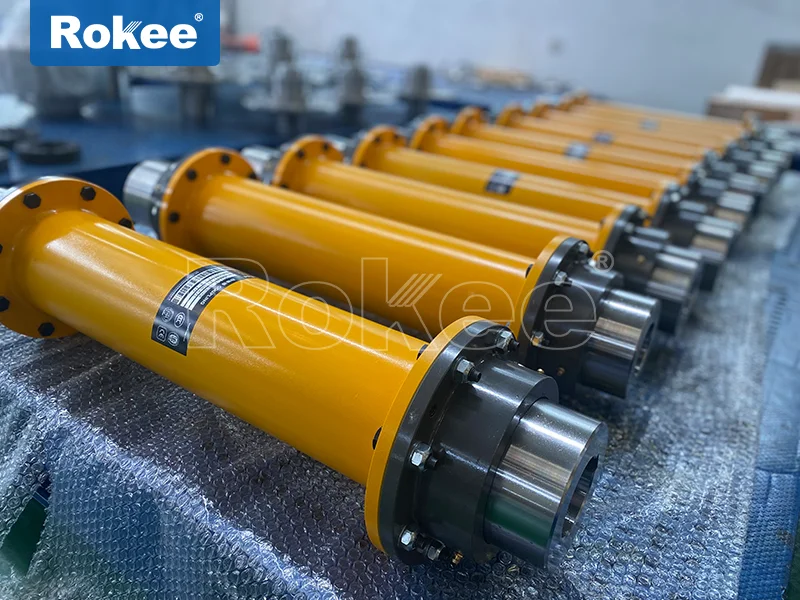
Gear type coupling is a mechanical transmission device that transmits torque through gear meshing and belongs to the category of rigid movable couplings. It allows for a certain degree of relative displacement between the connected shafts, including axial, radial, and angular deviations, while transmitting motion and power. This unique performance makes it the preferred solution for axis connections in many industrial fields.
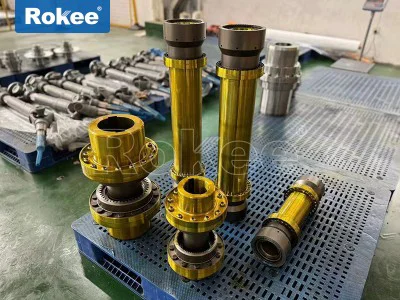
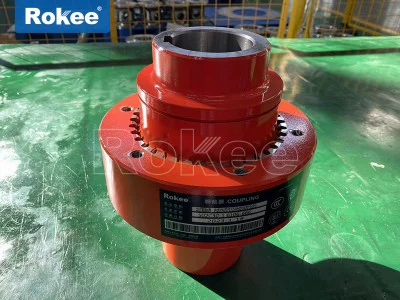
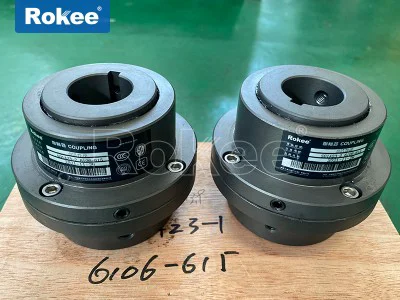
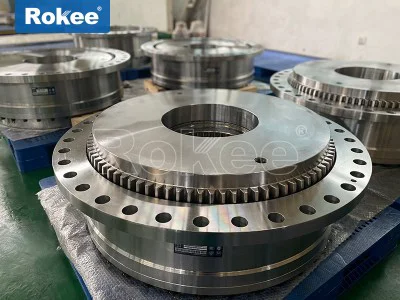
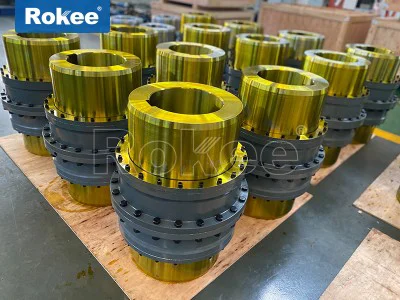
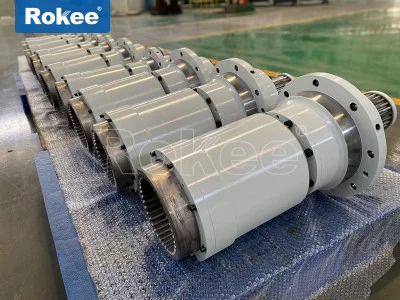
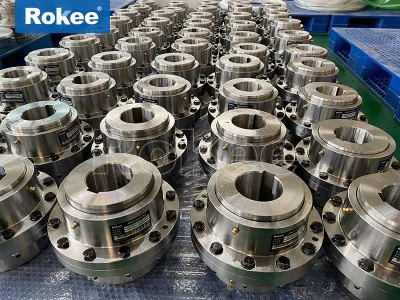
Structurally, a standard gear type coupling consists of three key components: an outer gear sleeve, an inner gear ring, and a connecting sleeve. External gear sleeve is usually installed at the shaft end of the driving shaft or driven shaft, and its outer surface is machined with precision gears; The internal gear ring is fixed inside the sleeve and forms a meshing relationship with the gear of the external gear sleeve. This structural design not only ensures effective torque transmission, but also provides deviation compensation capability through the clearance between gears. According to the different sleeve structures, gear type couplings can be divided into two main types: flange sleeve type and continuous sleeve type. The former is connected by flange bolts, while the latter is designed as a whole.
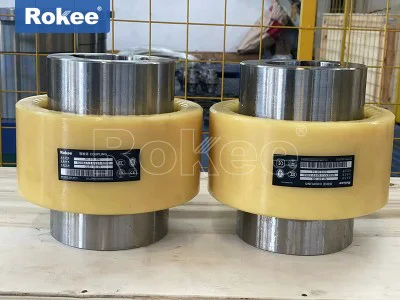
In terms of material selection, the manufacturing of gear type couplings usually uses high-quality alloy steels such as 42CrMo, 35CrMo, etc. These materials have excellent comprehensive mechanical properties after quenching and tempering heat treatment. For special working conditions, such as situations where weight reduction is required, high-strength aluminum alloy will be used; In corrosive environments, stainless steel material may be used. It is worth noting that in modern gear type couplings, engineering plastics such as nylon are often used to manufacture certain non-metallic sleeve components to provide better cushioning and vibration reduction effects.
The working principle of gear type couplings is based on the meshing transmission of precision gear pairs. When the driving shaft rotates, the outer gear sleeve drives the meshing inner gear ring to rotate, and then transmits power to the driven shaft through the sleeve. During this process, the special design of the gear pair allows for a slight relative displacement between the two shafts without generating excessive additional loads. The gear tooth profile usually adopts involute design, with a pressure angle of generally 20 °. This standardized design ensures transmission smoothness and interchangeability. It is worth mentioning that the drum tooth design significantly improves the coupling's ability to compensate for angular displacement by making the outer teeth spherical, allowing for a deviation range of 2-6 degrees, which is far superior to traditional spur gear type couplings.
The reason why gear type couplings stand out in many industrial applications is due to their unique working principle and excellent performance. A deep understanding of its power transmission mechanism and deviation compensation principle is crucial for correctly selecting and optimizing the use of couplings.
In terms of power transmission mechanism, gear type couplings transmit torque from the driving shaft to the driven shaft through precise meshing of internal and external teeth. In the ideal alignment state, all meshing teeth evenly share the load, and the transmission efficiency can reach up to 99.7%. This almost lossless transmission efficiency is particularly valuable in heavy-duty applications, as it can significantly reduce energy loss. According to industrial testing data, high-performance gear type couplings have a torque transmission capacity of up to 4500kN · m, which is sufficient to meet the needs of the vast majority of heavy machinery. It is worth noting that the torque transmission capacity of the coupling is directly related to the gear module, tooth width, number of teeth, and material strength. These parameters need to be carefully designed and calculated according to specific application conditions.
Deviation compensation capability is another core characteristic of gear type couplings. In actual mechanical systems, due to factors such as manufacturing errors, installation deviations, thermal deformation during operation, and foundation settlement, a completely ideal alignment state is almost non-existent. gear type couplings compensate for these inevitable deviations through carefully designed tooth flank clearances and special tooth profiles (such as drum teeth). A typical gear type coupling allows for parallel offset of 0.01-0.02 inches (approximately 0.25-0.5mm) and angular misalignment of 1.5-2 degrees, and high-performance models can even tolerate up to 6 degrees of angular deviation. This compensation capability effectively reduces the additional load caused by misalignment of the shaft system, protects key components such as bearings and seals, and extends the service life of the entire transmission system.
The dynamic performance of gear type couplings is also worth paying attention to. Compared to elastic couplings, gear type couplings have higher torsional stiffness and smaller backlash, which makes them perform well in situations that require precise synchronous transmission, such as the main drive of a rolling mill. Meanwhile, the gear type coupling that has undergone precise dynamic balancing can adapt to high-speed operating conditions, with a maximum speed of over 10000rpm. However, the centrifugal effect and meshing frequency of gears during high-speed operation require special consideration, as improper design may lead to resonance or excessive vibration. To solve this problem, modern high-performance gear type couplings often adopt variable gear design and special tooth profile modification techniques to optimize dynamic performance.
In terms of environmental adaptability, gear type couplings have shown a wide range of application potential. By selecting appropriate materials and sealing design, it can adapt to a working temperature range of -40 ℃ to 200 ℃. For special environments such as marine engineering, stainless steel materials and reinforced seals can be used to resist salt spray corrosion; In places with severe dust such as mining machinery, multiple sealing protections are required to prevent abrasive particles from entering the tooth surface. It is worth mentioning that the noise level of gear type couplings is usually higher than that of elastic couplings, so additional noise reduction measures need to be taken in noise sensitive environments, such as using soundproof covers or selecting hybrid couplings with nylon components.
Gear couplings have developed into various structural forms, each with unique performance characteristics and applicable scenarios. Understanding these different types of couplings and their differences is crucial for engineering and technical personnel to make the correct selection. According to the characteristics of tooth profile, structural design, and application features, gear type couplings can be divided into several main categories.
Drum gear coupling is currently the most widely used type, with its biggest feature being that the tooth tips of the outer gear shaft sleeve are in a circular arc shape, and the tooth blank is processed into a spherical shape. The advantages of this design are obvious: firstly, it significantly improves the tooth contact conditions, allowing the coupling to maintain good linear contact even in the presence of angular displacement, avoiding edge stress concentration. The data shows that under the same conditions, the drum gear type coupling has a 15-30% increase in torque transmission capacity compared to the straight gear type coupling. Secondly, the drum shaped design significantly enhances the angle compensation capability, allowing for a maximum tilt angle of up to 6 degrees (generally recommended for use within a range of 1.5 ° -2.5 °). Common drum shaped gear type couplings include CLZ type, GICL type and other series, which are widely used in heavy equipment such as metallurgical rolling mills and mining machinery.
As the simplest gear type coupling structure, the spur gear type coupling adopts a spur gear design for its outer gear shaft sleeve, which achieves limited compensation capability by increasing the tooth side clearance. Although this type of manufacturing has lower costs, it has been gradually phased out in modern industry due to its limited compensation capability (usually not exceeding 1 degree) and significant edge contact issues. It is only used in low-speed situations where compensation requirements are not high. When a spur gear type coupling is in operation, angular deviation can cause stress concentration at the tooth end, and long-term use can easily lead to early failure. Therefore, it is generally not recommended to use it in new construction projects.
Elastic pin toothed coupling (such as LZ series) is a combination of gear type coupling and elastic coupling, which transmits torque through nylon column pins instead of direct gear meshing. This type of coupling has the advantages of simple structure, good processability, and lubrication free maintenance, with a working temperature range of -20 ℃ to 70 ℃. Its biggest feature is that there is no need to move the half coupling when replacing the elastic element, greatly simplifying maintenance work. The improved elastic pin coupling adopts a locking block and spring washer design, which increases the contact area and improves the stability during high-speed rotation. However, due to the lower damping coefficient of nylon material, the vibration reduction performance of this type of coupling is not as good as that of rubber component couplings. Therefore, careful selection should be made in situations where strict vibration control is required.
A gear type coupling is a critical mechanical component designed to connect two rotating shafts at their ends for efficient torque transmission while accommodating a certain degree of misalignment, which is inevitable in most industrial machinery installations and operations. Unlike rigid couplings that require precise alignment and cannot tolerate any shaft deviation, gear type couplings combine the rigidity needed for high torque transfer with the flexibility to compensate for axial, radial, and angular misalignments, making them indispensable in a wide range of heavy-duty and precision industrial applications. The core functionality of a gear type coupling relies on the meshing of gear teeth, a design that has been refined over decades to balance strength, durability, and adaptability, ensuring reliable power transmission even under harsh operating conditions such as high speeds, heavy loads, and extreme environmental factors.
The structure of a gear type coupling is relatively sophisticated yet inherently robust, consisting of several key components that work together seamlessly to achieve torque transmission and misalignment compensation. At the heart of every gear type coupling are two toothed hubs, each featuring external gear teeth cut on the circumference of the hub. These hubs are designed to be mounted directly on the ends of the two shafts that need to be connected—one on the driving shaft and the other on the driven shaft. The external teeth of the hubs are precision-machined to ensure smooth meshing with a matching tubular sleeve, which forms the second critical component of the coupling. The sleeve, also known as the inner gear ring, has internal gear teeth cut around its interior circumference, with each tooth extending axially the full length of the sleeve to maximize contact with the hub teeth. When assembled, the two toothed hubs fit inside the sleeve, and their external teeth mesh perfectly with the sleeve’s internal teeth, creating a secure mechanical connection that allows torque to be transferred from the driving hub to the sleeve and then to the driven hub with minimal power loss. In addition to the hubs and sleeve, most gear type couplings include sealing elements to prevent the ingress of contaminants such as dust, dirt, and moisture, which can cause premature wear and damage to the gear teeth. These seals also help retain lubricant, which is essential for reducing friction between the meshing teeth and extending the coupling’s service life. Some designs may also incorporate flanges for easier mounting and disassembly, or intermediate shafts for applications where the two connected shafts are separated by a significant distance.
The material selection for gear type coupling components is a key factor in determining their overall strength, durability, and performance. Given the high loads and stresses that these couplings are subjected to during operation, the hubs and sleeve are typically manufactured from high-strength metallic materials. Carbon steel and alloy steel are the most commonly used materials due to their excellent tensile strength, toughness, and wear resistance. These materials are often heat-treated through processes such as quenching and tempering to further enhance their hardness and fatigue resistance, ensuring that they can withstand repeated cycles of torque transmission and misalignment without deforming or failing. In some specialized applications where corrosion resistance is a priority, such as in marine or chemical environments, stainless steel or other corrosion-resistant alloys may be used. The sealing elements are usually made from elastomeric materials such as rubber or nitrile, which provide effective sealing while remaining flexible enough to accommodate minor movements of the coupling components. The choice of material for each component is carefully matched to the specific operating conditions, including the magnitude of the torque being transmitted, the operating speed, the environmental conditions, and the expected service life of the coupling.
The performance characteristics of gear type couplings are what make them suitable for a wide range of industrial applications, distinguishing them from other types of couplings such as flexible disk couplings or jaw couplings. One of the most prominent performance features of gear type couplings is their high torque capacity. Due to the meshing gear design, which distributes the transmitted torque across multiple teeth, gear type couplings can transmit significantly higher torques than many other coupling types of the same size. This high power density means that they can handle heavy loads without requiring excessive radial space, making them ideal for applications where space is limited but high torque transmission is necessary. Another key performance characteristic is their ability to accommodate multiple types of misalignment. Mechanical systems often experience axial misalignment (movement of the shafts along their axial direction), radial misalignment (offset of the shafts relative to each other), and angular misalignment (tilting of the shafts relative to each other), and gear type couplings are capable of compensating for all three types simultaneously. This misalignment capability is achieved through several design features, including backlash in the gear teeth, crowning on the tooth surfaces, and a major diameter fit. Backlash refers to the slight looseness between the meshing teeth, which provides space for lubricant and allows the sleeve to shift off-axis without binding against the hub teeth. Crowning, or curving the surface of the hub teeth, further enhances misalignment capability by broadening the contact area between the teeth, reducing stress concentrations and preventing the sharp edges of the teeth from digging in and locking the coupling. Variable crowning, which varies the curvature radius along the tooth flank, maintains a greater contact area during misalignment compared to standard crowning, further reducing wear and extending service life.
In addition to high torque capacity and misalignment compensation, gear type couplings offer excellent transmission efficiency. The meshing of precision-machined gear teeth ensures that power is transferred from one shaft to the other with minimal friction and power loss, typically achieving transmission efficiencies of 99.7% or higher. This high efficiency is particularly important in industrial applications where energy conservation is a priority, as it helps reduce operational costs and improve overall system efficiency. Gear type couplings also exhibit good durability and long service life when properly lubricated and maintained. The heat-treated metallic components are resistant to wear, fatigue, and deformation, and the sealing elements prevent contaminants from damaging the gear teeth, ensuring reliable performance over extended periods of operation. Another notable performance feature is their ability to operate at high speeds. When precision-balanced, gear type couplings can handle high rotational speeds without generating excessive vibration or noise, making them suitable for applications such as gas turbines, electric motors, and centrifugal pumps, where high-speed operation is required. However, it is important to note that the operating speed of a gear type coupling is limited by factors such as the material strength, the quality of the machining, and the balance of the components, and exceeding the recommended speed can lead to premature failure.
Lubrication is a critical aspect of gear type coupling performance, as it directly affects the friction, wear, and service life of the coupling. The meshing gear teeth are subjected to significant contact pressures during operation, and without proper lubrication, friction between the teeth would cause excessive wear, overheating, and eventual failure. Lubricants act as a protective film between the meshing teeth, reducing friction and wear, dissipating heat, and preventing corrosion. The most commonly used lubricants for gear type couplings are greases and oils, with the choice depending on the operating conditions. Greases are preferred for applications where the coupling operates at moderate speeds and loads, as they provide long-lasting lubrication and are less likely to leak. Oils, on the other hand, are more suitable for high-speed or high-load applications, as they have better heat-dissipating properties and can flow more freely to ensure complete lubrication of all meshing surfaces. Proper lubrication practices include selecting the right type of lubricant, applying the correct amount, and regularly inspecting and replenishing the lubricant to ensure that the gear teeth remain properly lubricated at all times. Failure to maintain proper lubrication is one of the most common causes of premature gear type coupling failure, highlighting the importance of a regular maintenance schedule.
Gear type couplings are available in several different types, each designed to meet specific application requirements based on factors such as misalignment needs, torque capacity, operating speed, and installation constraints. The most common types are classified based on the shape of the gear teeth and the overall design of the coupling. The two primary types are straight tooth gear couplings and drum tooth gear couplings, with additional variations including floating shaft gear couplings and flange gear couplings. Straight tooth gear couplings are the simplest type, featuring straight external teeth on the hubs and straight internal teeth on the sleeve. This design is relatively easy to manufacture and cost-effective, but it has limited misalignment capability, particularly for angular misalignment. The straight teeth can only accommodate small amounts of angular misalignment before the tooth ends begin to experience excessive stress and wear, making straight tooth gear couplings more suitable for applications where shaft alignment is relatively precise and misalignment is minimal. Due to their limited misalignment capability, straight tooth gear couplings are gradually being phased out in many new applications, with drum tooth gear couplings becoming the preferred choice.
Drum tooth gear couplings are the most widely used type of gear coupling, offering significant advantages over straight tooth designs. As the name suggests, the external teeth of the hubs in drum tooth gear couplings are machined into a drum-shaped or spherical profile, with the center of the sphere located on the gear axis. This unique tooth design significantly improves the coupling’s misalignment capability, allowing it to accommodate larger angular misalignments—up to 6 degrees in some designs, compared to less than 1 degree for straight tooth couplings. The drum-shaped teeth also improve the contact conditions between the hub and sleeve teeth, distributing the load more evenly across the tooth surface and reducing stress concentrations at the tooth ends. This not only enhances the coupling’s torque capacity (typically 15-30% higher than straight tooth couplings of the same size) but also extends its service life by reducing wear and fatigue. The drum tooth design also eliminates the edge compression phenomenon that is common in straight tooth couplings, where the sharp ends of the teeth dig into each other during misalignment, causing premature wear and damage. In addition to standard drum tooth designs, there are also special drum tooth gear couplings with variable crowning or modified tooth profiles, which are optimized for specific applications requiring even higher misalignment capability or torque capacity.
Floating shaft gear couplings are a variation of the standard gear coupling design, specifically designed for applications where the two shafts to be connected are separated by a significant distance. These couplings consist of two gear coupling halves connected by an intermediate floating shaft, which acts as a bridge between the two shafts. The floating shaft allows for greater flexibility in terms of installation distance and misalignment compensation, making them suitable for large industrial equipment such as rolling mills, crushers, and conveyor systems, where the driving and driven shafts may be located far apart. The floating shaft is supported by bearings at both ends, which help to reduce the load on the gear teeth and ensure smooth operation. Flange gear couplings are another common variation, incorporating flanges on the hubs or sleeve for easier mounting and disassembly. The flanges are secured together using bolts, allowing for quick and convenient installation and removal of the coupling, which is particularly useful for maintenance and repair work. Flange gear couplings retain all the performance characteristics of standard gear couplings, including high torque capacity and misalignment compensation, while offering the added benefit of simplified installation.
The applications of gear type couplings are vast and varied, spanning almost all major industrial sectors where reliable torque transmission and misalignment compensation are required. One of the largest application areas is the metallurgical industry, where gear type couplings are used in heavy-duty equipment such as rolling mills, continuous casting machines, and heating furnace conveyor rollers. These applications require the transmission of extremely high torques and must accommodate significant misalignments caused by thermal expansion and the heavy loads exerted on the equipment. Gear type couplings are also widely used in the mining and construction industries, where they are employed in equipment such as ball mills, crushers, belt conveyors, and excavators. In these harsh environments, the couplings must withstand high levels of dust, vibration, and shock loads, making their durability and robustness essential. The high torque capacity and misalignment capability of gear type couplings make them ideal for these applications, ensuring reliable power transmission even under the most demanding conditions.
The lifting and transportation industry is another major user of gear type couplings, with applications in cranes, hoists, and elevators. In crane systems, for example, gear type couplings are used to connect the motor to the gearbox and the gearbox to the winch, transmitting the high torques required to lift heavy loads. The ability to accommodate misalignments is particularly important in these applications, as the shafts may become misaligned due to the dynamic loads exerted during lifting operations. The petroleum and chemical industries also rely heavily on gear type couplings, using them in equipment such as compressors, centrifugal pumps, and reaction vessels. These applications often involve corrosive environments, high pressures, and high temperatures, requiring the use of corrosion-resistant materials and effective sealing systems to ensure the couplings remain reliable. The high transmission efficiency of gear type couplings is also beneficial in these industries, as it helps reduce energy consumption and operational costs.
Marine and offshore applications represent another important area for gear type couplings, where they are used in ship propulsion systems, offshore drilling rigs, and marine pumps. In ship propulsion systems, gear type couplings connect the diesel engine to the propeller shaft, transmitting the high torques required to propel the ship through water. These couplings must be able to withstand the harsh marine environment, including saltwater corrosion, and must accommodate misalignments caused by the movement of the ship. The aerospace industry also uses specialized gear type couplings in aircraft engines and auxiliary systems, where high reliability, lightweight design, and high-speed performance are critical. In these applications, the couplings are manufactured from high-strength, lightweight alloys and are precision-machined to ensure optimal performance at high speeds.
In addition to these heavy-duty industries, gear type couplings are also used in a variety of general industrial applications, including electric motors, generators, fans, and blowers. In electric power generation, for example, gear type couplings are used to connect turbines to generators, transmitting the high torques required to produce electricity. The precision and high transmission efficiency of these couplings are essential for ensuring the reliable operation of power generation systems. Gear type couplings are also used in automated manufacturing systems, where they help transmit power to conveyors, robotic arms, and other automated equipment, ensuring precise and reliable motion control.
Proper selection, installation, and maintenance of gear type couplings are essential to ensure their optimal performance and long service life. When selecting a gear type coupling, engineers must consider several key factors, including the torque capacity required, the operating speed, the type and magnitude of misalignment, the environmental conditions, and the installation constraints. The torque capacity of the coupling must be sufficient to handle the maximum torque generated by the driving shaft, with a safety margin to account for shock loads and unexpected torque spikes. The operating speed must not exceed the recommended limit for the coupling, as excessive speed can lead to vibration, noise, and premature failure. The type and magnitude of misalignment must also be considered, with drum tooth couplings being preferred for applications with significant angular misalignment and straight tooth couplings suitable for applications with minimal misalignment. Environmental conditions such as temperature, humidity, and the presence of contaminants will influence the choice of materials and sealing systems.
Proper installation is equally important, as incorrect installation can lead to excessive misalignment, increased wear, and premature failure. During installation, the shafts must be aligned as precisely as possible, with the coupling components properly seated and secured. The lubricant must be applied correctly, and the sealing elements must be properly installed to prevent leaks and contamination. Regular maintenance is also critical, including periodic inspection of the gear teeth for wear, damage, or corrosion, inspection of the seals for leaks, and replenishment or replacement of the lubricant. Any signs of wear or damage, such as pitting, scoring, or cracks on the gear teeth, should be addressed immediately to prevent further damage to the coupling and the connected equipment. In some cases, worn or damaged components can be repaired, but in most cases, replacement is necessary to ensure reliable performance.
In conclusion, gear type couplings are essential mechanical components that play a critical role in ensuring reliable torque transmission and misalignment compensation in a wide range of industrial applications. Their robust structure, high torque capacity, excellent misalignment capability, and high transmission efficiency make them ideal for heavy-duty, high-speed, and precision applications across various industries, including metallurgy, mining, construction, petroleum, marine, and aerospace. The different types of gear type couplings, including straight tooth, drum tooth, floating shaft, and flange designs, offer flexibility in meeting specific application requirements, while proper material selection, lubrication, installation, and maintenance ensure their long service life and optimal performance. As industrial machinery continues to evolve, with increasing demands for higher torque, higher speed, and greater reliability, gear type couplings will remain a key component in mechanical transmission systems, continuing to adapt and improve to meet the changing needs of the industry. Their versatility and durability make them an indispensable tool for engineers and industry professionals, enabling the efficient and reliable operation of the machinery that powers modern industry.