Angle Compensation Advantage Of Universal Shaft Coupling Adapting To PIR Sandwich Panel Production Line
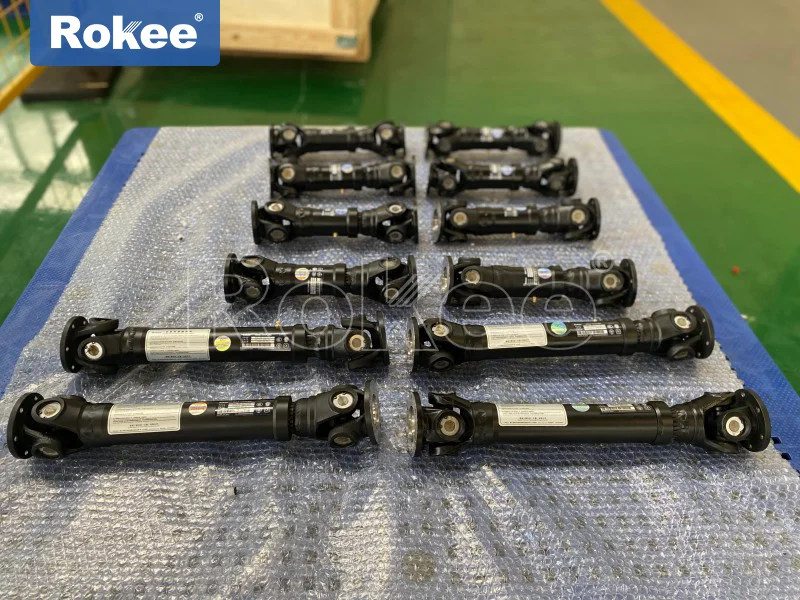
The continuous and stable operation of mechanical transmission systems serves as the core foundational guarantee for the efficient and standardized production of PIR sandwich panels, a building material widely applied in modern thermal insulation, cold chain construction, and industrial enclosure engineering. The entire PIR sandwich panel production line involves multiple interconnected mechanical processes, including raw material unwinding, continuous material conveying, precise foam pouring, high-pressure composite pressing, fixed-length cutting, and finished product conveying, all of which rely on reliable power transmission between driving motors, reduction gearboxes, transmission rollers, and auxiliary processing equipment. In actual industrial production scenarios, the long-term operation of the production line, inevitable installation deviations during equipment assembly, thermal deformation caused by continuous high-temperature working environments, and slight structural displacement generated by mechanical vibration and foundation micro-sedimentation will inevitably lead to angular misalignment and spatial offset between adjacent transmission shafts in the transmission system. If rigid transmission connecting components are adopted for power connection, such angular deviations cannot be effectively buffered and adjusted, resulting in severe stress concentration at the shaft connection positions, increased transmission friction loss, obvious mechanical vibration and equipment operation noise, and even premature wear of shaft parts, bearing damage, and unstable power output in the long run. These adverse mechanical problems will directly interfere with the synchronization accuracy of each processing station on the PIR sandwich panel production line, affect the uniformity of foam material pouring, the flatness of panel composite pressing, and the dimensional accuracy of fixed-length cutting, ultimately leading to inconsistent product quality, increased production defective rate, and frequent equipment shutdown maintenance that reduces overall production efficiency. The universal shaft coupling, relying on its unique structural design and excellent angle compensation performance, perfectly solves the angular misalignment adaptation problem faced by the transmission system of PIR sandwich panel production lines, realizing flexible and stable power transmission under complex working conditions with various shaft deflection deviations, and providing reliable mechanical transmission support for the long-term continuous, high-efficiency, and high-precision operation of the entire production line.
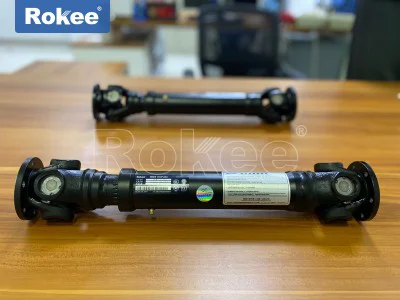
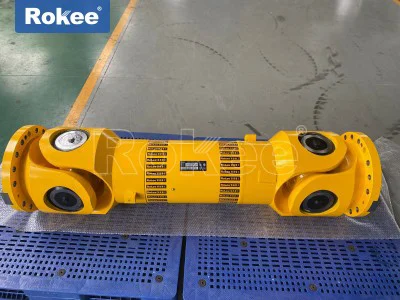
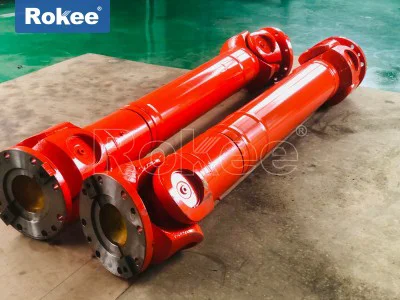
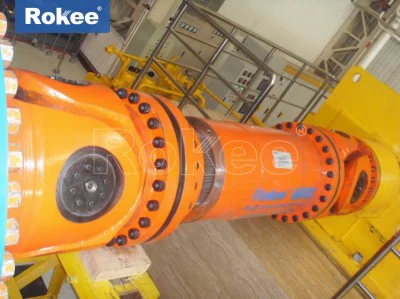
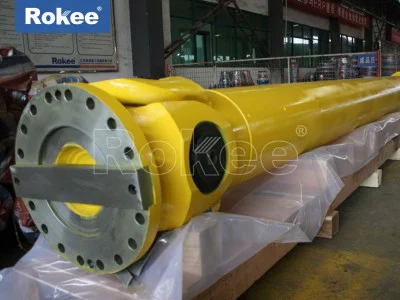
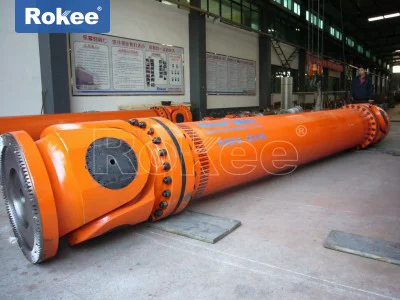
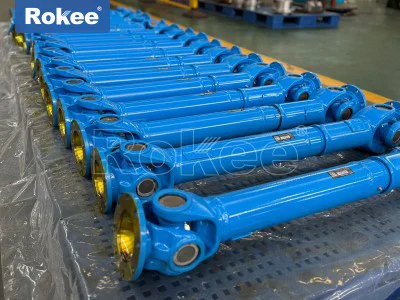
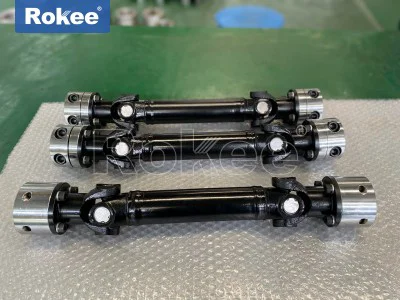
The core structural design of the universal shaft coupling lays a solid mechanical foundation for its outstanding angle compensation capability, distinguishing it fundamentally from traditional rigid couplings and ordinary elastic couplings that lack effective angular adaptation functions. Different from rigid couplings that require extremely high coaxiality of connected shafts and can hardly bear any angular offset during operation, the universal shaft coupling adopts a hinged connection structure composed of cross shafts and fork-shaped joints, which can flexibly rotate and adaptively adjust at multiple mechanical hinge points. This special structural form enables the coupling to effectively transmit continuous rotational power between the driving shaft and the driven shaft even when there is a certain angular deflection between the two shafts, without generating additional bending stress and transmission resistance that affect the normal operation of the transmission system. In the actual assembly and layout of PIR sandwich panel production lines, due to the large overall length of the entire line, scattered distribution of processing equipment, and complex on-site installation space constraints, it is impossible to achieve absolute precise coaxial alignment of all transmission shafts during mechanical installation and commissioning. Even if high-precision alignment tools and professional installation processes are used in the initial stage of equipment commissioning, tiny angular deviations will gradually appear between the transmission shafts after the production line runs for a certain period, affected by thermal expansion and contraction of metal components under long-term continuous operation temperature changes, slight vibration displacement during high-load operation, and slow micro-sedimentation of the equipment foundation. The single-section universal shaft coupling can adapt to small-angle angular misalignment between shafts in conventional transmission positions of the production line, while the double-section universal shaft coupling formed by series connection of two sets of universal hinge structures can further expand the range of angle compensation and realize more stable constant-speed power transmission under relatively large angular deflection conditions, fully matching the diverse transmission layout and complex operating environment requirements of different functional sections of the PIR sandwich panel production line.
The angle compensation advantage of universal shaft couplings brings remarkable optimization effects on reducing installation and commissioning difficulty and lowering later equipment maintenance pressure for PIR sandwich panel production line engineering deployment. The traditional rigid transmission connection mode has extremely strict requirements for shaft alignment accuracy during equipment installation, requiring repeated fine adjustment of the position and height of driving and driven equipment, consuming a large amount of manual adjustment working hours and professional technical operation costs, and any slight alignment deviation will leave hidden dangers for subsequent equipment operation failures. With the powerful angle compensation performance of universal shaft couplings, the alignment tolerance standard for transmission shaft installation on the PIR sandwich panel production line is significantly relaxed, eliminating the need for ultra-precise repeated calibration of each transmission shaft connection position during the installation and commissioning stage. Construction and installation personnel can complete equipment docking and transmission system assembly according to conventional mechanical installation specifications, which greatly shortens the overall installation and commissioning cycle of the production line and improves the efficiency of production line equipment put into operation. In the daily production and operation stage of the PIR sandwich panel production line, mechanical equipment will inevitably produce metal fatigue and component aging after long-term high-load continuous operation, accompanied by minor structural deformation and position shift of transmission components. Without effective angle compensation components, these tiny changes will cause continuous eccentric wear and stress impact at the shaft connection parts, leading to frequent damage to bearings, shafts, and other vulnerable parts, requiring regular shutdown inspection and replacement of accessories, which not only increases equipment maintenance costs but also interrupts continuous production arrangements and reduces the annual output of sandwich panel products. The universal shaft coupling can in real time absorb and compensate for various angular displacements generated during equipment operation through its flexible hinge structure, avoiding long-term stress concentration and eccentric wear at the transmission connection points, reducing the wear degree of key transmission components, extending the service life of bearings, shafts, and related matching parts, and effectively reducing the frequency of equipment failure shutdown and daily maintenance workload. This stable mechanical protection effect enables the PIR sandwich panel production line to maintain long-term uninterrupted continuous production, ensuring the stable supply of sandwich panel products for downstream engineering projects.
In the core processing link of PIR sandwich panel production, the angle compensation performance of universal shaft couplings is crucial to maintaining the synchronization and coordination accuracy of each processing station, which is directly related to the overall quality and performance qualification rate of finished sandwich panels. The production and processing of PIR sandwich panels have extremely strict requirements for the synchronization of material conveying speed and processing action coordination among all links. From the unwinding and conveying of upper and lower metal surface materials to the uniform pouring and foaming of PIR foam raw materials, and then to the composite pressing and shaping of panels, any slight transmission speed fluctuation or action synchronization deviation will lead to product quality problems. For example, inconsistent conveying speed of metal surface materials will cause material deviation and wrinkling during composite pressing, uneven pouring and distribution of foam materials will lead to inconsistent thermal insulation performance and structural strength of different parts of the panel, and asynchronous cutting action will result in unqualified dimensional accuracy of finished panels, all of which will affect the market application value and engineering construction effect of PIR sandwich panels. When traditional couplings are used for transmission, small angular misalignment between shafts cannot be compensated, resulting in unstable instantaneous transmission speed during operation, periodic mechanical vibration, and uncoordinated transmission actions of front and rear equipment. In contrast, the universal shaft coupling can rely on its angle compensation advantage to always maintain stable and constant-speed power transmission under the condition of angular deflection between driving and driven shafts, eliminate speed fluctuation and transmission vibration caused by angular misalignment, ensure that the conveying rollers and processing equipment of each station on the production line operate strictly according to the set speed and action rhythm, and maintain precise synchronization between the front and rear processing links. In the high-pressure composite pressing section of the production line, the transmission system needs to bear large load pressure and continuous mechanical impact, and the angular compensation function of the universal shaft coupling can buffer the instantaneous impact load generated during pressing, avoid transmission shaft deformation and equipment vibration caused by pressure impact, ensure the stable composite pressing effect of PIR foam and metal surface materials, and make the internal structure of the finished sandwich panel compact and uniform with stable overall performance.
The adaptability of universal shaft couplings to thermal deformation angular displacement in the high-temperature working environment of PIR sandwich panel production lines further highlights the irreplaceable value of its angle compensation advantage. The PIR foam pouring and foaming process in the production line needs to be carried out under a certain constant high-temperature condition, and the composite pressing and curing link also requires long-term heating and temperature maintenance, resulting in the entire production line equipment being in a continuous high-temperature operating environment for a long time. All metal transmission components such as transmission shafts and connecting parts will produce thermal expansion and cold contraction effects under the influence of high temperature, leading to inevitable angular deflection and position offset between connected transmission shafts. Ordinary transmission couplings do not have effective angle compensation capability, and thermal deformation-induced angular misalignment will generate huge additional thermal stress in the transmission system, leading to accelerated aging and deformation of transmission components, increased equipment operation vibration, and even thermal fatigue damage of shaft parts in severe cases. The universal shaft coupling can flexibly adapt to the angular displacement changes caused by thermal expansion and contraction of equipment through its movable hinge structure, automatically compensate for various thermal deformation deviations generated in the high-temperature working process, release thermal stress inside the transmission system, avoid mechanical failure and transmission instability caused by thermal stress accumulation, and ensure that the transmission system can still maintain efficient and stable power output under long-term high-temperature operating conditions. This excellent high-temperature angular adaptation performance enables the PIR sandwich panel production line to maintain stable processing accuracy and production efficiency in the long-term high-temperature production state, avoiding product quality fluctuations and equipment failures caused by thermal deformation of transmission components.
Compared with other types of flexible compensation transmission components, the universal shaft coupling has more prominent comprehensive advantages in angle compensation range, load-bearing capacity, and long-term operation stability, making it more suitable for the heavy-load and continuous operation characteristics of PIR sandwich panel production lines. Some common elastic couplings mainly rely on the deformation of elastic intermediate parts to achieve slight displacement compensation, with limited angular compensation range, poor adaptation to large angular deflection, and easy aging and deformation of elastic parts under long-term high-load and high-temperature working conditions, requiring frequent replacement and maintenance. Gear couplings have certain displacement compensation capabilities, but their structural design is complex, processing and assembly costs are high, the angular compensation effect is limited, and they are prone to gear surface eccentric wear and transmission clearance after long-term operation, affecting transmission accuracy. The universal shaft coupling not only has a large effective angle compensation range and can adapt to various small and medium angular misalignment working conditions in the production line, but also has an all-metal rigid hinge structure design, with strong load-bearing capacity, good impact resistance and high-temperature resistance, no vulnerable elastic parts, and long service life in long-term continuous heavy-load operation. In the long-term production and operation practice of PIR sandwich panel production lines, universal shaft couplings can always maintain stable angle compensation performance and reliable transmission function, will not produce performance attenuation and failure due to long-term operation, high-temperature environment, and mechanical vibration, and can continuously provide stable mechanical transmission guarantee for the production line. This excellent comprehensive performance not only ensures the long-term stable operation of the production line transmission system but also effectively reduces the comprehensive operation and maintenance cost of the production line, creating better economic benefits for sandwich panel production enterprises.
In conclusion, the unique angle compensation advantage of universal shaft couplings runs through the whole process of equipment installation and commissioning, daily production operation, high-temperature working adaptation, and product quality assurance of PIR sandwich panel production lines. Its special hinged flexible structure effectively solves a series of mechanical transmission problems caused by installation deviation, foundation settlement, thermal deformation, and operational vibration in the production line, realizes stable constant-speed power transmission under various angular misalignment working conditions, reduces equipment installation difficulty and later maintenance pressure, maintains the processing synchronization and operation stability of each core production link, and ensures the high quality and stable performance of finished PIR sandwich panel products. With the continuous upgrading of the construction material industry and the continuous improvement of the market's requirements for the production efficiency and product quality of PIR sandwich panels, the importance of reliable mechanical transmission systems in production line operation becomes increasingly prominent. As a key transmission component with excellent angle compensation performance, the universal shaft coupling will always be an indispensable and important mechanical guarantee for the efficient, stable, and long-term continuous operation of PIR sandwich panel production lines, providing solid technical support for the standardized production and high-quality development of the PIR sandwich panel manufacturing industry.