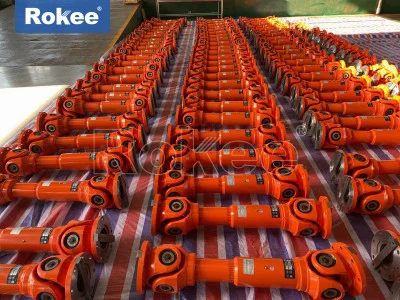
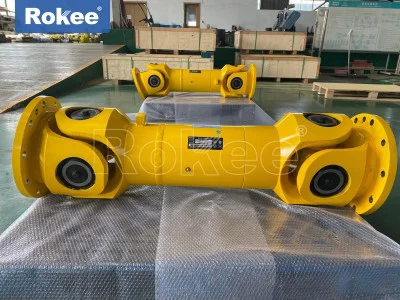
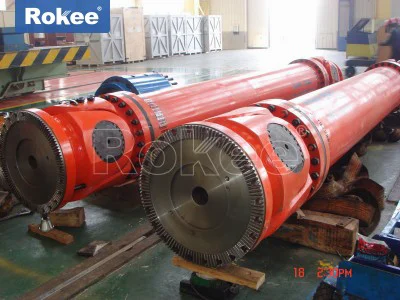
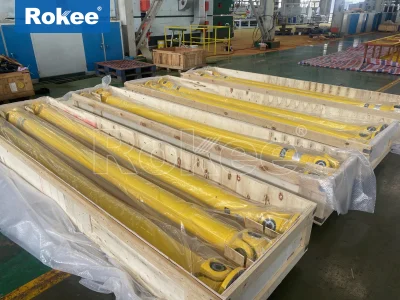
Cardan Coupling Helps Rockwool Sandwich Panel Production Line Break Through Production Capacity Bottlenecks
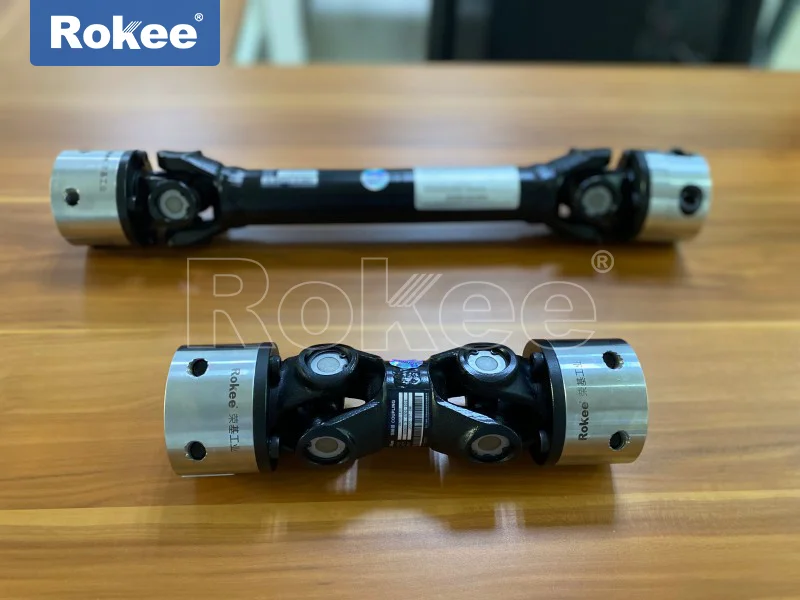
The manufacturing of rockwool sandwich panels relies on highly coordinated continuous production processes, where every link from raw material feeding, core material paving, surface plate laminating, high-pressure pressing to fixed-length cutting and finished product conveying requires stable and efficient mechanical power transmission. As the demand for energy-saving and fireproof building insulation materials continues to rise globally, production enterprises engaged in rockwool sandwich panel manufacturing are facing growing market order pressure, and the original production lines that have been operating for a long time are gradually exposing prominent capacity bottlenecks. These bottlenecks are not simply caused by insufficient production line scale or backward processing technology, but mostly stem from unstable power transmission links inside mechanical equipment, frequent mechanical vibration, easy deviation of transmission shafts, frequent shutdown maintenance and shortened continuous operation time, all of which restrict the overall operating efficiency of the entire production system to a great extent. In the actual production operation process of traditional rockwool sandwich panel production lines, most of the transmission connecting parts adopt rigid connection structures, which cannot adapt to the slight angular displacement, axial deviation and spatial position offset between the driving shaft and the driven shaft generated during long-term high-load operation. This inherent structural defect leads to uneven torque transmission in key production links, obvious equipment jitter during high-speed operation, serious wear and tear of core transmission components, and frequent failure of matching bearings and connecting parts. Every unexpected equipment shutdown and regular maintenance replacement will interrupt the continuous production rhythm, resulting in reduced effective production time per day, increased product defective rate caused by unstable processing parameters, and rising comprehensive production and maintenance costs, making it difficult for production enterprises to meet large-scale order delivery requirements and expand market share steadily. Under such industry production background, the introduction and application of cardan coupling in the core transmission positions of rockwool sandwich panel production lines has become a key technical transformation measure for many manufacturing enterprises to break through capacity limitations, optimize equipment operating conditions, extend continuous production cycle and reduce comprehensive operating costs. With its unique structural design and excellent mechanical transmission performance, cardan coupling perfectly solves various pain points existing in traditional transmission connection methods, realizes stable and efficient torque transmission under complex operating conditions, greatly improves the overall stability and continuous operation capacity of the production line, and effectively releases the inherent production potential of mechanical equipment, thus helping the rockwool sandwich panel production industry get rid of the capacity shackles brought by backward transmission supporting facilities.
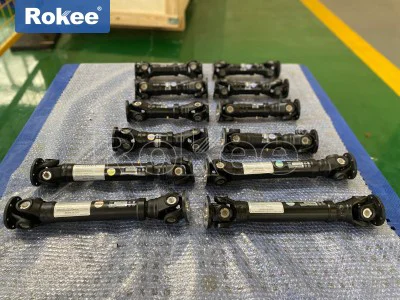
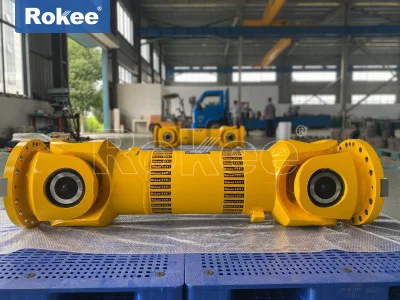
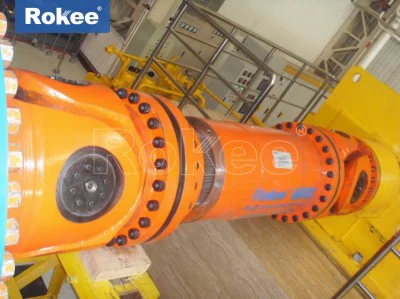
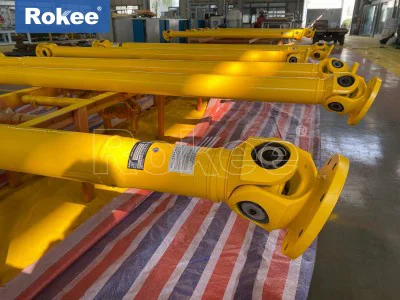
To understand why cardan coupling can bring such a significant improvement effect to rockwool sandwich panel production line, it is necessary to first clarify the core operating characteristics of rockwool sandwich panel production and the special requirements of the production environment for mechanical transmission components. Rockwool sandwich panel production is a typical continuous assembly line manufacturing mode, which has extremely high requirements for the synchronization, stability and continuity of each production station. Unlike intermittent processing mechanical equipment, once the rockwool sandwich panel production line is started, it needs to maintain long-term uninterrupted operation for dozens of hours or even longer. Any small failure or jitter in any transmission link will be amplified along the entire production line, affecting the processing accuracy of raw material composite pressing, the bonding firmness of surface plates and rockwool core materials, and the dimensional uniformity of finished products. In the actual production process, the production line equipment will inevitably be affected by multiple adverse factors such as mechanical vibration generated by long-term high-load operation, thermal expansion and contraction of metal components caused by continuous production heat generation, and slight foundation settlement of the production workshop. These factors will lead to different degrees of angular offset and axial misalignment between the driving power shaft and the driven working shaft of key equipment such as feeding rollers, pressing machines and conveying devices. For the rigid coupling structures widely used in traditional production lines, these small deviations cannot be compensated and adjusted at all. Rigid connections require extremely high coaxiality of the connecting shafts during installation and operation, and once position deviation occurs, the torque transmission process will be blocked, resulting in additional mechanical stress concentrated on the surface of the coupling and matching bearings. Long-term accumulation of such stress will accelerate the aging and wear of mechanical parts, cause abnormal noise and severe vibration during equipment operation, and even lead to shaft body deformation and component fracture in severe cases, forcing the production line to stop for emergency maintenance. In addition, frequent vibration and unstable torque transmission will also cause fluctuations in the operating speed of each processing station of the production line, resulting in inconsistent paving thickness of rockwool core materials, uneven pressing force during composite molding, and deviation in fixed-length cutting dimensions, which not only increases the number of defective products and wastes raw materials, but also reduces the overall production efficiency fundamentally. The core advantage of cardan coupling lies in its special universal joint hinge structure composed of cross shaft and multiple connecting joints, which can realize flexible transmission of rotating motion under the condition of spatial staggered shafts and different angular offsets. This unique structural design enables the cardan coupling to effectively compensate for angular displacement, axial displacement and radial displacement between the driving shaft and the driven shaft generated during equipment operation, always maintain stable and consistent torque transmission efficiency, and will not generate additional mechanical stress due to shaft body deviation. Whether it is slight vibration during high-speed operation, thermal deformation of equipment components or small foundation settlement, the cardan coupling can absorb and adapt to these changes through its own flexible hinge connection, ensuring that the power output by the power device can be accurately and stably transmitted to each working component of the production line all the time.
In the actual technical transformation and production application of rockwool sandwich panel production lines, the optimization effect of cardan coupling on breaking capacity bottlenecks is reflected in multiple core production links, and each link has produced tangible improvement results in actual production data. In the raw material feeding and core material conveying link, which is the front-end core process of the entire production line, stable and uniform conveying speed is the basic premise to ensure the consistent thickness and uniform distribution of rockwool core materials. In the past, due to the adoption of traditional rigid transmission connections, the feeding and conveying equipment often had unstable rotating speed and periodic jitter during operation, resulting in intermittent feeding of rockwool raw materials, local accumulation or shortage of core materials on the conveying platform, which not only required manual real-time adjustment and supervision, but also directly led to frequent fluctuations in the subsequent composite pressing process. After replacing the traditional connecting parts with cardan coupling, the torque transmission of the feeding and conveying shaft system becomes smooth and stable thoroughly. Even during long-term continuous high-load operation, there is no abnormal vibration and speed fluctuation in the conveying equipment. The flexible compensation performance of the cardan coupling eliminates the transmission resistance and additional stress caused by shaft misalignment, ensures that the conveying roller runs at a constant set speed all the time, makes the rockwool raw materials conveyed evenly and continuously, avoids material accumulation and missing materials, reduces the manual intervention frequency in the feeding link, and lays a solid foundation for the stable operation of subsequent processing links. More importantly, the stable operation of the feeding link greatly reduces the shutdown frequency caused by material conveying blockage and equipment failure. The effective continuous operation time of the front-end feeding system of the production line is significantly increased, and the daily effective production time is directly expanded, which is an important basic condition for the overall capacity improvement of the production line.
In the core composite pressing and laminating link of rockwool sandwich panel molding, the application effect of cardan coupling is more prominent, and it is also the key link to determine the product molding quality and production efficiency. The pressing equipment of rockwool sandwich panel production line needs to maintain stable pressing pressure and synchronous rotating speed of upper and lower pressing rollers for a long time, so that the surface color steel plates and rockwool core materials can be closely bonded and composite molded at a set temperature and pressure. The pressing roller shaft system bears large torque and pressure during operation, and the shaft body is prone to offset and deformation after long-term operation. The traditional rigid coupling cannot adapt to this working condition, and the coaxiality deviation of the pressing roller shaft will directly lead to asynchronous rotation speed of upper and lower rollers, uneven pressing force on different parts of the sandwich panel, and problems such as unbonded core materials and deformed plate surface of the produced finished products. These unqualified products not only need to be reworked and processed, wasting a lot of raw materials and labor costs, but also need frequent shutdowns to adjust the equipment and replace worn transmission parts, seriously affecting the continuous production progress. After applying cardan coupling to the transmission connection of the pressing roller shaft system, the angular and axial displacement generated by the pressing roller during high-pressure operation can be effectively compensated in real time. The torque transmission between the power motor and the pressing roller is always kept stable and synchronous, the rotation speed of the upper and lower pressing rollers is completely consistent, the pressing force acts uniformly on the whole surface of the sandwich panel, the product composite molding quality is greatly improved, and the defective product rate is reduced to a very low level. At the same time, due to the elimination of additional mechanical stress and severe vibration in the transmission process, the wear degree of the pressing roller shaft body, bearings and other matching components is greatly reduced, the service life of key equipment parts is significantly prolonged, and the maintenance cycle of the pressing equipment is extended multiple times compared with the original. The production line no longer needs frequent planned shutdown maintenance and emergency shutdown repairs, the continuous production cycle is greatly prolonged, and the production output per unit time is effectively increased, directly breaking the capacity bottleneck caused by frequent shutdowns of core molding equipment.
In the post-production fixed-length cutting and finished product conveying link, the stable operation of transmission equipment is related to the final finished product qualification rate and production delivery efficiency. The fixed-length cutting equipment needs to maintain accurate and stable operating speed coordination with the front-end pressing and conveying equipment to ensure that the cutting size of each rockwool sandwich panel is accurate and consistent. The finished product conveying equipment needs to stably transport the molded and cut finished products to the stacking and packaging area to avoid product collision and deformation caused by conveying jitter. The traditional transmission connection mode is prone to speed jitter and transmission delay during high-speed operation, resulting in inaccurate cutting size of products and easy deformation of finished products during conveying, which not only affects product quality, but also reduces the stacking and packaging efficiency, restricting the overall production rhythm of the production line. After the application of cardan coupling, the power transmission of the cutting and finished product conveying shaft system is more flexible and stable. The universal hinge structure can adapt to the slight position change of the equipment shaft body during high-speed operation, maintain accurate synchronization of operating speed between front and rear equipment, ensure the precise cutting size of finished products, stable conveying process without jitter, reduce product damage and size deviation problems, and improve the finished product qualification rate and subsequent packaging and delivery efficiency. The optimization of the post-production link further smoothes the overall production rhythm of the rockwool sandwich panel production line, makes all links from raw material feeding to finished product packaging coordinated and efficient, eliminates all kinds of production rhythm interruptions caused by unstable transmission, and realizes the overall improvement of production line operation efficiency.
In addition to the direct improvement in production efficiency and continuous operation time, the application of cardan coupling also brings long-term cost optimization and equipment life cycle extension benefits for rockwool sandwich panel production enterprises, which indirectly provides strong support for breaking capacity bottlenecks and realizing sustainable capacity expansion. In the past, due to the serious wear and tear of traditional rigid transmission parts and frequent equipment failures, production enterprises need to spend a lot of money every year to purchase replacement parts and pay for equipment maintenance and after-sales repair costs. At the same time, the shutdown time caused by equipment maintenance and failure will lead to delayed order delivery, and enterprises even need to bear additional economic losses such as order compensation. After using cardan coupling, the mechanical stress and vibration wear of the entire production line transmission system are greatly reduced, the service life of various transmission shafts, bearings and matching mechanical components is significantly prolonged, the frequency of replacement of wearing parts is greatly reduced, and the daily maintenance and annual parts procurement costs of enterprises are effectively saved. The saved maintenance cost and manpower resources can be invested in raw material procurement and production process optimization, further expanding the production scale and output capacity of the production line. Moreover, the stable operation of the production line and the reduction of defective products make the raw material utilization rate reach a higher level, avoiding the waste of rockwool raw materials and color steel plate materials caused by unqualified products, reducing the unit production cost of products, improving the economic benefits of enterprises, and enabling enterprises to have more capital and strength to carry out subsequent production line upgrading and capacity expansion transformation.
From the perspective of the overall development trend of the rockwool sandwich panel manufacturing industry, with the continuous upgrading of building energy conservation and fire protection standards, the market demand for high-quality rockwool sandwich panels will continue to grow, and the market competition among production enterprises will become increasingly fierce. Enterprises that can maintain stable high-efficiency production, ensure product quality stability and have flexible capacity adjustment capability will occupy a dominant position in the market competition. The traditional production line relying on backward transmission connection equipment has been difficult to adapt to the current large-scale, high-efficiency and low-cost production market demand, and capacity bottlenecks have become the main factor restricting the development of many small and medium-sized rockwool sandwich panel production enterprises. The popularization and application of cardan coupling in production line mechanical transmission links is not only a simple technical transformation of equipment parts, but also an important measure for manufacturing enterprises to optimize production system operation logic, release equipment inherent production potential and realize high-quality and high-efficiency production. Through the excellent displacement compensation and stable torque transmission performance of cardan coupling, all unstable factors affecting production efficiency in the production line transmission process are eliminated, the continuous operation capacity and effective production time of the production line are maximized, the product qualification rate and raw material utilization rate are improved, the comprehensive production and maintenance costs are reduced, and the dual improvement of production capacity and economic benefits is finally realized. In the long-term production and operation process, this kind of equipment optimization transformation with transmission system upgrading as the core has low investment cost, obvious improvement effect and long-term benefit cycle, which is the most practical and effective technical path for rockwool sandwich panel production enterprises to break through capacity bottlenecks, enhance market competitiveness and realize sustainable and stable development. With the continuous progress of mechanical transmission technology and the continuous upgrading of production line manufacturing requirements, cardan coupling will be applied in more rockwool sandwich panel production and processing links, and continue to play a core role in stabilizing production operation and promoting capacity upgrading, helping the entire building insulation material manufacturing industry move towards a more efficient, stable and intelligent production development direction.