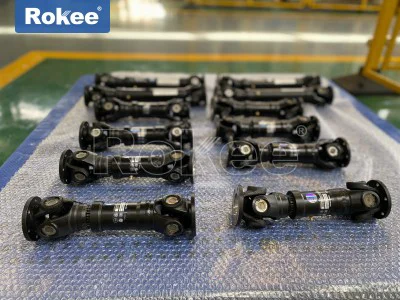
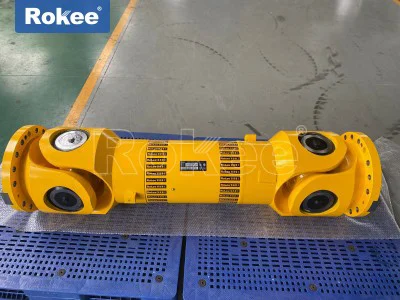
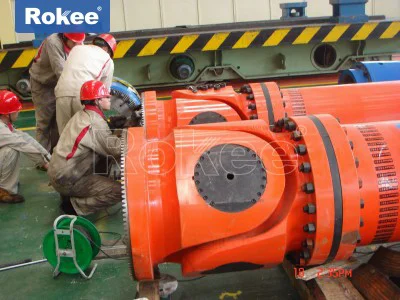
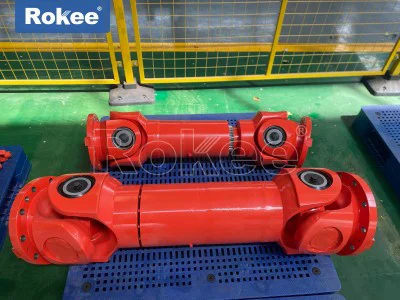
Lubrication Maintenance And Fault Prevention Of Cardan Coupling In Rock Wool Sandwich Panel Production Line
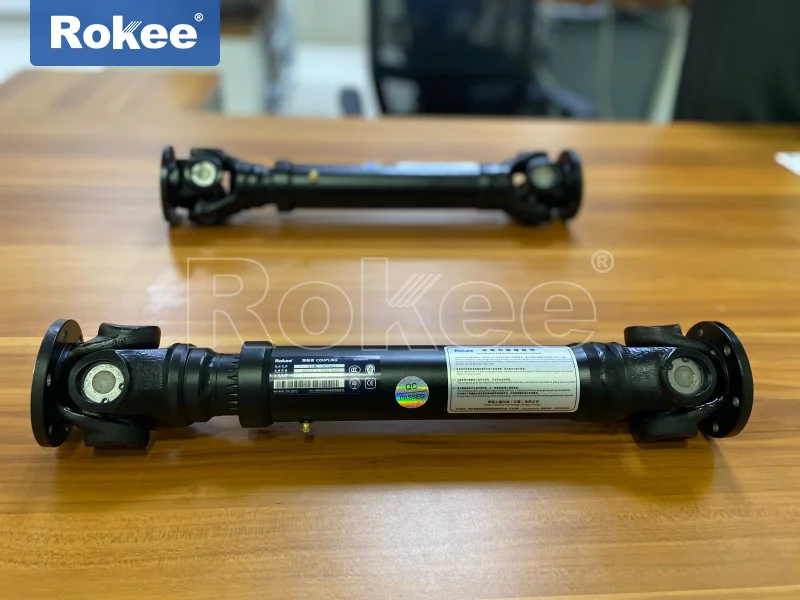
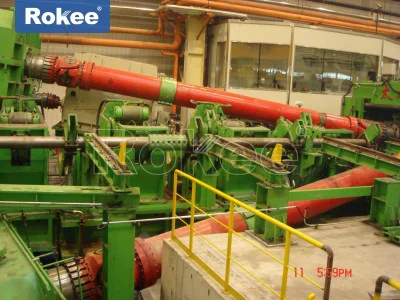
The rock wool sandwich panel production line is a continuous and high-load industrial production system that integrates raw material feeding, rock wool fiber paving, steel plate rolling, composite pressing, curing molding, and finished product cutting and conveying. All links in the production line rely on stable mechanical transmission to maintain synchronous operation and continuous production rhythm, and the cardan coupling, as a core universal transmission component, undertakes the key task of connecting various driving and driven equipment shafts, transmitting torque, and compensating for axial, radial and angular displacement deviations generated during equipment operation. In the actual production process of rock wool sandwich panels, the overall operating environment is relatively harsh. A large amount of fine rock wool dust, metal powder generated by steel plate processing, and humid air mixed with chemical auxiliary materials will continuously erode various mechanical transmission components. Meanwhile, the production line usually maintains long-term uninterrupted continuous operation to meet market supply demands, and the cardan coupling is always in a state of high-speed rotation and alternating heavy load impact for a long time. Under such comprehensive working conditions, the internal friction pairs of the cardan coupling are prone to accelerated wear, lubrication failure, component fatigue damage and other problems if lacking scientific and standardized daily management. Once the cardan coupling fails abnormally, it will not only cause transmission deviation between production line equipment, lead to inconsistent matching speed of rock wool paving and steel plate composite, resulting in unqualified product bonding quality and dimensional deviation, but also trigger sudden equipment shutdown, interrupt continuous production processes, cause a large amount of production material waste and production cycle delay, and even induce secondary damage to driving motors, reduction boxes and other matching core transmission equipment in severe cases. Therefore, targeted and refined lubrication maintenance work and systematic fault prevention management for the cardan coupling are essential basic work to ensure the long-term stable operation of the rock wool sandwich panel production line, reduce equipment operation failure rates, extend the service life of transmission components, and maintain stable product production quality and continuous production efficiency.
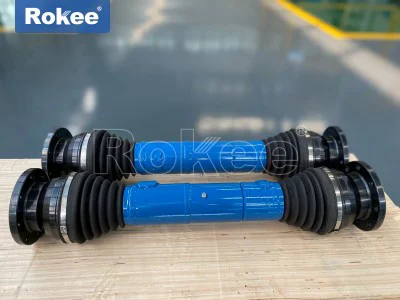
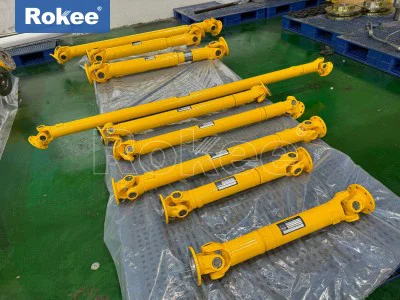
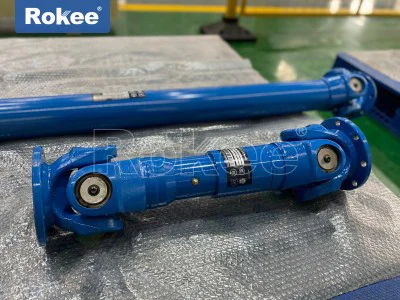
The structural characteristics and actual operating stress state of the cardan coupling determine that lubrication management is the core link of its daily maintenance and long-term stable operation. Different from ordinary coupling transmission parts, the cardan coupling relies on the mutual cooperation of universal joint forks, cross shaft assemblies, needle roller bearings and connecting flange components to realize power transmission and displacement compensation. All rotating and matching kinematic pairs inside the coupling need a stable and effective lubricating oil film to isolate direct metal contact between friction surfaces during operation. In the rock wool sandwich panel production line, the cardan coupling is installed in different transmission positions such as the main power drive end of the pressing equipment, the transmission connection end of the rolling forming machine, and the power output end of the conveying mechanism. The working load and operating speed of couplings in different positions are different, but the basic lubrication demand is consistent, that is, to maintain stable lubrication protection under high load, certain temperature rise and dusty and humid environmental conditions. The primary premise of scientific lubrication maintenance is to select lubricating materials that match the actual working conditions of the production line and the structural parameters of the cardan coupling. It is necessary to comprehensively consider the long-term continuous operation characteristics of the production line, the high friction heat generation characteristics of the coupling under alternating load, and the harsh environmental factors such as dust pollution and humid corrosion, and select lubricating grease or lubricating oil with excellent high temperature resistance, wear resistance, oxidation resistance and sealing stability. Unsuitable lubricating materials will directly lead to the inability to form a durable protective oil film on the friction surface. If the lubricating material has poor high temperature resistance, it will quickly soften and thin under the heat generated by the long-term operation of the coupling, resulting in oil film rupture and failure; if the wear resistance is insufficient, the metal friction pairs will be in direct contact for a long time, causing rapid wear of the cross shaft and needle roller bearings; if the oxidation resistance is poor, the lubricating material will deteriorate, carbonize and produce impurities after a short period of use, which will not only lose the lubrication effect, but also accelerate the abrasion and corrosion of internal components of the coupling.
On the basis of selecting appropriate lubricating materials, standardized lubrication operation specifications and reasonable lubrication cycle management are key to ensuring the lasting lubrication effect of the cardan coupling. In the daily lubrication work of the rock wool sandwich panel production line, it is necessary to adhere to the basic principle of moderate and sufficient lubrication, avoiding excessive lubrication or insufficient lubrication, both of which will cause adverse effects on the operation of the coupling. Insufficient lubrication cannot form a complete and continuous protective oil film on the surface of each friction pair, resulting in increased direct metal friction, rapid temperature rise during coupling operation, accelerated component wear, and early fatigue damage of key parts such as cross shafts and bearings. Excessive lubrication will cause redundant lubricating materials to accumulate inside the coupling cavity. On the one hand, it will increase the operating rotational resistance of the coupling, increase equipment power consumption and operating load; on the other hand, in the dusty production environment of rock wool processing, excessive lubricating grease is easy to adsorb a large amount of rock wool dust and metal fine particles in the air, forming abrasive mixed dirt. This kind of mixed dirt will circulate with the operation of the coupling, continuously scratch and wear the friction contact surface, aggravate the damage of internal precision components, and even block the internal lubrication channels of the coupling in severe cases, resulting in local lubrication dead angles and rapid failure of partial components. In actual lubrication operation, maintenance personnel need to carry out supplementary lubrication and thorough replacement of lubricating materials strictly according to the operating time of the production line and the actual working condition of the coupling. For the cardan couplings installed in the main transmission positions with heavy load and high operating frequency, regular lubrication inspection and supplementary oiling should be carried out every certain operating hours, and all the old and deteriorated lubricating materials inside the coupling should be thoroughly cleaned and replaced regularly; for the couplings in the auxiliary transmission links with relatively light load and low operating frequency, the lubrication inspection and replacement cycle can be appropriately extended according to the actual operation status, but regular inspection and maintenance cannot be omitted to avoid potential lubrication hidden dangers caused by long-term unattended operation.
In addition to regular lubricant replacement and supplementary oiling, the daily lubrication maintenance of cardan couplings in rock wool sandwich panel production lines also needs to be matched with good sealing protection and environmental maintenance work, which is an important auxiliary measure to ensure the long-term effectiveness of lubrication. The production site of rock wool sandwich panels is filled with a large amount of fine rock wool fiber dust and tiny metal dust generated by steel plate cold bending and rolling processing all year round. These fine dust particles have strong fluidity and adsorption. Once they enter the inside of the cardan coupling through the gaps of the connecting parts, they will mix with the lubricating materials to form abrasive impurities, destroy the lubricating oil film, and accelerate the wear and aging of internal components. At the same time, the production workshop will inevitably have humid moisture and a small amount of volatile chemical gas generated by panel bonding and curing processes. Moisture and corrosive gas entering the coupling will cause oxidation and corrosion of metal parts, accelerate the deterioration and emulsification of lubricating grease, and completely lose the lubrication protection effect in a short time. Therefore, in daily maintenance work, maintenance personnel need to regularly check the sealing performance of all sealing rings, sealing gaskets and protective covers of the cardan coupling. For aging, deformed, worn or damaged sealing components, they should be replaced in a timely manner to ensure that the overall sealing structure of the coupling is intact and the external dust and moisture are completely isolated. At the same time, during the daily equipment sanitation cleaning work, avoid using high-pressure water to directly flush the cardan coupling transmission parts, so as to prevent a large amount of water from penetrating into the coupling interior along the gaps and causing lubricant emulsification and component corrosion. Regularly clean the dust and sundries accumulated on the surface of the coupling to prevent excessive dust accumulation from affecting the heat dissipation of the coupling during operation, avoiding excessive operating temperature leading to accelerated lubricant deterioration and thermal deformation of structural parts.
Scientific fault prevention management for cardan couplings must be based on mastering the common fault types and root causes in the operation process of rock wool sandwich panel production lines, and build a full-cycle preventive management mechanism integrating daily inspection, regular detection, standardized operation and timely maintenance. In the long-term production and operation process, the common faults of cardan couplings in the production line mainly include abnormal vibration and noise during operation, excessive temperature rise of the coupling shell, abnormal wear and loosening of connecting bolts, fatigue damage of cross shaft and needle roller bearings, and transmission torque attenuation leading to asynchronous equipment operation. Most of these faults are not sudden accidents, but gradual deterioration problems caused by long-term accumulation of unreasonable lubrication, irregular installation and calibration, excessive equipment load and untimely daily maintenance. Effective fault prevention work needs to start from the source of fault formation, eliminate various potential hazard factors in advance, and avoid minor hidden dangers evolving into major equipment faults that affect production. Daily visual and sensory inspection is the most basic and effective link in fault prevention. Maintenance personnel need to conduct routine inspection of each cardan coupling every day before the production line starts and during the production interval, focusing on observing whether the coupling has obvious vibration and swing during operation, whether there is abnormal impact noise and friction noise, whether the surface temperature of the coupling is abnormally high after long-term operation, whether the connecting flanges and fastening bolts are loose or displaced, and whether there is oil leakage, grease overflow and dust accumulation at the sealing parts of the coupling. Through simple daily inspection, most early abnormal signs of the coupling can be found in a timely manner, and targeted adjustment and maintenance can be carried out before the fault expands, realizing early warning and early disposal of hidden dangers.
Regular professional detection and calibration maintenance is an important part of preventing serious mechanical faults of cardan couplings in rock wool sandwich panel production lines. The installation coaxiality and angular displacement calibration accuracy of the cardan coupling have a decisive impact on its service life and operating stability. In the long-term continuous production process, affected by equipment vibration, load impact and foundation slight deformation, the initial installation calibration state of the coupling will gradually change, resulting in increased coaxiality deviation between the driving shaft and the driven shaft. Excessive installation deviation will cause the coupling to bear additional alternating eccentric load during operation, resulting in uneven stress on internal cross shafts and bearings, intensified local friction and wear, rapid temperature rise, and early fatigue fracture of key components in severe cases. Therefore, it is necessary to regularly use professional calibration tools to detect and calibrate the installation coaxiality and horizontal deviation of all cardan couplings in the production line, adjust the installation position and connection gap of the coupling in a timely manner, control the deviation within a reasonable range, and ensure that the coupling bears uniform load during operation and runs in the optimal working state. At the same time, regular disassembly and inspection of key internal components of the coupling should be carried out during the regular shutdown maintenance period of the production line to check the wear degree of the cross shaft, needle roller bearings and universal joint forks, judge the aging state of internal lubricating materials and sealing parts, and replace the severely worn and aging components in a timely manner, so as to avoid equipment operation faults caused by component failure. In addition, it is necessary to standardize the production line operation management, avoid frequent sudden start and sudden stop of the equipment, and prevent the cardan coupling from being impacted by instantaneous excessive torque, which will cause structural deformation and internal component damage.
The coordinated implementation of long-term lubrication maintenance and systematic fault prevention can effectively reduce the failure rate of cardan couplings in rock wool sandwich panel production lines, extend the overall service life of transmission components, and ensure the stable and efficient operation of the entire production system. In actual industrial production management, equipment maintenance and production management departments need to establish a complete maintenance management ledger for cardan couplings, record each lubrication and oil replacement time, daily inspection results, regular calibration and component replacement conditions, form standardized and standardized maintenance management procedures, and avoid random maintenance and neglected maintenance behaviors caused by human factors. Maintenance personnel should receive professional operation and maintenance training, be familiar with the structural characteristics, lubrication requirements and common fault judgment methods of cardan couplings, master correct lubrication operation and fault disposal methods, and improve the professionalism and standardization of maintenance work. For the rock wool sandwich panel production line with continuous production characteristics, the stable operation of each transmission component is directly related to production efficiency and product quality. The cardan coupling, as a small but key basic transmission part, its lubrication maintenance and fault prevention work cannot be ignored or simplified. Only by always adhering to the working concept of prevention first and maintenance as the core, implementing refined lubrication management in place, doing a good job in daily inspection and regular calibration maintenance, fundamentally eliminating various potential fault hidden dangers, can the cardan coupling maintain stable and reliable transmission performance for a long time under harsh working conditions, provide solid mechanical transmission guarantee for the continuous and high-quality production of rock wool sandwich panels, reduce equipment operation and maintenance costs, and create better production benefits for industrial production operations.