Cardan Shaft Factory
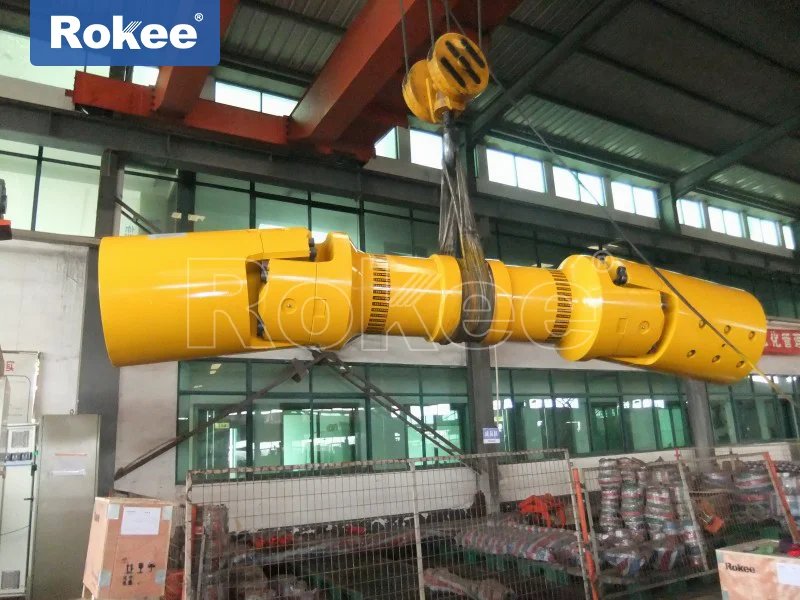
In the intricate ecosystem of modern industrial machinery, mechanical components that ensure stable and efficient power transmission form the fundamental backbone of all production and operation activities. Among these indispensable parts, the cardan shaft stands out as a flexible and durable transmission component, undertaking the critical task of transferring torque between disjointed and angularly offset mechanical shafts. A professional cardan shaft factory serves as a vital industrial production base, integrating material processing, precision manufacturing, structural optimization and performance testing to produce high-quality transmission components that adapt to complex working conditions. These manufacturing facilities are deeply embedded in the global industrial supply chain, providing essential supporting parts for heavy machinery, transportation equipment, metallurgical production and mineral processing industries, and their production concepts, manufacturing processes and technical iterations directly affect the operating efficiency and service life of downstream mechanical equipment.
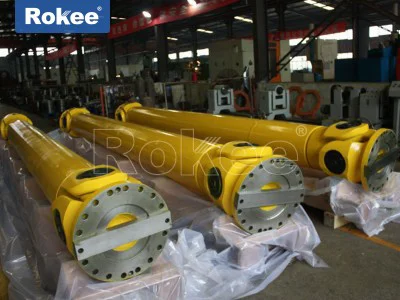
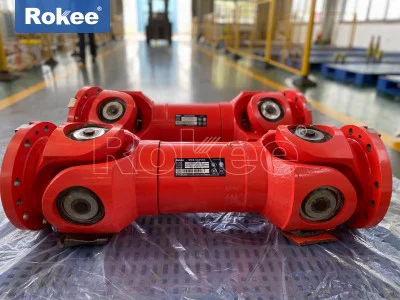
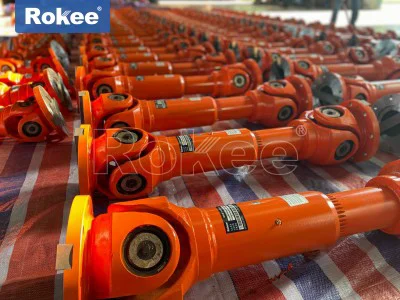
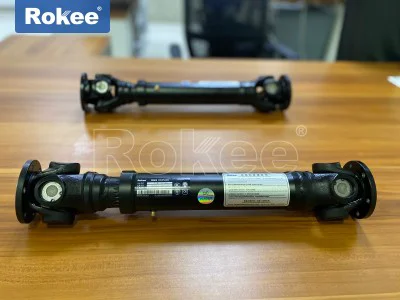
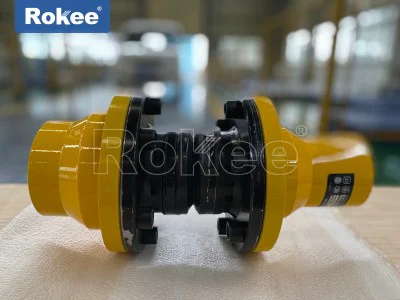
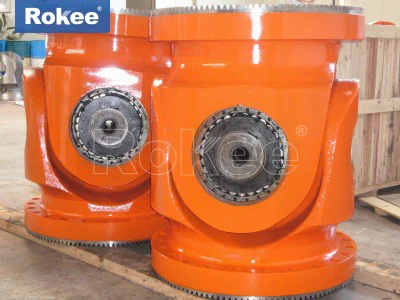
The core value of a cardan shaft factory lies in its in-depth understanding of mechanical transmission principles and its precise control over production technologies. The basic structure of a cardan shaft consists of yoke joints, cross shafts, bearing assemblies and intermediate shaft tubes, and the clever combination of these simple components realizes the flexible transmission of power under complex spatial conditions. Different from rigid transmission shafts, the unique structural design of cardan shafts allows for angular deflection, axial displacement and radial deviation between connected shafts, which effectively compensates for position changes caused by mechanical vibration, equipment installation errors and structural deformation during long-term operation. Factories rely on professional mechanical research and development teams to continuously optimize the internal structure of products, adjusting the proportion of component sizes and the matching mode of movable parts to make cardan shafts adaptable to diverse operating environments, ranging from low-speed and heavy-load industrial production lines to high-frequency vibrating screening equipment.
Material selection is the primary link in the entire production process of a cardan shaft factory, and it also determines the basic mechanical properties of finished products. In order to cope with extreme working conditions such as heavy torque, intense friction, high temperature and severe vibration in industrial scenarios, factories generally select high-strength alloy steel as the main raw material. This type of alloy material has excellent tensile strength, toughness and fatigue resistance, which can avoid structural fracture and deformation under long-term cyclic load. Before formal processing, all raw materials will undergo strict manual and instrumental inspection. Technicians check the internal density, chemical composition and surface flatness of steel materials to eliminate raw materials with impurities, cracks and uneven hardness. Qualified raw materials will be classified and stored in a constant-temperature storage area to prevent material performance changes caused by temperature and humidity fluctuations, laying a solid foundation for subsequent precision processing.
The processing workshop is the core functional area of the cardan shaft factory, where raw materials are gradually processed into standard mechanical components through multiple refined procedures. The initial processing stage mainly includes forging and cutting. The forging process adopts mechanical forging equipment to pressurize high-temperature steel blanks, which refines the internal metal grain structure of the materials and improves the overall compactness and impact resistance of components. Forged semi-finished products will be sent to precision cutting equipment for size shaping, and technicians set accurate processing parameters according to structural design drawings to polish the outer contour of shaft tubes and yoke joints, ensuring the dimensional tolerance of each component is controlled within an extremely narrow range. The cross shaft, as the most stress-bearing core component of the cardan shaft, requires more refined processing. It needs to go through multi-angle turning and grinding to achieve smooth surface finish, which reduces friction resistance during rotation and avoids mechanical jamming caused by rough surfaces.
Heat treatment is an indispensable key procedure in the production process, which fundamentally optimizes the mechanical performance of cardan shaft components. After preliminary mechanical processing, each component will be sent to a sealed heat treatment workshop for standardized tempering and quenching treatment. The precise temperature control system in the workshop adjusts the heating temperature and holding time according to the material characteristics and usage requirements of different parts. The heat treatment process can significantly improve the surface hardness and wear resistance of components, while maintaining sufficient toughness inside the materials. This dual-performance balance enables cardan shafts to resist surface abrasion during long-term high-speed rotation and prevent brittle fracture under sudden impact loads. After heat treatment, the components will be naturally cooled at a constant speed to avoid structural damage caused by rapid temperature changes, and then surface polishing and rust removal will be carried out to remove oxide layers generated during high-temperature processing.
Assembly and debugging work marks the transition of semi-finished components to finished cardan shafts, requiring technicians to have rigorous operational standards and rich assembly experience. In a dust-free assembly workshop, workers wear professional protective equipment to complete the splicing of various components in accordance with standardized assembly procedures. The matching gap between the cross shaft and the bearing is strictly controlled during the assembly process, and high-performance lubricating grease is injected into the movable connection parts to reduce operating friction and noise. After the preliminary assembly of a single cardan shaft, staff will conduct manual rotation detection to check whether there is stagnation or abnormal jitter during operation. Unqualified products will be disassembled and reworked to adjust the assembly tightness until the rotation flexibility meets the production standards. This meticulous assembly mode ensures that each finished product has stable transmission performance and flexible movement capability.
Quality inspection runs through every production link of the cardan shaft factory, forming a complete and rigorous quality control system. The factory has an independent testing laboratory equipped with professional mechanical testing equipment. After the completion of finished products, random sampling and comprehensive inspection will be carried out respectively. Static detection mainly includes dimensional re-measurement, surface defect observation and material hardness testing to confirm that the products meet the design specifications. Dynamic simulation tests are more critical; the testing equipment simulates various working conditions such as high-load torque transmission, continuous vibration and angular deflection operation in industrial scenarios. Sensors record the torque bearing capacity, vibration amplitude and operation stability of cardan shafts in real time. Products with excessive vibration, unstable torque transmission or easy deformation under load will be eliminated directly. In addition, the factory will conduct durability cycle tests on batches of products to verify the service life of components under long-term continuous operation, providing reliable performance data for product optimization.
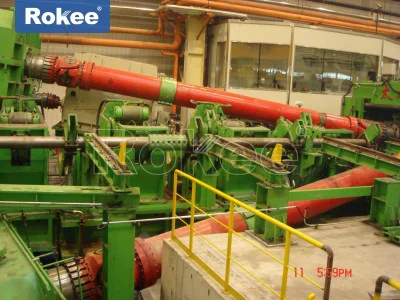
The finished cardan shafts have extremely wide application coverage, penetrating almost all industrial fields that require flexible power transmission. In the metallurgical industry, cardan shafts are installed on rolling mill equipment to connect driving motors and rolling rollers, stably transmitting power in high-temperature production environments and adapting to frequent start-stop impacts of rolling equipment. In mineral processing and aggregate processing industries, these components serve as the core connecting parts of vibrating screening equipment, maintaining continuous power output during high-frequency vibration and ensuring the efficient classification of ore, sand and gravel materials. In heavy engineering machinery, cardan shafts connect power output devices and walking or operating structures, adapting to position changes caused by mechanical jolting and inclination during outdoor operation. Besides, they also play an irreplaceable role in paper-making equipment, marine transportation facilities and automated production lines, becoming an essential mechanical joint for industrial power transmission.
A qualified cardan shaft factory not only focuses on product manufacturing, but also attaches great importance to technological innovation and production optimization to adapt to the evolving industrial market demand. With the continuous upgrading of global industrial automation, downstream industries have put forward higher requirements for the load-bearing capacity, corrosion resistance and lightweight design of transmission components. For this reason, factories continue to introduce advanced processing equipment and production technologies, optimize the internal production management system, and shorten the production cycle while improving processing accuracy. The research and development team keeps track of the development trend of industrial machinery, improves the structural design of existing products according to the feedback of equipment operation data in different scenarios, and develops customized cardan shaft products for special extreme working conditions such as high humidity, strong corrosion and ultra-low temperature.
Environmental protection and safe production are also important development concepts that modern cardan shaft factories adhere to in the production process. In the past, mechanical processing factories often generated a large amount of industrial waste gas, waste residue and noise pollution. At present, regular factories have built perfect environmental protection processing systems. The smoke and dust generated by forging and grinding are collected and purified by air circulation equipment, metal waste materials generated in the processing process are recycled and reused in a centralized manner, and the noise of production equipment is reduced through sound insulation and shock absorption facilities. At the same time, the factory formulates strict safety operation specifications, regularly conducts safety training for production technicians, and configures complete protective equipment and emergency disposal devices in each production workshop to eliminate potential safety hazards in the production process and realize the coordinated development of production efficiency and environmental safety.
In terms of market operation and service, excellent cardan shaft factories maintain a customer-oriented development model. On the basis of standardized mass production, they provide personalized processing services according to the special structural parameters and working condition requirements of customers’ mechanical equipment. The professional technical team communicates with customers in depth to understand the equipment operating environment, load intensity and installation space, and adjusts the material proportion and structural size of cardan shafts to achieve higher matching degree between products and mechanical equipment. After the products are delivered, the factory provides long-term technical consulting services, guiding customers to complete equipment installation, daily maintenance and regular lubrication maintenance, so as to extend the service life of cardan shafts and reduce the replacement cost of industrial equipment for customers.
Looking at the global industrial development trend, the market demand for cardan shafts is always in a stable growth state. As the infrastructure construction of various countries continues to advance and the degree of industrial automation continues to improve, the application scope of heavy machinery and automated production equipment will be further expanded, which brings broader development space for cardan shaft manufacturing factories. In the future, cardan shaft factories will continue to focus on technological research and development, actively explore new alloy materials and intelligent processing technologies, realize the intelligent monitoring of product production processes and the lightweight and high-strength optimization of finished products. At the same time, factories will further improve the industrial chain layout, strengthen the cooperative relationship with downstream manufacturing enterprises, and continuously improve the stability and applicability of cardan shaft products.
From raw material screening to finished product delivery, every production link in a cardan shaft factory condenses professional mechanical manufacturing technology and rigorous production attitude. As an inconspicuous but indispensable industrial component, each cardan shaft carries the operation power of mechanical equipment. Behind every stable running industrial production line, there is the silent support of high-quality transmission components. In the context of the continuous progress of modern industry, cardan shaft factories will always adhere to the production concept of precision manufacturing and quality priority, constantly break through technical bottlenecks, polish high-quality industrial components, and provide solid basic support for the sustainable development of the global machinery manufacturing industry.