Cardan Shaft Supplier
In the complex ecosystem of modern mechanical transmission systems, cardan shafts stand out as one of the most fundamental yet irreplaceable mechanical components, undertaking the critical task of transmitting torque between non-coaxial shafts under variable working conditions. As industrial machinery continues to evolve toward higher load resistance, stronger environmental adaptability and more stable continuous operation, the role of professional cardan shaft suppliers has become increasingly prominent in the global industrial supply chain. These specialized manufacturers focus on the research, development, production and distribution of transmission components, dedicating themselves to optimizing the structural performance of cardan shafts and matching diversified application demands from various industrial sectors. Unlike ordinary mechanical part producers, qualified cardan shaft suppliers concentrate on the inherent mechanical logic of universal transmission, continuously polishing production processes and refining structural designs to ensure that each manufactured component can maintain efficient and reliable power transmission in complex working scenarios. The long-term development of the cardan shaft manufacturing industry is closely bound to the upgrading of global heavy industry, transportation machinery and automated production equipment, making professional suppliers an indispensable link in the modern industrial manufacturing chain.
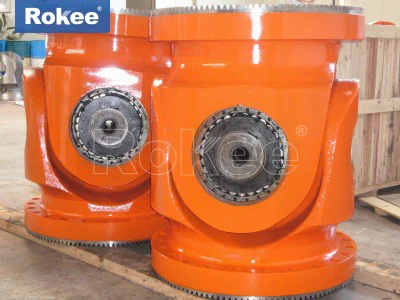
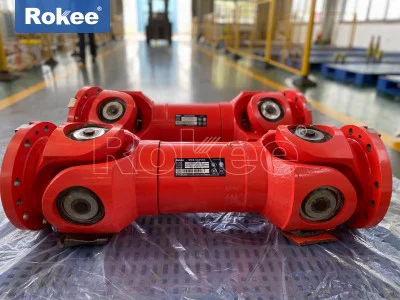
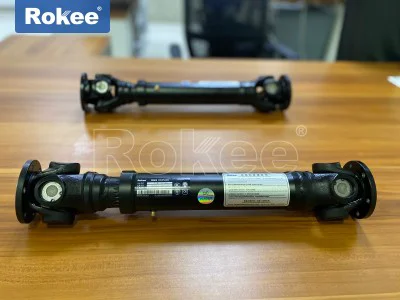
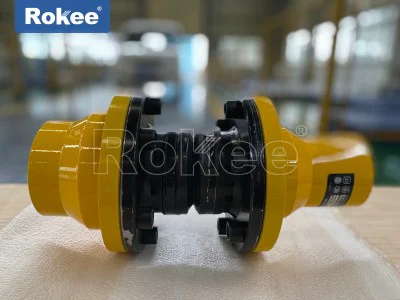
A complete cardan shaft is generally composed of universal joints, intermediate transmission shafts, connecting flanges and internal bearing structures, and its core operating principle relies on the flexible connection of cross-shaped shaft components to realize torque transmission between shafts with angular deviations. In actual mechanical operation, the input shaft and output shaft often cannot maintain absolute parallelism due to equipment installation errors, mechanical vibration and structural displacement during operation. The unique structural design of the cardan shaft can effectively compensate for angular, axial and radial displacements between connected shafts, ensuring continuous and stable power transmission without generating excessive mechanical loss. Professional suppliers have in-depth research on this transmission mechanism, and they rationally adjust the thickness of the cross shaft, the curvature of the fork arm and the internal gap of bearings according to different load intensities and motion frequencies. Through repeated mechanical simulation and physical testing, suppliers optimize the stress distribution of each component, effectively reducing mechanical fatigue caused by long-term torsion and friction. This precise structural optimization capability distinguishes professional cardan shaft suppliers from ordinary processing factories, reflecting profound accumulation in mechanical design and material application.
Material selection serves as the core foundation for determining the service life and working performance of cardan shafts, and mature suppliers have formed strict material screening and matching standards in long-term production practice. The main body of high-performance cardan shafts mostly adopts high-strength alloy steel materials, which undergo specialized heat treatment processes to enhance structural toughness and surface hardness. In harsh working environments with heavy load, frequent vibration and dust erosion, raw materials need to possess excellent tensile strength, wear resistance and low-temperature toughness to avoid structural fracture or deformation under extreme stress. Professional suppliers will select raw materials with different metal ratios based on application scenarios: for light-load and high-speed transmission equipment, refined alloy materials with lighter weight and better rotational smoothness are chosen; for heavy industrial machinery bearing large torque, thickened high-strength steel is adopted to improve overall compression resistance and torsion resistance. In addition to the main raw materials, auxiliary materials such as internal sealing rings and lubricating grease also have strict selection criteria. High-quality sealing materials can effectively block external dust, moisture and corrosive substances from entering the internal connection structure, while high-viscosity lubricants reduce friction loss between bearings and cross shafts, further extending the stable operation cycle of components.
The production process of cardan shafts involves multiple sophisticated processing links, and each production procedure requires precise technological control to ensure the consistency and stability of finished products. The production flow of formal suppliers starts with raw material forging, where metal blanks are forged at constant temperature to eliminate internal material gaps and enhance the compactness of the metal structure. After forging, mechanical finishing is carried out, including lathe processing, milling and grinding, to accurately polish the size and surface flatness of fork arms, cross shafts and connecting flanges. During the processing stage, suppliers will use high-precision processing equipment to control the assembly gap of each component within a tiny error range, avoiding transmission jitter and noise caused by excessive gaps during operation. The heat treatment process follows mechanical finishing, where finished parts are subjected to quenching and tempering treatments to balance hardness and toughness, preventing brittle fracture under sudden torque impact. Finally, through surface anti-corrosion treatment and integral assembly, qualified cardan shaft products are completed. Throughout the production process, professional suppliers will conduct multi-round sampling and full inspection, detecting indicators such as torsion resistance, rotation uniformity and sealing performance to eliminate defective products and ensure that each delivered product meets industrial application standards.
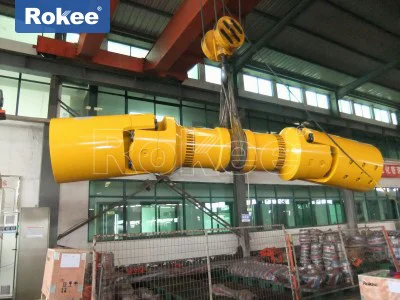
Cardan shafts have extremely extensive application coverage, penetrating almost all industrial fields that require flexible power transmission, which also drives suppliers to continuously expand product diversification and customization capabilities. In the transportation machinery industry, cardan shafts are applied in rear-drive vehicles and special engineering vehicles, connecting gearboxes and drive axles to adapt to chassis jitter and angle changes during driving, ensuring stable power output of vehicles. In the heavy industry sector including metallurgy, mining and building materials processing, cardan shafts serve vibrating screens, rolling mills and forging equipment, maintaining continuous power transmission under long-term heavy-load vibration. The paper-making and printing industry also relies on cardan shafts to drive cylindrical processing equipment, achieving low-jitter and high-precision rotational transmission to meet the requirements of refined material processing. Moreover, in marine transportation, wind power generation and automated production lines, cardan shafts undertake the connection tasks of power components, adapting to complex working conditions such as humid salt fog, high-altitude low temperature and continuous cyclic operation. Facing differentiated demands from various industries, professional suppliers provide targeted structural improvements, such as increasing the thickness of protective casings for mining equipment products and optimizing sealing structures for marine equipment products, to enhance environmental adaptability of components.
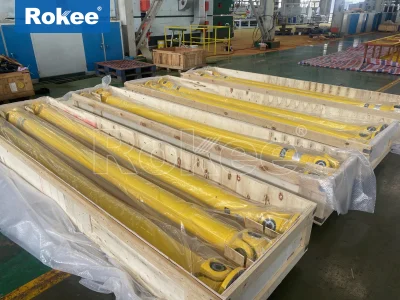
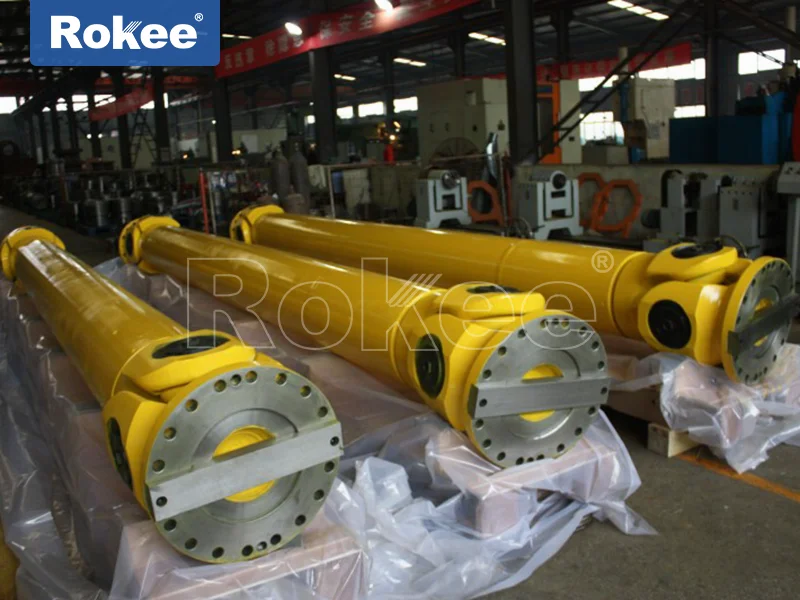
In the global industrial market, the service capability of cardan shaft suppliers has become an important indicator for measuring comprehensive competitiveness, and high-quality suppliers focus on building a complete industrial service system covering pre-sales consultation, customized production and after-sales technical support. In the pre-sales stage, professional technical teams communicate with customers to sort out equipment operating parameters, including load range, rotation speed, operating environment and installation space, providing targeted product matching suggestions. For non-standard mechanical equipment with special structural sizes, suppliers launch personalized customization services, adjusting product length, connection caliber and structural forms to meet unique assembly requirements. During the product delivery stage, suppliers optimize packaging and transportation schemes, adopting shockproof and anti-corrosion packaging measures to prevent structural damage and surface oxidation during long-distance transportation. In the after-sales link, suppliers provide installation guidance and daily maintenance suggestions, reminding customers of regular lubricant replacement and sealing component inspection. Meanwhile, mature suppliers reserve sufficient spare parts inventory to quickly respond to customer replacement demands and reduce equipment downtime caused by component aging and damage. This one-stop service model effectively reduces the procurement and use costs for industrial customers and establishes long-term stable cooperative relationships.
With the continuous progress of industrial manufacturing technology, the development trend of the cardan shaft industry is gradually leaning toward lightweight, high precision and intelligent optimization, bringing new development opportunities and technical challenges for suppliers. In terms of structural optimization, suppliers are committed to reducing self-weight while ensuring load-bearing performance, adopting hollow shaft body structures and streamlined fork arm designs to lower mechanical energy consumption during high-speed rotation. In terms of processing technology, digital processing equipment and intelligent detection systems are widely introduced into production workshops. Automated lathes and intelligent flaw detection instruments improve production accuracy and detection efficiency, reducing human processing errors. In terms of material innovation, new composite alloy materials are being continuously applied to product manufacturing. These materials have the advantages of low density, strong corrosion resistance and fatigue resistance, which can further expand the service life of cardan shafts in extreme environments. In addition, driven by the intelligent manufacturing trend, some suppliers have begun to try embedded sensing structures inside cardan shafts to monitor operating data such as torsion force, rotation speed and temperature in real time, providing data support for intelligent maintenance of mechanical equipment.
Despite the broad market development prospects, cardan shaft suppliers still face multiple industry challenges in the operation process. The first challenge comes from market competition. A large number of small-scale processing factories have entered the low-end market, adopting rough processing technology and low-cost raw materials to produce inferior products. These low-quality products affect the industry's overall product reputation and disrupt the standardized market order. Secondly, the technical threshold for high-end cardan shaft products is relatively high. Core processing technologies and material proportioning formulas require long-term accumulation and research and development, making it difficult for emerging manufacturers to quickly break through technical barriers. In addition, the fluctuation of metal raw material prices will directly affect the production cost of cardan shafts. Suppliers need to reasonably control raw material inventory and optimize production costs to maintain stable profit margins. Furthermore, as global environmental protection standards continue to improve, suppliers must upgrade production processes, reduce pollutant emissions in forging and heat treatment links, and realize green and low-carbon production.
To cope with industry challenges and achieve long-term stable development, excellent cardan shaft suppliers have formulated standardized development strategies from multiple dimensions. In terms of technological research and development, suppliers increase annual investment in research and development, establish professional mechanical research teams, and carry out technical cooperation with industrial colleges and mechanical research institutions to accelerate the iteration and upgrading of product structures and processing technologies. In terms of production management, suppliers introduce refined management modes, optimize production line layouts, improve raw material utilization and production efficiency, and strictly control product defect rates. In terms of market positioning, suppliers distinguish between high-end customized products and universal standard products, accurately meet the needs of different customer groups, and avoid homogeneous low-price competition. In terms of brand building, suppliers focus on accumulating industry service experience, relying on high-quality products and professional after-sales services to enhance market recognition, and expand overseas market business through international industrial trade channels. At the same time, suppliers actively follow industrial policies, promote the transformation and upgrading of production equipment, and continuously meet the increasingly stringent industrial manufacturing standards.
Looking ahead, the global cardan shaft market will maintain a steady growth trend, driven by the vigorous development of heavy industry, new energy equipment and intelligent manufacturing industries. The continuous expansion of infrastructure construction in various regions has increased the market demand for engineering machinery and mining equipment, which directly drives the procurement demand for high-load cardan shafts. The rapid development of the new energy industry, such as wind power generation equipment and new energy special transport vehicles, also puts forward higher requirements for the environmental adaptability and stability of cardan shaft components. In the future industrial system, mechanical equipment will develop toward higher integration and stronger intelligence, which means cardan shafts, as basic transmission components, need to achieve breakthroughs in precision control, fatigue resistance and intelligent monitoring functions. Professional cardan shaft suppliers will continue to take technological innovation as the core, optimize production processes and service systems, constantly polish product quality, and provide more reliable transmission component solutions for the global industrial manufacturing industry. As an indispensable part of the mechanical transmission field, cardan shafts will always occupy an important position in industrial development, and professional suppliers will keep promoting the upgrading of the entire industry with rigorous production concepts and persistent technological exploration.