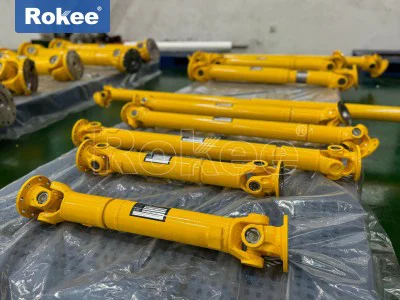
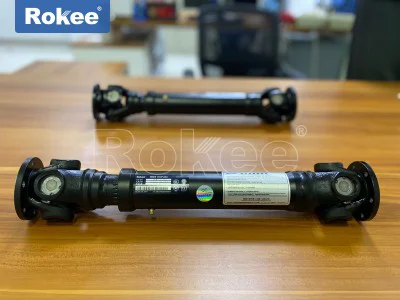
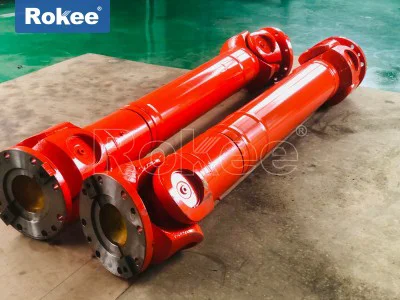
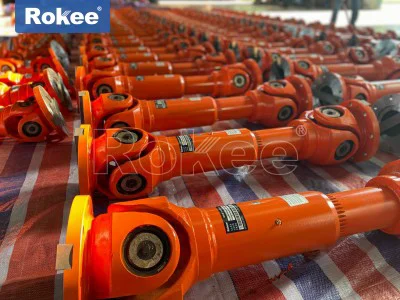
Cardan Shaft Wholesaler
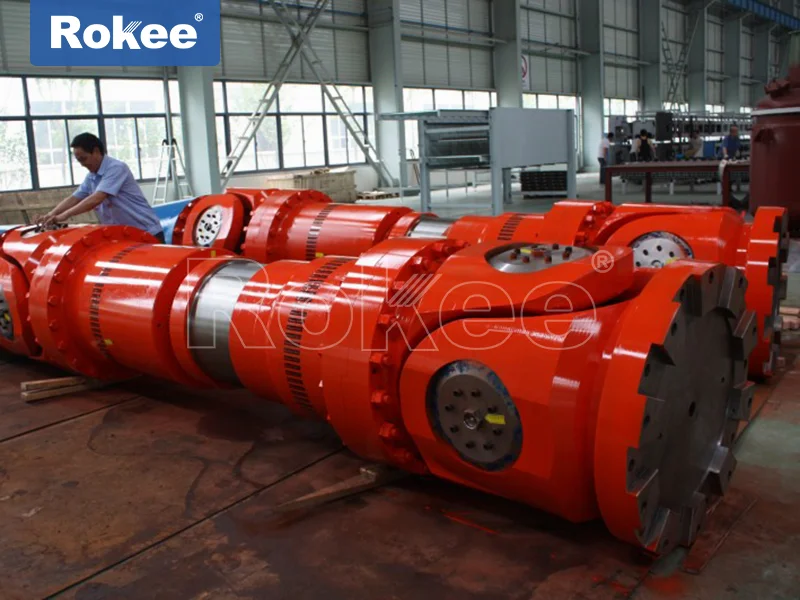
In the complex and interconnected system of modern mechanical transmission, cardan shafts stand out as one of the most fundamental yet irreplaceable mechanical components, undertaking the critical task of torque transmission between misaligned shafts across diverse operating environments. As vital intermediate links in the industrial supply chain, cardan shaft wholesalers play an indispensable role in bridging component manufacturers and downstream industrial users, maintaining the stable operation of various mechanical equipment and promoting the smooth progress of industrial production. The inherent structural characteristics of cardan shafts enable them to adapt to angular displacement, axial deviation and radial misalignment between connected shafts, making these components widely applicable in mobile machinery, heavy industrial equipment and automated production lines. Understanding the operational logic, product advantages and industrial service value of cardan shaft wholesalers is essential for all industrial participants seeking stable transmission component supply and long-term mechanical operation efficiency.
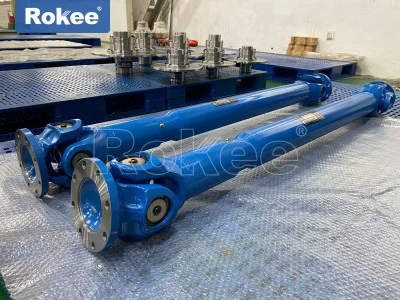
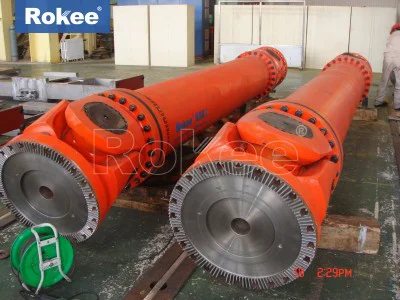
A standard cardan shaft is generally composed of universal joints, shaft bodies, bearing assemblies and connecting structures, among which the cross-shaped universal joint serves as the core functional structure to realize flexible power transmission. The working principle of this component relies on the rotational coordination between cross shafts and fork arms. When the driving shaft generates rotational torque, the cross shaft structure drives the driven shaft to rotate synchronously. Even if there is an included angle between the two shafts, the average rotational speed remains consistent during operation, ensuring continuous and stable power output. Most cardan shafts adopt high-strength alloy steel as the raw material, which undergoes precise forging, turning and heat treatment processes to enhance structural toughness and compression resistance. Key moving parts are equipped with sealing and lubrication structures to reduce friction loss during long-term operation, effectively slowing down component wear and extending the overall service life. Different structural designs are adopted for diverse working conditions; some cardan shafts feature retractable shaft bodies to adapt to axial distance changes, while others use reinforced flange structures to withstand heavy torque impact in high-load scenarios.
The application scenarios of cardan shafts cover almost all industrial fields that require flexible power transmission, forming a broad and stable downstream demand market. In the transportation machinery industry, cardan shafts are installed between transmissions and drive axles of rear-drive vehicles to transmit power generated by engines to walking structures, adapting to the angle changes of chassis components during driving and bumpy road conditions. In heavy industry sectors such as metallurgy and forging, these components connect power motors and rolling mill rollers, maintaining stable power output under continuous high-load operation and frequent start-stop impacts. Mining and aggregate processing equipment also relies heavily on cardan shafts, which serve as core connecting parts of vibrating screens and feeding systems to ensure continuous material screening and conveying in complex mining environments with dust and vibration. Additionally, cardan shafts are widely used in papermaking machinery, wind power equipment, automated production lines and marine auxiliary machinery, adapting to harsh working conditions including high humidity, low temperature and strong vibration with their reliable structural performance.
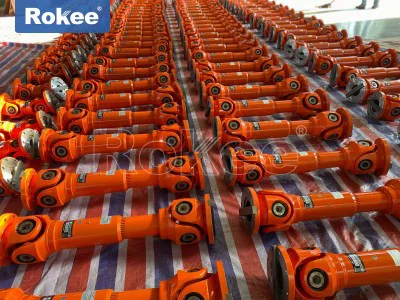
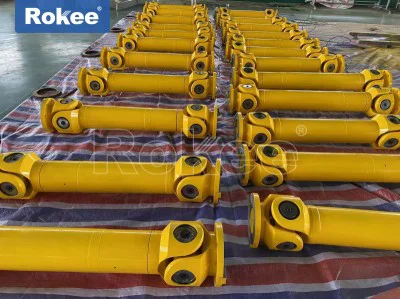
Against the backdrop of booming downstream industrial demand, cardan shaft wholesalers have gradually evolved from simple component distributors into comprehensive industrial service providers. Different from retail suppliers focusing on scattered small-batch orders, wholesalers maintain long-term and stable cooperative relationships with standardized production factories, realizing large-scale procurement of cardan shaft products. This bulk procurement model optimizes the circulation link of the industrial supply chain, effectively reducing the intermediate circulation cost of components and ensuring the stability of product supply. Wholesalers usually keep abundant spot inventories covering various specifications of cardan shafts, including lightweight models for precision automation equipment and heavy-duty models for large mining and metallurgical machinery. The diversified inventory layout enables them to meet the customized matching needs of different industrial users, avoiding production stagnation caused by temporary component shortages for downstream manufacturers.
Product quality control constitutes the core competitive strength of professional cardan shaft wholesalers. In the procurement process, wholesalers conduct strict screening on raw material selection, processing technology and structural stability of products. They inspect the surface finish, structural dimension accuracy and internal metal density of semi-finished cardan shafts, eliminating defective products with cracks, deformation and uneven wall thickness. For finished products, wholesalers simulate various working conditions to conduct torque resistance, rotation stability and fatigue life tests, verifying whether the components can maintain stable performance under long-term vibration and variable load environments. In addition, wholesalers pay attention to the optimization of product details, checking the sealing performance of bearing parts and the smoothness of lubrication channels to ensure that cardan shafts can resist dust, moisture and corrosive substances in complex industrial environments. Strict multi-level quality inspection mechanisms enable wholesalers to provide consistently high-quality products for downstream users, reducing the failure rate of mechanical equipment and the maintenance cost of component replacement.
Logistics and customized service capabilities further enhance the industrial value of cardan shaft wholesalers. Most wholesalers build standardized storage warehouses with moisture-proof, rust-proof and shock-proof protection measures to avoid oxidation, deformation and structural damage of cardan shafts during storage. Reasonable warehouse zoning management is adopted to classify products by structural type, size and load-bearing capacity, improving the efficiency of inventory sorting and order delivery. In terms of logistics distribution, wholesalers cooperate with professional industrial logistics teams to formulate targeted packaging and transportation schemes. Heavy-duty cardan shafts are fixed with anti-collision brackets during transportation, while precision components are wrapped with shock-absorbing materials to prevent structural damage caused by extrusion and vibration. For users with special mechanical transformation needs, wholesalers provide personalized customization services, adjusting shaft body length, connection caliber and structural reinforcement schemes according to equipment operating parameters and installation space to realize adaptive matching of non-standard mechanical equipment.
In the industrial service system, cardan shaft wholesalers also undertake important technical support and after-sales maintenance work. Professional technical teams of wholesalers are proficient in the structural parameters, application limitations and installation specifications of various cardan shaft products. They provide users with reasonable product selection suggestions based on equipment operating intensity, working environment and power transmission requirements, helping users avoid resource waste caused by inappropriate component selection. During the equipment installation stage, technical personnel offer remote guidance and on-site debugging services to ensure standardized installation of cardan shafts, prevent installation deviation from causing abnormal vibration and noise during equipment operation, and guarantee the optimal transmission efficiency of components. In terms of after-sales maintenance, wholesalers provide users with daily maintenance guidelines, including regular lubrication cycle, sealing part inspection standards and rust prevention measures for idle components, helping users extend the service life of cardan shafts and reduce long-term equipment operation costs.
The development trend of the cardan shaft wholesale industry is closely linked to the overall upgrading of the global manufacturing industry. With the continuous advancement of industrial automation and intelligent manufacturing technology, downstream mechanical equipment is developing towards high load, high precision and high durability, putting forward higher requirements for the structural performance and manufacturing precision of cardan shafts. Wholesalers keep pace with industrial changes by continuously optimizing their product portfolios, eliminating backward products with low structural strength and single performance, and introducing upgraded cardan shafts made of new alloy materials and optimized sealing structures. These upgraded products feature stronger torque resistance, better environmental adaptability and lower operation friction coefficient, meeting the stringent usage standards of modern intelligent production lines and large heavy-duty machinery. Meanwhile, driven by digital management technology, excellent wholesalers have realized intelligent inventory management, using data systems to monitor product consumption cycles and user demand changes, so as to dynamically adjust inventory reserves and further improve the efficiency of supply chain operation.
Despite the broad development prospects, the cardan shaft wholesale industry still faces multiple operational challenges. The fluctuation of metal raw material prices affects the manufacturing cost of cardan shafts, bringing uncertainty to the capital operation of wholesalers. In addition, the industry has a mixed market environment; some small-scale circulation merchants cut costs by reducing processing precision and using inferior raw materials, resulting in uneven product quality in the market, which interferes with the purchasing judgment of downstream users. Moreover, the technical threshold of matching services is gradually increasing, and the emerging intelligent mechanical equipment requires wholesalers to have more professional mechanical knowledge and customized service capabilities. To cope with these challenges, high-quality wholesalers establish long-term strategic cooperation with high-quality manufacturers to stabilize the raw material procurement system, and maintain transparent and standardized product supply channels to avoid being affected by inferior market products. They also continuously strengthen the professional training of technical teams, optimize digital service systems, and improve the comprehensive service capacity covering product selection, installation guidance and after-sales maintenance.
Looking into the future, the development potential of the cardan shaft wholesale industry remains huge. With the continuous expansion of infrastructure construction, heavy industrial manufacturing and new energy equipment industries, the market demand for high-performance transmission components will maintain a steady growth trend. Cardan shaft wholesalers will further deepen their industrial service attributes, not only providing standardized component supply services, but also building one-stop industrial transmission solution systems integrating product customization, technical debugging, daily maintenance and spare parts replacement. In terms of product iteration, wholesalers will pay more attention to environmentally friendly and energy-saving product characteristics, promoting the popularization of low-friction and low-consumption cardan shaft products to meet the green development requirements of the modern manufacturing industry. In terms of supply chain optimization, the combination of digital management and intelligent logistics will further shorten the product circulation cycle, realize efficient docking between manufacturers and end users, and reduce the comprehensive circulation cost of industrial components.
In conclusion, cardan shafts are indispensable basic components in the modern mechanical transmission system, and wholesalers, as key participants in the industrial chain, bear the important responsibility of connecting production ends and consumption ends. Through standardized product procurement, strict quality screening, diversified inventory reserves and professional technical services, excellent cardan shaft wholesalers provide reliable component guarantee for the stable operation of various industrial equipment. In the context of continuous industrial upgrading and increasingly fierce market competition, wholesalers need to adhere to the development concept of quality priority and service optimization, continuously optimize product structures, improve service systems, and actively respond to market changes and industrial demands. With the joint efforts of high-quality wholesalers and upstream manufacturers, the cardan shaft industry will continue to develop in a standardized, intelligent and high-performance direction, providing solid support for the long-term stable operation of the global manufacturing industry and the continuous innovation of mechanical transmission technology.