Integral Universal Shaft
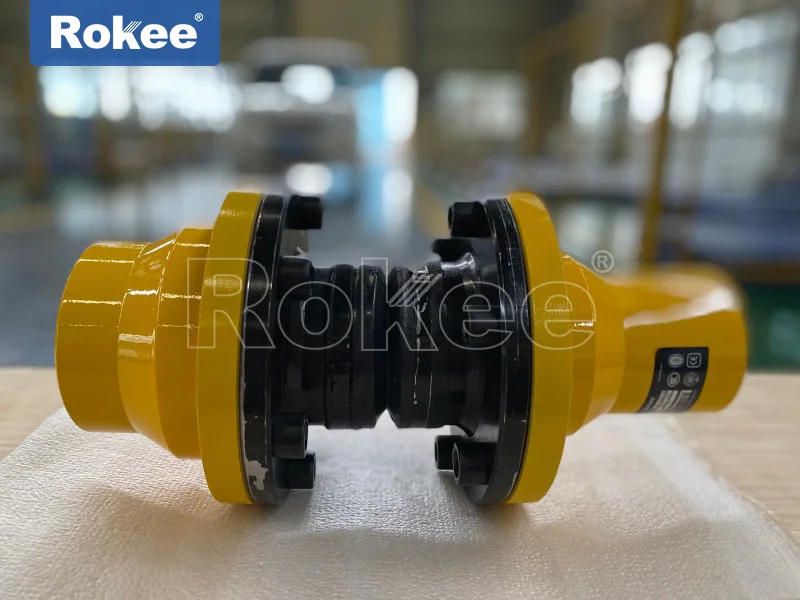
An integral universal shaft, a critical component in mechanical power transmission systems, is specifically engineered to connect two shafts that require synchronous rotation but are positioned with angular deviations, axial displacements, or radial offsets. Unlike conventional universal shafts where the connecting shaft and yoke are assembled separately, the integral design integrates these components into a single, unified structure, eliminating the need for bolted connections and enhancing overall structural integrity. This integration not only optimizes the transmission efficiency but also improves the component’s durability and stability, making it an indispensable element in a wide range of industrial, automotive, agricultural, and marine applications. The core functionality of an integral universal shaft revolves around its ability to transmit torque and rotational motion smoothly between non-coaxial shafts, accommodating misalignments without compromising performance or causing excessive wear on connected machinery.
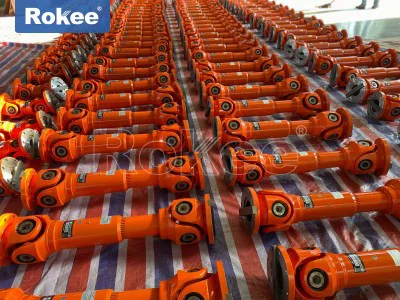
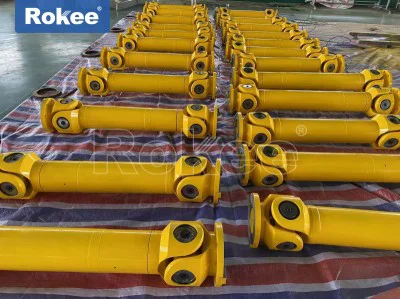
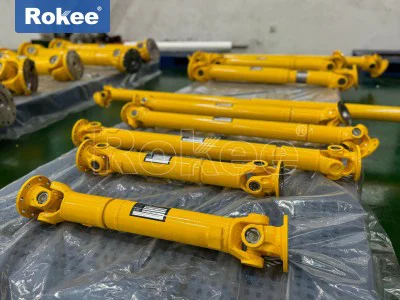
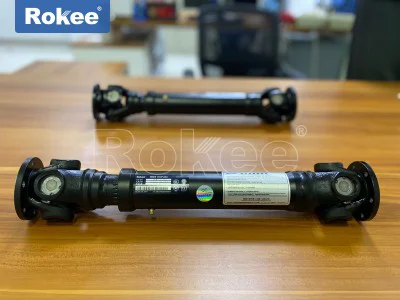
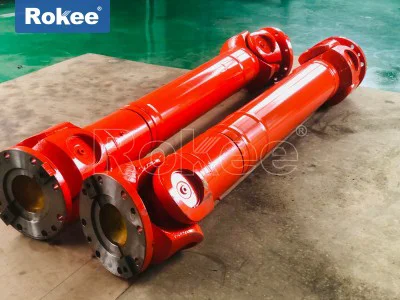
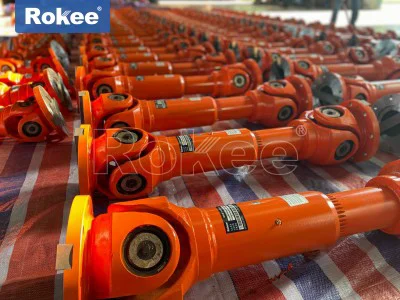
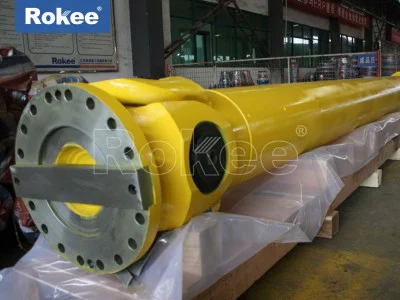
The structure of an integral universal shaft is a sophisticated assembly of interconnected components, each designed to fulfill a specific role in ensuring reliable power transmission. At the heart of its design is the integral yoke, which is seamlessly fused with the central shaft body rather than being attached through fasteners. This one-piece construction ensures uniform force distribution across the yoke and shaft, reducing stress concentrations that often lead to premature wear, pitting, or structural failure in conventional designs. The yoke, typically fork-shaped, features precision-machined ends that house the universal joint assembly, which serves as the pivot point enabling angular movement between the connected shafts. The universal joint, often referred to as a cardan joint in recognition of its historical development, is composed of a cross shaft with four cylindrical journals, each fitted with high-precision needle bearings to minimize friction during rotation. These bearings are enclosed within the yoke ends, providing support for the cross shaft while allowing it to rotate freely at varying angles, thus accommodating the angular misalignment between the input and output shafts. In addition to the integral yoke and universal joint, the integral universal shaft also includes a central shaft body, which acts as the main torque-carrying component. The shaft body is usually fabricated from high-strength materials and undergoes precision machining to ensure dimensional accuracy and surface smoothness, which are critical for reducing vibration and maintaining stable operation at high rotational speeds. Many integral universal shafts also incorporate a telescopic sleeve and spline assembly, which allows for axial compensation to adjust for changes in distance between the connected shafts caused by thermal expansion, installation errors, or dynamic movement of machinery during operation. This telescopic mechanism functions like an intelligent regulator, ensuring continuous and consistent power transmission even as the relative position of the shafts changes. Furthermore, the integral design often includes enhanced sealing components to protect the internal bearings and cross shaft from contaminants such as dust, dirt, and moisture, which can degrade performance and shorten service life. These structural features work in harmony to create a robust, efficient, and flexible power transmission component that can adapt to complex operating conditions.
The performance of an integral universal shaft is defined by a set of key characteristics that determine its suitability for different applications, including torque transmission capacity, angular compensation range, rotational precision, durability, and resistance to external factors. Torque transmission capacity is one of the most critical performance metrics, as it dictates the maximum amount of rotational force the shaft can transmit without deformation or failure. This capacity is primarily influenced by the material used in fabrication, the cross-sectional dimensions of the shaft body, and the design of the universal joint assembly. Integral universal shafts are engineered to handle a wide range of torque requirements, from small values for precision equipment to extremely high torques for heavy-duty industrial machinery. Unlike some power transmission components that experience significant torque loss, integral universal shafts maintain high transmission efficiency, typically above 95%, due to their streamlined design and minimal friction between moving parts. The integral construction eliminates the backlash and power loss associated with bolted connections, ensuring that most of the input torque is transferred directly to the output shaft. Angular compensation range is another vital performance feature, referring to the maximum angle between the input and output shafts that the component can accommodate while maintaining smooth operation. Most integral universal shafts can handle angular misalignments between 5° and 45°, depending on the specific design and application requirements. This flexibility allows the component to be used in machinery where perfect shaft alignment is difficult or impossible to achieve, such as in automotive drive trains, construction equipment, and industrial conveyors. Rotational precision is particularly important for applications that require accurate and consistent motion, such as precision machining tools and robotic systems. Integral universal shafts exhibit high rotational precision due to their rigid construction and tight manufacturing tolerances, minimizing runout and ensuring that the output shaft rotates in perfect synchronization with the input shaft. Durability is enhanced by the integral design, which reduces the number of wear points and ensures uniform stress distribution. The use of high-strength materials, combined with heat treatment processes such as quenching and tempering, further improves the component’s resistance to wear, fatigue, and impact loads. Additionally, integral universal shafts are designed to resist corrosion, vibration, and extreme temperatures, making them suitable for use in harsh operating environments such as marine propulsion systems, offshore equipment, and high-temperature industrial processes. The combination of these performance characteristics makes integral universal shafts a reliable and efficient choice for a diverse range of power transmission applications.
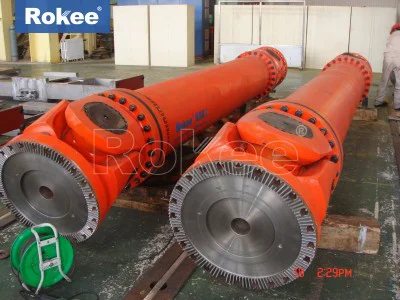
Integral universal shafts can be classified into several types based on different classification criteria, including structural design, torque capacity, application-specific modifications, and whether they include telescopic functionality. One of the most common classification methods is based on the type of universal joint used, with the two primary types being cross-axis integral universal shafts and ball cage integral universal shafts. Cross-axis integral universal shafts, also known as cardan shafts, are the most widely used type, featuring a cross-shaped universal joint assembly that allows for angular misalignment. These shafts are characterized by their simple structure, high torque capacity, and cost-effectiveness, making them ideal for heavy-duty applications such as steel rolling mills, construction machinery, and mining equipment. Cross-axis integral universal shafts can be further divided into telescopic and non-telescopic variants. Telescopic cross-axis integral universal shafts incorporate a spline and sleeve assembly that enables axial movement, accommodating changes in distance between the connected shafts. This type is commonly used in automotive drive shafts, where the distance between the transmission and differential changes during vehicle suspension movement. Non-telescopic cross-axis integral universal shafts, on the other hand, have a fixed length and are suitable for applications where the distance between the shafts remains constant, such as in some industrial conveyor systems and stationary machinery. Ball cage integral universal shafts, also known as constant velocity (CV) shafts, utilize a ball cage assembly consisting of an inner race, outer race, and steel balls to transmit torque. Unlike cross-axis shafts, which may experience speed fluctuations at large angles, ball cage integral universal shafts provide constant velocity transmission, ensuring that the output shaft rotates at the same speed as the input shaft regardless of the angular misalignment. This makes them ideal for applications requiring high rotational precision, such as automotive front-wheel drive systems, precision machining tools, and robotic arms. Ball cage integral universal shafts are available in both fixed and telescopic designs, with the telescopic variant often used in applications where axial compensation is needed. Another classification method is based on torque capacity, with integral universal shafts divided into light-duty, medium-duty, and heavy-duty types. Light-duty integral universal shafts are designed for low torque applications, such as small agricultural implements, household appliances, and light industrial machinery. They are typically smaller in size and fabricated from lightweight materials such as aluminum alloys. Medium-duty integral universal shafts are used for moderate torque requirements, found in applications such as medium-sized conveyors, pumps, and generators. Heavy-duty integral universal shafts are engineered to handle extremely high torques and are used in heavy industrial equipment, such as steel rolling mills, marine propulsion systems, and large construction machinery. These heavy-duty shafts are fabricated from high-strength alloy steels and feature reinforced universal joint assemblies to withstand the extreme stresses associated with high-torque transmission. Additionally, there are specialized integral universal shafts designed for specific applications, such as high-speed integral universal shafts for turbomachinery and corrosion-resistant integral universal shafts for marine and offshore applications. These specialized types incorporate design modifications and material selections tailored to the unique requirements of their intended use.
The versatility of integral universal shafts is reflected in their wide range of applications across various industries, where they play a critical role in ensuring the efficient and reliable operation of machinery and equipment. In the automotive industry, integral universal shafts are essential components in both passenger vehicles and commercial vehicles. In rear-wheel drive and four-wheel drive passenger vehicles, telescopic cross-axis integral universal shafts are used to transmit torque from the transmission to the differential, accommodating the angular misalignment and axial movement caused by the vehicle’s suspension system. Ball cage integral universal shafts are commonly used in front-wheel drive vehicles, where they connect the transmission to the front wheels, providing constant velocity transmission and enabling smooth steering and power delivery. Commercial vehicles, such as trucks, buses, and trailers, utilize heavy-duty integral universal shafts to handle the high torques required for hauling heavy loads, ensuring reliable power transmission even under harsh operating conditions. The automotive industry also relies on integral universal shafts in other applications, such as in the drive systems of electric vehicles, where their high efficiency and compact design make them well-suited for the unique requirements of electric propulsion. In the industrial sector, integral universal shafts are widely used in a variety of machinery and equipment. Steel rolling mills, for example, utilize heavy-duty cross-axis integral universal shafts to transmit torque from the drive motors to the rolling stands, accommodating the large angular misalignments and high torques associated with steel production. Conveyor systems, both in manufacturing facilities and mining operations, use integral universal shafts to connect the drive motors to the conveyor rollers, ensuring smooth and consistent movement of materials. Industrial pumps and compressors also utilize integral universal shafts to transmit power from the motor to the pump or compressor rotor, accommodating any misalignments between the motor and the driven component. In the mining industry, integral universal shafts are used in heavy machinery such as excavators, loaders, and crushers, where they must withstand extreme torques, vibrations, and harsh environmental conditions. These shafts ensure reliable power transmission between the engine and the various components of the machinery, enabling efficient mining operations. The agricultural industry is another major user of integral universal shafts, where they are used in a wide range of agricultural implements. Tractors, for example, use integral universal shafts to transmit power from the engine to various attachments, such as mowers, balers, seeders, and plows. These shafts must accommodate the angular misalignments that occur as the tractor moves over uneven terrain and the attachments are raised or lowered. Light-duty and medium-duty integral universal shafts are commonly used in agricultural applications, where they provide a cost-effective and reliable solution for power transmission. In the marine industry, integral universal shafts are critical components in marine propulsion systems, transmitting torque from the ship’s engine to the propeller. Marine integral universal shafts must be corrosion-resistant to withstand the saltwater environment and must be able to handle high torques and angular misalignments caused by the ship’s movement. Ball cage integral universal shafts are often used in smaller vessels, while larger ships utilize heavy-duty cross-axis integral universal shafts to handle the massive torques required for propulsion. Additionally, integral universal shafts are used in other marine equipment, such as winches and steering systems, ensuring reliable operation in challenging marine conditions. The aerospace industry also uses specialized integral universal shafts in aircraft and spacecraft, where their high precision, light weight, and durability are essential. These shafts are used in various systems, such as in the drive systems of aircraft engines and in the control systems of spacecraft, where they must operate reliably in extreme environments, including high temperatures, low pressures, and high vibrations. Other applications of integral universal shafts include in robotics, where their high rotational precision and compact design make them suitable for use in robotic arms and manipulators, enabling precise and smooth movement. Precision machining tools, such as lathes, milling machines, and grinders, also utilize integral universal shafts to transmit power from the motor to the cutting tool, ensuring accurate and consistent machining operations. Even in household appliances, such as washing machines and dryers, small integral universal shafts are used in the drive systems, providing reliable power transmission in a compact design. The wide range of applications for integral universal shafts is a testament to their versatility, reliability, and adaptability to different operating conditions and requirements.
In conclusion, integral universal shafts are essential mechanical components that play a critical role in power transmission systems across various industries. Their integral design, which fuses the yoke and shaft into a single unit, provides numerous advantages over conventional universal shafts, including enhanced structural integrity, improved torque transmission efficiency, reduced wear, and increased durability. The sophisticated structure of integral universal shafts, consisting of the integral yoke, universal joint assembly, central shaft body, and optional telescopic mechanism, enables them to accommodate angular misalignments, axial displacements, and radial offsets while transmitting torque and rotational motion smoothly and reliably. Their key performance characteristics, such as high torque capacity, wide angular compensation range, high rotational precision, and resistance to harsh operating conditions, make them suitable for a diverse range of applications. The various types of integral universal shafts, classified based on universal joint type, torque capacity, and application-specific modifications, ensure that there is a suitable solution for every power transmission requirement, from light-duty household applications to heavy-duty industrial and marine applications. Across the automotive, industrial, mining, agricultural, marine, aerospace, and robotics industries, integral universal shafts contribute to the efficient and reliable operation of machinery and equipment, making them an indispensable component in modern mechanical systems. As technology advances, the design and fabrication of integral universal shafts continue to evolve, with new materials and manufacturing processes being developed to further improve their performance, reduce their weight, and expand their range of applications. The ongoing innovation in integral universal shaft technology ensures that they will remain a critical component in power transmission systems for years to come, supporting the growth and development of various industries around the world.