Metallurgical Universal Shaft
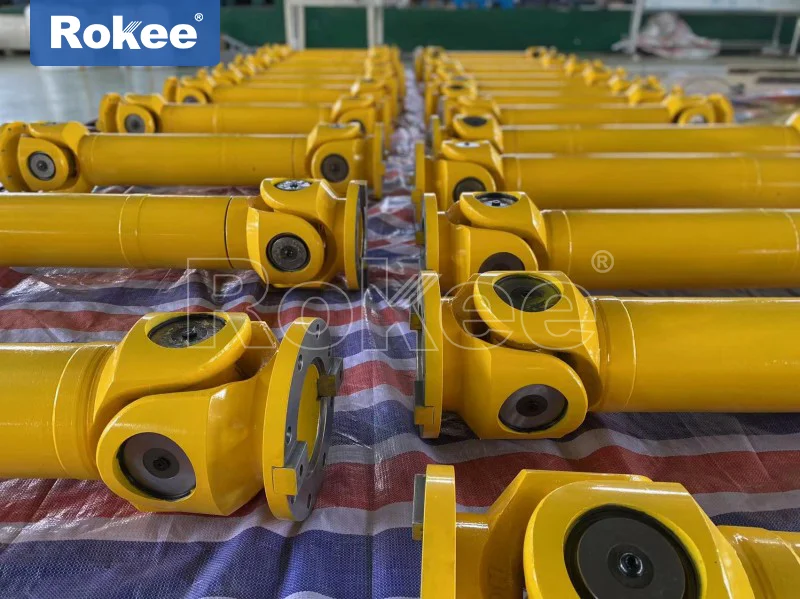
Metallurgical universal shafts are essential mechanical transmission components specifically designed to adapt to the harsh and complex working conditions of the metallurgical industry, serving as a critical link between different mechanical equipment to ensure stable and efficient power transmission. Unlike ordinary universal shafts, those used in metallurgical applications must withstand extreme loads, high temperatures, frequent impact forces, and harsh environments filled with dust, oxide scale, and cooling water, which requires their structure, performance, and material selection to meet more stringent standards. The rational design of their structure directly determines their reliability and service life in metallurgical production, while their performance indicators determine their adaptability to various working conditions, and different types are developed to match the diverse needs of different metallurgical processes.
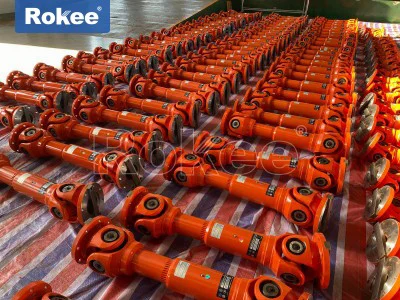
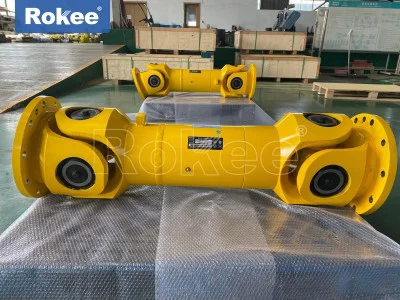
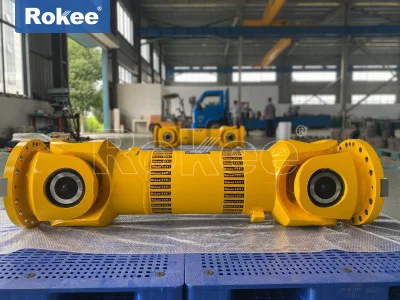
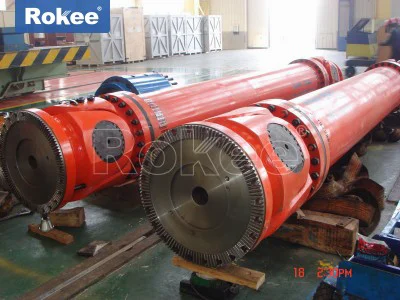
The structure of a metallurgical universal shaft is a sophisticated assembly of multiple components that work together to achieve torque transmission and angle compensation, with each part playing a unique and irreplaceable role. The core components of a typical metallurgical universal shaft include the cross shaft, yoke (also known as the universal joint fork), bearing assemblies, telescopic sleeve, spline shaft, and sealing system, all of which are precisely matched to ensure stable operation under harsh conditions. The cross shaft is the most critical core component, acting as the pivot for angle adjustment and torque transmission; it is usually forged from high-strength alloy steel through precision forging processes, with four shaft necks distributed in a cross shape, forming the rotating joint that connects the two yokes. The material selection and processing quality of the cross shaft directly affect the overall load-bearing capacity and fatigue life of the universal shaft, as it must bear complex composite stresses during operation, including contact stress, bending stress, and torsional stress. To enhance its durability, the cross shaft is often subjected to surface hardening treatments such as high-frequency quenching or deep ion nitriding, which significantly improve its surface hardness while maintaining sufficient toughness in the core, preventing premature wear or fracture under heavy loads and impact.
The yoke, which is responsible for connecting the cross shaft to the driving and driven shafts, is usually used in pairs, with one connected to the input shaft and the other to the output shaft. Yokes for metallurgical applications are typically manufactured using integral forging or split flange structures; integral forging yokes offer higher structural strength and impact resistance, making them suitable for heavy-duty scenarios, while split flange yokes facilitate later maintenance and disassembly, which is particularly useful in equipment that requires frequent inspection. The connection between the yoke and the cross shaft is achieved through bearing assemblies, which are mostly needle roller bearings or cylindrical roller bearings, selected for their ability to withstand high loads and reduce friction during rotation. These bearings are installed on the shaft necks of the cross shaft, and their quality and lubrication condition directly affect the service life of the entire universal shaft. To ensure smooth operation, the bearings are usually lubricated with high-temperature lithium-based grease or equipped with centralized oil lubrication systems, especially in high-temperature metallurgical environments, to prevent lubrication failure caused by high temperatures.
The telescopic sleeve and spline shaft form an axial compensation mechanism, a key feature of metallurgical universal shafts that allows for axial length adjustment during operation. This mechanism is crucial in metallurgical equipment because factors such as installation errors, temperature deformation, and equipment displacement during operation can cause changes in the distance between the driving and driven shafts. The telescopic sleeve is slidably connected to the spline shaft, enabling the universal shaft to automatically compensate for axial deviations, ensuring continuous and stable torque transmission without additional stress on the equipment. The spline connection is designed with high precision to ensure smooth sliding while maintaining sufficient torque transmission capacity, and it is often treated with anti-wear coatings to reduce friction and extend service life. Additionally, flanges or connecting keyways are used to firmly connect the universal shaft to the driving and driven shafts, ensuring that torque is transmitted effectively without slipping or loosening, even under high load and impact conditions.
The sealing system is another essential component of metallurgical universal shafts, designed to protect the internal components from the harsh metallurgical environment. Metallurgical production sites are often filled with dust, oxide scale, cooling water, and other contaminants that can easily enter the bearing assemblies and cross shaft, causing wear, corrosion, and lubrication failure. To address this, metallurgical universal shafts are equipped with multi-layer sealing structures, such as triple maze seals combined with fluororubber lip seals, which effectively prevent the intrusion of contaminants while retaining lubricating grease. This sealing design ensures that the internal components remain clean and well-lubricated, even in high-dust, high-humidity, and high-temperature environments, significantly extending the maintenance cycle and service life of the universal shaft.
The performance of metallurgical universal shafts is tailored to meet the specific requirements of the metallurgical industry, with key performance indicators including load-bearing capacity, angle compensation capability, transmission efficiency, high-temperature resistance, wear resistance, and impact resistance. Load-bearing capacity is one of the most critical performance indicators, as metallurgical equipment such as rolling mills and straighteners generate enormous torque during operation, with instantaneous impact loads reaching 2 to 3 times the normal torque. Metallurgical universal shafts are designed to withstand these extreme loads, with nominal torque ranges varying from several kilonewton-meters to thousands of kilonewton-meters, depending on the application scenario. The load-bearing capacity is determined by the material strength of the components, the structural design, and the processing precision; high-strength alloy steels such as 42CrMo and 45-grade steel are commonly used, as they offer excellent tensile strength, toughness, and wear resistance after heat treatment.
Angle compensation capability is another vital performance feature, allowing the universal shaft to transmit torque reliably even when the driving and driven shafts are not on the same axis or have angular deviations. In metallurgical equipment, factors such as thermal expansion, structural deformation, and installation errors often lead to angular deviations between shafts, and the universal shaft must be able to compensate for these deviations to ensure continuous power transmission. The allowable angular deviation for metallurgical universal shafts typically ranges from 5° to 45°, with special designs capable of compensating for larger angles; however, in heavy-duty metallurgical applications, the recommended angular deviation is usually no more than 10° to extend the service life of the universal shaft. This angle compensation capability is achieved through the articulated structure between the cross shaft and the yokes, which allows the cross shaft to adjust its angle continuously during rotation, ensuring smooth torque transmission without speed fluctuations.
Transmission efficiency is also a key performance indicator, as high efficiency helps reduce energy consumption and improve the overall productivity of metallurgical equipment. Metallurgical universal shafts are designed with minimal friction between components, thanks to high-precision processing and effective lubrication, resulting in transmission efficiencies of over 98% in most cases. This high efficiency is particularly important in continuous production processes such as hot rolling and continuous casting, where any energy loss can lead to increased production costs and reduced output. Additionally, metallurgical universal shafts have excellent impact resistance, capable of withstanding sudden load changes and impact forces generated during equipment startup, shutdown, and material processing. This impact resistance is achieved through the robust structural design, high-strength materials, and shock-absorbing properties of the components, which help reduce the impact on the entire transmission system and protect the equipment from damage.
High-temperature resistance and wear resistance are essential for metallurgical universal shafts, as they operate in environments where temperatures can reach up to 280°C or higher, especially in hot rolling and heat treatment processes. The materials used in the components are selected for their high-temperature stability, and surface treatments such as heat-resistant coatings are often applied to enhance their resistance to high temperatures and oxidation. The bearing assemblies and sealing systems are also designed to withstand high temperatures, with high-temperature lubricants and heat-resistant seals used to prevent failure. Wear resistance is achieved through the use of high-hardness materials, surface hardening treatments, and effective lubrication, which reduce friction and wear between moving components, ensuring a long service life even under continuous operation.
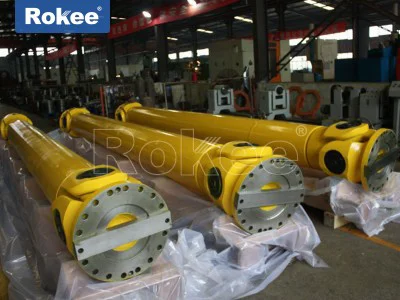
Metallurgical universal shafts can be classified into various types based on their structural design, load-bearing capacity, and application scenarios, each with unique characteristics and advantages to meet the diverse needs of the metallurgical industry. The most common classification is based on the structural form, with the main types including cross-shaft universal shafts, ball cage universal shafts, ball hinge universal shafts, and telescopic universal shafts. Cross-shaft universal shafts are the most widely used type in the metallurgical industry, characterized by their simple structure, high load-bearing capacity, and reliable performance. They are composed of a cross shaft, two yokes, and bearing assemblies, and are suitable for heavy-duty, high-torque applications such as rolling mills, crushers, and straighteners. Cross-shaft universal shafts can be further divided into fixed-length and telescopic types; fixed-length types are used in scenarios where the distance between shafts is fixed, while telescopic types are equipped with a spline telescopic mechanism to compensate for axial deviations, making them suitable for long-distance transmission and environments with frequent axial changes.
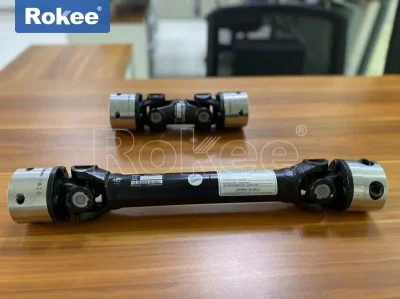
Ball cage universal shafts are designed for high-speed, precision transmission, making them suitable for metallurgical equipment that requires high transmission accuracy, such as precision rolling mills and automated production lines. They consist of an outer sleeve, an inner sleeve, transmission steel balls, and a cage, with the steel balls rolling in the raceways of the inner and outer sleeves to transmit torque. This structure allows for synchronous rotation of the driving and driven shafts, with minimal vibration and noise, and high dynamic balance accuracy, ensuring stable operation at high speeds. Ball cage universal shafts have a smaller angular compensation range compared to cross-shaft types, typically between 5° and 20°, but they offer superior precision and smoothness, making them ideal for precision transmission scenarios.
Ball hinge universal shafts are designed for special working conditions, such as scenarios with limited installation space or large radial loads. They adopt a ball hinge structure, which offers higher radial load-bearing capacity than cross-shaft universal shafts, and can be divided into single-ball hinge and double-ball hinge types. Single-ball hinge universal shafts are suitable for continuous operation with an angular deviation of no more than 10°, while double-ball hinge types have better angle compatibility but slightly lower torque transmission capacity, making them suitable for applications such as petroleum machinery and ship propulsion systems within the metallurgical industry. Ball hinge plunger universal shafts combine the advantages of ball hinge and plunger structures, offering buffering and shock absorption performance, as well as large axial and radial compensation capabilities, making them suitable for large-angle, heavy-duty scenarios such as metallurgical rolling mills and mining hoisting machinery.
Another common classification is based on load-bearing capacity, dividing metallurgical universal shafts into light, medium, heavy, and super-heavy types. Lightweight universal shafts are used in small metallurgical auxiliary equipment, such as small conveyors and auxiliary pumps, with a torque transmission range of 11.2 to 1120 N·m. Medium-sized universal shafts are suitable for general industrial equipment in the metallurgical industry, such as medium-sized crushers and auxiliary rolling equipment, with a maximum torque capacity of up to 40 kN·m. Heavy-duty universal shafts are widely used in heavy metallurgical equipment, such as hot rolling mills, cold rolling mills, and large crushers, with some models capable of transmitting torques of up to 8100 kN·m. Super-heavy universal shafts are specially customized for extreme working conditions, such as large-scale continuous casting machines and ship propulsion systems, capable of withstanding ultra-high torques and harsh environments.
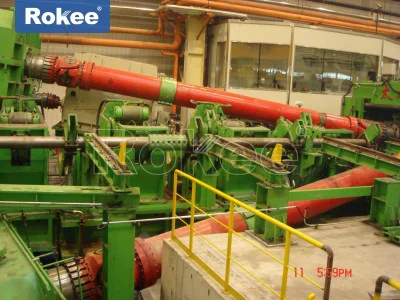
The applications of metallurgical universal shafts are closely linked to the various processes of the metallurgical industry, covering almost all key equipment in ferrous and non-ferrous metallurgy, playing an irreplaceable role in ensuring the smooth operation of production lines. One of the most important applications is in rolling mill systems, including hot rolling mills, cold rolling mills, profile rolling mills, and plate rolling mills. In hot rolling mills, the universal shaft connects the main motor to the rolling mill stand, transmitting enormous torque to drive the rolling rolls to compress and shape the steel billet. During the hot rolling process, the universal shaft must withstand high temperatures, large torques, and frequent impact loads when the steel billet is bitten, as well as compensate for the axial and angular deviations caused by thermal expansion of the rolls. For example, in a 4500mm wide and heavy plate rolling mill, the universal shaft used must be able to transmit a maximum torque of over 4500 kN·m, while withstanding temperatures of up to 200°C, and its reliable operation directly determines the quality and efficiency of the rolled plate.
In cold rolling mills, metallurgical universal shafts are used in the main transmission system and auxiliary equipment, requiring higher precision and stability due to the strict requirements for the surface quality and dimensional accuracy of cold-rolled products. Ball cage universal shafts are often used in cold rolling mills to ensure high transmission accuracy and smooth operation, reducing vibration and noise, which helps improve the surface finish of the cold-rolled sheets. In profile rolling mills, such as H-beam rolling mills, the universal shaft must adapt to the complex movement of the rolls, compensating for multiple angular and axial deviations to ensure that the profile is formed correctly. Practical application data shows that the use of high-performance universal shafts in profile rolling mills can reduce the vibration value of the transmission system by more than 50% and reduce equipment failure rates by 40%.
Metallurgical universal shafts are also widely used in straightener systems, which are essential equipment in the metallurgical industry for correcting the shape of steel plates, profiles, and wires. Straighteners operate under high loads and frequent impact forces, as the correction process requires applying significant pressure to the workpiece, and the universal shaft connects the drive motor to the straightening rolls, transmitting torque and compensating for the angular deviations caused by the pressure. The use of reinforced metallurgical universal shafts in straighteners can significantly improve the stability of the equipment, reduce the number of defective products, and extend the service life of the straightening rolls. For example, in a medium and heavy plate straightener, the use of a heavy-duty cross-shaft universal shaft with a robust sealing system can extend the maintenance cycle from 3 months to 1 year, while improving the qualified rate of product surface quality by 5%.
In addition to rolling and straightening equipment, metallurgical universal shafts are also used in other key metallurgical equipment, such as continuous casting machines, crushers, conveyors, and pushers. In continuous casting machines, the universal shaft is used to drive the withdrawal rolls, which pull the solidified steel billet out of the mold, requiring stable torque transmission and the ability to compensate for the axial deviations caused by the thermal expansion of the equipment. In crushers, which are used to crush raw materials and scrap steel in the metallurgical industry, the universal shaft must withstand extremely high impact loads and harsh working conditions, requiring high wear resistance and impact resistance. Telescopic cross-shaft universal shafts are often used in crushers to adapt to the axial movement of the crusher rotor, ensuring continuous and stable operation.
Conveyors are essential auxiliary equipment in the metallurgical industry, used to transport raw materials, semi-finished products, and finished products, and metallurgical universal shafts are used to connect the drive motor to the conveyor rollers, transmitting torque and compensating for the angular deviations between the motor and the rollers. The use of compact universal shafts in conveyors can reduce the installation space by 25% and improve transmission efficiency by up to 98.5%, achieving significant energy-saving effects. Pushers, which are used to push steel billets into the rolling mill or heating furnace, also rely on universal shafts for power transmission, requiring the universal shaft to have good impact resistance and rapid response to ensure the smooth progress of the production process.
The performance and reliability of metallurgical universal shafts have a direct impact on the efficiency, quality, and safety of metallurgical production. With the continuous development of the metallurgical industry towards large-scale, high-efficiency, and automated production, the requirements for metallurgical universal shafts are becoming increasingly stringent. In recent years, advances in material science and manufacturing technology have led to continuous improvements in the performance of metallurgical universal shafts. For example, the use of vacuum degassed alloy steel and advanced heat treatment processes has improved the fatigue life of the cross shaft by more than 50%, while the application of laser cladding technology has enabled the repair of worn components to reach 90% of the quality of new parts. The development of intelligent monitoring technology has also made it possible to real-time monitor the operating status of universal shafts, such as temperature, vibration, and lubrication conditions, allowing for predictive maintenance and reducing equipment downtime.
In conclusion, metallurgical universal shafts are critical mechanical components in the metallurgical industry, with their structure, performance, and types closely tailored to the harsh and complex working conditions of metallurgical production. Their sophisticated structure, composed of cross shafts, yokes, bearing assemblies, telescopic sleeves, and sealing systems, ensures stable torque transmission and angle compensation. Their excellent performance, including high load-bearing capacity, large angle compensation, high transmission efficiency, and resistance to high temperatures, wear, and impact, makes them suitable for various metallurgical equipment. The diverse types of metallurgical universal shafts, classified by structure and load-bearing capacity, meet the different needs of rolling mills, straighteners, continuous casting machines, and other key equipment. As the metallurgical industry continues to develop, metallurgical universal shafts will continue to evolve, with further improvements in material performance, structural design, and intelligent level, playing an even more important role in promoting the efficiency and quality of metallurgical production.