Welded Universal Shaft
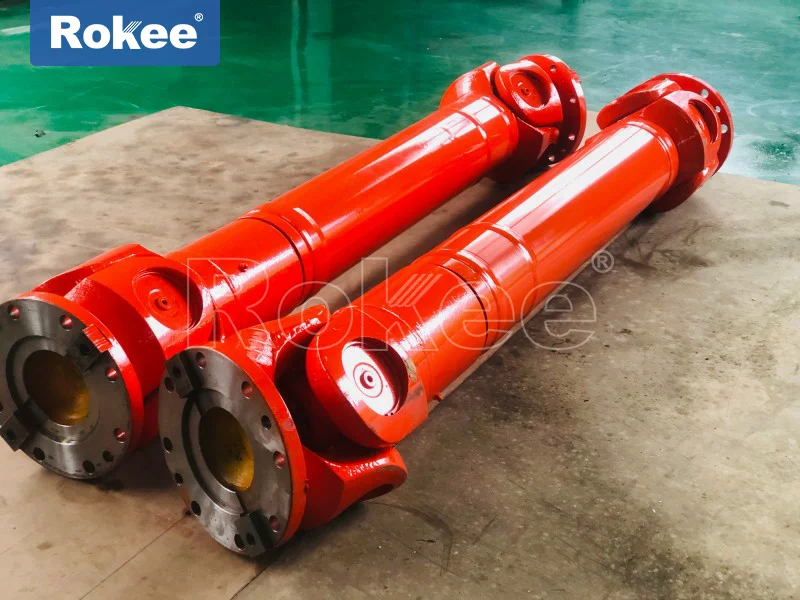
In the complex landscape of industrial power transmission, the welded universal shaft stands as a critical component engineered to address the inherent challenges of connecting rotating shafts in misaligned configurations. Unlike mechanical couplings that rely on bolted assemblies or flexible materials, welded universal shafts leverage permanent fusion bonding to create a robust, torsionally rigid structure capable of withstanding extreme loads, high rotational speeds, and dynamic operating conditions. This design philosophy makes them indispensable across a wide spectrum of heavy industries, where reliability, power density, and service life are non-negotiable requirements.
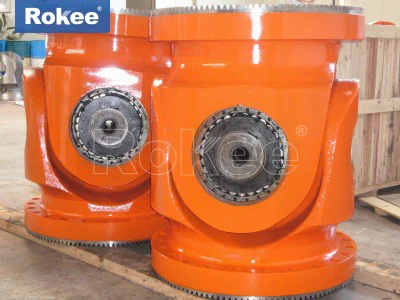
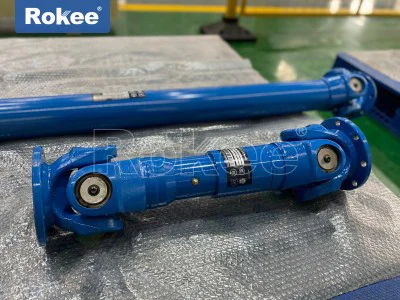
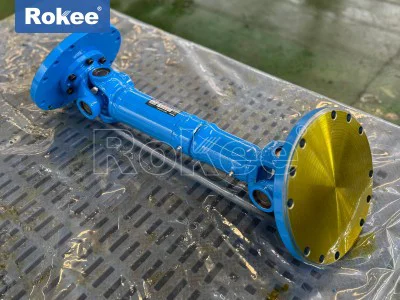
At its core, a welded universal shaft, often referred to as a welded cardan shaft, operates on the principle of a cross-axis joint mechanism to transmit torque between two shafts that are not perfectly aligned—whether angularly, radially, or axially. The fundamental structure consists of several key components that work in unison to achieve this functionality while maintaining structural integrity through welding. The outermost structure comprises two yokes, which are the connection points to the driving and driven machinery. In welded designs, these yokes are typically fabricated from heavy-gauge steel plate or forged steel blanks, which are then precision-machined to form the fork-like ends that house the central joint. The welding process fuses critical structural elements of the yoke, such as the arms to the hub or flange, creating a monolithic structure that eliminates the potential for bolt loosening or fatigue failure under cyclic loading, a common issue with bolted alternatives.
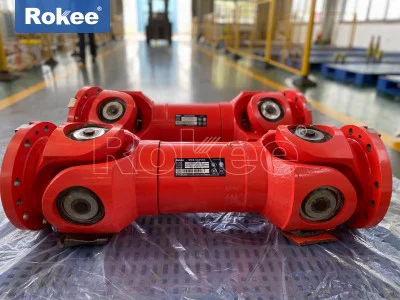
Connecting the two yokes is the cross assembly, also known as the spider, which is the heart of the universal shaft’s flexibility. This assembly consists of a central cylindrical block with four trunnions extending radially outward at 90-degree angles. Each trunnion is fitted with a bearing assembly, typically comprising needle roller bearings, which reduce friction and enable smooth rotation as the shaft operates at an angle. The bearing assemblies are secured within the bores of the yoke arms, and in welded shafts, the yoke arms are often reinforced around these bores through localized welding or forging to handle the concentrated stresses generated during torque transmission. A critical distinction in welded universal shafts is the integration of the yoke with the shaft tube. The shaft tube, a hollow cylindrical member that spans the distance between the two yokes, is permanently attached to the yoke hubs via circumferential welds. This welded connection ensures maximum torsional stiffness, as there is no relative movement between the tube and the yoke, making it ideal for applications that demand precise torque transfer without backlash.
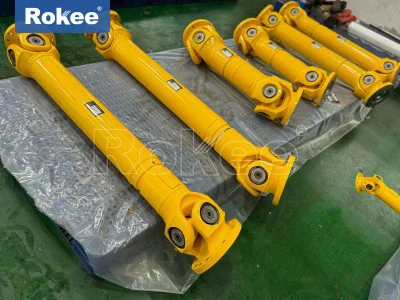
Depending on the application requirements, welded universal shafts may incorporate additional structural features to enhance their functionality. Telescopic welded shafts include a splined section within the shaft tube, allowing one portion of the tube to slide inside the other. This feature accommodates axial displacement between the connected shafts, which can occur due to thermal expansion in high-temperature environments or dynamic movement in mobile machinery. The splined section is often protected by a welded bellows or a sliding dust cover to prevent contamination from dirt, debris, or moisture, which can accelerate bearing wear. Non-telescopic welded shafts, by contrast, have a fixed-length shaft tube and are designed for applications where axial movement is minimal or non-existent, prioritizing maximum rigidity and simplicity. In both designs, the welding process is executed with strict attention to heat control and material integrity to avoid introducing thermal stresses that could lead to premature failure. High-quality welds are essential, as they are subjected to constant torsion, bending, and shear forces during operation.
The performance characteristics of welded universal shafts are directly tied to their structural design and the materials used in their construction, making them well-suited for the most demanding industrial environments. One of the most notable performance attributes is their high torque capacity. The monolithic nature of the welded yokes and shaft tube allows these shafts to transmit significantly higher levels of torque compared to their bolted counterparts of the same size. This makes them the preferred choice for heavy-duty applications such as steel rolling mills, mining crushers, and marine propulsion systems, where torque loads can reach into the thousands of kilonewton-meters. Additionally, welded universal shafts exhibit excellent angular misalignment capability. Most standard models can accommodate angular deviations between 15 and 25 degrees between the driving and driven shafts, with specialized designs capable of handling even larger angles for short-duration operations. This flexibility ensures continuous power transmission even when machinery components shift position due to load forces or structural deflection.
Transmission efficiency is another key performance metric, with welded universal shafts typically achieving efficiencies between 98 and 99.8 percent. The precision-machined cross assembly and needle roller bearings minimize frictional losses, ensuring that the vast majority of the input torque is transferred to the driven shaft. This high efficiency is particularly important in energy-intensive industries, where even small losses can translate to significant operational costs over time. Durability and resistance to fatigue are also hallmarks of welded universal shafts. The use of high-strength alloy steels, combined with advanced welding techniques and heat treatment processes, ensures that these components can withstand millions of load cycles without developing cracks or deformations. Welded joints are designed to distribute stresses evenly across the structure, reducing stress concentrations that are common failure points in other coupling designs.
In terms of dynamic performance, welded universal shafts offer excellent stability at high rotational speeds when properly balanced. Precision manufacturing processes, including dynamic balancing of the entire assembly, minimize vibration and noise during operation, which is crucial for applications such as high-speed industrial fans, centrifugal pumps, and automotive drivelines. The rigid welded structure also contributes to low backlash, meaning there is minimal play between the driving and driven components. This is essential for precision machinery, such as automated production lines and robotics, where accurate motion control is required. However, it is important to note that the welded construction limits field repair options, as damaged components cannot be easily replaced. This trade-off is acceptable in most industrial settings, where the extended service life and reduced maintenance requirements of welded shafts outweigh the need for on-site repairs.
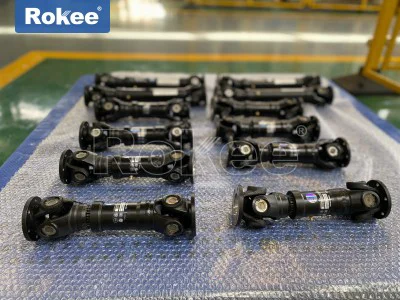
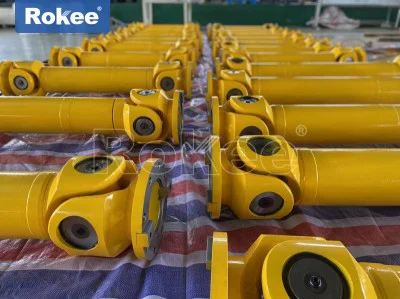
Welded universal shafts are classified into several primary types based on their design configuration, each tailored to specific application requirements and operational conditions. The most common classification is based on whether the shaft is telescopic or non-telescopic, as this determines its ability to accommodate axial displacement. Within these categories, further distinctions are made based on yoke design, joint type, and mounting configuration, leading to a diverse range of models suited for nearly every industrial need.
Telescopic welded universal shafts are designed with an internal spline mechanism that allows the shaft tube to extend or retract, making them ideal for applications where axial movement between shafts is a primary concern. The standard telescopic welded type, often designated with a “BH” suffix in industry nomenclature, features a basic splined design and is widely used in general heavy-industry applications, such as metalworking machinery and power generation equipment. The long telescopic welded type, or “CH” suffix, offers an extended spline length to accommodate greater axial displacement, making it suitable for long-distance power transmission systems, such as those found in large mining conveyors or paper mill machinery. For applications that require easy installation and maintenance, the telescopic welded flange type, or “BF” suffix, incorporates a welded flange at one or both ends, allowing for quick connection to machinery using bolts without the need for precise alignment during assembly. This design is popular in industries where equipment is frequently reconfigured, such as construction and agricultural machinery.
Non-telescopic welded universal shafts, by contrast, have a fixed length and are engineered for maximum torsional rigidity. The short non-telescopic welded type, or “WD” suffix, features a compact design with a short shaft tube, making it ideal for applications with limited installation space, such as small industrial gearboxes and pump units. The standard non-telescopic welded type, or “WH” suffix, is the most versatile model in this category, suitable for a wide range of heavy-duty applications where axial movement is minimal. Both types utilize a solid or hollow shaft tube, with hollow tubes being preferred for their higher strength-to-weight ratio, which reduces rotational inertia and improves dynamic performance at high speeds.
Another key classification is based on the design of the yoke, which directly impacts the shaft’s load capacity and application range. The integral yoke design, where the yoke is machined from a single piece of forged steel and welded to the shaft tube, is the most common in heavy-duty applications. This design offers superior strength and rigidity, with some models capable of handling turning diameters up to 1600 millimeters and torque transmission distances exceeding 30 meters. The split yoke design, by contrast, features a yoke that is assembled from two pieces and welded together, with a slightly lower load capacity but greater flexibility in manufacturing. Split yoke welded shafts are often used in medium-duty applications, such as automotive drivelines and light industrial machinery, where turning diameters typically reach up to 1200 millimeters. Additionally, specialized welded universal shafts, such as those with ball cage joints instead of traditional cross shafts, are available for high-speed applications that require ultra-smooth operation and reduced vibration. These models are commonly used in aerospace, automotive racing, and high-precision industrial equipment.
The versatility of welded universal shafts is reflected in their extensive range of industrial applications, spanning nearly every sector that relies on heavy machinery and power transmission. In the metallurgical industry, these shafts are the backbone of steel rolling mills, where they transmit torque from large electric motors to the rolling stands, accommodating the heavy loads and slight misalignments caused by the high pressure of metal forming. They are also used in continuous casting machines and roller conveyor systems, where their durability and resistance to high temperatures are critical. The mining industry relies heavily on welded universal shafts for equipment such as jaw crushers, cone crushers, and ball mills, which operate in extremely harsh conditions with high levels of vibration, dust, and impact loads. The rigid welded structure ensures that power is transmitted reliably even when the machinery is subjected to constant shock, minimizing downtime and maintenance costs.
Construction and heavy machinery are another major application area for welded universal shafts. Excavators, bulldozers, cranes, and loaders all use these shafts to connect engines to transmissions, hydraulic pumps, and drive axles. The telescopic models are particularly valuable in these applications, as they accommodate the dynamic movement of the machine’s components during operation, such as the lifting of a crane arm or the articulation of an excavator’s boom. In the marine industry, welded universal shafts are used in propulsion systems, connecting diesel engines to propeller shafts in ships and boats of all sizes. The marine environment demands components that are resistant to corrosion and saltwater contamination, so these shafts are often manufactured with stainless steel components or protective coatings, with welded seals to prevent water ingress into the bearing assemblies. They also accommodate the misalignments caused by hull flexure in rough seas, ensuring continuous power delivery to the propellers.
The automotive industry, while known for using bolted constant velocity (CV) joints in passenger vehicles, relies on welded universal shafts for heavy-duty applications such as commercial trucks, buses, and off-road vehicles. These shafts connect the transmission to the drive axles in rear-wheel-drive and four-wheel-drive vehicles, withstanding the high torque loads generated by large diesel engines. In the aerospace industry, lightweight welded universal shafts made from high-strength alloys such as titanium are used in aircraft control systems, connecting the pilot’s input mechanisms to the control surfaces (ailerons, elevators, rudders). They are also a critical component in helicopter rotor drive systems, transmitting power from the engine to the rotor while accommodating the dynamic misalignments caused by rotor movement during flight.
Other notable applications include the paper and pulp industry, where welded universal shafts drive the large rollers and drums in paper machines, operating in wet and high-temperature environments; the rubber and plastics industry, where they are used in extrusion lines and molding machines; and the power generation industry, where they connect turbines to generators in thermal and hydroelectric power plants. Even in emerging sectors such as renewable energy, welded universal shafts play a role in wind turbines, where they transmit torque from the gearbox to the generator, accommodating the misalignments caused by the turbine’s movement in the wind. In each of these applications, the welded universal shaft’s ability to combine high torque capacity, flexibility, and durability makes it an irreplaceable component in the global industrial ecosystem.
In conclusion, the welded universal shaft is a testament to the importance of structural design and material engineering in industrial power transmission. Its welded construction provides a level of rigidity, torque capacity, and reliability that is unmatched by bolted alternatives, making it the preferred choice for heavy-duty and precision applications alike. From the structural integration of yokes and shaft tubes to the precision of the cross assembly, every element is engineered to work in harmony, delivering high efficiency, low maintenance, and long service life. The diverse range of types—telescopic and non-telescopic, integral and split yoke—ensures that there is a welded universal shaft suited to nearly every industrial need, from the extreme conditions of a steel mill to the precision requirements of an aircraft control system. As industries continue to evolve and demand more from their machinery, the welded universal shaft will remain a critical enabler, facilitating the smooth and dependable transfer of power that drives global manufacturing, construction, and transportation forward. Its adaptability and performance solidify its place as a cornerstone component in the complex machinery that powers the modern world.