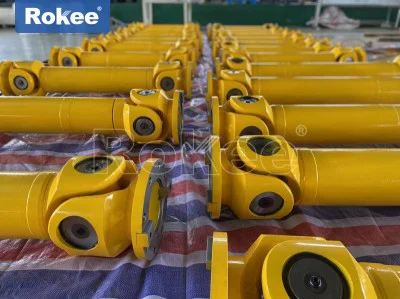
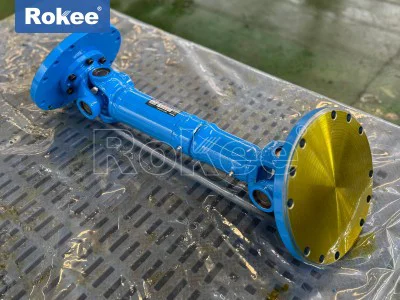
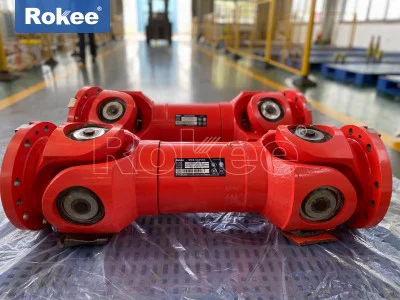
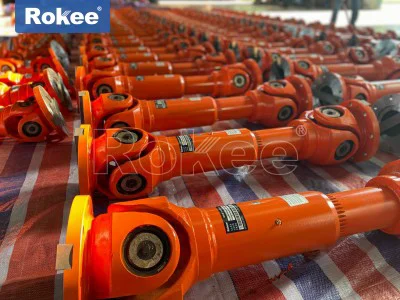
Long Telescopic Cardan Shaft Coupling
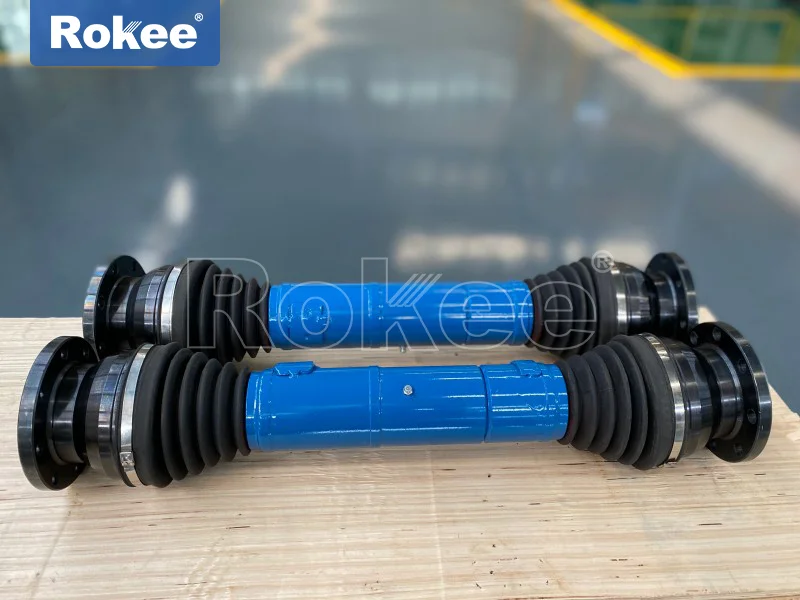
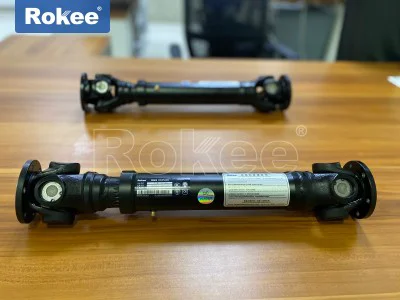
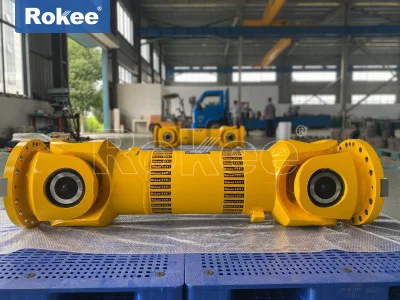
Long telescopic cardan shaft coupling is an important derivative type of traditional universal joint, which adds axial telescopic function while retaining angle compensation capability, greatly expanding its application range. Typical representatives of this type of coupling include SWC-CH type long telescopic welded cross shaft universal coupling, SWP-E type long cross shaft universal coupling with telescopic flange, etc., which can handle the problem of continuous rotation of two shafts with equal angular velocity that are not on the same axis or have large axis angles or axial movements.
From a structural design perspective, the long telescopic universal joint coupling has several significant characteristics. Firstly, there is the integral fork head structure, which eliminates the bolt connection in traditional structures and adopts welding technology, making the overall structure more compact and reasonable, and improving the load-bearing reliability. Secondly, the optimized bearing arrangement, through the design of the split bearing seat cover, facilitates the quick replacement of vulnerable bearing components, greatly reducing maintenance difficulty and downtime.
The combination of torque testing system and spatial position monitoring technology effectively controls the additional torque influence during the torque transmission process of the long telescopic cardan shaft coupling. Its telescopic structure not only compensates for axial displacement, but also absorbs some vibration energy, improving the dynamic performance of the entire transmission system.
In the realm of mechanical power transmission, the long telescopic cardan shaft coupling stands as a pivotal and versatile component, engineered to address the challenges of transmitting torque and rotational motion across non-collinear shafts with variable axial distances. Unlike standard rigid couplings that demand perfect shaft alignment and fixed axial spacing, this specialized coupling integrates the angular compensation capability of universal joints with the axial adjustability of telescopic mechanisms, creating a robust solution for complex industrial drive systems. Its design philosophy centers on adaptability, durability, and efficient power delivery, making it indispensable across countless heavy-duty and precision-driven mechanical setups where conventional transmission components fail to meet operational demands. Every aspect of its structure, from core load-bearing parts to auxiliary connecting elements, is meticulously crafted to withstand dynamic loads, compensate for misalignments, and maintain consistent performance over extended service life, without compromising on transmission efficiency or operational stability.
At its core, the long telescopic cardan shaft coupling features a modular and integrated structural composition, with three primary functional modules working in tandem to fulfill its transmission duties: the universal joint assembly, the telescopic spline mechanism, and the end connection components. The universal joint assembly, the heart of angular compensation, is predominantly designed with a cross-shaft structure in most industrial variants, consisting of two fork-shaped yokes at either end and a central cross journal that links them together. The cross journal is fitted with high-precision bearings, typically needle roller bearings or sliding bearings, which reduce friction and enable smooth angular deflection between the driving and driven shafts. This configuration allows the coupling to accommodate significant angular misalignments, ranging from a few degrees to more than 25 degrees in heavy-duty models, ensuring uninterrupted power transfer even when shafts are offset or inclined due to installation errors, equipment vibration, or operational movement. The fork yokes are forged from high-strength alloy steel to resist bending, shear, and torsional stresses, with precision machining to guarantee tight tolerances and stable load distribution across the joint surface.
Complementing the universal joint assembly is the telescopic spline mechanism, which defines the "long telescopic" attribute of the coupling. This module consists of an inner splined shaft and an outer splined sleeve, machined with precision-matched involute splines that enable smooth axial sliding while maintaining positive torque transmission. The spline pair is designed with ample contact area to distribute torsional loads evenly, preventing localized wear and ensuring reliable power delivery even during frequent axial adjustments. The telescopic travel range varies based on application requirements, with standard long telescopic models offering extended axial displacement capacity, far exceeding that of short telescopic counterparts, to cater to long-distance shaft connections and dynamic axial movement caused by thermal expansion, mechanical vibration, or equipment positioning adjustments. The spline surfaces are often heat-treated and surface-finished to enhance wear resistance and reduce friction, with sealing components integrated to prevent dust, debris, and lubricant leakage, preserving the internal lubrication environment and prolonging the service life of the sliding parts.
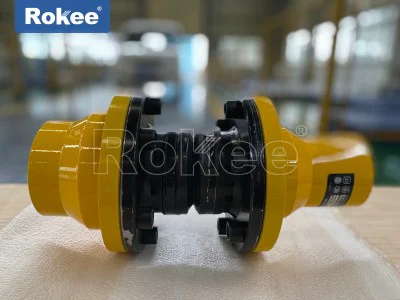
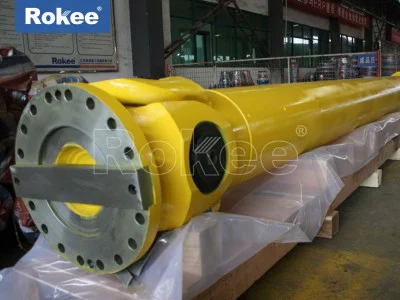
The end connection components serve as the interface between the coupling and the driving and driven equipment, ensuring secure and rigid attachment without power loss. Common connection designs include flange connections, keyway connections, and tapered bush connections, each tailored to different shaft sizes, torque ratings, and installation scenarios. Flange connections, widely used in heavy-duty applications, feature bolted flanges with precision-machined mating surfaces, distributing clamping forces evenly to avoid shaft damage and ensure zero backlash during torque transmission. Keyway connections rely on parallel or tapered keys to transfer torque, suitable for medium-load systems with simpler installation requirements, while tapered bush connections offer self-centering capabilities and easy installation/disassembly, ideal for precision equipment where alignment accuracy is critical. All connection parts are engineered to match the torsional strength of the main coupling body, eliminating weak points in the transmission chain and ensuring the entire assembly can withstand peak operational loads without failure.
The performance characteristics of the long telescopic cardan shaft coupling are directly derived from its structural design, making it a high-performance transmission solution with a unique set of advantages. Foremost is its exceptional misalignment compensation ability, which combines angular, axial, and limited radial compensation in a single component. This multifaceted compensation eliminates the need for precise shaft alignment during installation, reducing assembly time and costs, while also absorbing dynamic misalignments during operation to protect connected equipment from excessive stress and premature wear. Secondly, it boasts high torque transmission capacity and torsional rigidity, with the forged alloy steel construction and optimized cross-sectional design enabling it to handle heavy continuous loads and transient shock loads common in industrial machinery. The efficient power transfer design minimizes energy loss, with transmission efficiency reaching exceptionally high levels, making it an energy-efficient choice for large-scale power transmission systems.
Operational stability and durability are also standout performance metrics of this coupling. The balanced design of the universal joint and telescopic assembly reduces rotational vibration and noise, even at moderate to high operating speeds, ensuring smooth operation and minimizing wear on bearings and spline surfaces. The sealed telescopic mechanism and lubricated universal joints protect internal components from environmental contaminants, such as dust, moisture, and industrial pollutants, extending maintenance intervals and reducing downtime in harsh working conditions. Additionally, the coupling exhibits excellent fatigue resistance, capable of withstanding repeated cyclic loads, axial sliding, and angular deflection without structural degradation, maintaining consistent performance over years of continuous use. It also features good adaptability to extreme operating conditions, including high-temperature, low-temperature, and high-humidity environments, with material selections and surface treatments tailored to resist corrosion, oxidation, and thermal deformation.
While offering remarkable performance, the long telescopic cardan shaft coupling also has inherent performance limitations that guide its appropriate application. Single cross-shaft universal joint variants may exhibit slight rotational speed fluctuations at large deflection angles, leading to minor vibration at high speeds, which is mitigated in specialized double joint designs. The telescopic spline mechanism requires regular lubrication maintenance to prevent wear and seizing, especially in applications with frequent axial movement. Excessive angular deflection beyond the design limit can increase stress on the cross journal and bearings, leading to accelerated wear and reduced service life, so strict adherence to operational deflection parameters is essential. Furthermore, the overall length and weight of long telescopic models are greater than standard cardan shafts, requiring adequate support and installation space in the drive system, a factor that must be considered in equipment design and layout.
Long telescopic cardan shaft couplings are categorized into distinct types based on structural design, performance attributes, and application scenarios, each optimized for specific operational needs. The most prevalent category is the cross-shaft long telescopic cardan shaft coupling, available in welded and detachable fork designs. Welded variants feature integrated forged fork yokes and welded intermediate shafts, offering exceptional rigidity and load-bearing capacity, ideal for heavy industrial applications with extreme torque demands. Detachable designs feature bolted joint connections, facilitating disassembly, maintenance, and replacement of worn parts, making them suitable for systems requiring frequent upkeep. These couplings are further divided into heavy-duty, medium-duty, and light-duty subcategories based on torque rating, with heavy-duty models dominating large-scale industrial machinery and light-duty variants serving precision small-scale equipment.
Another prominent type is the constant velocity long telescopic cardan shaft coupling, built on ball cage universal joint technology. Unlike cross-shaft models, this design uses a spherical shell, steel balls, and a cage to transmit torque, ensuring synchronized rotation of input and output shafts even at large deflection angles, eliminating speed fluctuations and enabling ultra-smooth high-speed operation. It is ideal for precision machinery and high-speed drive systems where vibration and speed inconsistency are unacceptable, though it typically has lower torque capacity than heavy-duty cross-shaft couplings, making it better suited for medium-load, high-speed scenarios. There is also the spline-focused long telescopic cardan shaft coupling, optimized for maximum axial displacement with simplified universal joint structures, tailored for applications prioritizing axial adjustability over extreme angular compensation, such as equipment with significant thermal expansion or longitudinal movement.
Additionally, long telescopic cardan shaft couplings can be classified by installation orientation and connection type, including horizontal, vertical, and inclined installation models, as well as flange-mounted, keyed, and tapered bush-connected variants. Some specialized models feature enhanced sealing systems for harsh environments, or lightweight alloy constructions for mobile machinery, further expanding their versatility. Each type is engineered to balance key performance metrics—torque capacity, angular deflection, axial travel, speed rating, and durability—to match the unique demands of different industrial drive systems, ensuring optimal performance and cost-effectiveness when selected correctly.
The diverse structural and performance attributes of long telescopic cardan shaft couplings enable their widespread deployment across nearly every industrial sector that relies on mechanical power transmission, addressing unique challenges in each field. In the metallurgical and heavy machinery industry, these couplings are integral to rolling mill drives, continuous casting equipment, crushers, and hoisting machinery, where they transmit high torque across long distances, compensate for shaft misalignment caused by heavy loads and thermal expansion, and withstand harsh operating conditions involving dust, high temperatures, and mechanical shock. Their ability to maintain reliable transmission in such demanding environments ensures uninterrupted production in steel plants, mining operations, and heavy manufacturing facilities, where downtime incurs significant operational losses.
In construction and engineering machinery, including excavators, loaders, cranes, and concrete mixers, long telescopic cardan shaft couplings connect power sources to working components, accommodating the frequent movement, vibration, and shaft offset inherent to mobile machinery. The telescopic design adapts to frame deformation and positional adjustments during operation, while the universal joint compensates for angular changes in articulated components, ensuring stable power delivery and enhancing the overall durability and performance of construction equipment. In agricultural machinery, such as tractors, harvesters, and irrigation systems, these couplings provide flexible power transmission between engine and working parts, adapting to uneven terrain-induced shaft movement and variable operational loads, boosting equipment reliability and operational efficiency in field conditions.
The automotive and transportation sector also relies heavily on long telescopic cardan shaft couplings, particularly in commercial vehicles, off-road vehicles, and rail transit equipment. In rear-wheel-drive and four-wheel-drive vehicles, they transmit power from the transmission to the drive axle, compensating for suspension movement-induced axial and angular changes, ensuring smooth power delivery and vehicle stability. In rail systems, they connect traction motors to wheel sets, withstanding high-speed rotation, vibration, and dynamic loads, supporting safe and efficient rail transit. In shipbuilding and marine engineering, these couplings are used in propulsion systems, deck machinery, and auxiliary drive units, adapting to hull deformation and shaft movement in marine environments, with corrosion-resistant materials ensuring performance in saltwater conditions.
Beyond these core sectors, long telescopic cardan shaft couplings find applications in pumping systems, paper manufacturing equipment, textile machinery, test benches, and aerospace auxiliary systems. In pumping and fluid handling equipment, they connect motors to pump shafts, compensating for installation misalignment and thermal expansion, ensuring stable fluid transfer. In paper and textile production, they enable smooth power transmission in high-speed processing lines, minimizing vibration to maintain product quality. In aerospace and precision test equipment, constant velocity variants provide accurate, vibration-free torque transmission for precision testing and component validation. Their adaptability to diverse operational scenarios cements their status as a fundamental transmission component, bridging the gap between power sources and driven equipment in modern mechanical engineering.
As industrial technology advances and mechanical systems grow more complex, the long telescopic cardan shaft coupling continues to evolve, with ongoing design optimizations focused on enhancing performance, reducing weight, extending service life, and expanding application scope. Modern developments include advanced material formulations for improved strength and wear resistance, precision machining techniques for tighter tolerances and smoother operation, and optimized structural designs for higher torque density and reduced rotational inertia. These innovations not only elevate the coupling's performance but also broaden its applicability to emerging industrial fields, such as automated manufacturing systems, renewable energy equipment, and intelligent machinery. In essence, the long telescopic cardan shaft coupling remains a cornerstone of mechanical power transmission, its unique combination of angular compensation, axial adjustability, and robust performance making it an irreplaceable component that drives efficiency, reliability, and functionality across global industrial operations.