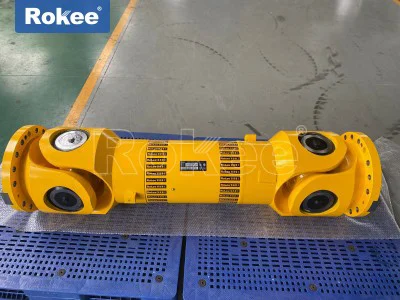
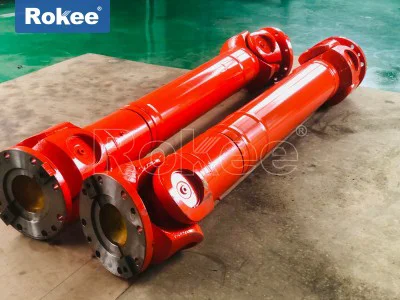
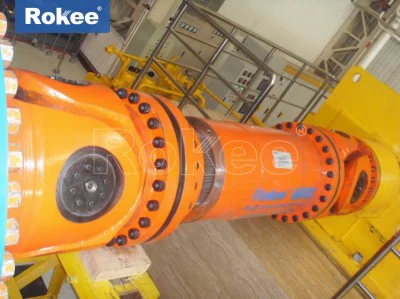
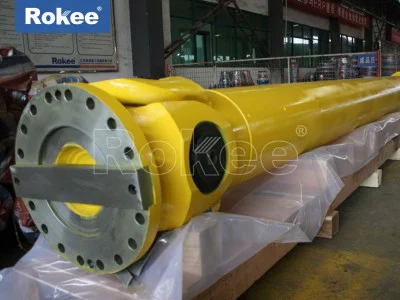
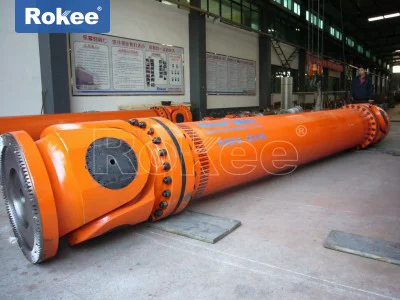
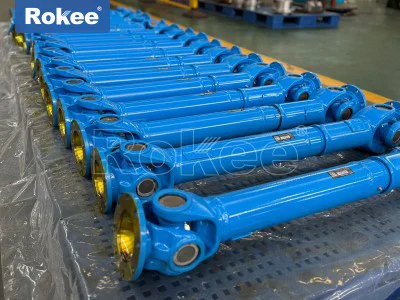
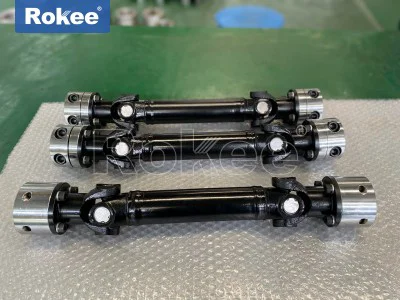
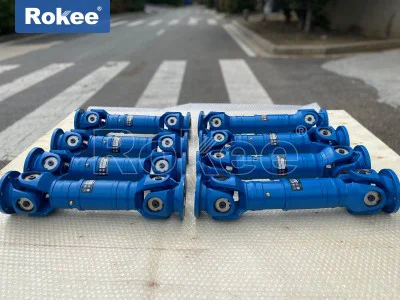
Flange Universal Joint Coupling
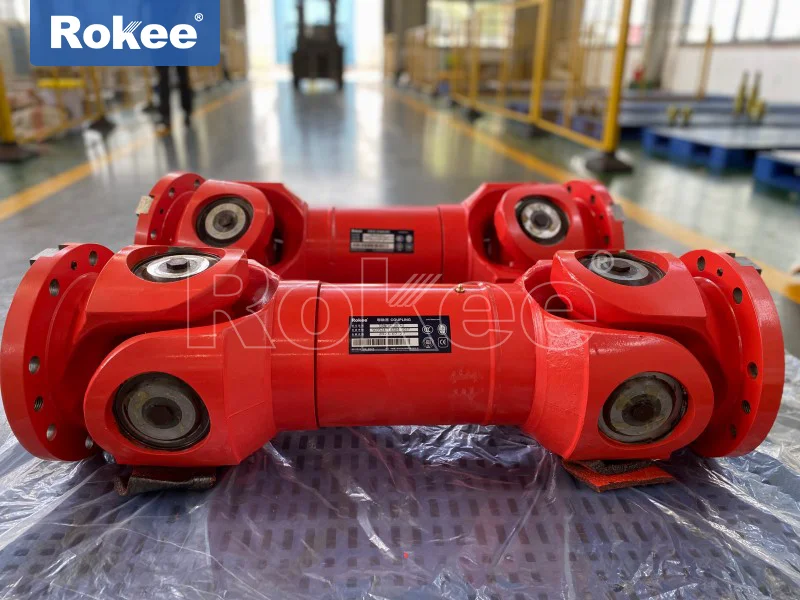
The flange universal joint coupling is a key connecting component widely used in mechanical transmission systems. It connects two transmission shafts with different axes on the same straight line through flange connection, allowing for power transmission while allowing for a certain degree of deflection and displacement. This type of coupling combines the stability of flange connections with the flexibility of universal joints, and plays an irreplaceable role in the industrial field.
Main components
Flange components: usually made of high-strength cast iron or forged steel, with precision machined surfaces and bolt holes for connection
Cross shaft assembly: composed of a cross shaft, needle roller bearings, and seals, it is the core moving component of the universal joint
Bearing seat: fixing the outer shell of the needle roller bearing to ensure stable operation of the bearing
Sealing system: prevent lubricant leakage and contamination from entering
The flange universal joint coupling achieves power transmission between non collinear shafts through a cross axis structure, and its working principle is based on the following mechanism:
Angular displacement compensation: When there is an angle between the two axes (usually ≤ 15 °), the cross axis rotates inside the bearing, keeping the driving shaft and the driven shaft rotating synchronously
Speed fluctuation adjustment: A single universal joint will generate speed fluctuations, and using a dual universal joint arrangement can eliminate these fluctuations
Axial displacement compensation: Some designs allow for limited axial displacement (typically 3-5mm)
Classified by structural form
Standard flange universal joint coupling: common basic types
Compact flange universal joint: smaller axial size
Large angle flange universal joint: allows for greater deflection angle
Universal joint with expansion joint flange: capable of axial compensation
Common Model Series
SWC type: lightweight flange universal joint
SWP type: Medium sized flange cross shaft universal joint
SWZ type: heavy-duty flange universal joint
G Ⅰ CL type: drum shaped toothed flange coupling (composite type)
Application field
Industrial machinery equipment
Metallurgical equipment such as rolling mills and straightening machines
Mining machinery: crushers, ball mills
Paper making machinery: drying machines, calenders
Construction machinery: excavators, cranesTransportation
Ship propulsion system
Locomotive transmission device
Heavy truck transmission shaftSpecial equipment
Wind turbines
Petroleum drilling equipment
Large test bench
The flange type universal joint coupling occupies an important position in the heavy industry field due to its excellent deflection compensation capability and high load-bearing characteristics. Proper selection, installation, and maintenance are key to ensuring its long-term reliable operation.
Flange universal joint coupling stands as a pivotal mechanical transmission component in modern industrial systems, engineered to bridge two rotating shafts that are not perfectly aligned, transferring torque and rotational motion efficiently while accommodating angular, axial and radial misalignments. Unlike standard rigid couplings that demand strict shaft coaxiality, this type of coupling integrates the stability of flange connections with the flexibility of universal joint mechanisms, making it a versatile solution for heavy-duty, high-torque and variable working condition scenarios. Its design philosophy centers on balancing structural rigidity, transmission precision and operational adaptability, addressing the core pain points of power transmission in complex mechanical setups where shaft displacement is inevitable due to manufacturing tolerances, installation errors, thermal expansion or dynamic load fluctuations. Every aspect of its structure, from core components to assembly details, is tailored to enhance load-bearing capacity, reduce wear and extend service life, while its diverse classifications cater to the unique demands of different industrial sectors, spanning heavy machinery, marine engineering, automotive systems, metallurgical production and more.
At its core, the flange universal joint coupling features a well-defined, robust structural composition that underpins its reliable performance. The primary components include two flange hubs, a cross-shaped spider (also known as a cross journal), needle roller bearings, bearing caps, sealing elements and fastening hardware. The flange hubs are the foundational connecting parts, typically forged from high-strength alloy steel or carbon steel to withstand extreme torsional forces and impact loads; each hub is equipped with a fork-shaped end that interfaces with the cross spider, and a flat flange face with pre-drilled bolt holes for secure attachment to driving and driven shafts. The cross spider, positioned at the center of the coupling, serves as the pivotal joint that enables angular deflection, with four precision-machined journal ends that fit into the bearing assemblies of the fork hubs. Needle roller bearings are mounted on each journal of the cross spider, replacing traditional ball bearings to deliver larger contact areas, higher load resistance and lower friction coefficients, which is critical for maintaining smooth rotation under heavy loads and reducing energy loss during transmission. Bearing caps are used to encapsulate the needle bearings, locking them in place to prevent axial displacement and protect internal components from external contaminants, while sealing elements such as rubber gaskets or lip seals are integrated around the bearing caps to block dust, moisture, grease leakage and abrasive particles, preserving lubrication efficiency and preventing premature wear of moving parts. Fastening bolts and nuts, selected for high tensile strength, secure the two flanges together firmly, ensuring tight contact between mating surfaces and eliminating slack that could cause vibration or torque loss during operation. The seamless integration of these components creates a rigid yet flexible transmission unit, where the flange structure provides stable shaft connection and the universal joint mechanism delivers the necessary misalignment compensation, forming a synergistic system that excels in both stability and adaptability.
The performance attributes of flange universal joint couplings are what distinguish them from other coupling types, making them indispensable in demanding industrial environments. First and foremost, they exhibit exceptional torque transmission capacity, capable of handling both static and dynamic high-torque loads without deformation or failure, a trait derived from the robust forged construction and optimized load distribution design of the cross spider and flange hubs. This high load-bearing capability allows them to operate reliably in heavy machinery where torque values are substantial, avoiding the common issues of breakage or slippage seen in weaker coupling designs. Secondly, they possess superior misalignment compensation performance, accommodating angular misalignments typically ranging from 15° to 25° between shafts, as well as moderate axial and radial displacements, which is far more flexible than rigid couplings and comparable to specialized flexible couplings but with greater rigidity. This flexibility prevents excessive stress on shafts, bearings and connected equipment, reducing mechanical fatigue and extending the service life of the entire transmission system. Thirdly, they offer stable transmission efficiency with minimal power loss, thanks to the low-friction needle roller bearings and precise machining of mating components; even under continuous high-speed operation, friction heat generation is controlled within a reasonable range, ensuring consistent performance and avoiding efficiency degradation over time. Fourthly, they feature excellent operational stability and vibration damping properties, absorbing minor shocks and vibrations generated during machine operation, which smooths out rotational fluctuations and protects sensitive downstream equipment from damage. Additionally, these couplings demonstrate strong environmental adaptability, able to function reliably in harsh conditions such as high temperatures, low temperatures, dusty atmospheres and humid environments, provided proper lubrication is maintained. They also boast good maintainability, with accessible bearing and sealing components that allow for routine lubrication, inspection and replacement without full disassembly of the entire transmission system, reducing downtime and maintenance costs for industrial operations.
Flange universal joint couplings are classified into distinct categories based on structural design, misalignment compensation features, application scenarios and load-bearing specifications, each tailored to meet specific operational requirements. The most common classification is based on the number of universal joint modules, dividing them into single flange universal joint couplings and double flange universal joint couplings. Single flange universal joint couplings consist of one set of cross spider and fork hubs, suitable for applications with moderate angular misalignment and relatively short shaft distances, offering a compact structure and cost-effective performance for light to medium load scenarios. Double flange universal joint couplings, also known as double universal joint couplings, integrate two sets of universal joint mechanisms connected by an intermediate shaft, enabling larger angular misalignment compensation (up to 30° or more) and longer transmission distances, making them ideal for heavy-duty applications with significant shaft displacement and high torque demands. Another key classification is based on flange connection type, distinguishing between integral flange couplings and split flange couplings. Integral flange couplings have a one-piece hub and flange structure, delivering higher rigidity and torque capacity, suitable for extreme heavy-load and high-precision transmission scenarios where structural integrity is paramount. Split flange couplings feature a two-piece flange design that simplifies installation and removal, especially in confined spaces where shaft disassembly is difficult, offering greater convenience for equipment maintenance and retrofitting. They can also be categorized by load capacity into light-duty, medium-duty and heavy-duty flange universal joint couplings. Light-duty models are designed for small-scale mechanical equipment, automated production lines and precision instruments, with compact dimensions and moderate load resistance; medium-duty models strike a balance between size and performance, widely used in general industrial machinery such as pumps, fans and conveyors; heavy-duty models are reinforced with thicker flanges, larger cross spiders and heavy-duty bearings, engineered for ultra-heavy applications like metallurgical rolling mills, mining machinery, marine propulsion systems and large construction equipment. Furthermore, some variants are designed with telescopic intermediate shafts to compensate for axial displacement over longer distances, enhancing their versatility in applications where shaft length varies due to thermal expansion or mechanical movement.
The unique combination of structural robustness, flexible misalignment compensation and high torque performance enables flange universal joint couplings to be deployed across a vast spectrum of industrial and engineering applications, serving as a critical link in power transmission systems worldwide. In the heavy machinery and metallurgical industry, these couplings are extensively used in rolling mills, crushers, hoists and conveyor systems, where they transfer high torque between motors and working components while accommodating the substantial shaft misalignment caused by heavy loads and mechanical deformation. Their ability to withstand continuous impact loads and harsh working conditions makes them irreplaceable in these high-intensity production environments, ensuring stable operation and minimizing production downtime. In marine engineering, flange universal joint couplings play a vital role in ship propulsion systems, connecting the engine output shaft to the propeller shaft; the marine environment often involves hull deformation, wave-induced vibration and shaft displacement, and the coupling’s angular flexibility ensures uninterrupted power transmission even under these dynamic conditions, while the sealed structure prevents seawater corrosion and lubricant loss, maintaining performance in corrosive marine atmospheres. In the automotive and transportation industry, they are integrated into the drivetrains of heavy-duty trucks, off-road vehicles and agricultural machinery, linking the transmission system to the drive axles. The variable road conditions and suspension movement cause constant shaft misalignment, and the coupling’s flexibility absorbs these displacements, reducing vibration in the vehicle chassis and improving ride comfort while enhancing the durability of drivetrain components. In the field of industrial manufacturing and automation, they are used in various processing equipment such as lathes, milling machines, packaging machinery and textile machinery, providing precise torque transmission for automated production lines. Their stable performance and low vibration characteristics help maintain machining accuracy and production efficiency, meeting the high-precision requirements of modern manufacturing. Additionally, they find applications in power generation equipment, including water turbines, wind turbines and generator sets, where they transfer rotational power from energy capture components to power generation units, compensating for shaft misalignment caused by foundation settlement and thermal expansion, ensuring efficient and stable power output. In construction machinery such as excavators, bulldozers and cranes, flange universal joint couplings deliver reliable power transmission in rugged construction sites, enduring heavy shocks, dust and frequent load changes, supporting the efficient operation of essential construction equipment.
Beyond these core applications, the adaptability of flange universal joint couplings continues to expand into emerging industrial fields, driven by ongoing advancements in mechanical design and material technology. Modern iterations feature enhanced material formulations, such as high-strength quenched and tempered steel for cross spiders and flanges, and wear-resistant coatings for bearing surfaces, further boosting load capacity, wear resistance and service life. Precision manufacturing processes, including CNC machining and heat treatment optimization, have also improved the dimensional accuracy and surface finish of components, reducing friction and enhancing transmission efficiency even further. While each classification of flange universal joint coupling is designed for specific scenarios, their core working principle remains consistent: leveraging the flange connection for stable shaft fixation and the universal joint for misalignment compensation, creating a reliable bridge for power transmission in imperfectly aligned shaft systems. As industrial equipment evolves towards higher loads, higher speeds and greater operational flexibility, the role of flange universal joint couplings becomes increasingly critical, as they address the fundamental challenge of efficient torque transmission in non-coaxial shaft systems. Their widespread adoption across diverse sectors underscores their status as a foundational mechanical component, and ongoing innovations in structure and materials will continue to enhance their performance, enabling them to meet the evolving demands of modern engineering and industrial production.
In summary, the flange universal joint coupling is a masterfully designed mechanical component that merges the stability of flange connections with the flexibility of universal joint technology, offering exceptional torque transmission, misalignment compensation and environmental adaptability. Its well-engineered structural components work in harmony to deliver reliable performance under demanding conditions, while its diverse classifications ensure suitability for a wide range of industrial applications. From heavy metallurgical machinery to precision manufacturing equipment, from marine propulsion systems to automotive drivetrains, this coupling serves as a vital transmission link, enabling efficient and stable power delivery in scenarios where shaft alignment cannot be perfectly maintained. As industrial technology progresses, the flange universal joint coupling will remain a key player in mechanical transmission systems, continuously evolving to meet the growing requirements of modern industry, solidifying its position as an indispensable component in global engineering and manufacturing.