Performance Testing And Optimization Scheme Of Cardan Shaft Coupling In Cold Storage Sandwich Panel Production Line
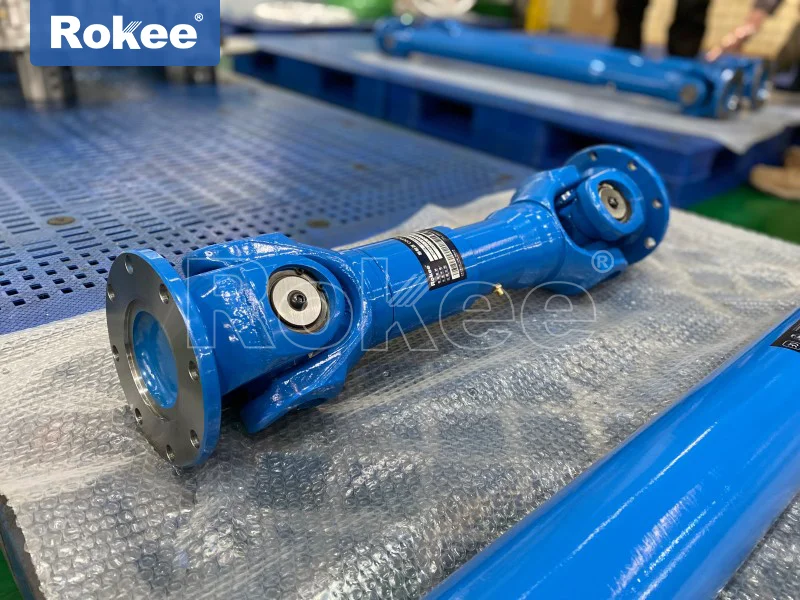
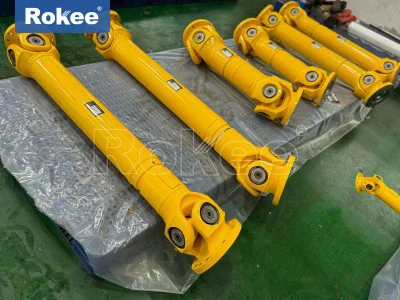
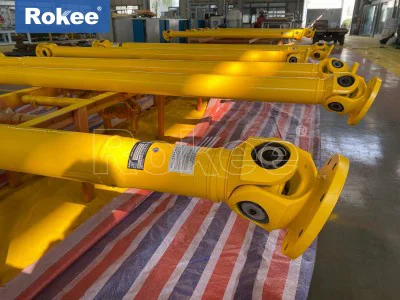
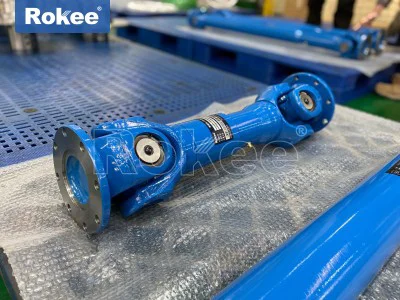
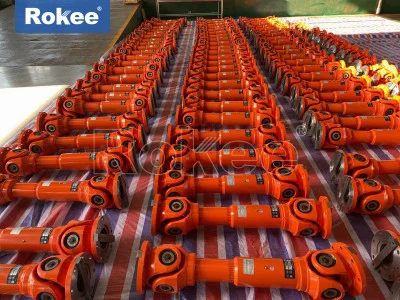
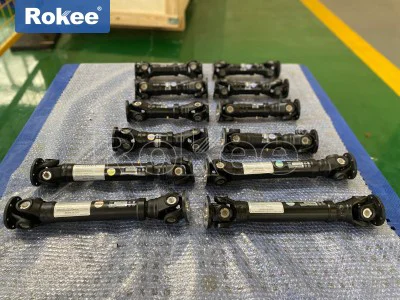
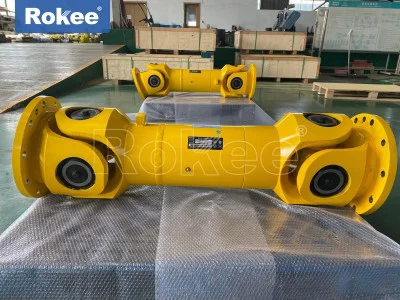
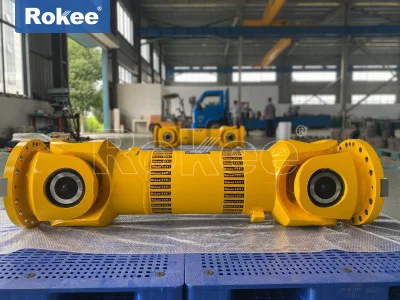
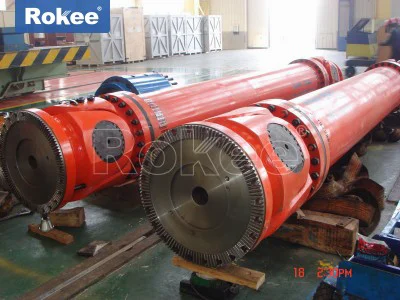
In the modern cold storage sandwich panel production line, the cardan shaft coupling serves as a critical transmission component that connects the power source to various processing equipment, including uncoilers, roll forming machines, foaming systems, and cutting devices. Its performance directly determines the stability, efficiency, and product quality of the entire production line. Unlike general industrial environments, the cold storage sandwich panel production process involves specific working conditions such as low-temperature operation areas, continuous high-load transmission, and frequent start-stop cycles, which place higher requirements on the durability, torque transmission accuracy, and environmental adaptability of the cardan shaft coupling. Any performance failure of the coupling, such as excessive vibration, torque loss, or premature wear, may lead to production interruptions, increased maintenance costs, and even defects in the sandwich panels, such as uneven thickness, poor bonding, or structural damage. Therefore, conducting systematic performance testing and formulating targeted optimization schemes for the cardan shaft coupling in cold storage sandwich panel production lines are essential to ensure the stable and efficient operation of the production system, reduce potential risks, and improve the overall competitiveness of the production enterprise.
The performance testing of the cardan shaft coupling in cold storage sandwich panel production line needs to be carried out based on the actual working characteristics of the production line, focusing on key performance indicators that affect the operation effect, and adopting scientific testing methods and equipment to ensure the accuracy and reliability of the test results. Before conducting the formal test, it is necessary to carry out sufficient preparatory work, including the inspection of the coupling itself and the adjustment of the test environment, to eliminate the interference of non-test factors on the test results. First, the coupling to be tested should be checked for appearance defects, such as cracks, scratches, or deformation on the surface of the cross shaft, yoke, and other components, and the tightness of the connecting bolts and bearings should be inspected to ensure that the coupling is in a normal installation state. At the same time, the lubrication condition of the coupling should be checked; the lubricating oil should be replaced if it is deteriorated or insufficient to avoid abnormal wear caused by poor lubrication during the test. In terms of the test environment, since the cold storage sandwich panel production line has partial low-temperature operation areas (usually 0℃ to -10℃ in the foaming and cold storage sections), the test should simulate the actual working temperature to ensure that the test results can truly reflect the performance of the coupling in the actual production environment. The test site should be kept clean and free of debris to prevent foreign objects from entering the coupling during the test and causing damage. In addition, the test equipment, including torque sensors, vibration analyzers, temperature sensors, and rotational speed meters, should be calibrated in advance to ensure their measurement accuracy meets the test requirements.
Torque transmission performance is one of the core performance indicators of the cardan shaft coupling, as it directly affects the power transmission efficiency between the motor and the processing equipment in the production line. In the cold storage sandwich panel production process, the coupling needs to transmit stable torque under different working conditions, such as the start-up phase of the production line, the stable operation phase, and the load change phase (such as when the thickness of the sandwich panel is adjusted). Therefore, the torque transmission test should cover multiple working conditions to comprehensively evaluate the torque transmission capacity and stability of the coupling. During the test, the coupling is connected to the test bench, which simulates the power output of the motor and the load of the processing equipment. The torque sensor is installed at both ends of the coupling to measure the input torque and output torque in real time, and the torque transmission efficiency is calculated by comparing the two sets of data. At the same time, the torque fluctuation during the operation of the coupling is recorded to judge whether the torque transmission is stable. In the start-up phase, it is necessary to focus on measuring the impact torque generated when the coupling starts, to avoid excessive impact torque causing damage to the coupling components or the connected equipment. In the stable operation phase, the torque transmission efficiency should be maintained above a certain threshold (usually not less than 95%) to ensure that the power loss is within a reasonable range. In the load change phase, the response speed of the coupling to torque changes should be tested to ensure that it can quickly adapt to the load fluctuation of the production line without torque loss or transmission delay. The test results show that the main factors affecting the torque transmission performance of the coupling include the fit clearance between the cross shaft and the bearing, the lubrication condition, and the material strength of the coupling components. Excessive fit clearance will lead to torque fluctuation and power loss, while poor lubrication will increase friction resistance and reduce transmission efficiency.
Vibration performance is another key indicator that needs to be focused on in the performance testing of the cardan shaft coupling. In the cold storage sandwich panel production line, the continuous operation of the coupling will generate vibration, and excessive vibration will not only affect the service life of the coupling itself but also transmit to other equipment in the production line, leading to increased noise, reduced processing accuracy of the sandwich panel, and even premature failure of other components (such as bearings and gears). Therefore, the vibration test of the coupling is mainly to measure the vibration amplitude, frequency, and acceleration under different rotational speeds and load conditions, and judge whether the vibration is within the allowable range. During the test, the vibration analyzer is installed at the key positions of the coupling (such as the yoke and the cross shaft) to collect vibration data in real time, and the data is analyzed and processed to obtain the vibration characteristics of the coupling. At the same time, the vibration transmission to the connected equipment is measured to evaluate the impact of the coupling vibration on the entire production line. The test results show that the main causes of excessive vibration of the coupling include unbalanced mass distribution, misalignment of the connecting shaft, wear of the cross shaft and bearing, and loose connecting bolts. For example, if the mass distribution of the coupling is unbalanced, it will generate centrifugal force during high-speed operation, leading to periodic vibration; if the connecting shaft is misaligned, it will cause additional torque and vibration during the torque transmission process. In addition, the low-temperature environment in the production line may cause thermal deformation of the coupling components, leading to changes in the fit clearance and further increasing vibration.
Durability testing is an important part of the performance testing of the cardan shaft coupling, as it is related to the service life of the coupling and the maintenance cycle of the production line. The cold storage sandwich panel production line usually operates continuously for a long time (24 hours a day in many cases), and the coupling is in a state of high-load transmission for a long time, so it is required to have good durability and wear resistance. The durability test of the coupling is mainly carried out by simulating the long-term continuous operation of the production line, and the operation time of the coupling is extended to simulate the wear and aging process under actual working conditions. During the test, the coupling is operated under the rated rotational speed and load, and the operation status of the coupling is regularly inspected, including the wear of the cross shaft, bearing, and other components, the change of lubrication condition, and the occurrence of abnormal noise or vibration. At the same time, the torque transmission efficiency and vibration performance of the coupling are tested regularly to record the changes of various performance indicators with the operation time. The durability test usually lasts for a certain period (such as 1000 hours) to simulate the service life of the coupling in actual production. The test results show that the main factors affecting the durability of the coupling include the material performance of the components, the lubrication condition, and the working load. The cross shaft and bearing made of high-strength alloy steel have better wear resistance and fatigue resistance, which can effectively extend the service life of the coupling; good lubrication can reduce the friction between components, avoid excessive wear, and slow down the aging process; excessive working load will accelerate the fatigue damage of the coupling components, leading to premature failure.
In addition to the above key performance indicators, the low-temperature adaptability test of the cardan shaft coupling is also necessary for the cold storage sandwich panel production line. Since part of the production process (such as the foaming and cold storage of the sandwich panel) is carried out in a low-temperature environment, the performance of the coupling components may be affected by low temperature, such as the decrease of material toughness, the increase of brittleness, and the change of lubricating oil viscosity. Therefore, the low-temperature adaptability test is to place the coupling in a low-temperature environment (simulating the actual working temperature of the production line) for a certain period, then test its torque transmission performance, vibration performance, and mechanical properties, and compare it with the test results under normal temperature to evaluate the impact of low temperature on the coupling performance. During the test, it is necessary to pay attention to the change of the lubricating oil viscosity in the low-temperature environment, because the increase of viscosity will increase the friction resistance of the coupling, reduce the transmission efficiency, and even cause the jamming of the coupling components. At the same time, the toughness of the coupling components should be tested to avoid brittle fracture caused by low temperature during operation. The test results show that the low-temperature environment will have a certain impact on the performance of the coupling, but by selecting appropriate materials and lubricants, the impact can be effectively reduced, ensuring that the coupling can work stably in the low-temperature environment.
Based on the results of the performance testing, it is necessary to analyze the existing problems of the cardan shaft coupling in the cold storage sandwich panel production line and formulate targeted optimization schemes to improve the performance of the coupling, extend its service life, and ensure the stable operation of the production line. The optimization schemes should be formulated according to the specific problems found in the test, such as torque loss, excessive vibration, premature wear, and poor low-temperature adaptability, and combined with the actual working conditions of the production line, to ensure the feasibility and effectiveness of the optimization measures.
For the problem of torque loss and low transmission efficiency found in the torque transmission test, the optimization measures mainly focus on improving the fit accuracy of the coupling components and optimizing the lubrication system. First, the fit clearance between the cross shaft and the bearing should be adjusted to the reasonable range. Excessive fit clearance will lead to torque fluctuation and power loss, while too small fit clearance will increase friction resistance. Therefore, it is necessary to strictly control the fit tolerance during the processing and installation of the coupling, and use precision processing equipment to improve the processing accuracy of the cross shaft and bearing. At the same time, the surface roughness of the coupling components should be reduced to reduce friction loss during torque transmission. In terms of the lubrication system, it is necessary to select lubricating oil with good performance, which has appropriate viscosity, wear resistance, and low-temperature fluidity, to ensure that the coupling can maintain good lubrication under different working conditions (including low-temperature environment). In addition, a regular lubrication maintenance system should be established to replace the lubricating oil regularly and check the lubrication condition to avoid poor lubrication caused by oil deterioration or insufficient oil quantity. For the coupling used in the low-temperature section of the production line, lubricating oil with low pour point should be selected to ensure that it can still maintain good fluidity in the low-temperature environment, reducing friction resistance and improving transmission efficiency.
For the problem of excessive vibration of the coupling, the optimization measures mainly include reducing the mass unbalance of the coupling, adjusting the alignment accuracy of the connecting shaft, and strengthening the structural strength of the coupling. First, the dynamic balance test of the coupling should be carried out, and the unbalanced mass of the coupling should be adjusted by adding or removing balance weights to reduce the centrifugal force generated during high-speed operation, thereby reducing vibration. During the dynamic balance test, the coupling should be tested under different rotational speeds to ensure that the mass distribution is balanced under the entire working rotational speed range of the production line. Second, the alignment accuracy of the connecting shaft between the coupling and the motor, processing equipment should be adjusted to avoid vibration caused by shaft misalignment. The alignment adjustment can be carried out by using laser alignment instruments to ensure that the coaxiality of the connecting shaft meets the requirements, reducing the additional torque and vibration generated during torque transmission. In addition, the structural strength of the coupling components should be strengthened. For example, the thickness of the yoke can be increased appropriately, and the material of the cross shaft can be replaced with high-strength alloy steel to improve the rigidity and vibration resistance of the coupling. At the same time, the connecting bolts of the coupling should be checked and tightened regularly to avoid vibration caused by loose bolts.
To solve the problem of premature wear of the coupling and improve its durability, the optimization measures mainly focus on material selection, surface treatment, and load control. First, high-performance materials should be selected for the key components of the coupling (such as cross shaft and bearing). High-strength alloy steel with good wear resistance and fatigue resistance can be used to improve the service life of the components. For example, the cross shaft can be made of 40CrNiMoA alloy steel, which has high strength, toughness, and wear resistance, and can withstand high-load transmission for a long time. Second, surface treatment technology can be adopted to improve the wear resistance of the coupling components. For example, carburizing and quenching treatment can be carried out on the surface of the cross shaft and bearing to increase the surface hardness and wear resistance, while maintaining the toughness of the core. In addition, the surface of the components can be coated with a wear-resistant coating to reduce friction and wear. Third, the working load of the coupling should be controlled within the rated range to avoid excessive load causing fatigue damage to the components. The production line should be equipped with a load monitoring system to real-time monitor the load of the coupling, and alarm and adjust in time when the load exceeds the rated value. At the same time, the start-stop operation of the production line should be standardized to reduce the impact torque generated during start-up, avoiding damage to the coupling components.
For the problem of poor low-temperature adaptability of the coupling, the optimization measures mainly include selecting low-temperature resistant materials and optimizing the lubrication system. In terms of material selection, low-temperature resistant alloy steel should be selected for the coupling components, which can maintain good toughness and mechanical properties in the low-temperature environment, avoiding brittle fracture. For example, the cross shaft and bearing can be made of low-temperature resistant stainless steel, which has good low-temperature toughness and corrosion resistance, suitable for the low-temperature working environment of the cold storage sandwich panel production line. In terms of the lubrication system, as mentioned earlier, lubricating oil with low pour point and good low-temperature fluidity should be selected to ensure that it can still play a good lubricating role in the low-temperature environment. At the same time, the lubrication pipeline can be insulated to prevent the lubricating oil from solidifying due to low temperature, ensuring the normal circulation of the lubricating oil. In addition, the coupling can be preheated before starting in the low-temperature environment to reduce the impact of low temperature on the components, avoiding brittle damage caused by sudden start-up.
In addition to the above targeted optimization measures, it is also necessary to establish a complete daily maintenance and inspection system for the cardan shaft coupling to ensure the long-term stable operation of the coupling. The daily maintenance includes regular inspection of the appearance of the coupling, the tightness of the connecting bolts, the lubrication condition, and the operation status (such as abnormal noise and vibration). The inspection frequency can be determined according to the operation time of the production line, usually once a day for daily inspection and once a week for detailed inspection. For the problems found during the inspection, timely handling should be carried out, such as tightening loose bolts, replacing deteriorated lubricating oil, and repairing or replacing worn components. At the same time, the maintenance records of the coupling should be kept in detail, including the maintenance time, maintenance content, and replacement parts, to provide a basis for subsequent maintenance and performance optimization. In addition, the operators of the production line should be trained to master the basic knowledge of the coupling, such as the working principle, operation precautions, and common fault handling methods, so that they can find and deal with the potential problems of the coupling in time during the operation process, reducing the occurrence of faults.
The effectiveness of the optimization scheme needs to be verified through re-testing after the optimization measures are implemented. The re-test should be carried out according to the same testing standards and methods as the initial performance test, focusing on testing the torque transmission efficiency, vibration performance, durability, and low-temperature adaptability of the optimized coupling. By comparing the re-test results with the initial test results, the improvement effect of the optimization scheme can be evaluated. If the performance indicators of the coupling after optimization meet the requirements of the production line, the optimization scheme is considered effective; if there are still deficiencies, the optimization measures should be adjusted and improved according to the re-test results until the performance of the coupling meets the requirements. At the same time, the long-term operation effect of the optimized coupling should be tracked and monitored to understand its performance changes during long-term operation, and timely adjust the maintenance and optimization measures to ensure that the coupling can always maintain good performance.
In conclusion, the cardan shaft coupling is a key component in the cold storage sandwich panel production line, and its performance directly affects the stable operation and production efficiency of the entire production line. Through systematic performance testing, including torque transmission performance, vibration performance, durability, and low-temperature adaptability, the existing problems of the coupling can be accurately found. By formulating targeted optimization schemes, such as improving fit accuracy, optimizing lubrication system, reducing mass unbalance, strengthening structural strength, selecting high-performance materials, and establishing a complete maintenance system, the performance of the cardan shaft coupling can be effectively improved, its service life can be extended, and the production interruptions caused by coupling faults can be reduced. This not only ensures the stability and efficiency of the cold storage sandwich panel production line but also improves the quality of the sandwich panel products, reduces the maintenance cost of the production line, and brings greater economic benefits to the enterprise. With the continuous development of the cold storage industry, the requirements for the performance of the cold storage sandwich panel production line will be higher and higher, and the performance testing and optimization of the cardan shaft coupling will also need to be continuously improved and innovated to adapt to the new production needs, providing a strong guarantee for the sustainable development of the cold storage sandwich panel industry.