Rigid Couplings
Rigid coupling is a type of mechanical transmission device that firmly connects two shafts through rigid connectors, making them rotate as a whole. Unlike flexible couplings, rigid couplings do not provide any form of elastic deformation or displacement compensation capability, and require the two shafts connected to be strictly aligned. This type of coupling is widely used in precision transmission and heavy-duty applications due to its simple structure, high torque transmission, and zero return clearance.
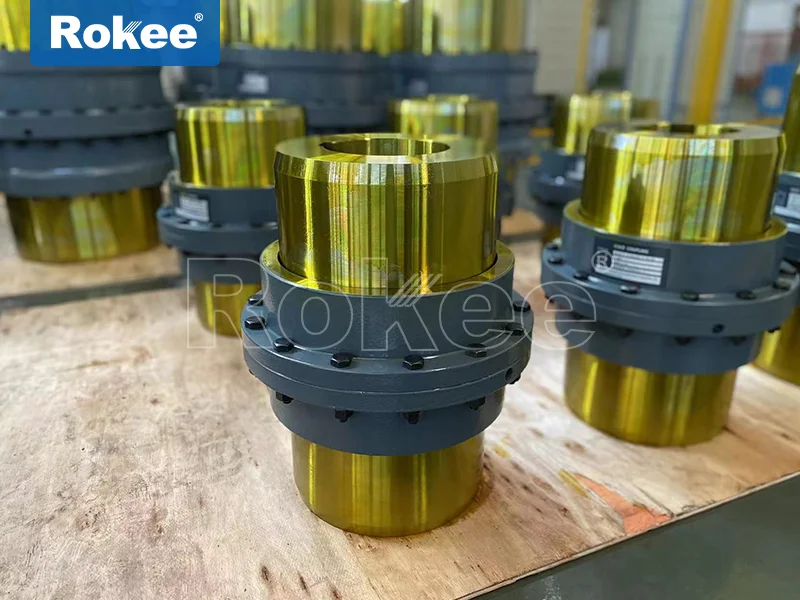
In mechanical transmission systems, rigid couplings play a crucial role in ensuring efficient and precise transmission of power from the drive shaft (such as the motor shaft) to the driven shaft (such as the pump or gearbox shaft). Due to its rigidity, this type of coupling is particularly suitable for applications that require high transmission accuracy and stiffness, such as machine tool spindles, precision instruments, automated production lines, etc.
The main types of rigid couplings
Flange coupling
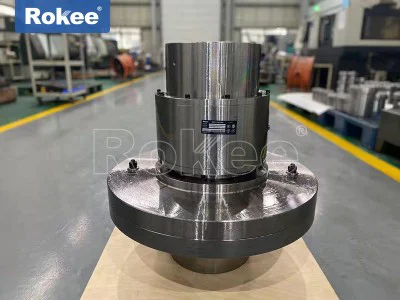
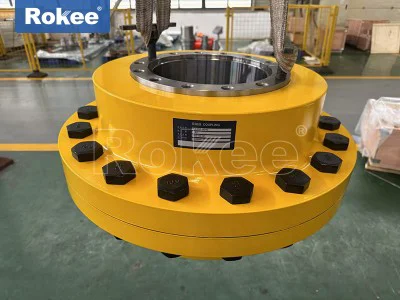
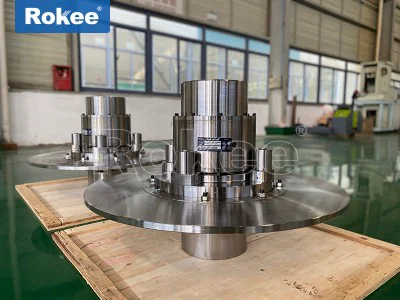
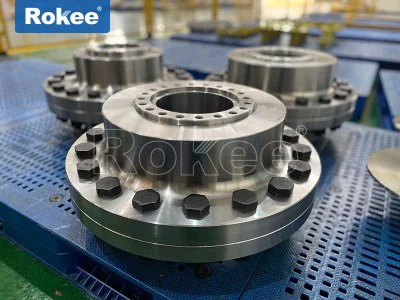
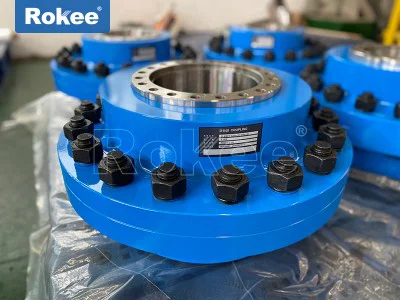
The flange type coupling consists of two flange plates and connecting bolts, and is one of the most common types of rigid couplings. Two flanges are installed at the ends of the two shafts that need to be connected, and are fastened together with high-strength bolts. This structure can transmit extremely high torque and is commonly used in large mechanical equipment and heavy industry fields.
Structural features: Flanges are usually forged from high-quality carbon steel or alloy steel, and the contact surfaces are precision machined to ensure a good fit. There is a positioning stop on the flange plate, which helps to align the two shafts. The bolt holes are hinged or fitted with bolts to improve positioning accuracy.sleeve coupling
Sleeve coupling is a type of rigid coupling with the simplest structure, consisting of a single cylindrical sleeve and connecting components. The two ends of the sleeve are fixedly connected to the two shafts through keys, pins, or fastening screws.
Working principle: The inner hole of the sleeve is fitted with a transition fit or interference fit with the shaft, and torque is transmitted through a key. At the same time, a set screw or conical pin is used for axial fixation. This type of coupling has a compact structure and small radial size, making it suitable for space limited situations, but it is relatively difficult to assemble and disassemble.clamping coupling
The clamp type coupling consists of two semi cylindrical shells, connecting bolts, and axial fastening devices. The two halves of the shell are fastened with bolts to form a complete cylindrical sleeve, and the two shaft ends are clamped to achieve connection.
Application advantages: The biggest advantage of this type of coupling is that it is easy to install and disassemble, without the need to move equipment or shafts, making it particularly suitable for equipment that requires frequent maintenance. There are usually longitudinal key slots inside the clamping shell, which transmit torque through flat keys.
The structural design of rigid couplings embodies the engineering concept of "simplicity and reliability". Its main features include:
Non elastic component: entirely composed of metal parts, without any elastic materials such as rubber or plastic
Zero clearance connection: interference fit or precision fit is used between the shaft and the coupling to ensure no transmission clearance
High overall rigidity: The structural rigidity is close to a solid axis, and it has strong resistance to torsional deformation
Compact design: usually with smaller radial dimensions, saving installation space
Rigid couplings have significant advantages in transmission performance:
High transmission accuracy: no elastic deformation, maintaining precise phase relationship, suitable for precision transmission
High torque capacity: Direct contact between metals can transmit extremely high torque
No energy loss: Without the hysteresis effect of elastic components, the transmission efficiency is close to 100%
High temperature resistance: The all metal structure can work for a long time in high temperature environments
Long lifespan: No vulnerable parts, long service life under correct installation
Despite its many advantages, rigid couplings also have some inherent limitations:
Strict alignment requirements: The radial, angular, and axial deviations of the two axes are required to be minimal, usually not exceeding 0.05mm
No damping ability: unable to absorb or buffer vibrations and impact loads, may transmit vibrations
No compensation capability: unable to compensate for displacement caused by thermal expansion of the shaft or foundation settlement
High installation accuracy requirements: precise alignment tools and techniques are needed, improper installation can lead to premature bearing failure
When choosing a rigid coupling, torque is the most critical parameter:
Rated torque: The maximum torque value at which the coupling can continuously operate should be greater than the maximum working torque of the system
Peak torque: The instantaneous maximum torque that a coupling can withstand, taking into account starting, braking, or stalling conditions
Safety factor: generally taken as 1.5-3, determined based on the smoothness and importance of the operating conditions
Proper installation is crucial for rigid couplings:
Pre installation inspection: Confirm that the shaft and coupling are not damaged, clean the mating surface
Accurate alignment: Use a dial gauge or laser alignment device to ensure that the radial and angular deviations are within the allowable range
Assembly sequence: Tighten the bolts in the order required by the instruction manual, usually using the cross method to gradually tighten them
Torque control: Use a torque wrench to tighten the connecting bolts according to the recommended values
Final inspection: Verify the alignment accuracy and manually turn the disc to check for any jamming
Although rigid couplings do not require frequent maintenance, regular inspections cannot be ignored:
Regular inspection: Check the tightening status of bolts every 3-6 months to prevent loosening
Lubrication management: The flange connection surface can be coated with a small amount of anti rust oil, and the keyway should be lubricated regularly
Status monitoring: Pay attention to abnormal vibration or noise during operation and promptly investigate the cause
Wear inspection: Regularly check the keyway and mating surface for signs of wear or deformation
Common problems and solutions of rigid couplings:
Abnormal vibration: usually caused by poor alignment, requiring re alignment
Loose connection: Check and re tighten the bolts, replace if necessary
Keyway wear: repair or replace keys and keyways, check fit condition
Corrosion at the shaft end: Improve sealing and regularly treat with rust prevention measures
Application scenarios
Application in the Machine Tool Industry
In the field of precision machine tools, rigid couplings play an irreplaceable role:
Spindle drive: Connect servo motor and spindle to ensure high-precision rotation
Ball screw transmission: achieving precise positioning of the worktable without reverse clearance
Numerical Control System: Coordinate Axis Transmission for High Precision CNC Machine Toolsautomatic production line
Rigid couplings are widely used in automation equipment:
Mechanical arm joints: ensuring precise position control
Conveyor system: rigid connection of synchronous belt drive shaft
Assembly equipment: precision positioning rotating unitSpecial industrial fields
Some special industries have unique requirements for rigid couplings:
Aerospace: Lightweight and high-strength design, with materials mostly made of titanium alloy
Energy equipment: Large generator set shaft connection, transmitting super large torque
Military equipment: high reliability requirements, special environmental adaptability design
Rigid couplings play an important role in the field of mechanical transmission due to their simple structure, high transmission efficiency, and high precision. When choosing, engineers should consider factors such as torque requirements, centering accuracy, and space limitations comprehensively. For precision transmission, heavy-duty conditions, or applications requiring zero backlash, rigid couplings are often the preferred solution. However, in situations where there is a significant risk of misalignment or vibration reduction is required, flexible couplings should be considered.
With the advancement of materials science and manufacturing technology, rigid couplings are developing towards higher performance and intelligence, providing more reliable transmission solutions for modern industrial equipment. The correct selection and use of rigid couplings will significantly improve the transmission accuracy and reliability of mechanical systems, and reduce maintenance costs.
In the realm of mechanical power transmission, shaft couplings serve as indispensable connecting components that bridge two rotating shafts, facilitating the transfer of torque and rotational motion while sustaining operational stability across diverse machinery setups. Among the broad spectrum of coupling designs, rigid couplings stand out as a fundamental category defined by their inflexible, solid construction, which eliminates relative movement between coupled shafts and delivers uncompromising torque transmission efficiency. Unlike flexible couplings that incorporate elastic or movable elements to accommodate shaft misalignment, rigid couplings prioritize rigidity, concentricity and zero-backlash performance, making them the preferred choice for applications where precise shaft alignment, consistent power delivery and mechanical stability are non-negotiable.
To grasp the essence of rigid couplings, it is essential to first define their core structural principles and inherent performance traits. At their most basic level, rigid couplings are constructed from robust, solid materials—typically high-grade steel, stainless steel, aluminum alloy or other durable metals—with no integrated flexible parts, damping elements or movable joints. This monolithic or tightly fastened structure ensures that the two connected shafts operate as a single unified rotating assembly, eliminating any play, backlash or torsional deflection during operation. The primary performance hallmark of rigid couplings is exceptional torsional stiffness, which enables them to transmit even the highest levels of torque without deformation or energy loss, a critical advantage in high-load, high-precision mechanical systems. Additionally, rigid couplings boast excellent axial and radial load-bearing capacity, as their solid design distributes stress evenly across the connection point, reducing wear on shafts, bearings and adjacent machinery components over prolonged use.
A key consideration for rigid coupling performance is their strict requirement for precise shaft alignment. Since these couplings lack the ability to compensate for angular, parallel or axial misalignment between shafts, even minor deviations from perfect coaxial alignment can induce excessive dynamic stress, vibration and premature wear on the coupling and connected equipment. This alignment sensitivity dictates that rigid couplings are exclusively suitable for machinery setups where shafts are permanently and accurately aligned during installation, with minimal thermal expansion or mechanical shift during operation. Despite this limitation, the benefits of rigid couplings remain substantial: they feature a simple, compact design that minimizes radial and axial footprint, require minimal maintenance due to the absence of wearable components, offer exceptional durability under steady operating conditions, and deliver consistent, repeatable performance in precision-driven applications. Their straightforward construction also streamlines manufacturing and assembly processes, enhancing practicality for widespread industrial use.
Rigid couplings are categorized into several distinct types based on their structural design, assembly method and connection mechanism, each tailored to specific operational requirements, installation constraints and load conditions. The most prevalent types include flange couplings, sleeve couplings, clamp couplings (also known as split couplings), and specialized rigid coupling variants for unique industrial scenarios, each with unique structural features that shape their performance and suitability for different applications.
Flange couplings represent the most widely used type of rigid coupling, valued for their high torque-transmission capacity and reliable, sturdy connection. Structurally, a flange coupling consists of two separate hub components, each fitted with a radial flange at one end, designed to be mounted onto the two shafts being connected. The hubs are typically secured to the shafts via keyways, set screws or interference fits to prevent rotational slippage, and the two flanges are fastened together tightly using high-strength bolts arranged in a circular pattern. Some flange coupling designs feature a precision machined spigot-and-socket joint between the two flanges, which enhances concentricity and ensures flawless alignment during assembly, further reinforcing the rigid connection. This structural configuration grants flange couplings exceptional torsional rigidity and load-bearing capability, enabling them to handle heavy, steady torque loads in medium to large-scale mechanical systems. Their robust construction also makes them resistant to shock loads under stable operating conditions, though they remain vulnerable to stress induced by shaft misalignment. Flange couplings are available in both solid and split hub designs, with split versions offering easier installation and removal without requiring axial movement of the shafts, adding versatility to their application scope.
Sleeve couplings, also referred to as box couplings, are the simplest and most compact form of rigid couplings, characterized by a hollow cylindrical sleeve that encloses the adjacent ends of the two coupled shafts. The inner diameter of the sleeve is precision machined to match the outer diameter of the shafts, ensuring a tight, snug fit, and torque transmission is achieved through either friction between the sleeve and shaft surfaces, set screws that penetrate the sleeve to lock onto the shafts, or integrated keyways that prevent relative rotation. The fully enclosed, smooth outer profile of sleeve couplings eliminates protruding parts, reducing the risk of entanglement and enhancing operational safety, while their minimal radial size makes them ideal for machinery with limited installation space. However, their simple structure results in lower torque capacity compared to flange couplings, limiting their use to light to medium load applications. A notable drawback of standard sleeve couplings is the need for axial shaft movement during installation or removal, which can be impractical in setups with fixed or restricted shaft positioning; this has led to the development of modified sleeve designs with split or clamping features to address assembly challenges.
Clamp couplings, or split rigid couplings, are engineered to overcome the assembly limitations of traditional sleeve and solid flange couplings, offering a practical solution for installations where shaft movement is restricted. These couplings feature a split design, typically consisting of two symmetrical halves or a single sleeve with a longitudinal cut, that clamps securely around the shafts when tightened with heavy-duty screws. The clamping force creates a firm frictional grip on the shaft surfaces, supplemented by keyways in high-torque applications to prevent slippage and ensure reliable torque transmission. The split construction allows for quick, tool-efficient installation and disassembly without axial shaft displacement, making them highly suitable for retrofitting, maintenance-intensive machinery, or tight assembly spaces. Clamp couplings maintain excellent concentricity and zero-backlash performance when properly tightened, matching the torsional stiffness of solid sleeve couplings for most light to medium load scenarios. They are available in one-piece, two-piece and three-piece configurations: two-piece clamp couplings are the most common, offering balanced ease of use and stability, while three-piece designs feature a central sleeve and two clamping hubs for enhanced flexibility in component replacement and alignment maintenance. The versatility of clamp couplings has made them a staple in precision motion control systems and compact industrial machinery.
Beyond these standard types, specialized rigid couplings are engineered to meet niche industrial demands, including square bore, hex bore and tapered rigid couplings, designed for non-round shafts or specialized shaft connections that require slip-free torque transmission. These custom variants retain the core rigid coupling traits of zero backlash and high torsional stiffness, with modified bore profiles to accommodate unique shaft geometries, expanding the applicability of rigid couplings beyond standard round shaft setups. Regardless of type, all rigid couplings share the common performance attributes of exceptional rigidity, consistent torque transfer and long-term durability, with structural differences only altering their load capacity, installation ease and spatial compatibility.
The unique performance profile of rigid couplings—centered on precision, rigidity and zero-backlash operation—dictates their targeted use across a vast array of industrial sectors, where shaft alignment can be reliably maintained and precision power transmission is critical. One of the primary application domains is precision manufacturing and motion control equipment, including CNC machine tools, servo motor assemblies, robotic systems and automated production lines. In these setups, rigid couplings ensure flawless synchronization between drive motors, ball screws, lead screws and rotary shafts, eliminating backlash that could compromise machining accuracy, positioning repeatability or operational smoothness. The zero-play connection provided by rigid couplings is indispensable for achieving tight tolerances in milling, turning, grinding and automated assembly processes, where even minor positional errors can result in defective parts or reduced production efficiency.
Rigid couplings are also extensively utilized in fluid handling and power generation equipment, such as industrial pumps, compressors, generators and gearboxes. In these applications, the high torque-transmission capacity and robust construction of flange and heavy-duty clamp couplings enable reliable power delivery under steady, high-load conditions, supporting continuous operation in water treatment plants, manufacturing facilities, energy production systems and hydraulic setups. The maintenance-free nature of rigid couplings is particularly advantageous here, as it minimizes downtime and reduces long-term operational costs for critical fluid and power transfer machinery.
Aerospace, automotive and heavy machinery sectors also rely on rigid couplings for specialized high-stability applications, where operational precision and mechanical strength are paramount. In aerospace instrumentation, lightweight aluminum alloy rigid couplings provide a secure, rigid connection for precision control systems and avionic components, balancing durability with weight efficiency. In automotive manufacturing, rigid couplings are integrated into test benches, engine assembly equipment and transmission systems to ensure accurate torque measurement and consistent power delivery during testing and production. For heavy industrial machinery, including mining equipment, material handling systems and industrial mixers, heavy-duty rigid couplings withstand extreme torque loads and harsh operating environments, maintaining stable shaft connections without flexing or failure.
Additional applications of rigid couplings span precision instrumentation, medical devices, food processing machinery and marine equipment, each leveraging the core benefits of rigid shaft connections. In laboratory and medical equipment, where precise rotational motion is critical for diagnostic or testing procedures, compact rigid couplings ensure accurate power transfer without vibration or play. In food and beverage processing machinery, stainless steel rigid couplings resist corrosion and comply with strict hygiene standards, providing a reliable, easy-to-clean connection for processing shafts and drive systems. In marine mechanical setups, corrosion-resistant rigid couplings maintain stable shaft alignment in marine propulsion and auxiliary equipment, enduring harsh marine environments without compromising performance.
When selecting a rigid coupling for a specific application, engineers must evaluate multiple key factors to ensure optimal performance and longevity, including torque requirements, shaft diameter and geometry, installation space constraints, alignment feasibility and operating environmental conditions. High-torque heavy-duty applications demand robust flange couplings or heavy-duty clamp couplings, while light-load, space-constrained setups benefit from compact sleeve or miniature clamp couplings. Material selection is equally critical: steel couplings offer maximum strength for heavy loads, aluminum couplings provide lightweight efficiency for precision motion systems, and stainless steel couplings deliver corrosion resistance for harsh or hygienic environments. Ultimately, the success of a rigid coupling installation hinges on precise shaft alignment during setup, as even minor misalignment can negate the performance benefits of rigid design and lead to premature component failure.
In summary, rigid couplings are foundational mechanical components that excel in delivering rigid, zero-backlash, high-efficiency torque transmission for precision-aligned shaft systems. Their diverse structural types—from standard flange and sleeve couplings to versatile clamp designs and specialized custom variants—offer tailored solutions to meet varied industrial load, installation and performance needs. While their sensitivity to shaft misalignment presents a key limitation, their exceptional torsional stiffness, durability, low maintenance requirements and compact design make them irreplaceable in applications where precision, stability and consistent power delivery are non-negotiable. As industrial machinery continues to evolve toward higher precision, greater efficiency and more compact designs, the role of rigid couplings remains pivotal, supporting the reliable operation of countless mechanical systems across manufacturing, aerospace, automotive, fluid handling, medical and marine sectors. Understanding the structural nuances, performance traits and application suitability of each rigid coupling type is essential for engineers and designers to select the optimal component, ensuring seamless power transmission, prolonged equipment lifespan and enhanced operational reliability across all mechanical setups.