Pump Couplings
As an important mechanical component connecting the pump shaft and the driving device (motor or engine), the pump coupling plays an indispensable role in modern industrial systems. This precision connection device is not only responsible for transmitting torque and rotational motion, but also effectively compensates for misalignment between shafts, absorbs vibration impacts, and protects equipment from damage.
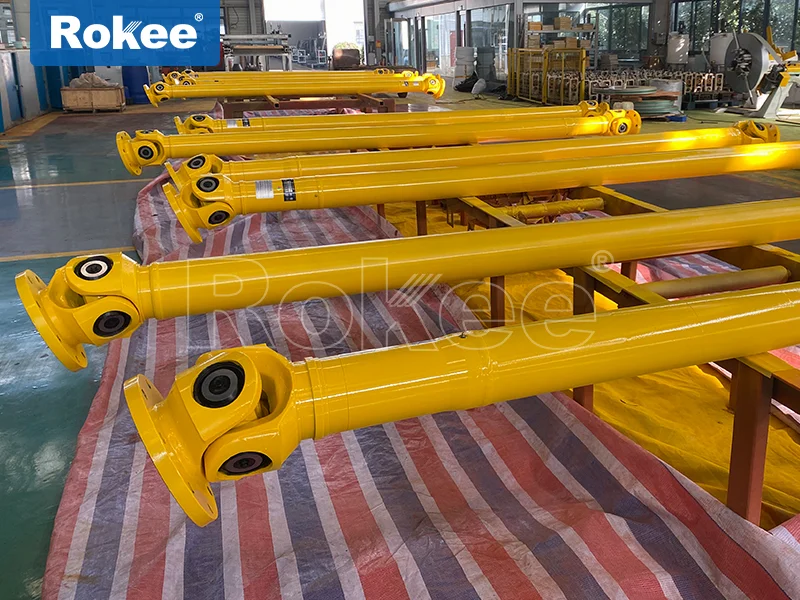
From a technical perspective, a pump coupling is a mechanical device used to connect two rotating shafts and transmit power, allowing for a certain degree of relative displacement between the two shafts. Unlike rigid connections, high-quality pump couplings are designed to adapt to installation errors, displacement caused by thermal expansion, and dynamic changes during operation, ensuring long-term stable operation of the pump system. Main types and characteristics of pump couplings:
Rigid coupling
Rigid couplings provide a secure connection without compensation capability and are suitable for precise centering without relative displacement:
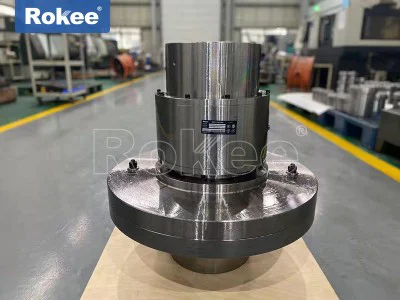
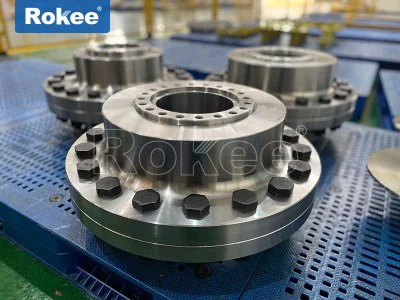
Flange coupling: Two flange plates are securely connected by bolts, with a simple structure and high torque transmission
Sleeve coupling: using sleeve and keyway matching, suitable for low-power pump sets
Clamp shell coupling: It consists of two semi cylindrical shells that clamp the shaft end with bolts, making it easy to disassemble and assemble
Flexible coupling (key type)
Flexible couplings can compensate for various deviations and are the most commonly used type in pump systems:
Flexible Coupling
Rubber component coupling: absorbs vibration through elastic deformation of rubber components, such as tire type and claw type couplingsPolyurethane coupling: It has excellent wear resistance and oil resistance, with a lifespan 30-50% longer than rubber couplingsSpring coupling: using spiral spring elements, especially suitable for high-frequency vibration occasionsMetal diaphragm coupling
Composed of multiple layers of stainless steel membranes, with zero back clearance and high rigidityCompensation angle deviation can reach 1.5 °, axial displacement ± 0.5mmMaintenance free design, with a service life of over 100000 hoursGear coupling
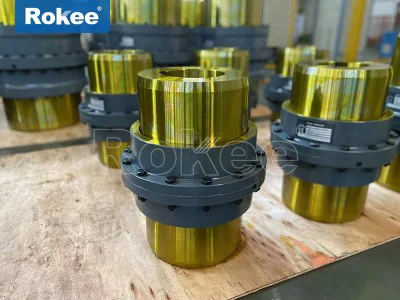
Excellent compensation capability by transmitting torque through meshing of internal and external teethRegular lubrication is required, suitable for heavy-duty low-speed situationsNew sealing technology has solved the oil leakage problem of traditional gear couplingsuniversal joint coupling
Allow large angle deviation (usually 15 ° -45 °)Two main structures: cross axis and ball cageWidely used in special occasions such as oil drilling pumpsHydraulic coupling
Transmitting power through liquid medium to achieve soft start and overload protectionVariable speed hydraulic coupling can infinitely adjust the speed of the pumpSignificant energy-saving effect, especially suitable for high-power pump systems
Selection process
Determine pump parameters: power, speed, shaft diameter
Analyze working conditions: temperature, humidity, corrosiveness, etc
Evaluate installation deviation: actual measurement or estimation of possible misalignment
Calculate required torque: Consider starting torque and impact load
Select coupling type: Determine the most suitable structure based on the above factors
Check size fit: Ensure that the shaft holes, keyways, etc. match
Recommended couplings for different pump types
Centrifugal pump: preferred diaphragm coupling or high-quality elastic coupling
Reciprocating pump: select rubber couplings with good vibration reduction performance
Screw pump: suitable for using gear couplings or universal couplings
Magnetic pump: non-magnetic stainless steel coupling is required
Accurate installation steps
Clean all mating surfaces and remove burrs
Use specialized tools for hot fitting (during interference fit)
Use a laser alignment instrument to ensure that the deviation is within the allowable range, generally requiring: radial<0.05mm, angle<0.02mm/m
Tighten the bolts evenly step by step and tighten them to the standard torque
Install protective cover to ensure compliance with safety regulations
Key points of daily maintenance
Regularly check the tightening status of bolts (recommended every 3 months)
Monitoring changes in vibration values, abnormal vibrations often indicate coupling failures
Lubricating couplings, such as gear couplings, require periodic replacement of lubricating grease
Check the aging condition of elastic components (cracking, hardening, etc.)
Record the operating temperature, abnormal temperature rise may be a signal of poor alignment
As the "key joint" of the pump system, the selection and maintenance quality of the pump coupling directly affect the reliability, energy efficiency, and service life of the entire system. With the development of materials science and intelligent monitoring technology, modern couplings are evolving towards higher performance, longer lifespan, and greater intelligence. Engineering practice has shown that selecting suitable couplings and implementing scientific maintenance can significantly improve the overall efficiency of pump systems, creating considerable economic benefits for enterprises.
In the complex and interconnected landscape of fluid handling systems, pump couplings stand as indispensable mechanical components that serve as the critical link between driving mechanisms, typically electric motors or engines, and driven pump shafts. These seemingly modest parts are tasked with far more than merely transmitting rotational torque; they are engineered to address a spectrum of operational challenges, including shaft misalignment, vibration transmission, shock loading, and thermal expansion, all while sustaining consistent power delivery to ensure pumps operate reliably across diverse industrial settings. Without properly designed and selected pump couplings, even the most high-performance pumps and drive units would suffer from premature wear, increased downtime, reduced efficiency, and catastrophic mechanical failure, making a deep understanding of their structure, performance attributes, classifications, and practical applications essential for engineers, maintenance professionals, and system designers alike. This comprehensive exploration delves into the fundamental characteristics of pump couplings, breaks down their primary structural categories, analyzes the unique performance metrics that define each type, and outlines their targeted industrial uses to provide a holistic overview of these vital power transmission components.
At its core, a pump coupling is a precision-engineered assembly that connects two parallel or coaxial shafts, facilitating the transfer of mechanical power while mitigating the adverse effects of operational stresses. The basic structural design of nearly all pump couplings revolves around two core hubs—one attached to the drive shaft and the other to the pump shaft—and a central connecting element that bridges these hubs. The hubs are typically constructed from durable metals such as cast iron, carbon steel, or stainless steel, chosen for their high tensile strength, resistance to torsional stress, and compatibility with standard shaft mounting methods like keyways, set screws, or clamping mechanisms. The central connecting element is the defining feature that differentiates coupling types, dictating their flexibility, torque capacity, misalignment tolerance, and maintenance requirements. Beyond these core components, many pump couplings incorporate additional features such as balancing grooves, corrosion-resistant coatings, or protective casings to enhance durability and operational safety, though these secondary elements vary widely based on the intended application and performance demands.
Pump couplings are broadly categorized into two primary groups based on their structural flexibility and functional capabilities: rigid couplings and flexible couplings. Rigid pump couplings represent the simplest structural design, characterized by a solid, inflexible connection between the drive and pump shafts with no movable or deformable components. These couplings are engineered to provide a direct, backlash-free torque transfer, making them ideal for systems where shaft alignment is perfectly maintained and no flexibility is required. Structurally, rigid couplings often take the form of flanged assemblies, sleeve-style muff couplings, or clamp-type couplings, each designed to lock shafts firmly in place to eliminate relative movement. Flanged rigid couplings feature two circular flanged hubs bolted tightly together, creating a rigid joint that distributes torque evenly across the shaft interface, while sleeve couplings consist of a single cylindrical sleeve that slides over both shaft ends and is secured with keys or set screws for a compact, streamlined connection. Clamp-style rigid couplings utilize a split-hub design with tightening bolts to create a frictional grip on the shafts, simplifying installation and removal without damaging shaft surfaces. The performance of rigid couplings is defined by exceptional torsional stiffness, high torque-carrying capacity, and zero backlash, but they offer no tolerance for angular, parallel, or axial misalignment. Even minor deviations in shaft positioning can induce severe stress on bearings, seals, and shafts themselves, leading to rapid component degradation. Due to these traits, rigid pump couplings are exclusively deployed in applications where precise shaft alignment is guaranteed, such as vertical pump installations, stationary industrial pump systems with rigid mounting bases, and low-speed, high-torque pumping operations where stability and direct power transfer are prioritized over misalignment compensation.
Flexible pump couplings, by contrast, are engineered with built-in flexibility to accommodate controlled levels of shaft misalignment while maintaining efficient torque transmission, making them the most widely used category across global pumping applications. This flexibility is achieved through specialized connecting elements that can deform, flex, or shift slightly to absorb misalignment and dampen vibrational forces without compromising power delivery. Flexible couplings are further subdivided into multiple distinct types based on their core connecting components, each offering unique performance profiles tailored to specific operational conditions. Elastomeric flexible couplings are among the most common variants, featuring a resilient elastomer element—typically rubber, polyurethane, or other synthetic polymers—positioned between the two metal hubs. Structurally, these couplings may utilize spider-shaped elastomers, sleeve-style elastomeric inserts, or block-type elastomeric pads, all designed to flex under load and compensate for misalignment. The performance of elastomeric couplings stands out for excellent vibration damping, shock absorption, and moderate tolerance for angular, parallel, and axial misalignment, alongside low maintenance requirements as they require no lubrication. They operate efficiently across low to medium torque and speed ranges, with the elastomer acting as a natural buffer to reduce noise and prevent torsional vibration from transferring between the drive and pump. These couplings are lightweight, easy to install, and cost-effective, though their performance is limited by temperature constraints; extreme heat or cold can degrade the elastomer, reducing flexibility and service life. Elastomeric pump couplings find extensive use in general industrial pumping, HVAC systems, water treatment facilities, agricultural irrigation pumps, and small-to-medium scale process pumps where vibration control and misalignment compensation are critical.
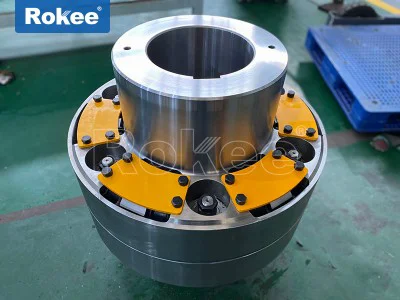
Metallic flexible couplings represent another major subset of flexible pump couplings, utilizing metal components rather than elastomers to deliver flexibility, making them suitable for more demanding, high-performance environments. Within this category, disc couplings and gear couplings are the most prevalent designs, each with distinct structural and performance characteristics. Disc couplings feature a series of thin, high-strength metal discs stacked between the two hubs, connected with precision bolts to form a flexible yet rigid torque transmission assembly. The metal discs flex slightly to accommodate misalignment, offering exceptional torsional stiffness, zero backlash, and high precision in power delivery. Structurally, they are compact, balanced, and resistant to high temperatures, chemicals, and wear, with no moving parts that require lubrication, resulting in minimal maintenance needs. Their performance excels in medium to high torque and speed applications, with the ability to maintain consistent efficiency even under fluctuating loads and thermal expansion conditions. Gear couplings, on the other hand, employ interlocking gear teeth on the inner surfaces of the two hubs, with a curved tooth design that allows for limited angular misalignment while transmitting extremely high torque levels. Structurally, gear couplings are robust and heavy-duty, built to withstand heavy shock loads and continuous operation in harsh environments, though they require regular lubrication to reduce friction between gear teeth and prevent premature wear. The performance of gear couplings is marked by unparalleled torque capacity, making them ideal for heavy-duty pumping operations, but they offer less vibration damping than elastomeric couplings and have higher maintenance demands due to lubrication requirements. Metallic flexible couplings are deployed in critical industrial pumping applications, including oil and gas processing, chemical manufacturing, power generation plants, marine pumping systems, and large-scale industrial process pumps where high torque, high speed, and durability are non-negotiable.
Beyond rigid and standard flexible couplings, specialized pump coupling designs cater to unique operational requirements that cannot be met by conventional models, expanding the versatility of pump coupling technology across niche industrial sectors. Grid couplings, a variation of metallic flexible couplings, feature a curved metal grid element that fits into slots on both hubs, combining the high torque capacity of metallic designs with enhanced shock absorption and misalignment tolerance. The grid structure flexes under load to dampen sudden torque spikes and absorb vibration, making them suitable for pumps with frequent start-stop cycles or variable load conditions, such as mining pumps, slurry handling systems, and heavy-duty industrial water pumps. Fluid couplings represent a hydrodynamic variant of pump couplings, operating without direct mechanical contact between drive and driven components; instead, they transmit torque through a viscous fluid medium housed within a sealed casing, with an impeller on the drive shaft and a turbine on the pump shaft. This design enables smooth, gradual startup, overload protection, and significant vibration isolation, as the fluid absorbs shock loads and prevents torque surges from damaging the pump. Fluid couplings are ideal for large centrifugal pumps, high-inertia pumping systems, and applications where soft startup and equipment protection are critical, such as water supply networks and industrial processing lines. Magnetic couplings offer a contactless, hermetically sealed solution, utilizing permanent magnets to transmit torque across a sealed barrier, eliminating the risk of fluid leakage and contamination. This structural design makes them perfect for pumps handling hazardous, toxic, or sterile fluids, including chemical processing pumps, pharmaceutical production pumps, and food and beverage processing pumps, where leak-proof operation and maintenance-free performance are essential.
Selecting the appropriate pump coupling for a given application requires a meticulous analysis of multiple performance and operational factors to ensure optimal functionality and longevity. Key considerations include the required torque capacity, operating speed range, type and degree of shaft misalignment, environmental conditions (temperature, humidity, chemical exposure), vibration damping needs, maintenance capabilities, and the specific demands of the pumping system. For instance, low-speed, stationary water pumps with stable alignment may benefit from cost-effective rigid couplings, while high-speed chemical process pumps require precision metallic disc couplings for accuracy and durability. Pumps in noisy industrial environments or with frequent load fluctuations will perform best with elastomeric couplings for vibration control, while hazardous fluid applications demand the leak-proof design of magnetic couplings. Proper installation is equally critical to maximizing coupling performance; even the most advanced coupling will fail prematurely if shafts are misaligned during setup, or if mounting tensions are unevenly distributed. Routine maintenance practices, such as regular inspections for wear, lubrication checks for gear couplings, and elastomer condition monitoring for flexible couplings, further extend service life and prevent unplanned downtime, ensuring the coupling continues to fulfill its role as a reliable link in the pumping system.
In summary, pump couplings are far more than simple connecting components; they are precision-engineered solutions tailored to address the unique challenges of fluid power transmission, with diverse structural designs that deliver distinct performance attributes to suit every industrial pumping scenario. Rigid couplings offer unrivaled stability and direct torque transfer for aligned systems, while flexible couplings provide the misalignment tolerance and vibration control essential for most real-world applications. Specialized variants like grid, fluid, and magnetic couplings further expand the range of capabilities, catering to heavy-duty, high-inertia, and leak-sensitive operations respectively. As fluid handling systems continue to evolve with demands for higher efficiency, greater reliability, and enhanced safety, the role of pump couplings remains central, with ongoing advancements in materials and design further refining their performance to meet the ever-changing needs of industrial, commercial, and municipal pumping applications. Understanding the intricate relationship between structure, performance, and application is key to harnessing the full potential of these vital components, ensuring seamless pump operation, reduced maintenance costs, and prolonged equipment life across all sectors of the fluid handling industry.