Telescopic Shafts
A telescopic shaft is a core mechanical component widely deployed across industrial, automotive, agricultural, construction and aerospace sectors, engineered to transmit rotational torque and linear motion while accommodating axial length variations and minor angular misalignments between connected mechanical parts. Unlike fixed-length drive shafts that struggle with dynamic positional shifts, thermal expansion, vibration-induced displacement and installation tolerances, telescopic shafts feature a modular, sliding structural design that delivers exceptional adaptability, making them indispensable in modern mechanical systems where flexible power transmission and motion control are non-negotiable.
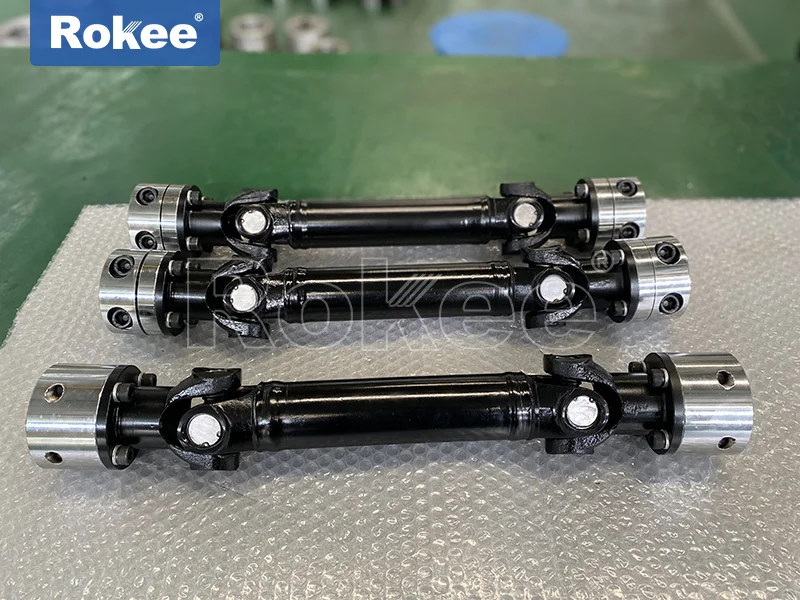
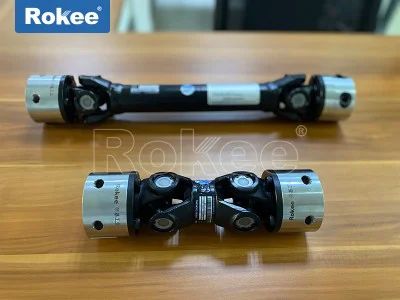
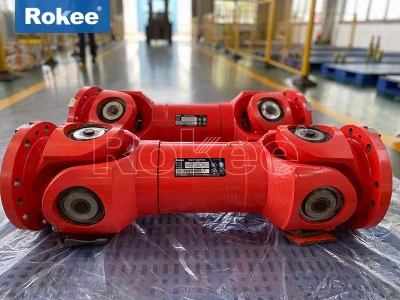
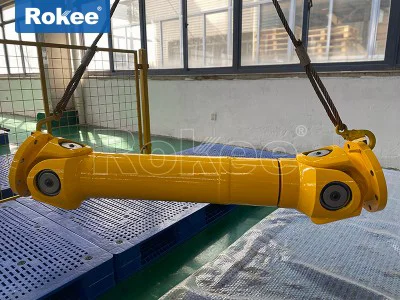
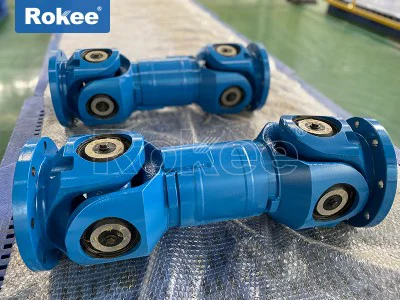
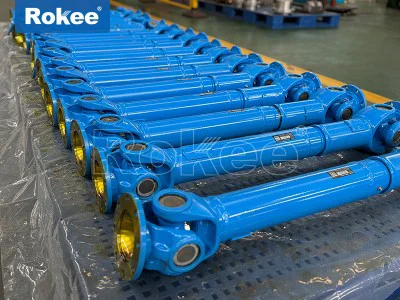
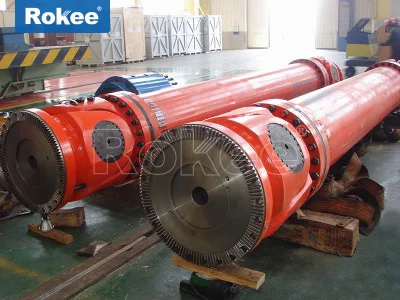
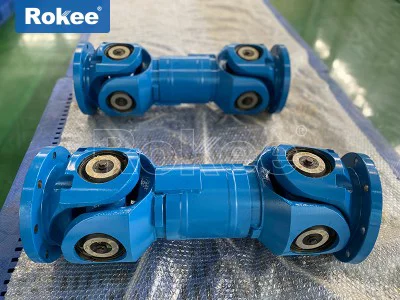
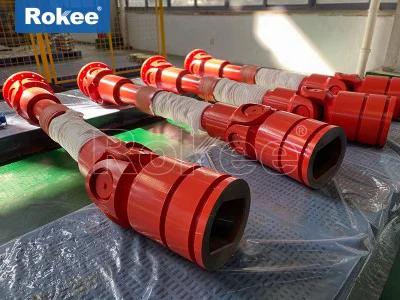
At its core, the structural design of a telescopic shaft is defined by its ability to extend and retract smoothly while maintaining consistent torque transmission, with a layout that balances mechanical strength, sliding efficiency and operational stability. The fundamental structure typically consists of nested concentric tubular sections or splined shaft assemblies, where inner components slide seamlessly within outer housing sections to achieve length adjustment. Most standard telescopic shafts integrate precision-machined spline connections as the core transmission mechanism, with external splines on the inner shaft and internal splines on the outer sleeve; this interlocking design ensures synchronous rotation between sliding parts, eliminating slippage and ensuring efficient torque transfer even during full extension or retraction cycles. High-performance variants often incorporate enhanced structural elements, including wear-resistant sliding bearings, dust-proof sealing assemblies, lubrication channels and reinforced end connectors, which work in tandem to boost durability, reduce friction and prevent contamination from dust, moisture or debris in harsh working environments. Advanced telescopic shafts may also feature universal joints or constant-velocity joints at either end, enabling the shaft to compensate for both axial length changes and angular misalignment between driving and driven components, expanding their operational flexibility beyond basic linear adjustment. The structural integrity of telescopic shafts is further reinforced by precision manufacturing processes, with tight tolerances for spline machining, surface finishing and component alignment to guarantee smooth sliding motion, minimal backlash and long-term dimensional stability under cyclic loading.
Performance is a defining attribute of telescopic shafts, with a set of critical metrics that dictate their suitability for specific operational scenarios and determine overall system efficiency. Torsional rigidity stands as a primary performance indicator, reflecting the shaft’s ability to resist twisting deformation under applied torque; high torsional rigidity ensures minimal power loss during transmission, prevents fatigue failure under heavy loads and maintains precise motion control in high-precision machinery. Axial load capacity is another vital parameter, measuring the maximum linear force the shaft can withstand during extension and retraction without buckling, bending or structural damage, a key consideration for heavy-duty applications involving lifting, pushing or pulling motions. Sliding smoothness is equally essential, as low-friction sliding surfaces reduce energy consumption, minimize wear on contact components and eliminate jamming or sticking during length adjustment, even under continuous operation. Fatigue resistance is a cornerstone performance trait, enabling the shaft to endure repeated extension-retraction cycles, fluctuating torque loads and vibrational stress without developing cracks, warping or premature failure; this is particularly critical for equipment operating in high-cycle working conditions, such as automated production lines and mobile machinery. Environmental adaptability further enhances performance versatility, with premium materials and surface treatments enabling telescopic shafts to perform reliably in extreme temperatures, corrosive atmospheres, high-humidity settings and dusty industrial spaces. Additional performance attributes include low operational noise, minimal backlash for precise motion control, high transmission efficiency (often exceeding 95% in well-designed units) and long service life with minimal maintenance requirements, all of which collectively define the functional superiority of telescopic shafts over conventional fixed shafts.
Telescopic shafts are categorized into distinct types based on structural design, operational functionality, joint configuration and application-specific requirements, each tailored to address unique mechanical challenges and performance needs. The most fundamental classification is based on the number of sliding sections, distinguishing between single-stage and multi-stage telescopic shafts. Single-stage telescopic shafts feature a simple two-part sliding assembly (one inner shaft and one outer sleeve), offering compact dimensions, straightforward installation and reliable performance for applications with limited axial adjustment needs, such as small-scale industrial machinery, automotive steering systems and light-duty power transmission setups. Multi-stage telescopic shafts incorporate three or more nested sliding sections, delivering extended stroke lengths within a compact retracted footprint, making them ideal for scenarios requiring significant length variation, including construction equipment, crane booms, agricultural machinery and large-scale industrial conveyors. Classification by joint type divides telescopic shafts into rigid telescopic shafts and flexible telescopic shafts, a distinction centered on misalignment compensation capabilities. Rigid telescopic shafts lack articulated joints, prioritizing maximum torsional rigidity and precise torque transmission for applications with perfectly aligned driving and driven components, such as industrial fans, pumping systems and precision manufacturing equipment; they excel in stable operating environments but cannot accommodate angular or radial misalignment. Flexible telescopic shafts integrate universal joints, Cardan joints or constant-velocity joints, enabling them to compensate for both axial length changes and moderate angular misalignment (typically ranging from 15 to 45 degrees) between connected shafts. This type is further subdivided into double-joint, triple-joint and four-joint variants, with additional joints enhancing misalignment tolerance and operational flexibility for heavy-duty, dynamic applications. Another key classification is based on transmission purpose, separating power transmission telescopic shafts and linear motion telescopic shafts; power transmission variants focus on efficient torque delivery for rotational systems, while linear motion variants prioritize smooth, controlled linear displacement for positioning, lifting and extension tasks. Material-based classification also plays a role, with steel alloy telescopic shafts offering exceptional strength and load capacity for heavy-duty use, aluminum alloy shafts providing lightweight, corrosion-resistant performance for mobile and aerospace applications, and stainless steel shafts delivering superior corrosion resistance for marine, chemical and outdoor operating environments.
The versatility of telescopic shafts is reflected in their extensive cross-industry applications, where their unique combination of length adjustability, torque transmission and misalignment compensation solves critical engineering challenges across diverse operational settings. In the automotive industry, telescopic shafts are integral components of drive train systems, steering columns and suspension assemblies, accommodating axial displacement caused by vehicle movement, road vibration and chassis flex; they ensure consistent power delivery from the engine to the wheels and enable smooth, responsive steering control, even as the vehicle’s suspension compresses and rebounds. Agricultural machinery relies heavily on telescopic shafts for power take-off (PTO) systems, harvesters, tractors and tillage equipment, where they adjust length to match varying implement sizes, compensate for field unevenness and transmit high torque across uneven terrain, supporting efficient farming operations in diverse agricultural landscapes. Construction machinery, including excavators, loaders, bulldozers and mobile cranes, depends on heavy-duty telescopic shafts to handle extreme loads, frequent length adjustments and harsh on-site conditions; these shafts enable the extension and retraction of booms, arms and buckets, delivering reliable power transmission and motion control in heavy construction and material handling tasks. Industrial manufacturing equipment utilizes telescopic shafts across automated production lines, conveyor systems, machine tools and packaging machinery, where they accommodate thermal expansion of rotating components, enable quick reconfiguration of production setups and maintain precise motion control for high-volume manufacturing processes. In the aerospace sector, lightweight, high-precision telescopic shafts are used in aircraft actuation systems, landing gear mechanisms and cargo handling equipment, where their compact design, high strength-to-weight ratio and reliable performance meet stringent aerospace operational standards. Marine and offshore applications employ corrosion-resistant telescopic shafts in ship propulsion systems, deck machinery and offshore drilling equipment, where they withstand saltwater exposure, humid marine environments and dynamic wave-induced displacement, ensuring durable power transmission for marine operations. Renewable energy systems, such as wind turbines and solar tracking devices, use telescopic shafts to adjust component positions, compensate for structural movement and transmit rotational power efficiently, supporting the reliable operation of clean energy infrastructure. Beyond these core sectors, telescopic shafts find use in material handling equipment, mining machinery, railway systems, medical devices and recreational vehicles, adapting to unique operational demands and proving their value as a versatile, reliable mechanical solution for nearly every industry requiring flexible, robust power and motion transmission.
As industrial technology advances and mechanical systems evolve toward greater efficiency, compactness and adaptability, the design and performance of telescopic shafts continue to improve, with ongoing innovations focused on enhancing load capacity, reducing friction, extending service life and optimizing structural compactness. Modern engineering advancements, such as precision spline machining, advanced material alloys, low-friction surface coatings and integrated sealing technologies, have elevated the performance of telescopic shafts to meet the demands of next-generation mechanical systems, from automated smart factories to electric vehicles and advanced aerospace platforms. The enduring relevance of telescopic shafts stems from their ability to address a universal mechanical challenge: accommodating dynamic positional changes while maintaining reliable power transmission. Unlike specialized components that serve narrow applications, telescopic shafts offer a adaptable, cost-effective solution that balances performance, durability and versatility, making them a staple in mechanical engineering design. Whether deployed in heavy-duty industrial machinery, precision automotive systems or cutting-edge aerospace equipment, telescopic shafts deliver consistent, efficient performance, underscoring their status as an essential, irreplaceable component in modern mechanical engineering. Their widespread adoption across diverse industries is a testament to their functional excellence, and as technology continues to progress, telescopic shafts will remain a critical enabler of innovative, high-performance mechanical systems worldwide, adapting to emerging engineering needs and driving efficiency across countless operational landscapes.