Universal Joint Shaft Couplings
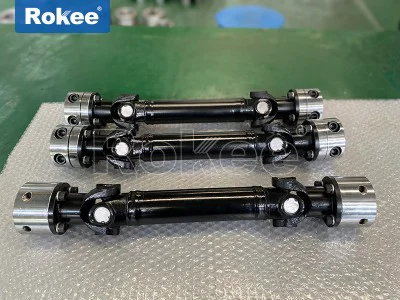
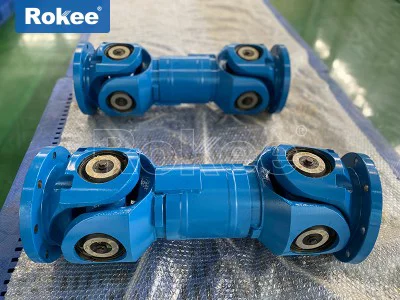
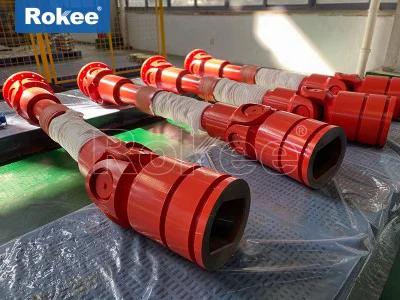
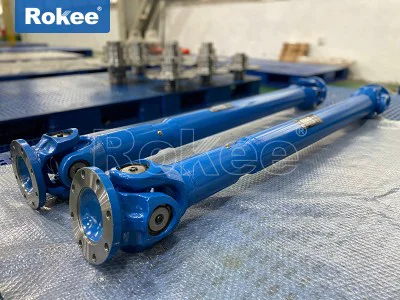
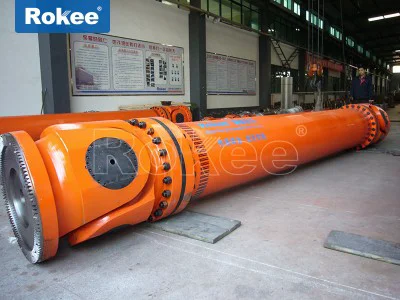
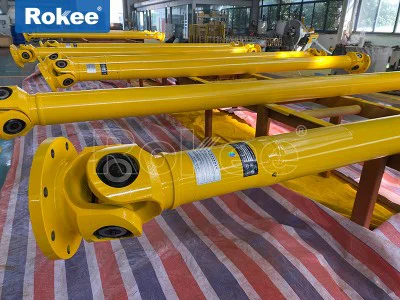
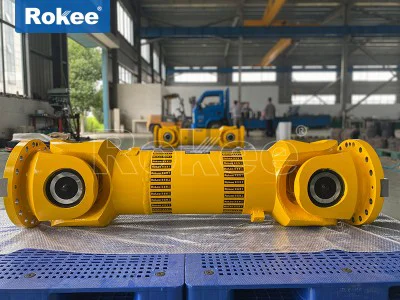
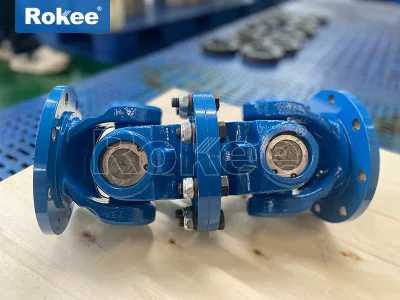
Universal joint shaft coupling is a mechanical component that achieves non collinear shaft transmission through structures such as cross shafts and ball cages.
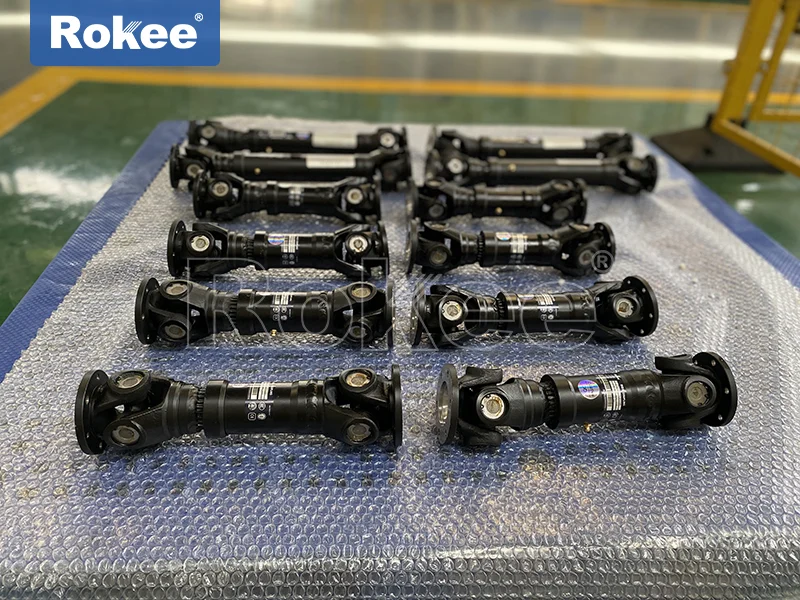
Core Features
Large angle compensation capability: allows the angle between the two axis lines to vary within the range of 5 ° -45 °, such as cross axis compensation angle of over 25 ° and cage type compensation angle of up to 45 °.
Efficient transmission: Made of alloy steel or composite materials (such as 42CrMo, 45 forged steel), the transmission efficiency exceeds 98%, and the torque transmission capacity of some heavy-duty models can reach 1250kN · m.
Modular design: including SWC (welded type), SWP (split bearing seat type) and other series, supporting expansion spline structure to compensate for axial displacement (such as SWC350 type with an expansion of 130mm).
Mainstream types and application scenarios
Cross axis type (SWC series)
Heavy duty transmission: used for steel rolling mills and lifting machinery, with a nominal torque of 16-1250kN · m and strong impact resistance.
Automotive industry: Suitable for truck drive shafts with flange design.Cage style
Precision field: Car drive shafts use constant velocity universal joints to eliminate speed fluctuations.Micro universal joint (WSD series)
Light industry equipment: small couplings with an outer diameter of 20mm, suitable for multi axis linkage systems such as drilling and tapping machines.
The universal joint shaft coupling is developing towards high precision and integration, becoming a key transmission component of intelligent manufacturing equipment.
In the realm of mechanical power transmission, the universal joint shaft coupling stands as one of the most versatile and indispensable components, bridging the gap between misaligned rotating shafts and ensuring seamless torque and motion transfer across diverse industrial and mechanical systems. Unlike rigid shaft couplings that demand perfect coaxial alignment between connected shafts, universal joint shaft couplings are engineered to accommodate angular, parallel, and even compound misalignments, making them a cornerstone of machinery design where precise alignment is impractical or impossible to maintain during operation.
At its core, the universal joint shaft coupling is a mechanical assembly built around a articulated pivot mechanism, designed to transmit rotational force while allowing relative movement between the input and output shafts. The fundamental structural composition of a standard universal joint shaft coupling consists of several key integrated parts, each serving a critical function in enabling flexible power transmission. The primary components typically include two yoke members, a central pivot element, bearing assemblies, and a connecting shaft body, with variations in these parts giving rise to different coupling subtypes. The yoke members, often forged or machined from high-strength metallic materials, are the interface components that attach to the driving and driven shafts, featuring fork-shaped ends that cradle the central pivot. The central pivot, the heart of the coupling, varies in form across different types—most commonly a cross-shaped spider in conventional designs—providing the pivotal axis that allows the yokes to articulate at angles relative to one another. Bearing assemblies, usually needle roller bearings, tapered roller bearings, or ball bearings, are integrated into the junction between the yokes and the central pivot, minimizing friction during articulation and rotational movement, reducing wear, and enhancing the overall efficiency of power transmission. The connecting shaft, which links the two universal joint ends in double joint configurations, adds length flexibility and can be designed as a fixed or telescopic structure to adapt to axial displacement between shafts.
The structural integrity of universal joint shaft couplings is further reinforced by material selection and manufacturing precision, which directly shape their mechanical robustness and service life. Most industrial-grade universal joint shaft couplings are fabricated from high-quality alloy steels, carbon steels, or forged steels, chosen for their exceptional tensile strength, fatigue resistance, and wear durability. These materials undergo specialized heat treatment processes, such as quenching and tempering, to optimize their mechanical properties, enabling the couplings to withstand heavy torsional loads, shock impacts, and prolonged cyclic operation without deformation or failure. In specialized environments, such as those involving corrosion, high temperatures, or lightweight requirements, alternative materials like stainless steel, aluminum alloys, or engineered thermoplastics may be employed, each tailored to meet the unique operational constraints of the application. The precision machining of mating surfaces, bearing seats, and pivot points is equally critical, as tight tolerances ensure smooth articulation, minimal backlash, and consistent power delivery, preventing excessive vibration, noise, and premature wear that can compromise the performance of the entire transmission system.
The performance of a universal joint shaft coupling is defined by a set of key mechanical and operational characteristics that determine its suitability for specific working conditions, with angular misalignment capacity, torque transmission capability, rotational speed tolerance, and operational efficiency standing as the most pivotal metrics. Foremost among these is the ability to compensate for shaft misalignment, a defining feature that sets universal joint shaft couplings apart from rigid couplings. Single universal joint configurations can typically accommodate angular misalignments ranging from 5 degrees to 45 degrees, depending on the design, while double joint setups expand this range further and eliminate the speed fluctuations inherent in single joint operation, enabling near-constant velocity transmission even at significant angles. This misalignment compensation not only accommodates manufacturing and installation errors but also offsets dynamic shifts in shaft position caused by load-induced deformation, thermal expansion, or mechanical vibration during operation, protecting connected equipment such as motors, gearboxes, and pumps from excessive stress and potential damage.
Torque transmission capacity is another core performance parameter, reflecting the maximum torsional load a universal joint shaft coupling can handle without structural failure or performance degradation. Couplings are engineered to cater to a broad spectrum of torque requirements, from small-scale precision machinery handling minimal torque to heavy-duty industrial systems transmitting extremely high torque loads. The design of the yoke, pivot, and bearing components directly influences torque capacity; reinforced yoke structures, larger cross-section pivots, and heavy-duty bearings enhance torque handling, making these couplings suitable for heavy industrial applications. Rotational speed tolerance is equally vital, as different coupling designs are optimized for low-speed, high-torque operation or high-speed, precision transmission. Conventional cross-type universal joints are well-suited for moderate to low rotational speeds, where speed fluctuations are less impactful, while constant-velocity designs excel at high-speed operation, maintaining smooth rotation and minimizing vibration even at elevated RPM. Operational efficiency, typically ranging from 95% to over 99% for well-designed couplings, is driven by low-friction bearing systems and streamlined structural design, reducing energy loss during power transmission and lowering the overall energy consumption of the mechanical system.
Additional performance attributes include shock load absorption, vibration damping, and axial flexibility, all of which contribute to the longevity and reliability of the coupled machinery. Universal joint shaft couplings can dampen transient shock loads generated by sudden starts, stops, or load spikes, preventing torque spikes from damaging sensitive drive components. They also absorb mechanical vibration generated by rotating shafts, reducing noise levels and improving the stability of the entire system. Axial flexibility, particularly in telescopic shaft designs, allows for limited axial movement between shafts, accommodating thermal elongation or minor positional shifts without imposing excessive axial stress on the coupling or connected equipment. Maintenance requirements also factor into overall performance; designs with sealed bearing assemblies minimize lubrication needs and reduce contamination from dust, debris, or moisture, extending service intervals and enhancing durability in harsh operating environments.
Universal joint shaft couplings are classified into distinct categories based on structural design, operating principles, and functional capabilities, with each type tailored to address specific transmission challenges and application requirements. The most prevalent classification is based on the core pivot and power transmission mechanism, dividing couplings into three primary groups: cross-type universal joint shaft couplings, constant-velocity universal joint shaft couplings, and specialized articulated universal joint shaft couplings, each with unique structural nuances and performance profiles.
Cross-type universal joint shaft couplings, also referred to as Cardan or Hooke’s couplings, represent the most widely used and traditional design, characterized by a simple, robust structure centered around a cross-shaped spider pivot. This design features two yokes connected by the cross spider, with needle roller bearings at each spider arm to facilitate smooth articulation. Cross-type couplings are lauded for their high torque capacity, straightforward construction, ease of installation and maintenance, and cost-effective manufacturing, making them ideal for heavy-duty, low-to-moderate speed applications. While single cross-type couplings exhibit minor speed fluctuations at operating angles, pairing two single joints with a connecting shaft creates a double cross-type coupling that cancels out these fluctuations, delivering smoother power delivery and expanding angular misalignment capabilities. Subvariants of cross-type couplings include designs with integral yokes for enhanced strength, split bearing housings for simplified maintenance, and compact profiles for space-constrained installations, further broadening their applicability across industrial settings.
Constant-velocity (CV) universal joint shaft couplings are engineered to eliminate speed variations entirely, ensuring the input and output shafts rotate at identical speeds regardless of the operating angle, making them indispensable for high-speed and precision-critical applications. These couplings achieve true constant velocity through advanced structural designs, such as ball cage mechanisms, ball fork configurations, or double Cardan setups with centering components. Ball cage CV couplings feature a spherical outer race, a star-shaped inner race, a cage assembly, and torque-transmitting steel balls, with the cage positioning the balls along the bisector of the shaft angle to maintain uniform motion. This design offers exceptional angular flexibility, smooth operation, low noise, and high dynamic balance, making it perfect for high-speed machinery. Ball fork CV couplings, a simpler constant-velocity variant, consist of two fork-shaped members and a central torque-transmitting ball, offering robust torque handling for medium-load, moderate-speed applications. Double Cardan CV couplings combine two cross-type joints with a centering yoke, delivering constant velocity performance at a lower cost than precision ball cage designs, striking a balance between performance and practicality for heavy-duty high-speed systems.
Specialized articulated universal joint shaft couplings encompass a range of niche designs developed to address unique operational demands that standard cross-type and CV couplings cannot meet. These include three-pin universal couplings, which excel at accommodating large angular misalignments and axial displacement; block-type couplings, engineered to absorb heavy shock loads in rugged machinery; and telescopic universal couplings, which integrate extendable shaft sections to adapt to variable axial distances between shafts. Lightweight miniature universal couplings, often crafted from non-ferrous alloys or thermoplastics, are designed for small-scale precision equipment, offering compact dimensions and low inertia for delicate transmission tasks. Each specialized type is optimized for a specific set of conditions, from extreme misalignment scenarios to high-precision motion control, ensuring that a universal joint shaft coupling variant exists for nearly every mechanical transmission challenge.
The unique combination of flexible misalignment compensation, reliable torque transmission, and diverse design options makes universal joint shaft couplings a ubiquitous component across countless industries and mechanical applications, spanning heavy industry, automotive engineering, precision manufacturing, agricultural machinery, construction equipment, and beyond. In heavy industrial sectors, including metallurgy, mining, and shipbuilding, cross-type universal joint shaft couplings are the go-to choice, handling the high torque loads of rolling mills, crushers, conveyor systems, and marine propulsion drives. Their robust construction withstands the harsh operating conditions of these environments, including dust, moisture, and heavy shock loads, while accommodating the significant shaft misalignment common in large-scale industrial machinery.
The automotive industry relies heavily on both cross-type and constant-velocity universal joint shaft couplings for drivetrain functionality. Cross-type couplings are widely used in drive shafts for rear-wheel-drive and four-wheel-drive vehicles, transmitting power from the transmission to the differential while accommodating suspension movement and chassis flex. Constant-velocity couplings are critical for front-wheel-drive vehicles and independent suspension systems, delivering smooth power to the drive wheels even during steering and suspension articulation, ensuring stable vehicle handling and ride comfort at varying speeds. Off-road vehicles and heavy-duty trucks also utilize reinforced universal joint shaft couplings to withstand the extreme loads and terrain-induced shaft movement inherent in these applications.
In precision manufacturing and industrial automation, constant-velocity and miniature universal joint shaft couplings play a vital role in high-precision equipment such as machine tools, textile machinery, packaging machinery, and robotic systems. These couplings maintain precise rotational synchronization, minimal backlash, and smooth motion transfer, ensuring the accuracy of cutting, shaping, and assembly processes. Their ability to compensate for minor misalignments preserves the precision of delicate automated systems, reducing wear on linear guides, gears, and other precision components and extending equipment service life.
Agricultural machinery benefits immensely from the durability and flexibility of universal joint shaft couplings, which are integral to tractors, harvesters, tillers, and other farm equipment. These couplings transmit power from the tractor’s power take-off (PTO) to attached implements, accommodating the uneven terrain and dynamic movement that cause significant shaft misalignment in agricultural operations. Their rugged design resists exposure to soil, water, and crop debris, ensuring reliable performance in the demanding outdoor conditions of farming. Similarly, construction machinery, including excavators, loaders, and concrete mixers, uses heavy-duty universal joint shaft couplings to transfer power in mobile equipment, where vibration, shock loads, and constant shaft position shifts are unavoidable.
Beyond these core sectors, universal joint shaft couplings find application in a vast array of specialized machinery, including pumping systems, fan and blower assemblies, material handling equipment, printing presses, and marine propulsion systems. In pumping and ventilation systems, they compensate for misalignment caused by foundation settling or thermal expansion, reducing vibration and extending the life of motors and pumps. In printing and paper processing machinery, they ensure precise motion transfer for consistent production quality. Even in aerospace and marine engineering, specialized high-performance universal joint shaft couplings are employed in actuation systems, propeller drives, and control mechanisms, where reliability and precision are non-negotiable.
In summary, the universal joint shaft coupling remains a fundamental and irreplaceable component in mechanical power transmission, distinguished by its adaptive structural design, robust performance characteristics, and unparalleled versatility. Its ability to bridge misaligned shafts and transmit power reliably across diverse operating conditions has solidified its role in nearly every sector of engineering and manufacturing. As mechanical systems continue to evolve toward greater efficiency, precision, and durability, the design and application of universal joint shaft couplings will advance in tandem, with ongoing refinements to materials, manufacturing techniques, and structural engineering enhancing their performance and expanding their potential uses. Whether in heavy industrial machinery, high-speed automotive systems, delicate precision equipment, or rugged mobile equipment, the universal joint shaft coupling continues to serve as a critical link that enables the seamless operation of modern mechanical systems, underscoring its enduring significance in the field of mechanical engineering.