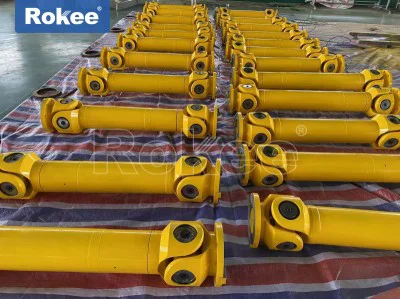
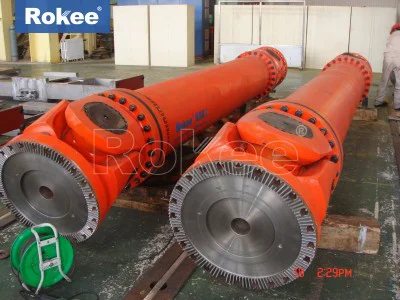
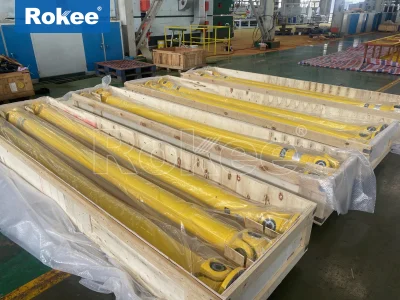
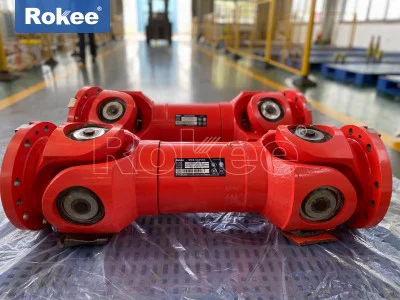
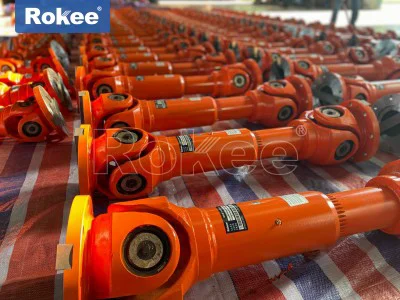
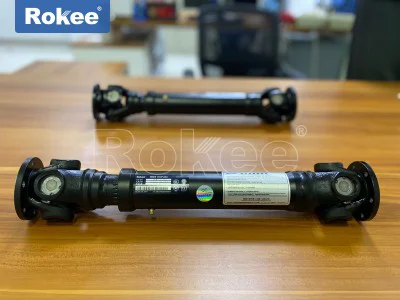
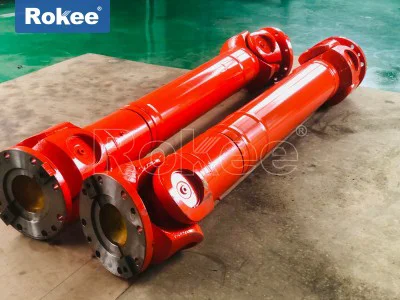
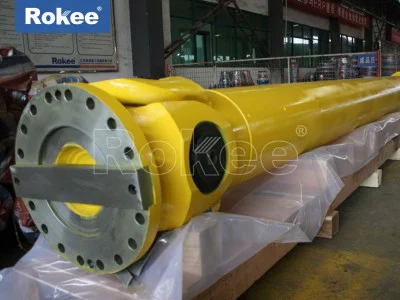
Model of Cross Cardan Shaft
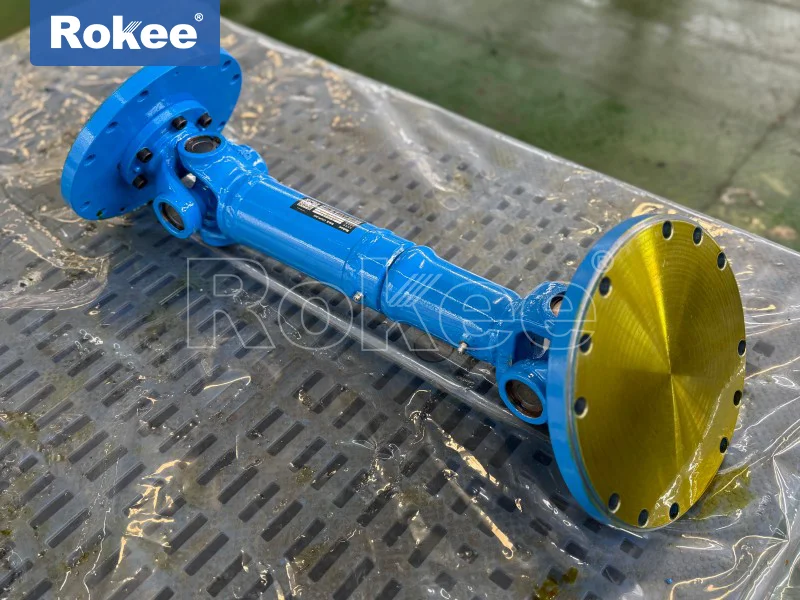
Cross cardan shaft is a mechanical device widely used in industrial transmission systems, mainly for transmitting torque and rotational motion, especially suitable for conditions where there is an angle between two axes or non coaxial working conditions. According to different structures, uses, and performance requirements, there are various models and series of cross universal couplings.
SWC series cross cardan shaft
Features: Adopting an integral fork head bolt free connection structure, it has high reliability, long service life, and high transmission efficiency. Suitable for industries such as metallurgy, lifting, engineering transportation, mining, petroleum, and shipbuilding.
Typical models: SWC100, SWC120, SWC150, SWC180, SWC200, SWC250, SWC315, SWC350, etc.
SWP series cross cardan shaft
Features: Adopting a split bearing seat design, it is easy to disassemble and maintain quickly, suitable for heavy equipment such as steel rolling machinery, lifting and transportation machinery, etc.
Typical models: SWP160, SWP180, SWP200, SWP225, SWP250, SWP315, etc.
WS series (small cross cardan shaft)
Features: Suitable for small transmission systems, compact structure, and a small range of nominal torque transmission (11.2~1120N · m).
Typical models: WS1, WSD1, WS2, WSD2, etc., divided into single type (WSD) and double type (WS).
Application: Suitable for transmission shaft systems with two axis angles ≤ 45 °.
WSN series (universal joint coupling for orthodontic machines)
Features: Designed specifically for roll type sheet metal straightening machines, with an axis angle of ≤ 10 ° and a rotation diameter of 46-150mm.
Typical models: WSL1, WSL2, WSL3, WSL4, etc.
WSH series (sliding bearing structure)
Features: Adopting sliding bearings and cross axis structure, suitable for various industrial scenarios, with multiple models (standard expansion welding type, long expansion welding type, etc.).
SWP-F type (large telescopic single type)
Features: It has a large expansion and contraction capacity (up to 150mm), suitable for heavy load conditions such as metallurgy, lifting, and mining.
In the intricate landscape of mechanical power transmission, the cross cardan shaft stands as a timeless and indispensable component, bridging the gap between misaligned rotating shafts and enabling seamless torque transfer across diverse industrial and mechanical systems. Rooted in the fundamental principles of kinematics and mechanical linkage, this device has evolved from a basic hinge-like structure to a precision-engineered assembly that balances durability, flexibility, and operational efficiency, catering to the rigorous demands of modern machinery. Unlike rigid shaft couplings that fail to accommodate angular, axial, or radial misalignment, the cross cardan shaft leverages its distinctive cross-shaped core and articulated design to maintain consistent power delivery even when connected shafts deviate from a perfectly collinear path, making it a cornerstone of transmission systems across countless sectors.
At its core, the cross cardan shaft operates on the principle of the universal joint, a mechanism designed to transmit rotational motion between two shafts that intersect at a variable angle. The foundational structure of a standard cross cardan shaft assembly is deceptively simple yet mechanically elegant, comprising three primary interconnected elements: a central cross-shaped spindle, two yoke assemblies (also referred to as fork joints), and a set of precision bearings that facilitate smooth articulation. The central cross spindle, the heart of the assembly, features four perpendicular arms that extend outward, each engineered to fit securely within the bearing housings integrated into the yokes. Each yoke is a U-shaped component crafted to attach firmly to the driving shaft and driven shaft respectively, creating a dual-hinge connection that allows for multidirectional movement. The bearings, typically needle roller bearings or precision sleeve bearings, are mounted on the cross arms to minimize friction between the static cross spindle and the rotating yokes, a critical design choice that reduces wear, heat generation, and energy loss during operation. This modular construction ensures that the assembly can withstand repeated rotational stress and angular deflection without compromising structural integrity, while also simplifying manufacturing, assembly, and replacement processes for end users.
The operational dynamics of the cross cardan shaft are defined by its ability to compensate for misalignment while preserving torque transmission, a trait that sets it apart from conventional coupling systems. When the driving shaft initiates rotation, the attached yoke moves in tandem, transferring rotational force to the central cross spindle via the bearing interfaces. The cross spindle, in turn, transmits this motion to the second yoke and the connected driven shaft, even as the angle between the two shafts shifts dynamically. Unlike fixed couplings that induce excessive mechanical stress, vibration, and premature component failure under misalignment, the cross cardan shaft’s articulated design allows for angular deflection within a predefined range—typically between 5 and 45 degrees, varying based on dimensional specifications and load-bearing requirements. This flexibility addresses common operational challenges such as installation inaccuracies, thermal expansion-induced shaft movement, and mechanical vibration that cause shaft misalignment in real-world machinery. It is important to note that a single cross cardan joint exhibits minor non-uniform rotational velocity during operation, a natural characteristic of its kinematic design; however, this limitation is readily mitigated by pairing two cross cardan joints in a tandem configuration with a shared intermediate shaft, aligning the yokes symmetrically to cancel out velocity fluctuations and achieve near-uniform power delivery, a modification widely adopted in high-precision and high-speed applications.
Mechanical performance is a defining attribute of the cross cardan shaft, shaped by material selection, engineering tolerances, and design optimization tailored to specific operational loads and environments. Most cross cardan shafts are fabricated from high-strength alloy steels or carbon steels, chosen for their exceptional tensile strength, fatigue resistance, and ability to withstand heavy torsional loads without deformation or fracture. The cross spindle and yokes undergo specialized heat treatment processes to enhance surface hardness and core toughness, creating a balance that resists abrasive wear, impact damage, and cyclic loading failures common in heavy-duty operations. Bearing selection further elevates performance: needle roller bearings, with their high load-carrying capacity and compact profile, are ideal for high-torque, moderate-speed applications, while sealed bearing assemblies prevent contamination from dust, debris, and moisture, extending operational lifespan in harsh industrial settings. Transmission efficiency is another key performance metric, with well-designed cross cardan shafts achieving efficiency rates upwards of 98% under optimal operating conditions, minimizing energy waste and reducing operational costs for machinery operators. This blend of strength, flexibility, and efficiency makes the cross cardan shaft adaptable to a vast spectrum of load requirements, from light-duty precision machinery to heavy industrial equipment operating under extreme mechanical stress.
The versatility of the cross cardan shaft is reflected in its widespread deployment across an extensive array of mechanical systems, where it solves unique transmission challenges that other couplings cannot address. In automotive and transportation systems, it serves as a critical link in drive trains, connecting the transmission output to the differential input while accommodating the vertical movement of suspension components and ensuring consistent power delivery to the wheels, even as the vehicle navigates uneven terrain. In heavy industrial machinery, including mining equipment, metallurgical machinery, and rolling mills, cross cardan shafts transmit massive torque levels between misaligned shafts, enduring continuous heavy loads and harsh operating conditions without faltering. Agricultural machinery relies heavily on these shafts to transfer power from tractors to attached implements such as tillers, harvesters, and balers, adapting to the variable angles and rough vibrations inherent in farming operations. Marine engineering applications utilize sealed cross cardan shafts to transmit power in propulsion systems, resisting corrosion from saltwater and maintaining performance in damp, high-vibration marine environments. Beyond these sectors, the cross cardan shaft is integral to construction equipment, pumping systems, conveyor assemblies, machine tools, and aerospace support machinery, proving its adaptability to nearly any scenario where rotational power must be transferred across non-collinear shafts. Its universal utility stems not from complex design, but from a perfect fusion of simplicity, durability, and functional precision that aligns with the core needs of mechanical engineering.
Sustaining the reliable performance of a cross cardan shaft requires consistent maintenance and adherence to operational best practices, as neglect can lead to accelerated wear, reduced efficiency, and catastrophic failure mid-operation. The most critical maintenance task is regular lubrication of the bearing assemblies, as proper lubrication creates a protective film that reduces friction, dissipates heat, and prevents metal-on-metal contact between the cross arms and bearings. Lubrication schedules vary based on operating intensity and environmental conditions, with heavy-duty or high-speed applications requiring more frequent lubrication cycles to preserve component integrity. Routine visual inspections are equally vital, focusing on detecting signs of wear such as excessive play in the joints, corrosion on metal surfaces, bearing damage, or loose fasteners connecting the yokes to the shafts. Early detection of these issues allows for timely repairs or component replacements, preventing minor faults from escalating into costly system failures. Operators must also adhere to recommended load and speed limits, as overloading the shaft or operating it beyond its designed rotational speed can induce excessive stress, leading to fatigue cracks, bearing failure, or breakage of the cross spindle. Additionally, protecting the shaft from abrasive contaminants and corrosive substances—through protective guards or sealed housing designs—extends its service life and reduces the frequency of maintenance interventions, ensuring consistent performance over years of operation.
While the core design of the cross cardan shaft has remained consistent for decades, ongoing engineering innovation has refined its performance, durability, and adaptability to meet the evolving demands of modern industry. Advances in material science have introduced high-performance alloys and composite materials that offer enhanced strength-to-weight ratios, reducing the overall mass of the shaft without compromising load-bearing capacity, a critical improvement for high-speed machinery where excess weight increases vibration and energy consumption. Precision manufacturing techniques, including computer numerical control (CNC) machining and automated forging, have tightened engineering tolerances, resulting in smoother articulation, reduced noise, and improved transmission efficiency. Sealing technology has also advanced, with multi-layered, corrosion-resistant seals providing superior protection against contaminants, enabling cross cardan shafts to operate reliably in extreme environments such as construction sites, mining operations, and marine facilities. Computational modeling and finite element analysis (FEA) have revolutionized the design process, allowing engineers to simulate stress distribution, load capacity, and fatigue life under diverse operating conditions, optimizing the shape and dimensions of the cross spindle and yokes for maximum performance. These incremental innovations have transformed the traditional cross cardan shaft into a more efficient, durable, and versatile component, ensuring its relevance in an era of increasingly sophisticated mechanical systems and sustainable engineering practices.
Beyond its functional role in power transmission, the cross cardan shaft embodies the essence of practical mechanical engineering: a design that prioritizes reliability, adaptability, and cost-effectiveness without sacrificing performance. Its enduring popularity across industries is a testament to its ability to solve a universal mechanical problem—transmitting power across misaligned shafts—with remarkable simplicity and efficiency. Unlike complex, specialized transmission components that require bespoke manufacturing and maintenance, the cross cardan shaft’s modular design and standardized construction make it accessible and practical for a wide range of applications, from small-scale precision equipment to large industrial machinery. As industrial systems continue to evolve, with a growing emphasis on energy efficiency, durability, and operational resilience, the cross cardan shaft remains a vital component, continuously refined to meet new challenges while retaining the core design principles that have made it indispensable. Whether in heavy industry, transportation, agriculture, or manufacturing, the cross cardan shaft continues to serve as a reliable link in power transmission systems, a silent yet critical workhorse that keeps global machinery and infrastructure operating smoothly.
In summary, the cross cardan shaft represents a pinnacle of functional mechanical design, merging basic kinematic principles with precision engineering to deliver unparalleled flexibility and reliability in power transmission. Its robust structural composition, adaptive operational mechanics, impressive performance attributes, broad industrial applicability, manageable maintenance requirements, and ongoing technological evolution collectively solidify its position as a foundational component in modern mechanical systems. By accommodating misalignment, transmitting torque efficiently, and withstanding harsh operating conditions, the cross cardan shaft addresses a fundamental challenge in mechanical engineering, enabling the seamless operation of countless pieces of machinery that underpin daily life and industrial progress. As technology advances and industrial demands grow more rigorous, the cross cardan shaft will undoubtedly continue to evolve, retaining its core utility while adapting to new performance standards, ensuring its place as a vital and irreplaceable element in the world of mechanical transmission for years to come.