Structure Of Universal Shaft Coupling
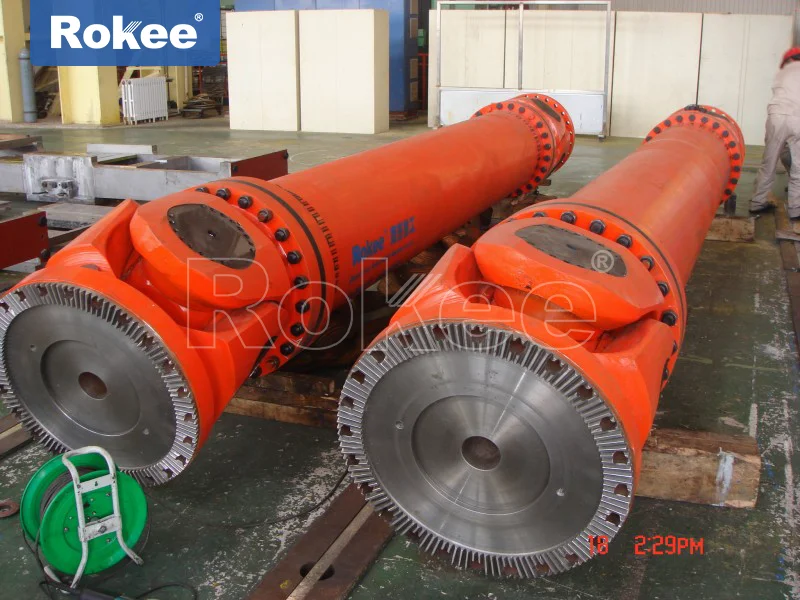
Universal shaft coupling is a mechanical device used to connect two shafts with different axes or angular deviations to achieve power transmission. Its core function is to compensate for axial, radial, and angular displacements while ensuring transmission efficiency.
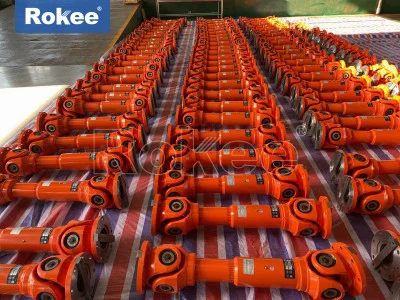
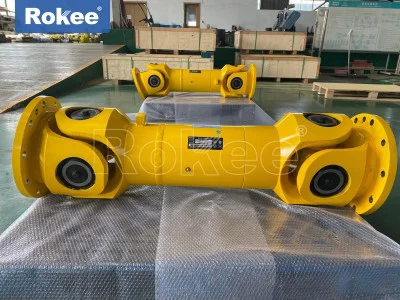
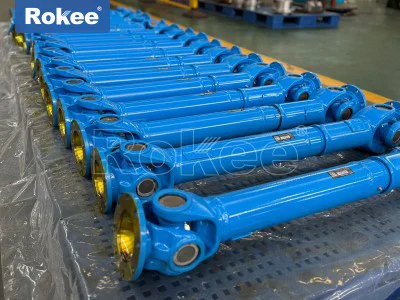
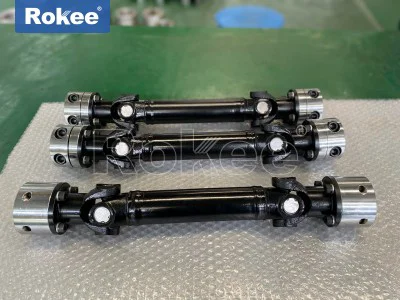
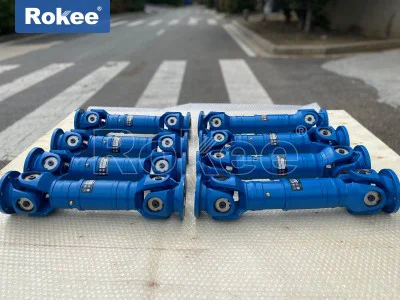
Cross axis universal joint coupling
Core components: Cross shaft, bearings, fork shaped head (integral or split).
Characteristics:
Allow an angle of 5 ° -45 ° between the two axes, and transmit torque up to 8000-10000 kN · m (heavy-duty specifications).
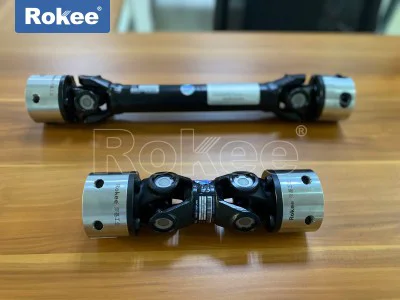
The structure is simple and cost-effective, but there may be speed fluctuations when using a single section, requiring a dual structure (with intermediate shafts arranged at equal angles) to achieve constant speed transmission.
Common models: SWC type (integral fork head), SWP type (split fork head).
Key structural components
Cross axis and bearings
The cross shaft, as the core transmission component, is connected to the fork head through needle roller bearings to withstand torque and bending moment.
Bearings need to be lubricated regularly (daily oil injection is required for high temperature conditions), as wear can easily lead to vibration or abnormal noise.Expansion spline
Used to compensate for axial displacement, commonly used in segmented design of transmission shafts, combined with dust-proof sealing sleeves.Intermediate support
Used for segmented support of long transmission shafts to reduce vibration, usually containing rubber elastic elements to absorb impact.
The diversified structural design of cardan shaft enables it to adapt to complex working conditions, and has wide applications from micro precision equipment to heavy machinery. When selecting, it is necessary to consider factors such as transmission efficiency, compensation capability, and maintenance costs.
In the realm of mechanical power transmission, the universal shaft coupling stands as a pivotal and versatile component, engineered to bridge the gap between two rotating shafts that exhibit angular misalignment, axial displacement, or radial offset—conditions that render rigid couplings ineffective and prone to premature failure. Unlike rigid connection devices that demand flawless shaft alignment for optimal operation, the universal shaft coupling’s sophisticated structural design enables it to transmit torque and rotational motion reliably even when the connected shafts are not collinear, making it an indispensable element across countless industrial, automotive, and heavy machinery applications. Its structural composition is a masterclass in mechanical engineering, balancing simplicity of form with exceptional functional versatility, durability, and load-bearing capacity, with every component working in tandem to mitigate misalignment stresses, maintain transmission efficiency, and extend the service life of the entire drive system.
At the heart of every standard universal shaft coupling lies a set of core structural components that form the foundation of its misalignment compensation and power transmission capabilities, with no single part operating in isolation—each contributes to the coupling’s overall strength, flexibility, and rotational stability. The primary and most recognizable component is the cross-shaped spindle, commonly referred to as the spider or cross shaft, which serves as the central connecting hub between the two shafts being coupled. This cross shaft features four perpendicular journal ends, precision-machined to tight tolerances to ensure smooth rotational movement and even load distribution; its robust construction is critical, as it bears the brunt of torsional forces, bending moments, and dynamic stresses generated during power transmission, especially when operating at non-zero shaft angles. Crafted from high-strength alloy steel through processes like hot forging, precision machining, and surface hardening, the cross shaft is engineered to resist wear, fatigue, and deformation under heavy loads and continuous operation, with its geometric symmetry ensuring balanced rotation and minimal vibration even at moderate to high speeds.
Surrounding the journal ends of the cross shaft are specialized bearing assemblies, another cornerstone of the universal shaft coupling’s structure, designed to facilitate low-friction rotation and absorb radial and axial loads. These bearings are typically needle roller bearings, chosen for their compact profile, high load-carrying capacity, and ability to operate efficiently in confined spaces—key attributes given the limited clearance within the coupling’s fork assemblies. Each bearing set is housed within a precision-machined bearing cup or sleeve, which fits securely into the mating bores of the coupling’s yoke components, creating a sealed and stable rotational interface. The bearing design is optimized to reduce friction losses, which not only boosts overall transmission efficiency but also minimizes heat generation during prolonged use; paired with internal lubrication channels, these bearings ensure smooth articulation of the cross shaft relative to the yokes, enabling the coupling to accommodate angular misalignments ranging from a few degrees to more substantial angles depending on the specific structural configuration. Sealing elements, such as lip seals, dust covers, and gaskets, are integrated around the bearing assemblies to form a protective barrier, preventing the ingress of contaminants like dust, dirt, moisture, and debris while retaining lubricating fluids within the bearing housing—this sealing structure is vital for preserving bearing integrity and preventing premature wear in harsh operating environments, from industrial manufacturing floors to outdoor heavy-duty equipment setups.
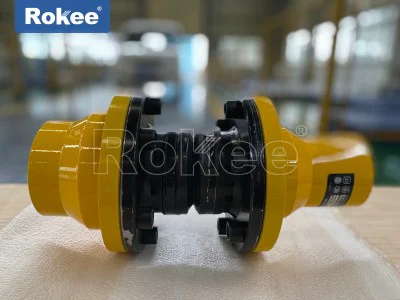
Completing the core structural framework are the yoke assemblies, also known as fork heads, which serve as the connection points between the universal shaft coupling and the driving and driven shafts. Typically manufactured as two identical Y-shaped components, these yokes are positioned at 90 degrees to one another relative to the cross shaft, with each yoke featuring two opposing arms that encase the bearing assemblies on the corresponding ends of the cross shaft. The yokes are engineered with high structural rigidity to withstand torsional and bending loads without warping or cracking, while their precision-machined bore surfaces ensure a tight, secure fit with the cross shaft bearings and the attached shafts. Yoke designs vary based on application requirements, with two primary configurations dominating standard designs: integral yokes, which are forged as a single piece for enhanced strength and load-bearing performance, and split yokes, which feature a two-piece construction for easier assembly, disassembly, and maintenance in tight installation spaces. The end faces of the yokes are equipped with connection interfaces—such as flanged surfaces, splined bores, or keyway slots—designed to mate securely with the shaft ends, ensuring a rigid, backlash-free connection that eliminates slippage and maintains consistent torque transmission. This seamless integration between yokes, cross shaft, and bearings creates a flexible yet robust kinematic chain, allowing the coupling to pivot and articulate as the shafts move relative to one another, all while preserving the continuity of rotational motion.
Beyond the basic core structure, universal shaft couplings are often engineered with additional structural features to enhance their functionality and adaptability to specific operational demands, with telescopic shaft assemblies being one of the most common and practical enhancements. This structural addition consists of a splined inner shaft and a matching outer sleeve, integrated into the coupling’s main shaft body between the two yoke assemblies, enabling axial length adjustment to compensate for thermal expansion, shaft movement, or installation tolerances. The spline design features precision-machined longitudinal grooves that distribute axial loads evenly, preventing localized stress concentrations while allowing smooth sliding movement without compromising torque transmission; paired with dust boots and sealing rings, the telescopic structure maintains lubrication and prevents contamination, ensuring reliable performance even in applications where shaft length varies during operation. This telescopic feature transforms a fixed-length universal coupling into a flexible drive element capable of handling both angular misalignment and axial displacement simultaneously, expanding its usability across a wider range of machinery and drive systems, from long-distance industrial drive lines to mobile equipment with dynamic shaft positioning.
For applications requiring higher torque capacity, extended operational life, or reduced rotational vibration, universal shaft couplings often adopt a double joint structural configuration, which addresses a key limitation of single joint designs: non-uniform rotational velocity at significant shaft angles. A double universal shaft coupling consists of two single joint assemblies linked by an intermediate shaft or center yoke, arranged such that the angular misalignment is split equally between the two joints. This structural symmetry cancels out the velocity fluctuations inherent to single joint operation, resulting in near-constant rotational speed transmission and significantly reduced vibration, noise, and dynamic stress on the drive system. The intermediate shaft is engineered to match the load-bearing capacity of the joint assemblies, with reinforced walls and precision balancing to ensure smooth rotation at high speeds; the dual joint structure also enhances the coupling’s ability to handle combined angular, radial, and axial misalignments, making it ideal for heavy-duty applications such as industrial machinery, marine propulsion systems, and large-scale material handling equipment. The structural integrity of the double joint design is further reinforced by robust connection flanges and high-strength fasteners, which secure the intermediate shaft to the two joint assemblies and prevent separation under extreme torsional loads, ensuring uninterrupted power transmission even under harsh operating conditions.
The structural design of universal shaft couplings is also deeply tailored to material selection and manufacturing processes, as these factors directly impact the component’s strength, durability, and performance characteristics. High-quality alloy steels are the material of choice for critical load-bearing components like the cross shaft, yokes, and telescopic shafts, selected for their exceptional tensile strength, toughness, and resistance to fatigue and wear; heat treatment processes such as carburizing, quenching, and tempering are applied to these components to create a hard, wear-resistant surface layer while maintaining a ductile core, balancing hardness and toughness to withstand both static and dynamic loads. Non-load-bearing components like seals, dust covers, and lubrication fittings are typically crafted from durable polymers, rubber composites, or corrosion-resistant metals, chosen for their sealing efficiency, flexibility, and resistance to environmental degradation. Precision manufacturing techniques, including CNC machining, precision forging, and grinding, are employed to achieve tight dimensional tolerances across all components, ensuring perfect mating between parts, minimal rotational backlash, and smooth articulation—even the smallest deviation in component dimensions can compromise the coupling’s misalignment compensation ability and reduce transmission efficiency, making precision engineering a cornerstone of its structural design.
Structural optimization for universal shaft couplings also extends to lubrication system design, a often-overlooked yet critical aspect that directly impacts operational reliability and maintenance requirements. Modern universal shaft couplings feature integrated lubrication pathways, including internal oil grooves, lubrication holes, and grease fittings, strategically positioned to deliver lubricant directly to the bearing surfaces and cross shaft journals. This centralized lubrication structure ensures consistent lubrication coverage, reducing friction and wear between moving parts and dissipating heat generated during operation; for heavy-duty or high-speed applications, some couplings feature sealed, pre-lubricated bearing assemblies, eliminating the need for regular manual lubrication and reducing maintenance overhead. The lubrication system is paired with the coupling’s sealing structure to create a closed-loop environment, preventing lubricant leakage and contamination ingress, which is especially vital for applications operating in dusty, wet, or high-temperature environments where unprotected bearings would fail rapidly. This holistic structural approach—combining robust load-bearing components, effective sealing, and efficient lubrication—ensures that the universal shaft coupling operates reliably over extended service intervals, minimizing downtime and reducing long-term maintenance costs for end-users.
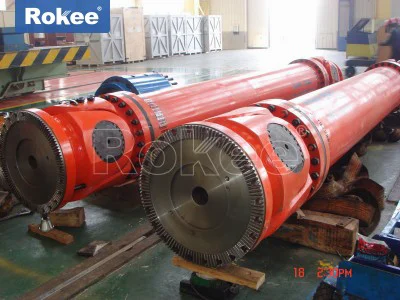
The adaptability of the universal shaft coupling’s structure is one of its most defining advantages, as it can be modified and scaled to suit a vast spectrum of load capacities, speed ranges, and misalignment requirements without compromising core functionality. Small-scale precision universal couplings feature compact, lightweight structures with miniaturized cross shafts and bearings, designed for low-torque, high-precision applications such as instrumentation, small automated machinery, and optical equipment, where minimal backlash and smooth motion are paramount. Medium-duty couplings strike a balance between size and strength, featuring reinforced core components and standard telescopic structures, ideal for general industrial machinery, conveyor systems, and pump drives. Heavy-duty universal shaft couplings boast oversized, heavily reinforced cross shafts, thick-walled yokes, and dual-bearing assemblies, engineered to transmit extremely high torque loads and withstand the rigorous demands of mining equipment, steel rolling mills, marine propulsion systems, and large construction machinery. Despite these variations in scale and capacity, the fundamental structural principles remain consistent: a central cross shaft, articulated yokes, low-friction bearings, and protective sealing, proving the timeless efficacy of this design in solving real-world mechanical transmission challenges.
When evaluating the structural performance of a universal shaft coupling, several key metrics are directly tied to its design and component integration, including maximum allowable angular misalignment, axial displacement capacity, torque rating, rotational speed limit, and fatigue resistance. The structural geometry of the cross shaft and yokes dictates the maximum angular deflection the coupling can accommodate, with standard designs capable of handling angles ranging from 5 degrees to 45 degrees, while specialized heavy-duty variants can exceed this range for extreme applications. The telescopic shaft structure defines the axial adjustment range, ensuring compatibility with shafts that experience thermal expansion or positional shifts during operation. The material strength and cross-sectional dimensions of the core components determine the torque rating, with larger, reinforced structures handling higher torsional loads without failure. Balancing is another critical structural consideration: precision dynamic balancing of the cross shaft, yokes, and telescopic assemblies minimizes rotational imbalance, reducing vibration and noise at high speeds and preventing premature wear on bearings and connected machinery. Every structural element is calibrated to work in harmony, optimizing these performance metrics to meet the unique demands of each application, from low-speed, high-torque heavy machinery to high-speed, precision-driven industrial automation systems.
In practical operation, the structural design of the universal shaft coupling also plays a pivotal role in ease of installation, maintenance, and repair—factors that significantly impact its real-world usability. Modular structural designs, with interchangeable components such as bearings, seals, and cross shafts, simplify replacement of worn parts, eliminating the need to replace the entire coupling assembly and reducing operational costs. Split yoke designs allow for quick assembly and disassembly without removing connected machinery, saving time during installation and maintenance routines. The durable, rugged construction of core components ensures resistance to accidental damage during handling and installation, while the compact, streamlined profile of most coupling designs fits seamlessly into tight machinery spaces, making it suitable for retrofitting existing drive systems as well as new equipment builds. Even in cases of component wear, the straightforward structural layout enables technicians to diagnose issues quickly, whether it’s worn bearings, damaged seals, or misaligned yokes, streamlining repair processes and minimizing equipment downtime.
Looking beyond individual component design, the structural integration of the universal shaft coupling within broader drive systems highlights its role as a critical stress mitigator, protecting connected machinery such as motors, gearboxes, pumps, and driven equipment from the damaging effects of shaft misalignment. Rigid couplings transfer misalignment stresses directly to connected components, leading to premature bearing failure, shaft bending, and gear damage; in contrast, the universal shaft coupling’s flexible structural design absorbs and compensates for these stresses, isolating the drive system components from harmful loads and extending their service life. This protective function, enabled by its articulated, misalignment-tolerant structure, adds tangible value to industrial and mechanical systems, reducing overall operational costs and enhancing system reliability. Whether used in short-distance drive assemblies or long-range transmission lines, the coupling’s structural efficiency ensures that power is transmitted smoothly and consistently, with minimal energy loss and maximum operational stability.
In summary, the structure of the universal shaft coupling is a meticulously engineered fusion of simplicity, strength, and flexibility, with every component and design feature serving a clear purpose in enabling reliable power transmission across misaligned shafts. From the central cross shaft and low-friction bearing assemblies that form the core kinematic system, to the robust yokes, telescopic shafts, and protective sealing that enhance functionality and durability, each structural element is optimized to balance performance, durability, and adaptability. Its ability to accommodate angular, axial, and radial misalignments, coupled with scalable design for diverse load and speed requirements, cements its status as a foundational component in modern mechanical engineering. As industrial technology continues to evolve and demand more from power transmission systems, the universal shaft coupling’s proven structural design remains highly relevant, with ongoing refinements to materials, manufacturing, and component integration further enhancing its efficiency, durability, and versatility. Understanding the intricate structure of this essential component not only sheds light on its operational mechanics but also underscores the ingenuity of mechanical design in solving the universal challenge of reliable rotational power transmission in imperfectly aligned systems.