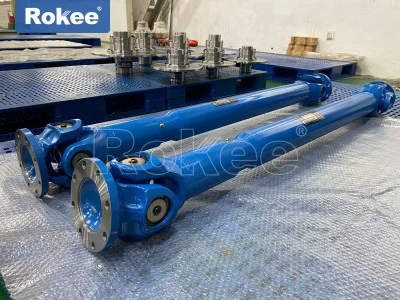
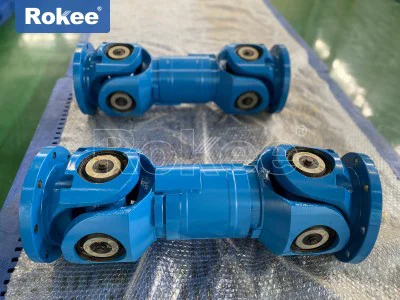
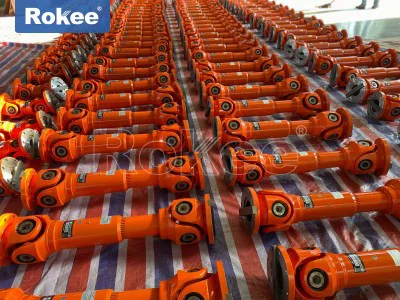
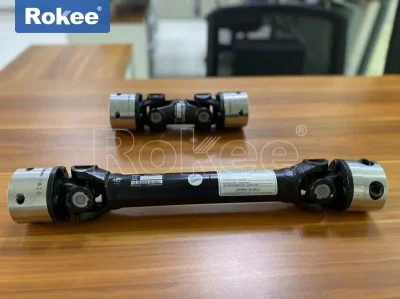
Advantages And Disadvantages Of Universal Couplings
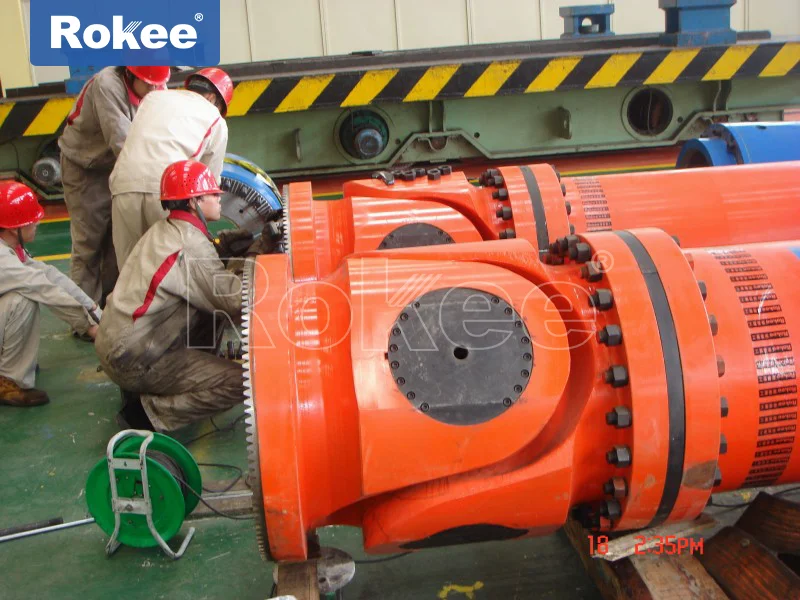
Advantages of Universal Coupling
Powerful angle compensation capability
Universal couplings allow for significant angular deviations between two shafts, making them suitable for situations where the axes are not collinear or where relative displacement occurs during operation. For example, in scenarios such as automotive transmission systems and construction machinery that require flexible transmission.High load capacity and transmission efficiency
Made of high-strength materials such as alloy steel and carbon steel, it can transmit high torque and is suitable for heavy machinery such as rolling mills and cranes.
The transmission efficiency can reach over 98%, with low energy loss.Compact structure and strong adaptability
Small size, suitable for situations with limited installation space.
There are various types that can be selected according to different working conditions. The cross axis universal joint has lower cost and is suitable for medium and low-speed scenarios.Widely used
Suitable for various industries, including automobiles, metallurgy, ships, agricultural machinery, etc., it performs exceptionally well in equipment that requires frequent adjustment of shaft to shaft angles.
Disadvantages of Universal Coupling
Speed fluctuation and vibration issues
When there is an angle between the two shafts of a single cross axis universal joint, the speed of the driven shaft will fluctuate periodically, which may cause vibration and noise. It needs to be alleviated through a double joint structure (such as a double cross axis) or a cage design.
Strict dynamic balancing is required during high-speed operation, otherwise wear may be exacerbated by centrifugal force.High wear and maintenance requirements
Cross axis bearings, ball cage steel balls and other components are prone to wear and require regular lubrication (such as using high-temperature grease) and inspection, otherwise transmission failure may occur due to wear.
Adverse environments such as dust and corrosive media can shorten the lifespan, and special protective models need to be selected.Installation accuracy requirements
Although it can compensate for deviations, excessive initial centering errors can increase additional loads and reduce efficiency.Cost and complexity
High precision types have higher manufacturing costs and complex maintenance.
Some models require customization and have long delivery cycles.
Universal couplings have become an ideal choice for complex transmission systems due to their flexible compensation capabilities and high transmission efficiency. However, it is necessary to balance their disadvantages such as vibration and wear, and extend their service life through reasonable selection and maintenance.
In the complex landscape of mechanical power transmission, universal couplings stand out as indispensable components that bridge the gap between misaligned shafts, enabling the seamless transfer of torque and rotational motion across a wide range of industrial and mechanical applications. Unlike rigid couplings that demand precise alignment between connected shafts, universal couplings are engineered to accommodate angular, axial, and in some cases, radial misalignments, making them versatile solutions for scenarios where perfect shaft alignment is either impractical or impossible to maintain. From automotive drive systems and heavy industrial machinery to precision instruments and aerospace equipment, these couplings play a critical role in ensuring the reliability and efficiency of power transmission, adapting to the dynamic demands of diverse operating environments. To fully understand their value and limitations, it is essential to examine both their inherent advantages and the unavoidable disadvantages that come with their design and functionality, as this knowledge is crucial for engineers, technicians, and decision-makers tasked with selecting the right coupling for specific applications.
One of the most prominent advantages of universal couplings is their exceptional angular compensation capability, which sets them apart from most other types of couplings. Traditional rigid couplings require the two connected shafts to be perfectly collinear, as even minor angular misalignment can lead to excessive wear, vibration, and eventual component failure. In contrast, universal couplings can operate effectively with significant angular deviations between the input and output shafts, typically ranging from 5 degrees to 45 degrees depending on their structural design and size. This unique feature makes them ideal for applications where the relative position of shafts changes dynamically during operation, such as in automotive drive shafts that must adjust to the movement of the suspension system, or in construction machinery where articulated joints require flexible power transmission. For example, in a rear-wheel-drive vehicle, the transmission and the rear axle are not perfectly aligned due to the vehicle’s suspension geometry, and a universal coupling (often paired with a drive shaft) compensates for this angular difference, ensuring that power is transmitted smoothly regardless of the vehicle’s load or the terrain it traverses. This angular flexibility also simplifies the installation process, as it reduces the need for precise shaft alignment, saving time and labor costs in both initial setup and maintenance operations.
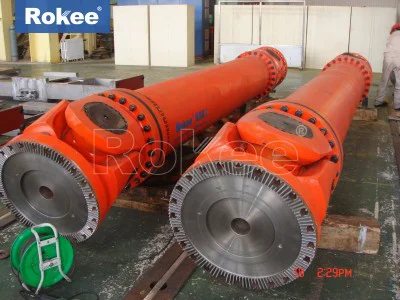
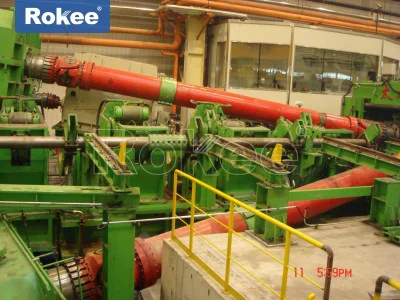
Another key advantage of universal couplings is their high torque transmission efficiency and capacity, which makes them suitable for both light-duty and heavy-duty applications. Designed with robust mechanical structures, including cross shafts, yokes, and bearings, these couplings are capable of transmitting large amounts of torque without significant energy loss. The transmission efficiency of well-designed universal couplings typically ranges from 98% to 99.8%, making them highly efficient in power transfer, which is particularly important in high-power applications such as industrial motors, generators, and heavy machinery like metallurgical rolling mill and mine crushers. In these demanding environments, the ability to transmit high torque reliably is essential to ensuring the overall performance and productivity of the equipment. Additionally, universal couplings exhibit excellent durability and resistance to wear under heavy loads, as their components are often made from high-strength materials such as alloy steel, which can withstand the stresses and strains of continuous operation. This durability translates to a longer service life, reducing the frequency of component replacement and minimizing downtime for maintenance, which is a significant benefit for industries where operational continuity is critical.
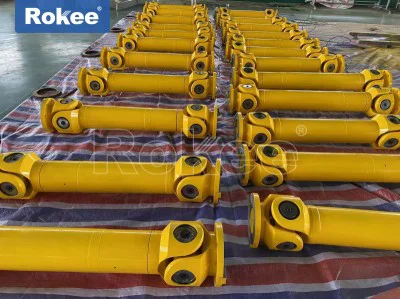
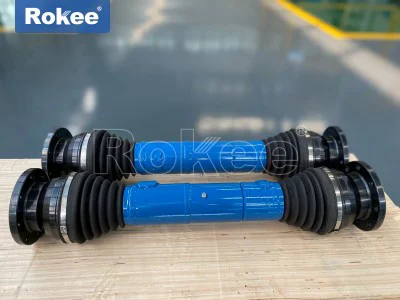
Versatility is yet another major advantage of universal couplings, as they are available in a variety of structural types to suit different application requirements. The two most common types are rigid universal couplings (such as the cross-axis or Hooke’s joint) and flexible universal couplings (such as the ball cage or Rzeppa joint), each with its own set of characteristics that make it suitable for specific scenarios. Cross-axis universal couplings are simple in design, cost-effective, and ideal for heavy-duty applications where high torque transmission is required, even with moderate angular misalignment. Ball cage universal couplings, on the other hand, are designed for constant-velocity transmission, eliminating the speed fluctuations that can occur with cross-axis designs when operating at large angles. This makes them suitable for high-precision applications such as automotive front-wheel-drive systems, precision machine tool, and robotic joints, where smooth and consistent motion is essential. Beyond these primary types, there are also specialized universal couplings designed to operate in extreme environments, including high-temperature, low-temperature, and corrosive conditions, further expanding their range of applications across various industries such as aerospace, marine engineering, and chemical processing.
The compact design of universal couplings is an additional advantage that enhances their practicality in many applications. Compared to other types of flexible couplings, such as diaphragm couplings or jaw couplings, universal couplings are typically smaller in size and lighter in weight, making them ideal for use in equipment with limited installation space. Their compact structure also means that they can be integrated into existing mechanical systems with minimal modifications, which is particularly beneficial for retrofitting older equipment or upgrading transmission systems without the need for extensive redesign. For example, in small industrial machines or precision instruments where space is at a premium, a compact universal coupling can provide the necessary angular flexibility without occupying excessive space, ensuring that the overall design of the equipment remains streamlined. Additionally, the simple structure of most universal couplings makes them easy to assemble and disassemble, which simplifies maintenance operations and reduces the time required for routine inspections or component replacement.
Despite their numerous advantages, universal couplings are not without their disadvantages, the most notable of which is the issue of non-uniform velocity transmission in certain designs. Single cross-axis universal couplings, in particular, exhibit a phenomenon known as angular velocity fluctuation, where the output shaft rotates at a varying speed even when the input shaft rotates at a constant speed, especially when the angular misalignment between the shafts is large. This fluctuation occurs because the angle between the cross shaft and the yokes changes continuously during rotation, leading to periodic variations in the rotational speed of the output shaft. These speed fluctuations can cause vibration and noise in the transmission system, which not only affects the smooth operation of the equipment but also increases the wear and tear on other components such as bearings, gears, and shafts. In severe cases, excessive vibration can lead to premature component failure and reduce the overall lifespan of the equipment. To mitigate this issue, engineers often use double universal couplings (two cross-axis couplings paired together with an intermediate shaft) arranged in a specific configuration to cancel out the velocity fluctuations. However, this solution increases the complexity of the transmission system, adds to the overall cost, and requires more precise installation and alignment.
Another significant disadvantage of universal couplings is their relatively high maintenance requirements compared to some other types of couplings. Most universal couplings rely on moving components such as bearings, cross shafts, and yokes that are subject to friction and wear during operation. To ensure smooth operation and prevent premature failure, these components require regular lubrication to reduce friction and minimize wear. The frequency of lubrication depends on the application, but in heavy-duty or high-speed applications, lubrication may be required as frequently as every few hundred hours of operation. Failure to lubricate the coupling properly can lead to increased friction, overheating, and premature wear of the components, which can result in costly downtime and repairs. Additionally, in harsh environments such as dusty or corrosive settings, the seals of the universal coupling can become damaged, allowing contaminants to enter the internal components and accelerate wear. This means that in such environments, more frequent inspections and maintenance are necessary to ensure the coupling remains in good working condition, adding to the overall maintenance burden and cost.
The performance of universal couplings is also limited at high speeds, particularly when operating at large angular misalignments. As the rotational speed increases, the centrifugal force generated by the rotating components of the coupling increases significantly, which can cause excessive vibration and stress on the coupling and other parts of the transmission system. This limits the maximum speed at which universal couplings can operate effectively, making them less suitable for high-speed applications such as gas turbines or high-speed motors, where other types of couplings (such as diaphragm couplings) are more appropriate. Even ball cage universal couplings, which are designed to reduce velocity fluctuations, have speed limitations due to the centrifugal forces acting on the ball bearings and other components. To operate at higher speeds, universal couplings require precise balancing to minimize vibration, which adds to the manufacturing cost and complexity. In applications where high speed and large angular misalignment are both required, the limitations of universal couplings can become a significant constraint.
Manufacturing precision requirements and associated costs are additional disadvantages of universal couplings, particularly for high-precision applications. To ensure reliable performance and minimize vibration, universal couplings require tight tolerances in the manufacturing of their components, including the cross shaft, yokes, and bearings. Any deviations from the specified dimensions or surface finishes can lead to increased friction, wear, and velocity fluctuations, which compromise the performance of the coupling. This high level of manufacturing precision increases the cost of production, making high-quality universal couplings more expensive than some other types of couplings. For example, ball cage universal couplings, which require precise machining of the ball grooves and bearings to ensure constant-velocity transmission, are significantly more costly to manufacture than simple cross-axis couplings. Additionally, specialized universal couplings designed for extreme environments or high-precision applications often require custom manufacturing, which further increases the cost and lead time for delivery.
Another potential disadvantage of universal couplings is their limited radial misalignment capacity. While they excel at accommodating angular and axial misalignments, most universal couplings can only handle small amounts of radial misalignment (misalignment where the shafts are parallel but offset from each other). This limits their suitability for applications where significant radial misalignment is present, such as in some industrial machinery where shafts may be displaced due to structural deformation or installation errors. In such cases, other types of couplings, such as Oldham couplings or diaphragm couplings, which can accommodate larger radial misalignments, may be more appropriate. Additionally, the presence of radial misalignment in a universal coupling can increase the stress on the cross shaft and bearings, leading to premature wear and reduced service life.
In conclusion, universal couplings are versatile and reliable components that play a critical role in mechanical power transmission, offering exceptional angular flexibility, high torque capacity, versatility, and a compact design that makes them suitable for a wide range of applications. Their ability to accommodate misaligned shafts and transmit power efficiently makes them indispensable in industries such as automotive, manufacturing, construction, and aerospace. However, their limitations, including non-uniform velocity transmission in single cross-axis designs, high maintenance requirements, speed limitations, high manufacturing costs, and limited radial misalignment capacity, must be carefully considered when selecting a coupling for a specific application. By understanding both the advantages and disadvantages of universal couplings, engineers and decision-makers can make informed choices that optimize the performance, reliability, and cost-effectiveness of their transmission systems. In many cases, the benefits of universal couplings outweigh their limitations, especially when proper maintenance is performed and the coupling is selected based on the specific requirements of the application. However, in scenarios where high precision, high speed, or large radial misalignment is required, alternative coupling types may be more suitable, highlighting the importance of a thorough assessment of the application’s needs before making a final selection.