Plate Couplings
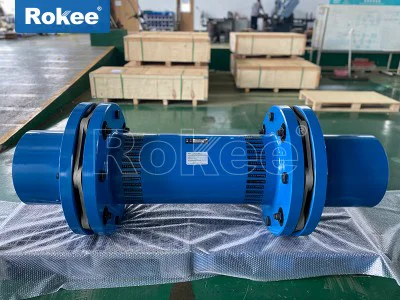
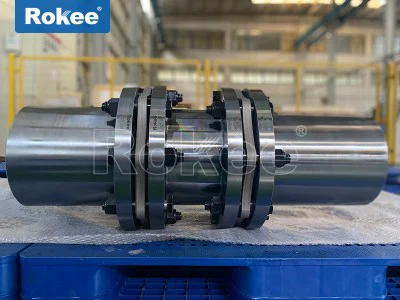
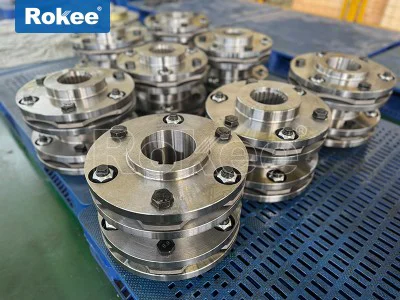
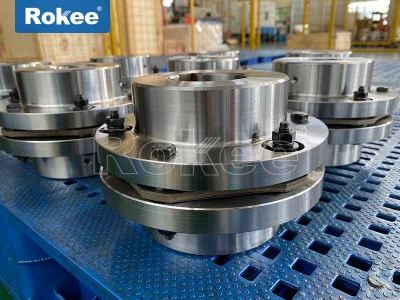
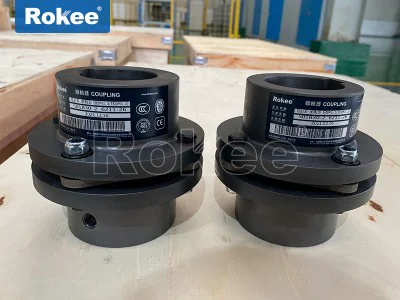
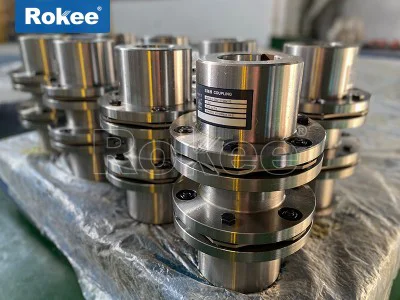
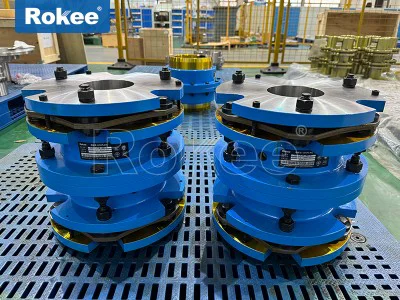
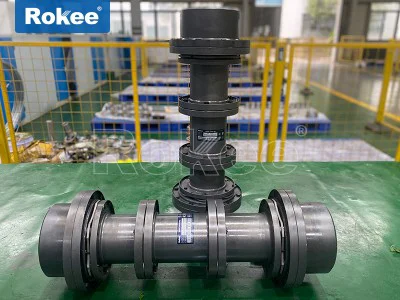
The plate coupling consists of a laminated diaphragm group of stainless steel thin plates, high-strength bolts, and two half couplings. The core principle is to compensate for the axial, radial, and angular displacements of the two axes through the elastic deformation of the diaphragm, which is suitable for high-precision transmission scenarios.
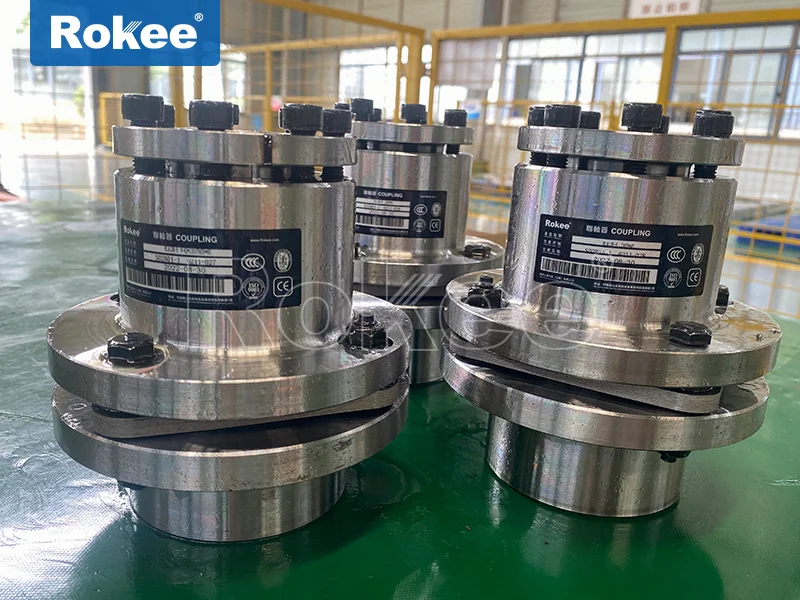
According to the number of membranes, plate couplings can be divided into:
Single membrane coupling: suitable for mild deviation compensation (≤ 1.5 ° angular deviation), with a simple structure but weak eccentricity adaptability.
Double diaphragm coupling: Through the collaborative deformation of two sets of diaphragms, it can simultaneously compensate for multi-directional deviations and has stronger load-bearing capacity. It is commonly used in high-power transmission systems such as fans and compressors.
Performance advantage
Non lubrication design: The metal diaphragm is maintenance free, resistant to oil stains, acid and alkali corrosion, and suitable for temperatures ranging from -80 ℃ to 300 ℃.
High transmission efficiency: The torque transmission efficiency reaches 99.86%, with no rotational clearance, and is precisely suitable for servo systems.
Vibration reduction and noise reduction: The diaphragm flexibly absorbs vibration, reduces bearing load, and reduces noise by more than 90% compared to gear couplings.
Compact and lightweight: The combination of aluminum alloy wheels and stainless steel diaphragms reduces weight by 30% to 50% compared to traditional couplings.
Application field
High speed heavy load: generator set, steam turbine (speed up to 6000r/min, torque up to 8.1 million Nm).
Harsh environment: chemical pumps, petroleum machinery (corrosion-resistant), aviation engines (high-temperature resistant).
Precision transmission: CNC machine tools, printing machinery (zero backlash, angular compensation ± 1.5 °).
Selection criteria:
Select the number of diaphragm groups based on torque and speed (e.g. JMI type for medium torque, JZM type for heavy machinery).
J1 type is preferred for shaft hole matching to ensure interchangeability.
Installation specifications:
The bolts need to be tightened in stages in diagonal order (1/4 torque first, then 1/2, and finally full torque).
Gap control: The gap between the diaphragm and the flange is 0.2-0.3mm, and the axial deviation is ≤ 1mm.
Maintenance and Fault Prevention
Regular inspection: Check for loose bolts and membrane deformation every 500 hours, and shut down for calibration if there is any abnormal vibration.
Extended lifespan: Coating the surface of the membrane with molybdenum disulfide lubricant can reduce micro motion wear.
Typical faults:
Abnormal noise: Often caused by excessive axial displacement or loose bolts, requiring re centering.
Diaphragm fracture: caused by long-term overload or fatigue, it is recommended to replace it with a higher strength material.
Plate couplings with their high reliability and environmental adaptability, are gradually replacing toothed and elastic couplings and becoming the preferred solution for modern industrial transmission. Proper selection and installation are the key to maximizing its performance. It is recommended to consult professional manufacturers for customized design based on specific working conditions.
In the field of mechanical power transmission, plate couplings stand out as a versatile and reliable category of shaft coupling components, engineered to bridge the gap between driving and driven shafts while addressing common operational challenges such as misalignment, vibration, and torque transmission inefficiencies. Unlike rigid couplings that demand perfect shaft alignment and offer no flexibility, plate couplings integrate flexible metal plate assemblies into their core design, enabling them to balance robust torque delivery with adaptive deformation to accommodate shaft deviations. This unique combination of structural rigidity and elastic flexibility has made them indispensable across a wide spectrum of industrial, manufacturing, and precision engineering applications, where consistent performance and long service life are non-negotiable.
At its core, the structure of a standard plate coupling is streamlined yet highly engineered, typically consisting of two hub components that attach to the respective driving and driven shafts, a set of thin, high-strength metal plates (often referred to as diaphragm plates or laminated plates), and fastening hardware that securely connects the plates to the hubs. The metal plates are the heart of the coupling, crafted from premium alloy steels or stainless steel with exceptional tensile strength, fatigue resistance, and elastic recovery properties—traits that allow them to bend, twist, and stretch slightly under load without permanent deformation or failure. These plates are arranged in a stacked or laminated configuration in most variants, distributing stress evenly across the entire assembly to prevent localized wear and tear. Unlike elastomeric couplings that rely on rubber or plastic components for flexibility, plate couplings utilize all-metal construction, eliminating the risk of material degradation from oil, chemicals, extreme temperatures, or prolonged mechanical stress. The hub design varies to suit different shaft mounting requirements, with options including keyway hubs, clamp hubs, and tapered hubs, all designed to ensure a tight, slip-free connection to the shaft surface and prevent torque loss during operation. The absence of complex moving parts or lubrication-dependent mechanisms further simplifies the structure, resulting in a low-maintenance component that can operate continuously in demanding environments without frequent upkeep.
The performance of plate couplings is defined by a set of inherent advantages that stem directly from their structural design, setting them apart from other flexible coupling types. Foremost among these is their exceptional torque transmission capacity, which ranges from light-duty precision applications to heavy-duty industrial power transmission. The all-metal plate assembly enables efficient power transfer with minimal energy loss, boasting nearly 100% transmission efficiency in most operating scenarios, a critical feature for high-performance machinery where energy conservation and operational precision matter. Another key performance trait is their ability to compensate for multiple forms of shaft misalignment, including angular misalignment, parallel misalignment, and axial displacement. The elastic deformation of the metal plates absorbs these deviations smoothly, preventing excessive stress on shaft bearings, gears, and other connected components, which in turn extends the service life of the entire drive system. This misalignment compensation is not only effective but also consistent, maintaining stable performance even as operating conditions shift over time.
Plate couplings also exhibit outstanding resistance to harsh operating conditions, a hallmark of their durable construction. They can withstand extreme temperature fluctuations, from sub-zero cold to high heat generated by heavy machinery, without compromising their structural integrity or flexible properties. Additionally, they are impervious to oil, grease, chemical contaminants, and moisture, making them suitable for use in environments where elastomeric couplings would quickly deteriorate. Their fatigue resistance is equally impressive; the laminated plate design distributes cyclic stress evenly, resisting cracking, warping, or breakage even under continuous, high-frequency rotational loads. Unlike gear couplings or chain couplings, plate couplings operate with zero backlash, a vital characteristic for precision motion control applications where positional accuracy is paramount. This zero-backlash design ensures that rotational movement is transmitted instantaneously and accurately, without lag or play, enhancing the overall precision of the machinery. Furthermore, plate couplings offer effective vibration damping and noise reduction capabilities, absorbing mechanical vibrations generated during operation and minimizing noise emission, creating a smoother and quieter working environment while reducing wear on adjacent components.
Plate couplings are categorized into several distinct types based on their structural design, plate configuration, and functional capabilities, each tailored to meet specific operational needs and application requirements. The primary classification revolves around the number and arrangement of the flexible metal plates, as well as the overall structural layout, which directly impacts their misalignment tolerance, torque capacity, and application suitability. One of the most common variants is the single plate coupling, featuring a single set of flexible metal plates connecting the two hubs. This type is characterized by a compact, lightweight design and straightforward installation, making it ideal for applications with limited mounting space and mild misalignment conditions. Single plate couplings excel in light to medium duty torque transmission, offering reliable performance for small to medium-sized machinery where shaft deviations are minimal and operational speeds are moderate. Their simple construction also translates to cost-effective production and easy maintenance, though their misalignment compensation capacity is more restricted compared to multi-plate alternatives.
In contrast, double plate couplings (also known as dual diaphragm couplings) incorporate two separate sets of flexible plates, positioned on either side of a central spacer or directly linked between the hubs. This dual-plate configuration significantly enhances the coupling’s ability to handle combined misalignments—angular, parallel, and axial—simultaneously, making it suitable for applications with more severe shaft deviation issues. The double plate design also boosts torque transmission capacity, allowing it to handle heavier loads and higher rotational speeds than single plate variants. The spacer between the two plate sets can be adjusted in length to accommodate different shaft separations, adding to the coupling’s versatility. Double plate couplings strike a balance between flexibility and rigidity, making them a popular choice for general industrial machinery that requires robust performance and reliable misalignment compensation without the complexity of more specialized designs.
Laminated multi-plate couplings represent a more advanced category, featuring multiple thin metal plates stacked together to form a single flexible assembly. This layered construction maximizes stress distribution, further improving fatigue resistance and load-bearing capacity, making them suitable for heavy-duty, high-torque applications. The laminated design also enhances elastic flexibility, enabling greater misalignment compensation while maintaining structural stability under extreme loads. These couplings are often used in large-scale industrial equipment where continuous, heavy-duty operation is the norm, and where failure would result in significant downtime. Another specialized variant is the radial plate coupling, where the flexible plates are arranged radially around the shaft axis, rather than in a axial or diaphragm configuration. This design prioritizes radial flexibility and shock absorption, making it ideal for applications with significant radial shaft movement or frequent shock loads, such as heavy machinery, mining equipment, and marine drive systems. The radial plate layout distributes load evenly across multiple plates, reducing wear and extending service life in high-impact environments.
Additionally, plate couplings can be classified based on their mounting style and hub design, including flange-mounted plate couplings, clamp-type plate couplings, and keyless lock plate couplings. Flange-mounted variants feature a flanged hub design for secure, rigid mounting to heavy-duty shafts and equipment, offering enhanced stability for high-torque applications. Clamp-type plate couplings use a clamping mechanism to attach to shafts, eliminating the need for keyways and simplifying installation while ensuring a concentric fit, making them suitable for precision machinery. Keyless lock plate couplings utilize a friction-based locking system to grip the shaft, providing zero backlash and maximum torque transfer, perfect for high-precision motion control systems where positional accuracy is critical. Each of these design variations caters to specific installation constraints, torque requirements, and precision needs, ensuring that there is a plate coupling variant suitable for nearly every mechanical transmission scenario.
The diverse structural and performance characteristics of plate couplings translate to a vast array of real-world applications across numerous industries, where their unique advantages address specific operational pain points. In the precision manufacturing and automation sector, plate couplings are widely used in CNC machine tools, robotic arms, servo motor systems, and precision positioning equipment. Here, their zero-backlash design, high precision, and compact size ensure accurate motion control and positional repeatability, critical for producing intricate components with tight tolerances. The ability to absorb minor shaft misalignments also protects sensitive servo motors and linear drive components from premature wear, reducing maintenance needs and improving production efficiency.
In the general industrial machinery field, plate couplings are a staple in pumps, fans, compressors, conveyors, and gearboxes. Double plate and laminated multi-plate couplings are particularly prevalent here, as they handle the medium to heavy torque loads and moderate misalignments common in these applications. Their resistance to oil and chemical contaminants makes them ideal for use in industrial pumps and compressors that handle various fluids, while their durable all-metal construction ensures reliable operation in continuous production environments. For heavy-duty industrial equipment, such as steel rolling mills, mining machinery, and large-scale material handling systems, high-capacity laminated multi-plate couplings and radial plate couplings are the go-to choice. These variants deliver the exceptional torque capacity, shock absorption, and misalignment compensation needed to withstand the extreme loads and harsh operating conditions of heavy industry, minimizing downtime and maximizing equipment uptime.
The automotive and transportation industry also relies heavily on plate couplings, integrating them into vehicle drive systems, engine components, and auxiliary equipment. Their lightweight yet durable design helps reduce overall vehicle weight, improving fuel efficiency, while their vibration damping properties enhance ride comfort and reduce noise. In marine engineering, plate couplings are used in ship propulsion systems, marine pumps, and deck machinery, where their corrosion resistance (especially stainless steel variants) and ability to withstand saltwater environments make them superior to other coupling types. The aerospace and aviation sector utilizes specialized high-precision plate couplings in aircraft engine accessories, flight control systems, and avionics equipment, where lightweight construction, zero backlash, and exceptional reliability are non-negotiable for safety and performance.
Beyond these core industries, plate couplings find use in renewable energy systems, such as wind turbine drive trains and solar tracking mechanisms, where they endure variable loads and environmental exposure while maintaining consistent performance. They are also employed in medical equipment, printing machinery, textile manufacturing equipment, and food processing machinery, adapting to the unique requirements of each sector—whether it’s the sterile, low-vibration needs of medical devices or the high-speed, continuous operation of printing and textile equipment. The adaptability of plate couplings is further enhanced by their customizable design; manufacturers can adjust plate thickness, material composition, hub size, and overall dimensions to meet specific application requirements, ensuring a tailored solution for even the most specialized mechanical transmission systems.
In summary, plate couplings represent a pinnacle of flexible coupling engineering, merging simple, robust structural design with exceptional performance capabilities to meet the diverse needs of modern mechanical power transmission. Their core metal plate construction delivers unmatched durability, misalignment compensation, and torque transmission efficiency, while their diverse classifications—from single plate to laminated multi-plate, radial to flange-mounted—offer tailored solutions for every application, from light-duty precision robotics to heavy-duty industrial machinery. As industrial technology continues to advance, with a growing emphasis on efficiency, reliability, and precision, the role of plate couplings is set to expand further. Their ability to operate flawlessly in harsh conditions, minimize maintenance, and protect critical drive system components makes them an essential component in countless machines and systems worldwide. By understanding the structural nuances, performance benefits, and application-specific advantages of each plate coupling type, engineers and equipment designers can select the optimal coupling solution to enhance the performance, longevity, and efficiency of their mechanical systems, ensuring smooth and reliable operation for years to come.